Breathtaking Koi Fish Artwork Ideas for Your Home
Roughly 80 percent of adults report that the art hanging in their homes directly affects their daily mood, and yet most walls still hold whatever was bought on impulse years ago. If a deliberate upgrade is overdue, koi fish artwork offers something genuinely rare: imagery that carries centuries of meaning while fitting neatly into the design languages of 2026. This guide covers 6 breathtaking koi fish artwork ideas for your home, from affordable digital prints to tactile mixed-media pieces, so the choice becomes clear no matter the room, budget, or style.
Disclosure: This post contains affiliate links. As an Amazon Associate, we earn from qualifying purchases, and at no extra cost to you.
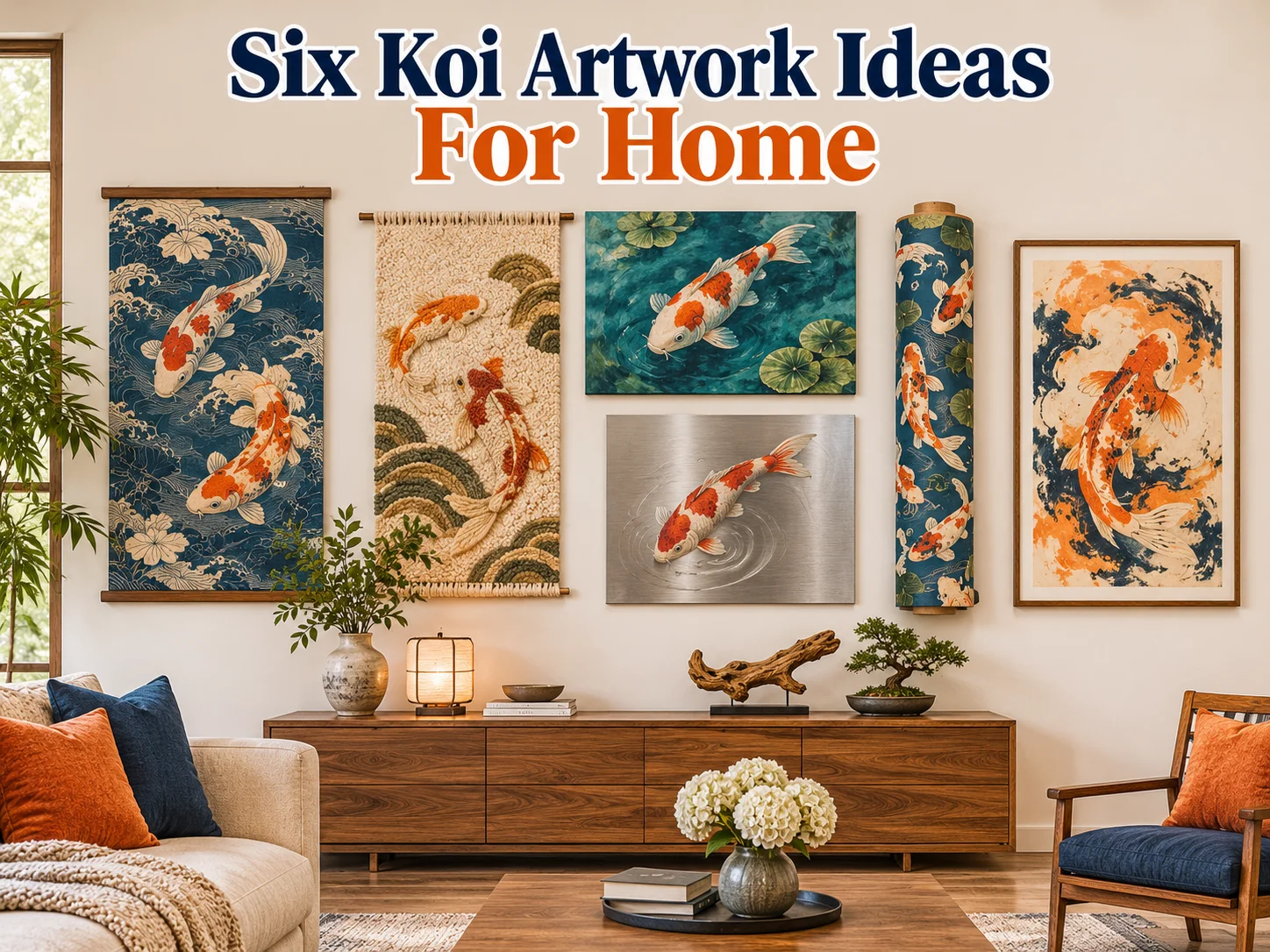
1. Japanese Woodblock-Style Koi Prints
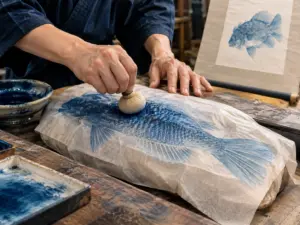
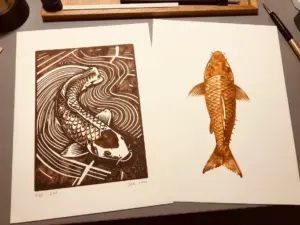
Few art traditions translate as cleanly to a modern wall as the Japanese woodblock aesthetic. The flat fields of color, bold outlines, and deliberate negative space that define this style look equally at home above a minimalist console table or inside a gallery wall that mixes old and new. Koi subjects suit the format naturally, the fish’s flowing fins and circular movement echo the compositional rhythms that woodblock masters used for waves and botanical subjects centuries ago.
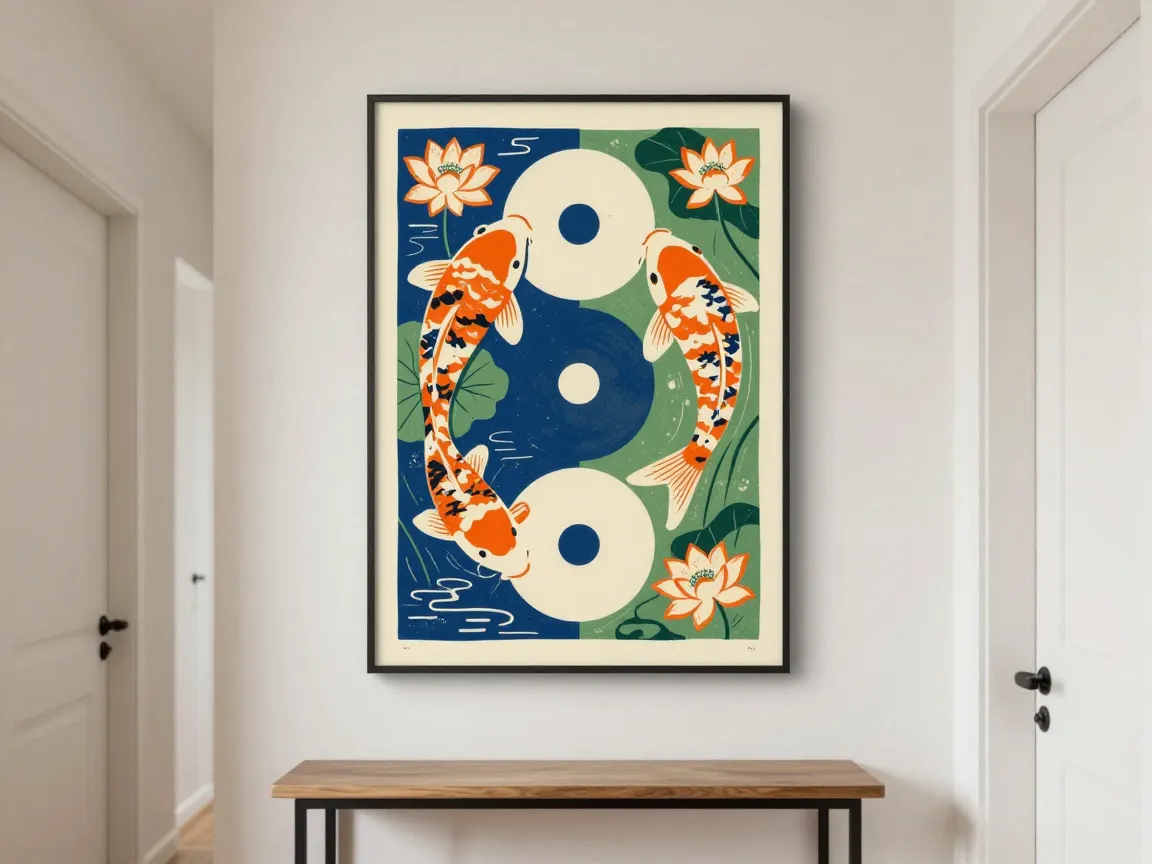
What makes this style particularly practical in 2026 is accessibility. Print-on-demand platforms and independent Etsy sellers offer woodblock-inspired koi prints in unframed formats starting at prices well under twenty dollars, with framed options available for buyers who want a finished, ready-to-hang piece. The imagery commonly pairs yin-yang symbolism with pond water and lotus flowers, reinforcing associations with balance and harmony that many buyers specifically seek for meditation rooms, home offices, or reading corners.
Placement matters here. A single large woodblock-style print, roughly 24 by 36 inches, commands a narrow hallway wall without crowding it. Two identically framed, smaller prints hung symmetrically on either side of a doorframe create formality without heaviness. The color vocabularies most often used in current listings lean toward indigo, burnt orange, cream, and moss green, all of which sit well against the warm white and greige tones that dominate contemporary interiors.
For those assembling a gallery wall, woodblock koi prints mix cleanly with botanical illustrations and abstract ink works. The shared graphic quality ties disparate pieces together without requiring a matching color scheme. Buy the print first, then choose a simple black or natural wood frame; overthinking the frame is what usually stalls this kind of project.
2. Embroidered and Tufted Textile Wall Art
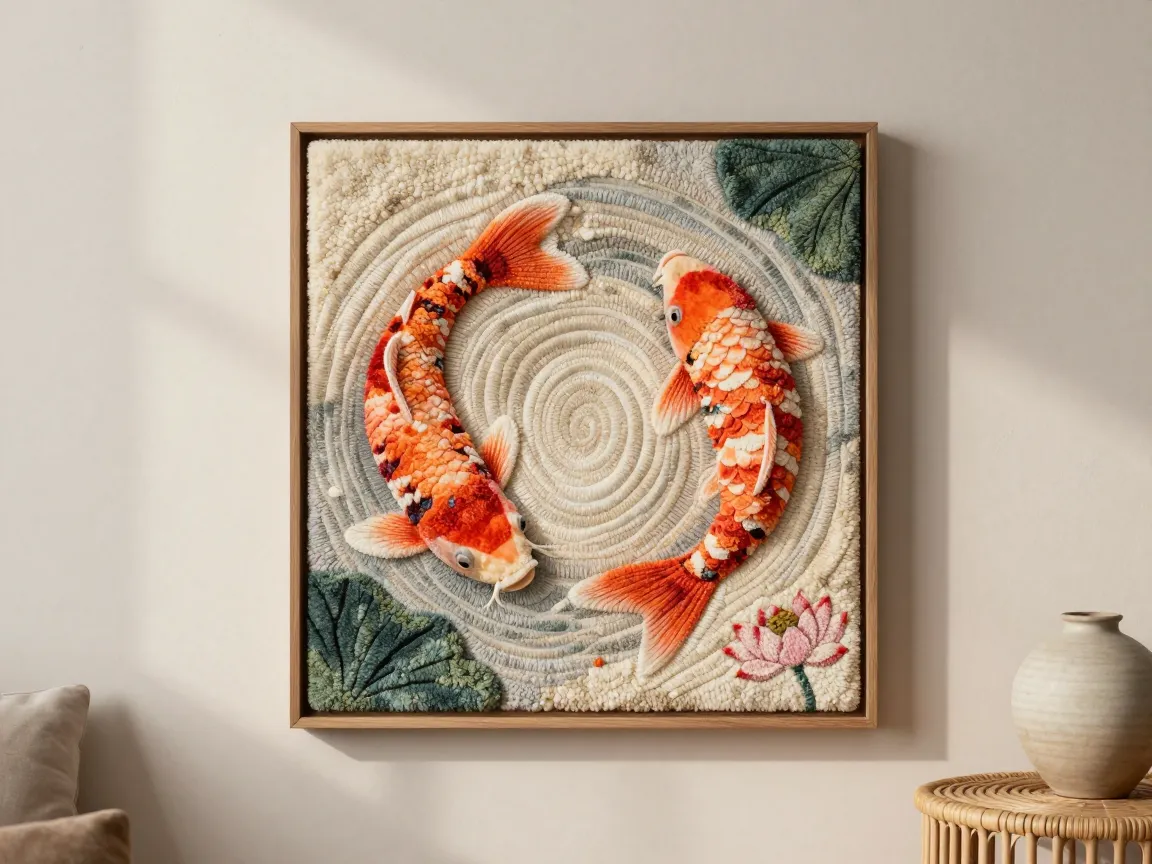
The most significant shift in home decor over the past few years has been a turn away from flat surfaces toward texture. Textile wall art, pieces that incorporate woven, tufted, or embroidered elements into a framed format, has become one of the cleaner expressions of that shift, and koi subjects translate into the medium with surprising depth.
A tufted textile koi piece combines materials such as polyester, wool, and acrylic to build up a layered, almost sculptural surface. When light changes throughout the day, the texture catches it differently, which means the piece reads differently at noon versus in the evening with lamps on. World Market, among other mainstream retailers, has carried exactly this type of piece, a 25-inch square framed in mango wood, a signal that the format has moved well past niche craft markets into broad consumer appeal.
The design language here aligns with Japandi interiors (the Japan-Scandinavia hybrid that prizes natural materials and quiet restraint) as well as eclectic and revivalist styles. A tufted koi piece on an otherwise bare plaster wall does not need company; it works as a standalone statement precisely because the texture provides enough visual interest on its own. Pairing it with a rattan side table, a ceramic vase, or any other natural-material object in the room reinforces the tactile theme without looking curated to the point of feeling stiff.
Water-and-flora motifs, rippled pond surfaces, lotus blossoms, aquatic grasses, appear frequently in textile koi compositions and add organic movement to what might otherwise read as a static fabric square. When shopping, look for pieces where the koi’s body color contrasts deliberately against the background; pale fish on a deep teal ground, or vivid coral fish on a natural linen tone, tend to read most clearly from across the room.
3. Large-Format Canvas Koi Paintings as Focal-Wall Anchors
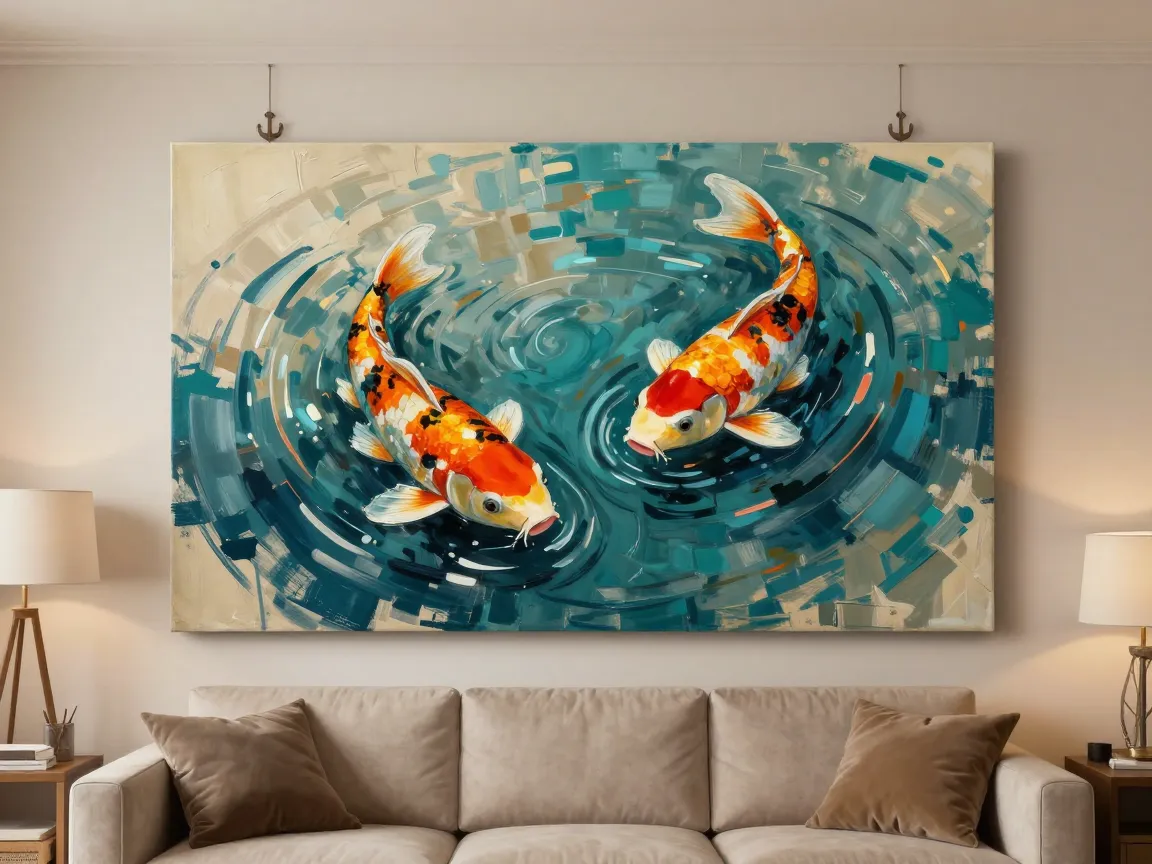
A focal wall, the single wall in a room that the eye goes to first, works best when it carries one strong, well-scaled piece rather than a collection of small ones. Large-format koi canvas paintings are purpose-built for this role. At widths of 40 inches and above, a single koi canvas fills the visual weight of a sofa wall, a dining room end wall, or the stretch above a fireplace mantel in a way that smaller prints simply cannot.
The genre spans a range of approaches. At one end sits painterly, gestural work where brushstrokes remain visible and the composition feels energetic, koi breaking the water’s surface, fins catching light at the moment of movement. At the other end sits calmer, more graphic work: two fish circling each other on a dark indigo ground, the water surface rendered as a series of concentric rings. Both read as strong focal pieces; the choice depends on whether the room already contains a lot of visual activity or needs it.
Contemporary color pairings for large canvas koi work include beige with deep teal, taupe with burnt sienna, and charcoal with gold, combinations that feel current without chasing trends so short-lived that the piece will look dated within a few years. Art Heroes and similar print-on-demand platforms offer these styles as custom-sized prints, which solves the perennial problem of finding a canvas that fits an odd wall dimension.
The practical consideration most buyers overlook is hanging hardware. A canvas over 36 inches wide needs two anchor points, and those anchor points should hit wall studs or use appropriate drywall anchors. Getting this wrong means a piece that lists sideways within days. Have the hardware sorted before the canvas arrives, not after.
4. Koi-Themed Wallpaper Murals and Patterned Panels
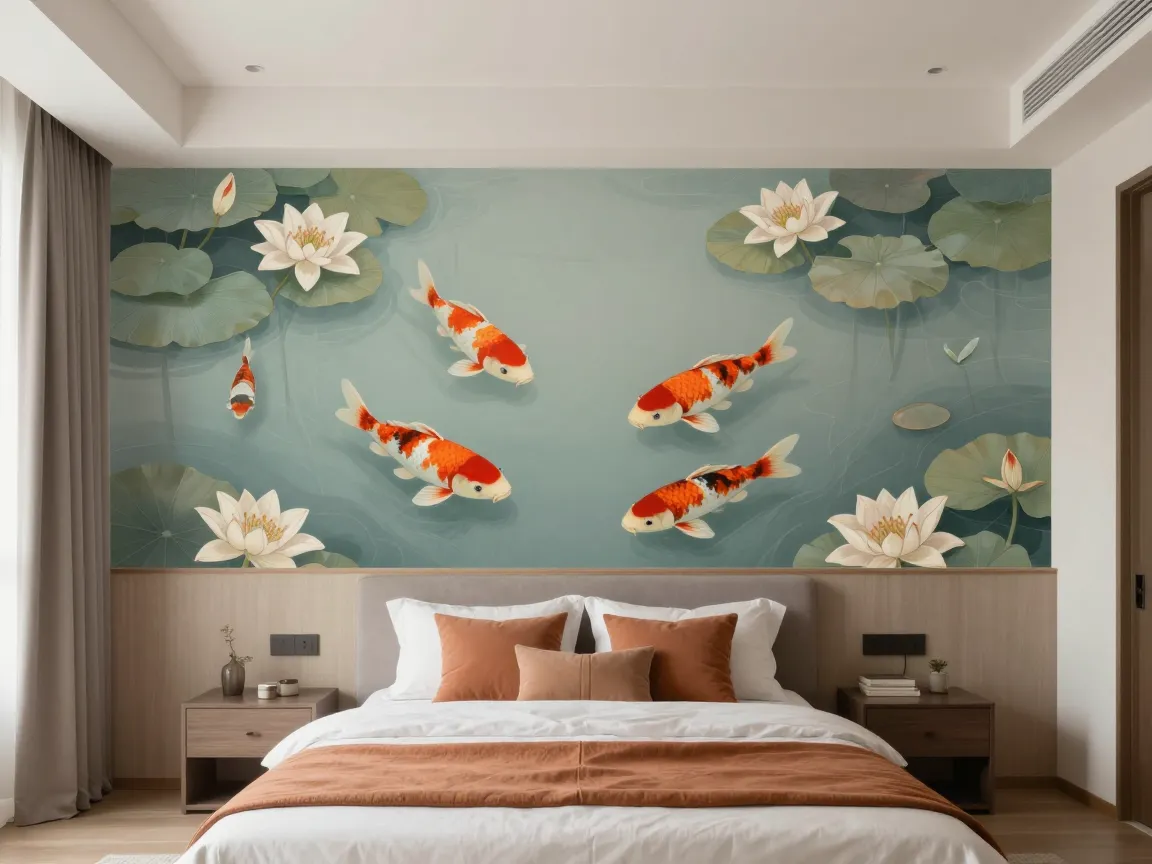
Not every koi art idea needs a frame. Wallpaper has had a sustained design renaissance, and koi-themed murals and repeat-pattern wallpapers represent one of its most atmospheric expressions. A single accent wall covered in a hand-painted-style koi mural transforms the entire spatial experience of a room rather than simply decorating a surface within it.
Print-on-demand wallpaper marketplaces such as Spoonflower have catalogued an expanding range of koi designs, from traditional pond scenes with layered lily pads and darting fish to abstracted, warped versions that use the koi’s silhouette as a graphic element within a modern pattern. This variety means the medium is not limited to traditionally styled rooms. An abstract koi wallpaper in a muted sage and terracotta palette works in a contemporary apartment just as naturally as a classical scene works in a heritage home.
The most effective placement for a koi mural is a wall that is already architecturally framed in some way: the wall behind a bed headboard, the wall at the end of a narrow hallway, or the wall opposite the main window in a living room. These positions let the mural behave like an enormous piece of framed art while also becoming part of the architecture itself. Rooms with tall ceilings benefit most, since a floor-to-ceiling koi pond scene has a genuinely immersive quality that shorter walls diminish.
Peel-and-stick options now reach quality levels that allow renters to use them confidently, and removable panels sold in fixed-width strips mean installation does not require a professional. Measure twice, pick the dominant color in the wallpaper, and pull that color into at least one soft furnishing in the room, a cushion, a throw, or a lampshade, to prevent the mural from feeling like a backdrop rather than an integrated design choice.
5. Metal Poster and Aluminum Print Koi Art
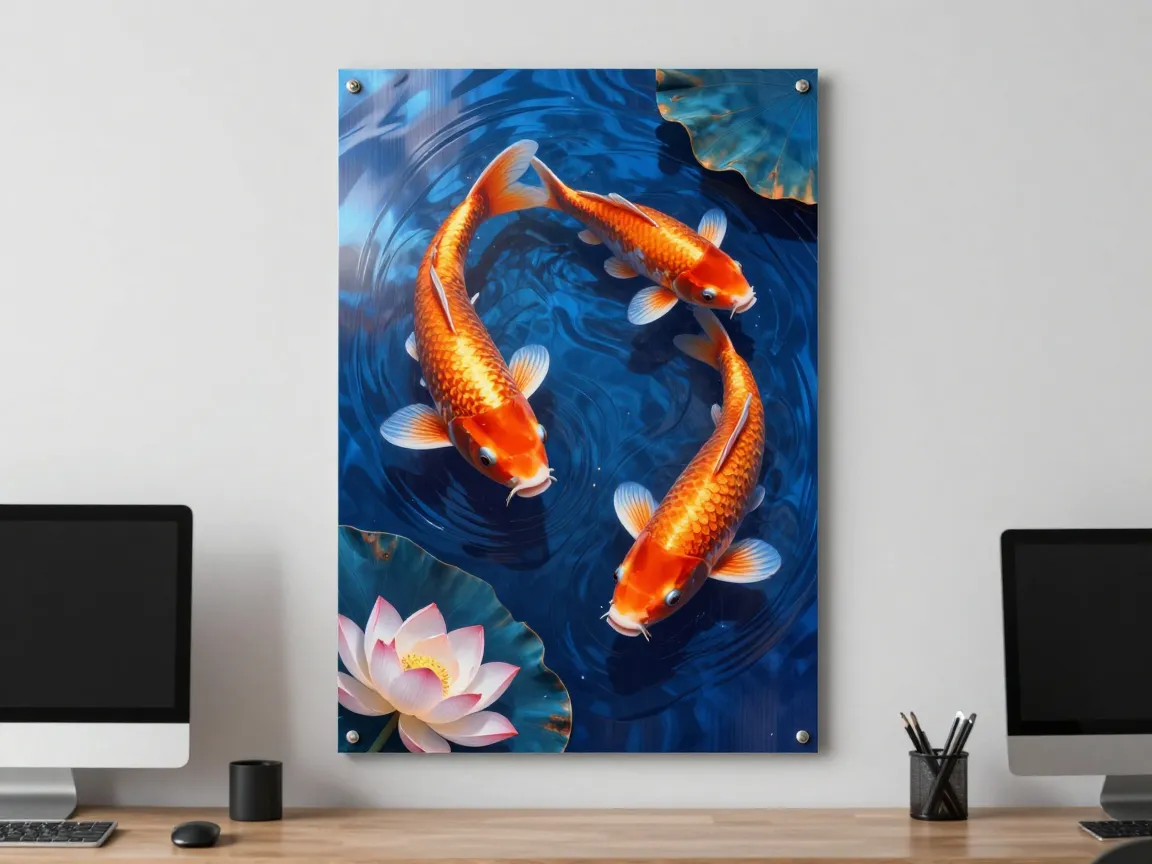
There is a category of koi artwork that suits spaces where canvas or paper would feel too delicate or too expected: metal prints. Aluminum art panels and metal posters bring a distinctive luminosity to koi imagery because the surface reflects ambient light in a way that paper and canvas do not. The result is a piece that appears to glow faintly, which works exceptionally well with the water-and-light themes inherent to koi compositions.
Platforms like Displate produce metal poster editions of koi designs that hang via a magnetic mounting system, no nails, no hardware beyond a single wall magnet, and swappable when tastes change. The format is particularly popular for home offices and gaming or creative studio spaces, where the slight industrial quality of the metal surface fits the aesthetic without looking out of place. A vivid koi composition in deep blue and orange on brushed aluminum reads very differently from the same image on a cotton canvas, and many buyers find the metal version easier to live with in a modern, hard-surfaced room.
Color saturation is higher on metal prints than on most paper alternatives, which means buyers should seek designs where the palette is intentional rather than accidental. A koi scene with strong tonal contrast, dark water, bright fish, clearly defined lotus elements, maximizes the material’s strengths. Muted or pastel-dominant designs can look washed out on the reflective surface, so test with a sample or review photos of the printed piece rather than relying solely on the digital preview.
One useful application for metal koi art is in spaces with high humidity, such as a bathroom with good natural light or a laundry room that doubles as a utility gallery. Unlike paper prints or canvas, aluminum panels are unaffected by moisture, so they retain their quality in conditions that would damage softer formats.
6. Custom Commission and Abstract Koi Artwork
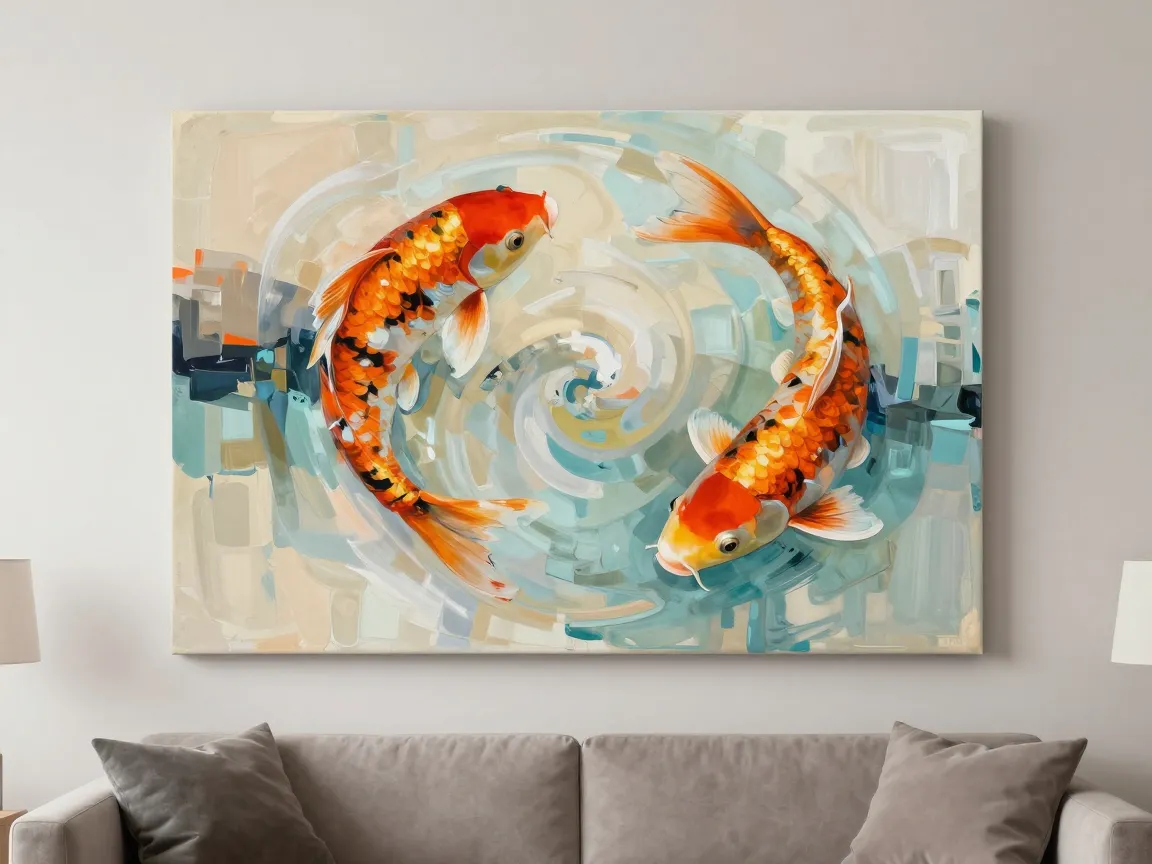
The previous five ideas all involve selecting from an existing catalog. The sixth takes a different path: commissioning a custom piece, or choosing an abstract interpretation of koi imagery that moves the subject away from literal representation entirely. This approach produces artwork that cannot be found on any shelf, and that singularity has genuine value both aesthetically and emotionally.
Custom koi commissions are more accessible in 2026 than at almost any previous point. Independent artists on Etsy and Behance accept commissions ranging from traditional Japanese ink paintings to contemporary acrylic work, and the communication process, sharing color references, room dimensions, and stylistic preferences, is streamlined enough that most buyers complete it comfortably without prior experience. Providing a photograph of the room where the piece will hang is the single most useful thing a buyer can do, since it allows the artist to calibrate the scale, palette, and contrast level to the actual space.
Abstract koi work deserves its own mention here because it broadens the audience considerably. A buyer who finds photorealistic fish imagery too literal or too traditional may respond strongly to a composition that uses koi as a structural element, the curve of a body becoming a brushstroke, the circular movement of two fish becoming a dynamic spiral, the pond surface rendered purely through layers of translucent color. These pieces carry the same symbolic associations with perseverance, quiet strength, and fluid motion without requiring the viewer to consciously register the subject.
Art Heroes and similar curated print platforms offer koi pieces in bold and abstract styles expressly positioned for modern living rooms where a conversation-starting visual anchor is the goal. A large abstract koi piece in beige, burnt orange, and soft teal, hung at eye level above a sofa, reads as confident and contemporary to a viewer who may not immediately identify the subject, and reveals its full meaning to those who look closer. That layered quality is what elevates a good piece of art above mere decoration, and it is what makes the custom or abstract route worth the additional consideration and, often, the additional cost.
Conclusion
Koi fish artwork has moved firmly beyond specialty decor and into the mainstream design conversation, with formats ranging from affordable woodblock-style prints to handcrafted textiles and luminous metal panels. The 6 breathtaking koi fish artwork ideas explored here cover that full range, so there is a viable option whether the goal is a low-commitment print swap or a fully custom commission.
The most useful next step is to identify the wall first: its dimensions, its light conditions, and what the room already contains. That information narrows the format and scale choices immediately, which makes the final artwork decision far more confident and far less likely to result in a piece that gets swapped out again next year.