Deep Sea Fishing Pics: What Makes Offshore Catch Photos So Epic
A 52-pound mahi-mahi glowing neon green and yellow under open-sky light, held at fish level by an angler whose grin says everything the caption doesn’t need to say. That single image, pulled from a charter gallery in late 2026, got more engagement than a dozen technically correct but lifeless boat-deck shots. The difference wasn’t the fish. It was everything around the fish.
Disclosure: This post contains affiliate links. As an Amazon Associate, we earn from qualifying purchases, and at no extra cost to you.
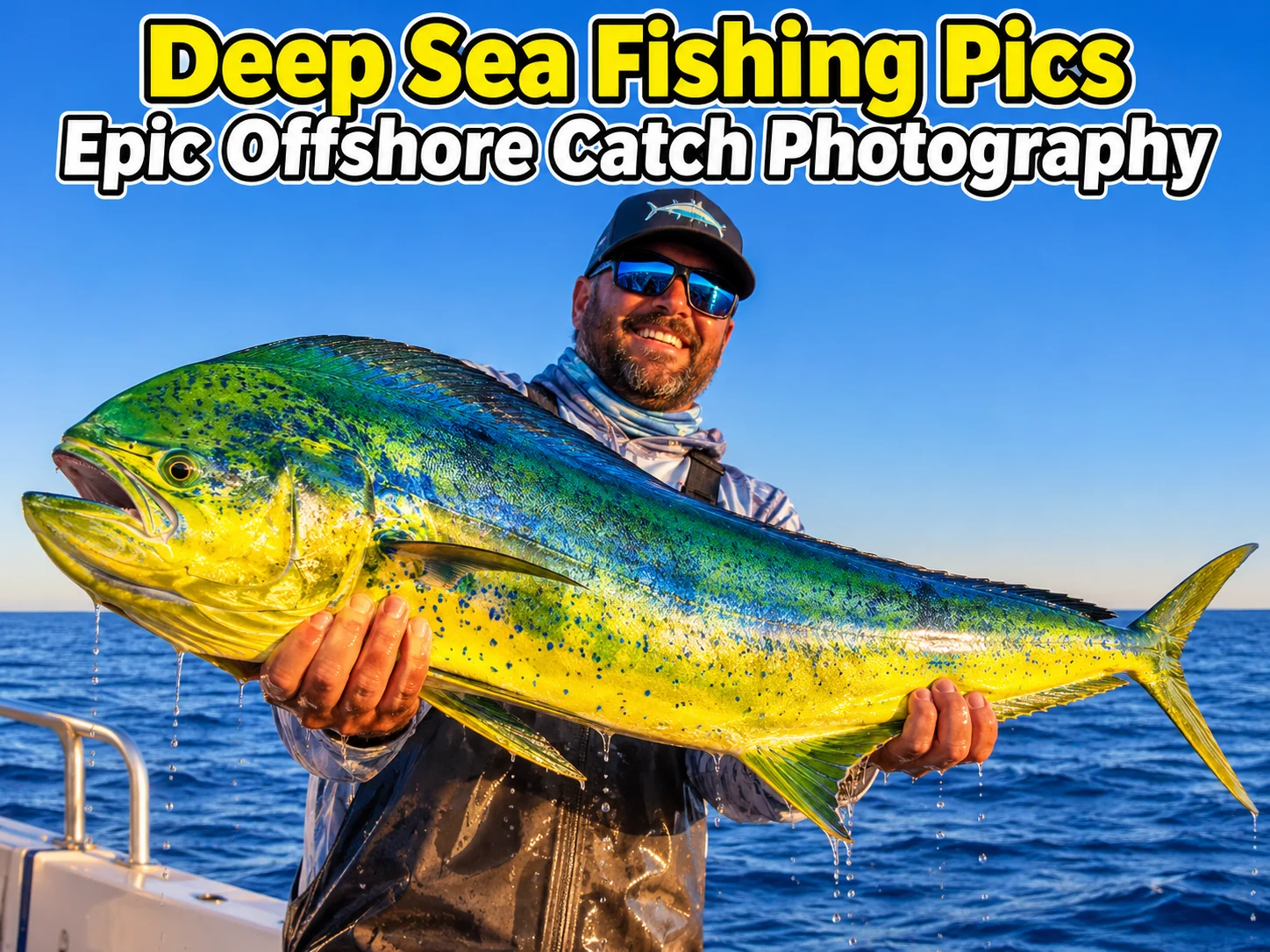
Deep Sea Fishing Pics: What Makes Offshore Catch Photos So Epic is a question worth answering seriously, because offshore catch photography has quietly developed a set of conventions that separate forgettable snapshots from images that actually spread. Those conventions mix camera technique, light physics, fish handling ethics, and human storytelling in ways most anglers haven’t stopped to map out.
Key Takeaways
- Natural light direction and shooting angle are the two fastest fixes for flat, dull catch photos
- Ethical fish handling, keeping the fish wet and limiting air exposure, now reads as part of what makes a photo look “epic” to an informed audience
- Scale, species identification, and clear weight data dramatically increase a photo’s shareability
- Burst mode and golden-hour timing capture live color and motion that posed shots almost never replicate
- The human story in the frame, age, effort, surprise, matters as much as the fish’s size
The Physics of Light That Separates Good Shots from Great Ones
NOAA Fisheries guidance is direct on this: keep the sun behind the photographer, not behind the subject. That single positioning decision eliminates the two most common offshore photo failures, a silhouetted angler and a washed-out fish. Mahi-mahi lose their electric green-yellow coloration within minutes of leaving the water, so the shot has to happen fast, and the light has to be working with you when it does.
Golden-hour light, the hour after sunrise and before sunset, adds warm side-lighting that pops the iridescent scales on species like marlin, wahoo, and dolphinfish in ways midday overhead sun never will. Expert fishing photographers point specifically to this window and to the practice of getting physically low, crouching to the fish’s level, so the open-water horizon fills the background instead of a cluttered gunwale or a pile of tackle.
Color temperature also explains why fish boxes photographed in direct morning light look dramatically different from the same catch photographed under a boat’s shade canopy. The shade version reads flat and gray. The direct-light version reads like a trophy wall.
1. Light Direction and Timing
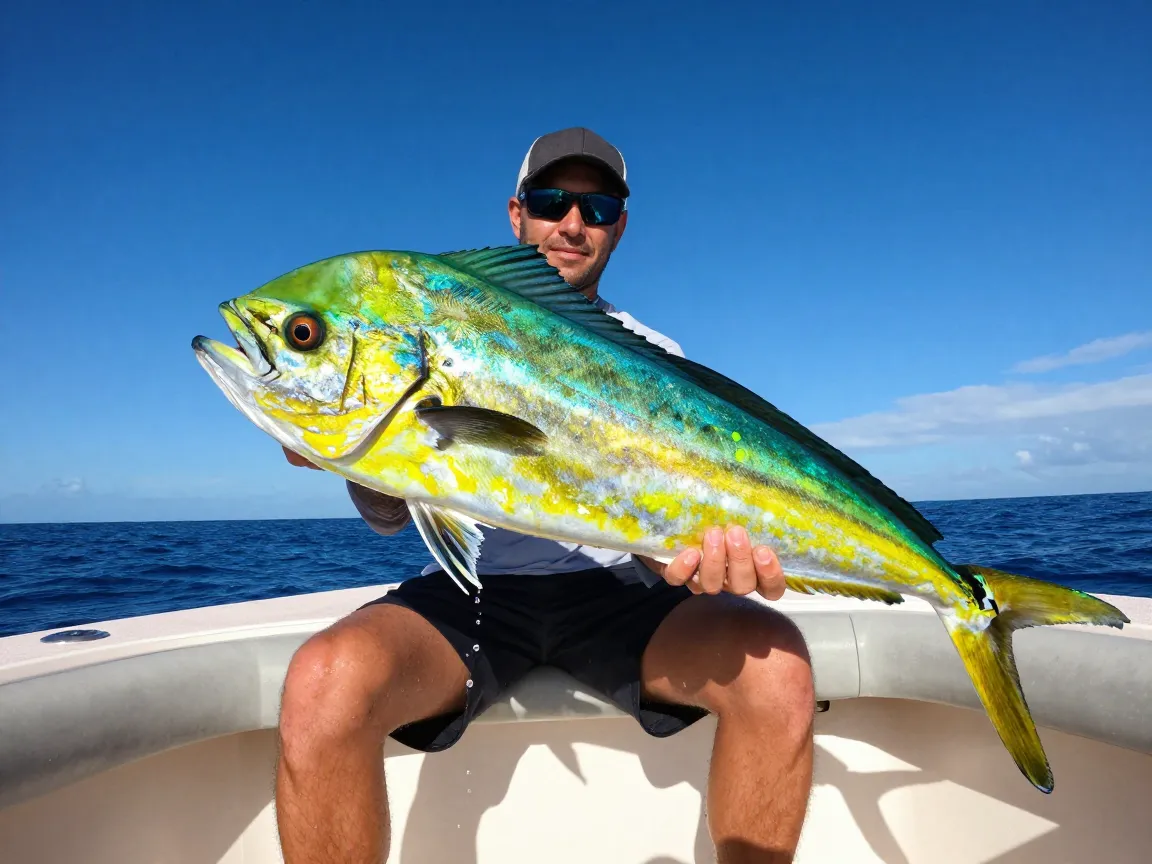
Face the sun toward the photographer, not into the angler’s face. This keeps harsh shadows off the fish and maintains the vivid color that makes offshore catches visually distinct from freshwater photos. The rule applies at any time of day but matters most between 10 a.m. and 2 p.m., when overhead sun creates deep eye-socket shadows on anglers and kills scale iridescence entirely.
Timing within the catch itself is equally non-negotiable. The moment a large pelagic fish comes out of the water, its color is at peak saturation. Mahi-mahi, in particular, can shift from bright blue-green-yellow to a dull tan-grey within two to three minutes of air exposure. The camera needs to be ready before the fish leaves the water, not after the angler has taken a few steps across the deck.
2. Shooting Angle and Composition
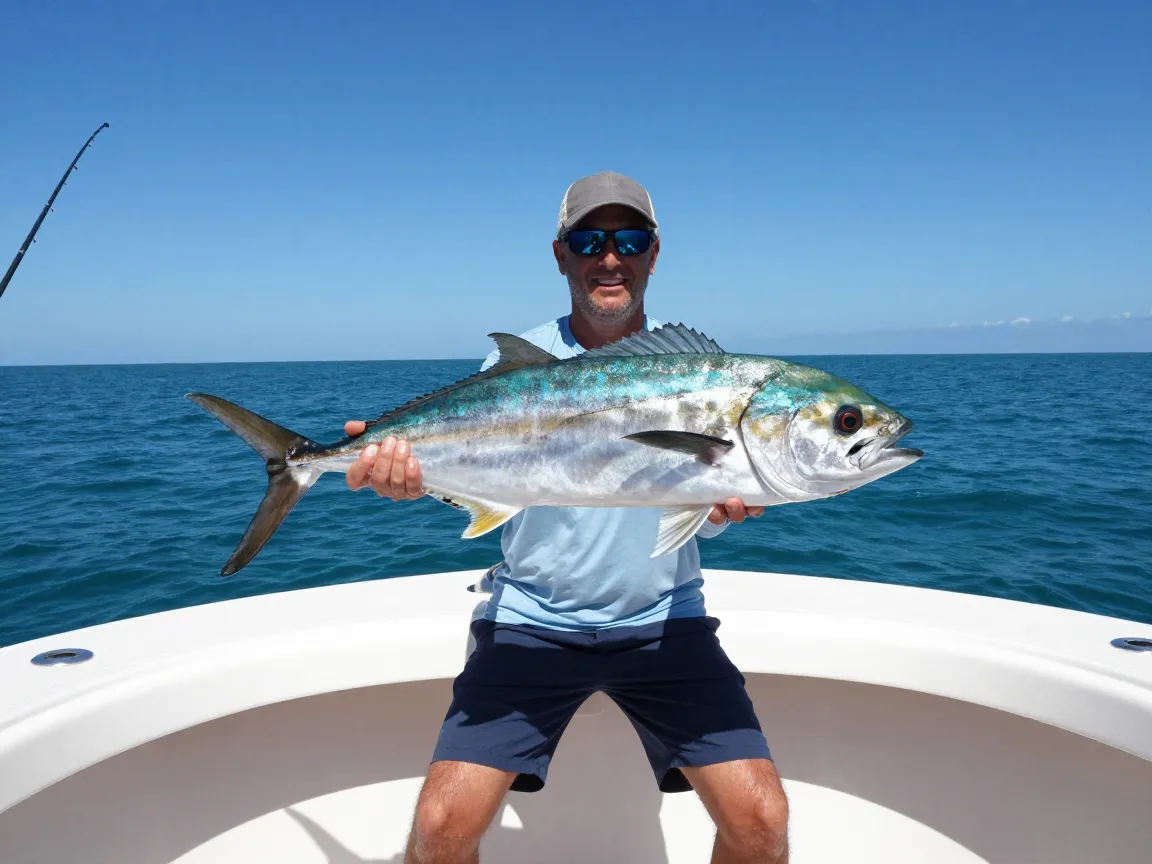
Get low. Standard standing-height phone shots make most fish look smaller than they are because the photographer is looking down at the subject. Dropping to knee height or lower, so the lens is roughly level with the fish, creates a perspective where the animal genuinely fills the frame. Held slightly toward the camera, not at arm’s length, the fish appears larger without any optical trickery that would look dishonest.
The background matters nearly as much as the subject. Official tip sheets specifically recommend framing the catch against open water rather than the boat’s interior, dock equipment, or other people. A clean blue or blue-green horizon gives the eye nowhere to wander except to the fish and the angler. Charters with strong gallery reputations consistently apply this discipline.
3. Ethical Handling as Visual Storytelling
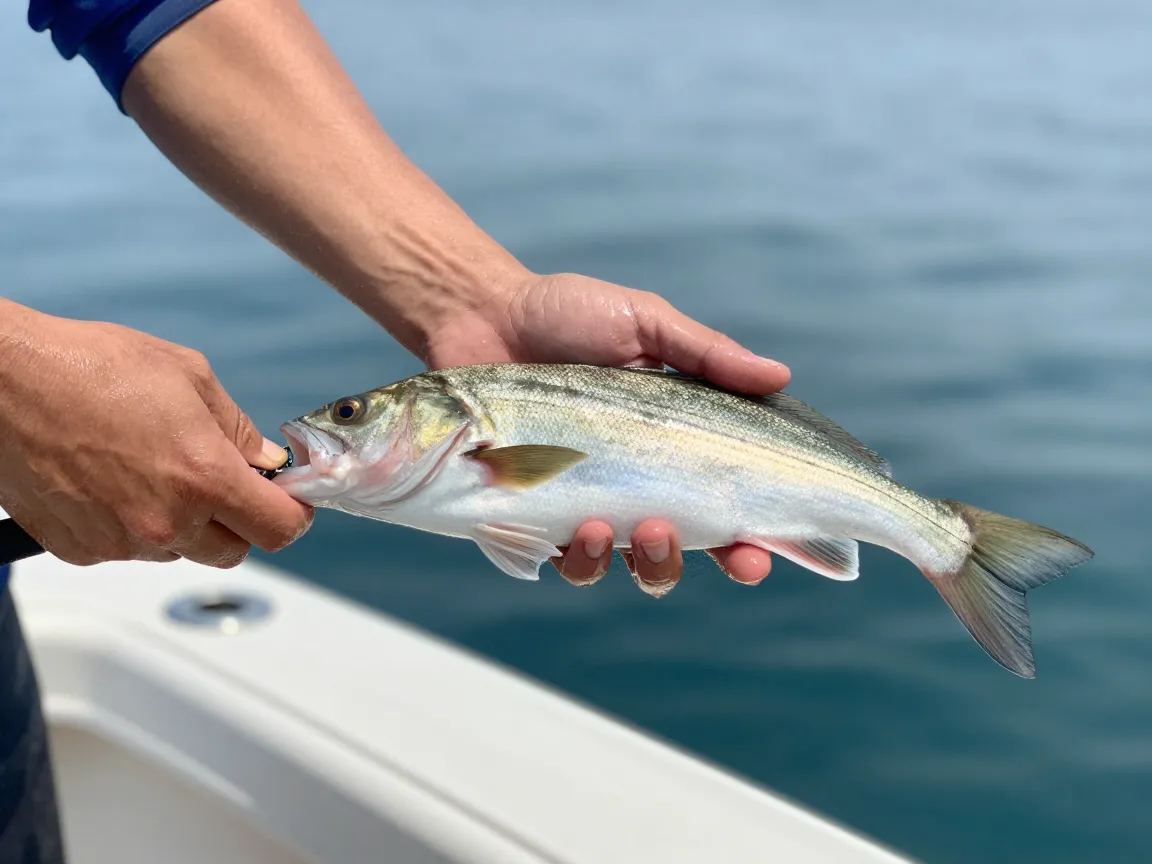
A photo where the angler’s hands are visibly supporting the fish from underneath, the fish is wet, and the interaction looks controlled communicates something to anyone who fishes. Conservation-oriented photography guides now describe the “perfect fish selfie” as one where fish health is visibly prioritized. That means short air exposure, wet hands, no fingers near the gills, and the fish returned to the water within seconds of the shot.
This matters for shareability too. Posts that show obviously stressed or damaged fish receive negative comments that dominate the thread and suppress reach on social platforms. Posts that show a healthy, vivid, respectfully held fish tend to generate admiration and shares from both anglers and non-anglers. The ethical and the photographic incentives now point in the same direction.
4. Scale, Weight, and Species Data
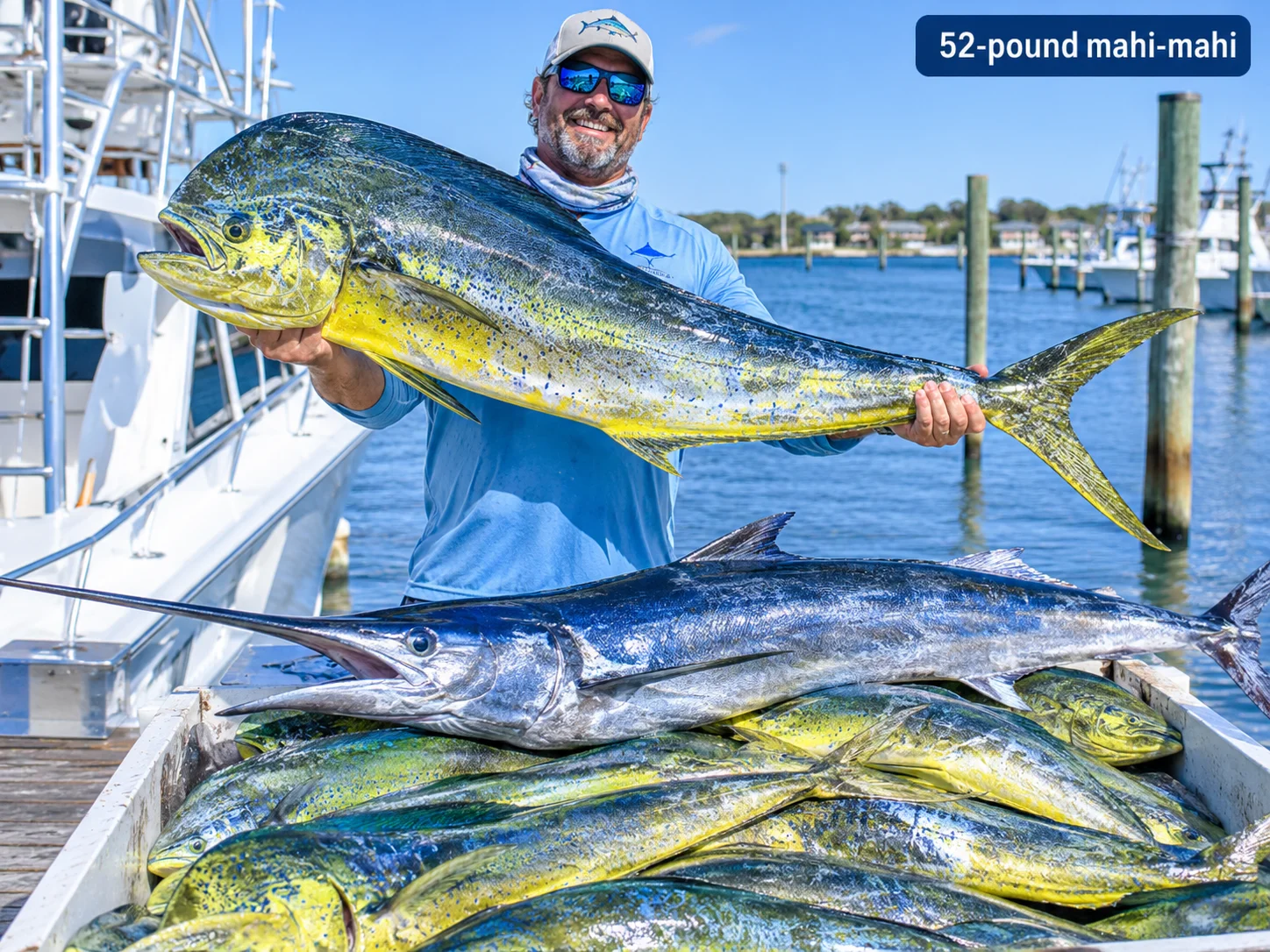
Numbers tell a story photos can’t fully tell alone. When a Reel Addiction III charter gallery caption reads “52-pound mahi-mahi” alongside a full-frame shot of the fish and angler, the weight transforms the image from “nice catch” to “epic catch” for anyone who knows how big a 52-pound dolphinfish is. Species names matter for the same reason. “Big fish” means nothing. “Pacific blue marlin” means something specific.
The national angler bragboard model, where captions consistently list weight, species, and location, has become the community standard for a reason. Anglers scrolling those galleries compare numbers, not just aesthetics. A photo without data is a missed opportunity to communicate scale to the people most likely to share it.
Fish boxes also carry this weight-and-quantity story. An overflowing box of mahi-mahi topped with a blue marlin communicates a successful offshore day faster than any single-fish portrait. Charter galleries that include both individual trophy shots and full-box or rail shots cover both storytelling modes.
5. Motion, Effort, and the Fighting Chair
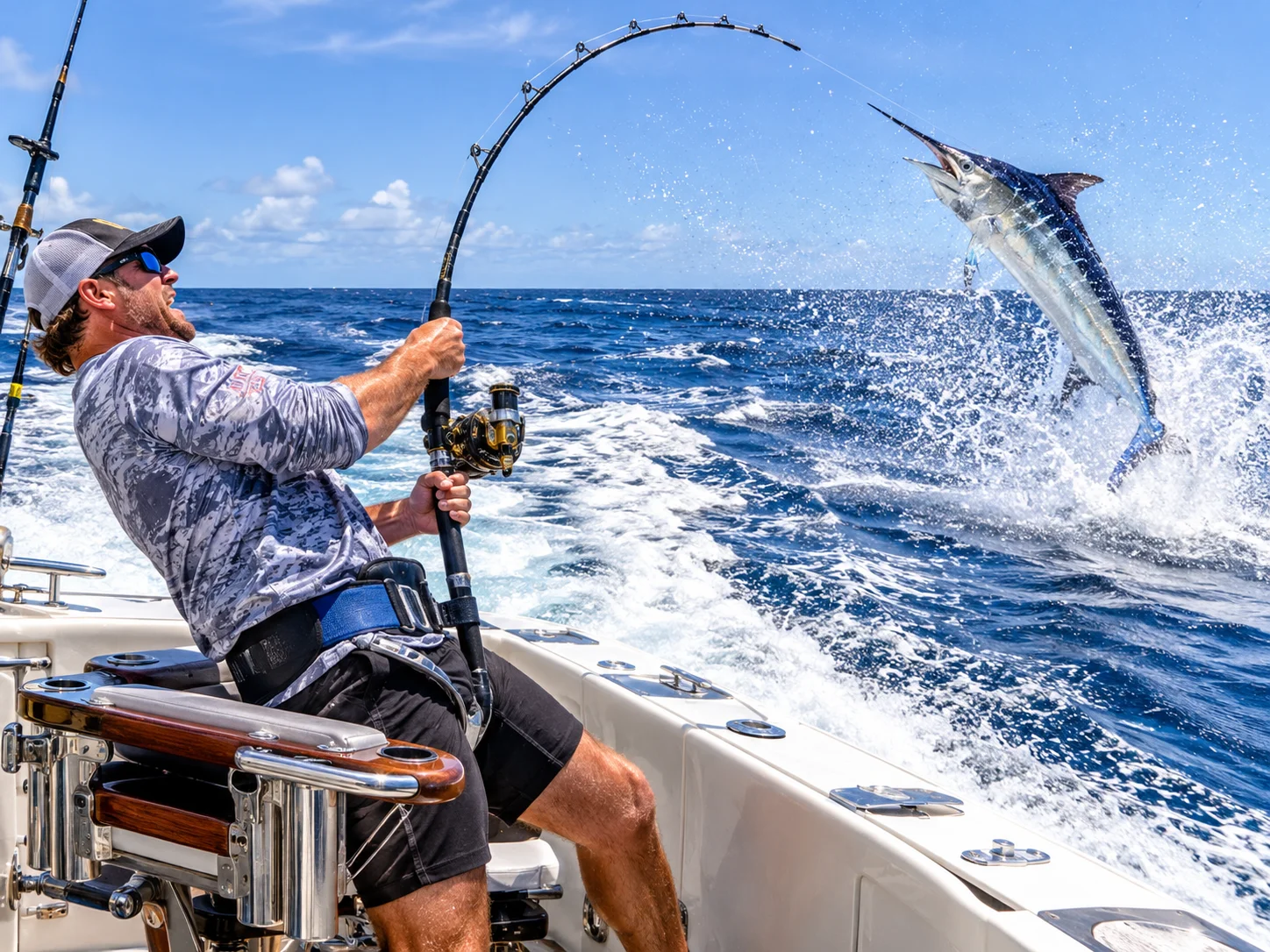
Stock footage libraries value specific offshore moments: bent rods, anglers straining backward in fighting chairs, wake trails behind a big-game boat running out to the canyon. These images sell because they show the effort component that a dockside pose can’t replicate. The fight matters to the story.
Burst mode is the technical tool that captures these moments. Set at five to ten frames per second, burst mode catches the tail flick at the surface, the spray off a leaping marlin, and the exact second when the fish comes broadside to the light. Any one of those frames can be the keeper. Without burst mode, you’re gambling on a single moment that may already be over by the time the shutter fires.
The celebrity catch model illustrates why effort narrative amplifies a photo’s reach. When Big Boi shared dockside images of a 99-inch, 200-pound striped marlin in November 2026, the detail that he fought the fish for roughly 50 minutes became part of every caption and headline that shared the image. The fish’s size alone would have made it notable. The duration of the fight made it shareable.
6. The Human Story in the Frame
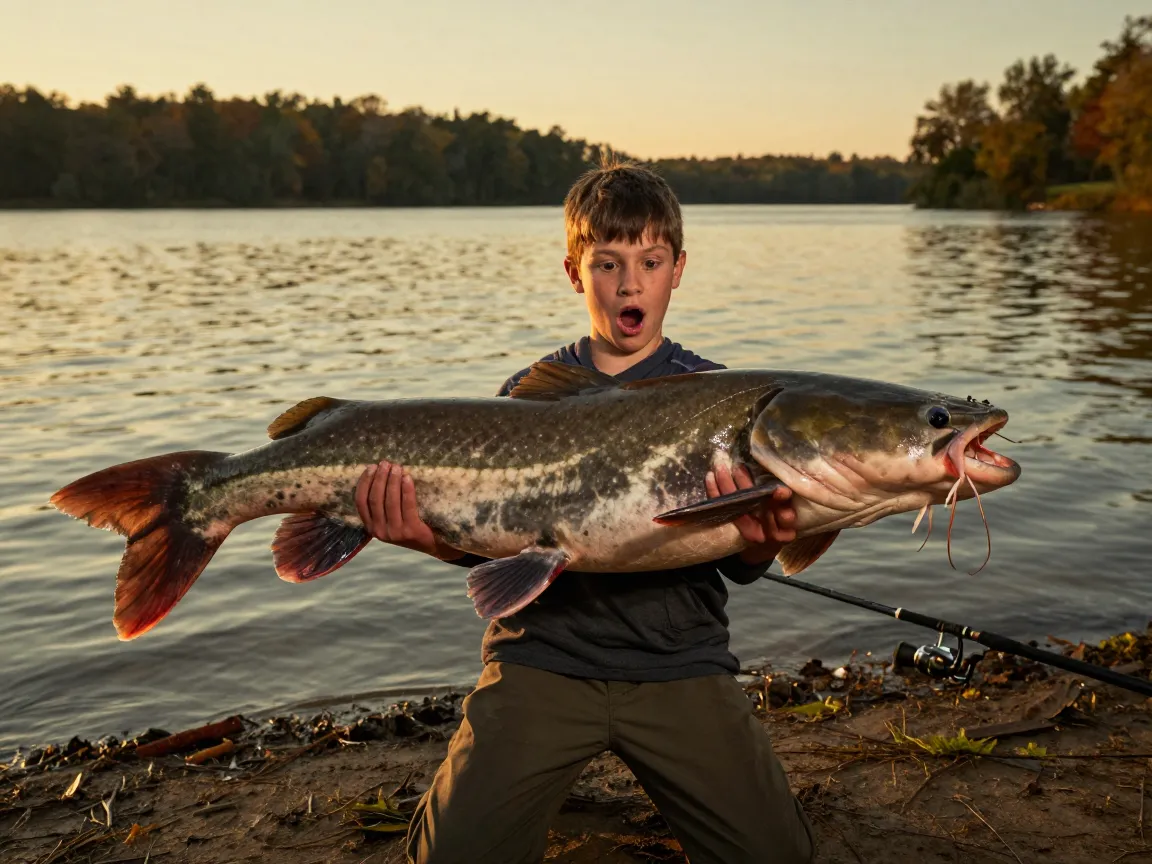
A 13-year-old pulling a monster catfish from depth generates a different kind of viral reach than a professional angler holding the same fish. The Landon Anthony catch from Lake Wylie in November 2026 spread widely because the size of the fish relative to the angler’s age and frame created an immediate visual contrast. The surprise element, a young kid versus a massive fish, did work that the fish’s weight alone could not.
The same logic applies to offshore catch photography. First-time offshore anglers, senior anglers, groups of kids on a charter, or unlikely combinations of angler and species all add a human narrative that pushes a technically average photo into wide-share territory. The image doesn’t have to be technically perfect if the story is immediately legible from the frame.
What Professional and Award-Winning Offshore Photography Adds
The Ocean Photographer of the Year 2026 selections show how far the definition of “epic” fishing imagery has expanded. Winning images included aerial views of fishing fleets moored in sapphire water, with boat patterns read as abstract shapes from altitude. These images aren’t catch photos in the traditional sense, but they’re part of the same conversation about what offshore fishing looks like from outside the angler’s immediate perspective.
For working offshore photographers, this expansion of scope is a practical cue. The boat running out at dawn, shot from a low stern angle with spray lifting off the bow, is as commercially valuable as the fish itself. The long shot of a fighting chair from behind, angler silhouetted against open ocean, tells a story about what offshore fishing feels like. Regional charter collections, like Naples “Catch of the Day” galleries updated through mid-2026, increasingly mix individual catch portraits with these atmospheric context shots.
The practical implication: carry the camera before the lines are set and after the fish is released, not only during the 30 seconds when the fish is in someone’s hands.
Deep Sea Fishing Pics: What Makes Offshore Catch Photos So Epic Across Different Species
Not all offshore species photograph equally. The table below maps key visual characteristics by species type for practical field reference.
| Species | Peak Color Window | Key Visual Feature | Best Angle |
|---|---|---|---|
| Mahi-mahi | First 2-3 minutes out of water | Neon green-yellow-blue iridescence | Low, fish at frame center |
| Blue/striped marlin | At the surface during fight | Bill length, body size relative to boat | Boat-level or aerial during jump |
| Yellowfin tuna | Dockside, in box | Deep blue-silver body, yellow finlets | Top-down in full fish box |
| Wahoo | Immediately boatside | Distinct lateral stripes | Side profile, horizontal |
| Amberjack | Dockside | Amber lateral stripe, mass | Held horizontally, weight visible |
| Shark | Water-side or quick boat-side | Body length vs. angler | Full-length comparison shot |
Species variety within a single charter day’s gallery also increases overall impact. Regional deep-sea charter collections with amberjack, shark, snapper, and mahi-mahi all represented in one session communicate the depth of an offshore fishery better than a single-species spread.
Practical Checklist for Offshore Catch Photography in 2026
The following six factors, ordered by the sequence in which they apply during a real fishing day, cover the technical and ethical fundamentals that separate an epic offshore photo from a standard one.
Before the shot:
- Camera charged and accessible before lines are set
- Identify the best low-clutter spot on the boat with an open-water background
- Confirm light direction; plan to position the photographer with sun at their back
During the shot:
- Wet hands before touching the fish
- Support the fish from underneath, never by the jaw alone on a large pelagic species
- Shoot in burst mode to capture spray, motion, and peak color
- Get low; lens at fish level
- Hold fish slightly toward the camera, not at arm’s length
After the shot:
- Include weight, species, and location in the caption
- Return the fish within seconds of the final frame
- Review for background clutter and crop if needed before posting
Deep Sea Fishing Pics: What Makes Offshore Catch Photos So Epic When They Go Viral
The consistent thread across the most-shared offshore fishing images in 2026 is legible context. The viewer, often someone who doesn’t fish, needs to understand immediately why this catch is significant. That understanding comes from three things: visible scale, a human expression or story, and specific data in the caption.
A technically perfect photo with no caption data performs below a mediocre phone shot that includes “52 lbs, blue water, 60 miles out.” The numbers give non-anglers the reference point they need to pass the image along with confidence. They’re sharing a fact, not just an aesthetic.
Fishing images that go wide also tend to have one clear focal point. The fish, or the angler’s reaction, or the size comparison, not all three competing at once. The best offshore photos guide the eye immediately and then give it context. That’s the same thing that makes any photograph work, but the offshore environment, open water, vivid species, physical scale, makes it unusually achievable when the basic conditions are met.
Conclusion
The gap between a forgettable deck snapshot and an offshore catch photo that spreads comes down to preparation, light, and the 30 seconds around the moment the fish is in someone’s hands. Sun direction and shooting angle can both be adjusted before a single fish is caught. Burst mode costs nothing to turn on. Ethical handling, wet hands and quick return, produces better photos and healthier fish simultaneously.
For your next offshore trip, set the camera to burst mode the night before, identify your clean-background shooting spot when you board, and have someone designated to shoot from low and fast the moment a fish comes up. Write the weight, species, and location into every caption before you post. Those four steps will move your deep-sea fishing pics from the bottom of a charter gallery to the top of a brag board, and they’ll do it without a single piece of additional gear.