Ducks Unlimited Tattoo Designs For The Dedicated Waterfowler
Roughly 10 million ducks and waterfowl are harvested in the United States every year, and for many of the hunters behind that number, a single season is just one chapter in a decades-long commitment to the marsh. Some of that commitment ends up permanent. If you’ve been looking at the 6 Ducks Unlimited tattoo designs for the dedicated waterfowler that keep appearing in hunting forums, waterfowl subreddits, and AI tattoo galleries, well over 500 duck hunting tattoo ideas are now indexed on platforms like Tatship alone, the options are wider and more specific than most people expect. These designs aren’t random duck art. They map directly onto the experiences, relationships, and conservation values that define a serious waterfowler’s life.
Disclosure: This post contains affiliate links. As an Amazon Associate, we earn from qualifying purchases, and at no extra cost to you.
Key Takeaways
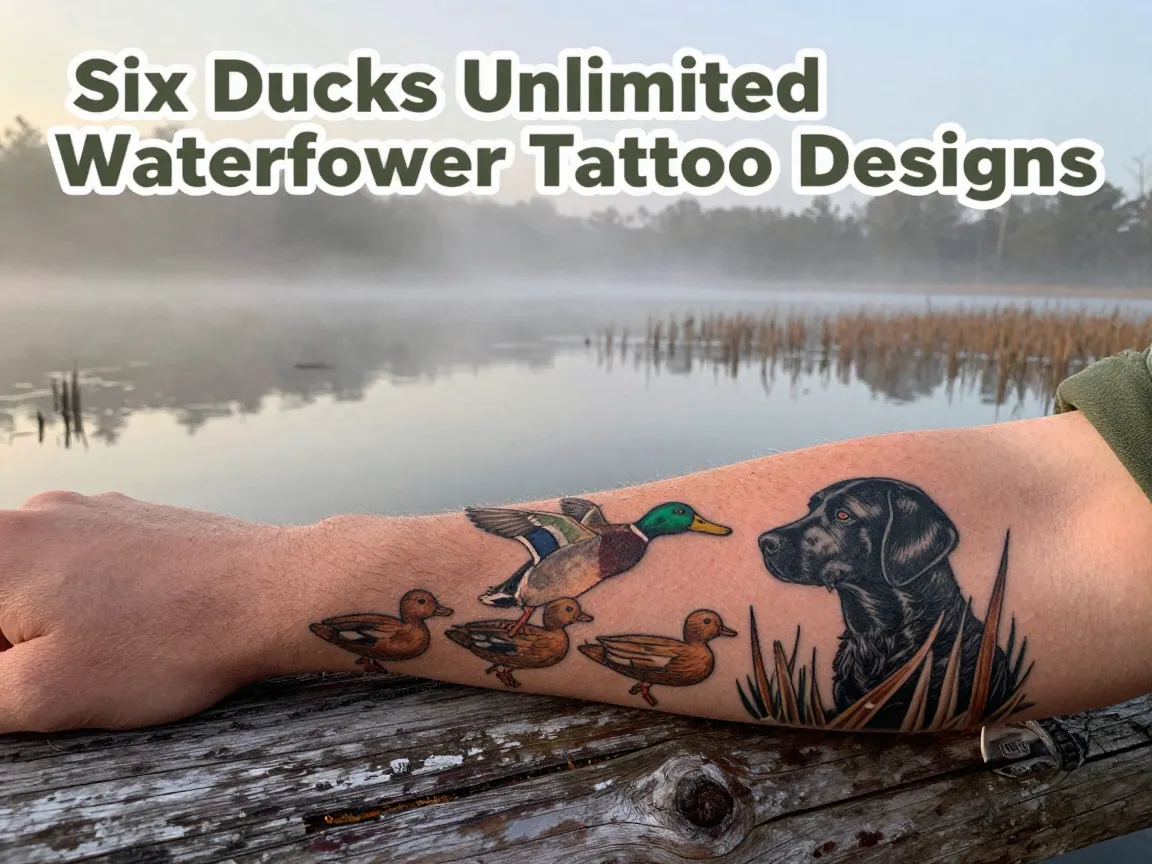
- Six recurring design archetypes dominate waterfowl tattoo culture: the cupped mallard, the working retriever, the flooded timber silhouette, the duck band close-up, the state-outline marsh scene, and the flying duck logo silhouette.
- Placement matters as much as subject. Shoulder, forearm, and thigh offer the surface area that detailed marsh scenes require.
- Personal elements, season dates, family names, or a deceased hunting partner’s call, transform a generic duck image into a tribute piece.
- Conservation themes overlap naturally with Ducks Unlimited branding, making these designs meaningful to hunters who support wetland preservation.
- Humor and stylization are both legitimate in this space; the waterfowl community embraces both realism and pop-culture mashups.
1. The Cupped Mallard Over Decoys
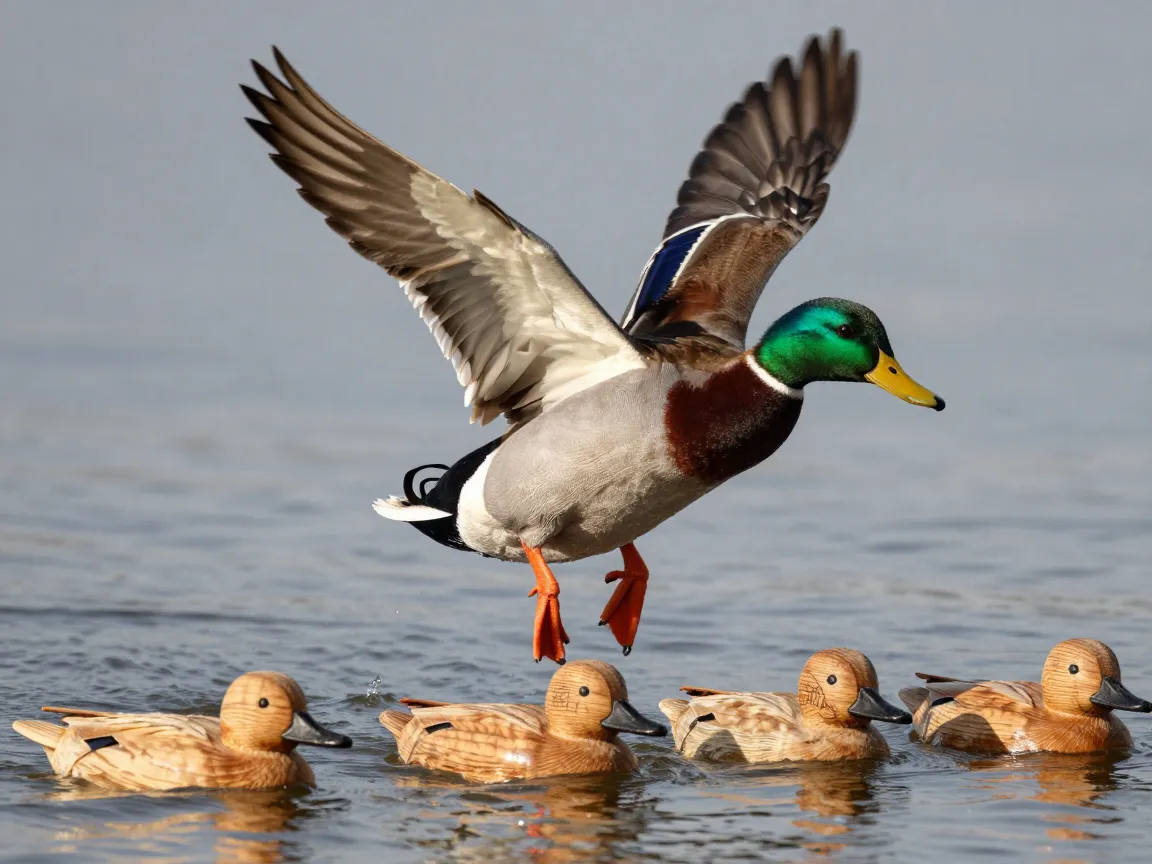
A drake mallard banking hard with wings cupped and feet dropped toward a spread of decoys is the single most requested image in duck hunting tattoo galleries. BlackInk AI’s collection of more than 4,100 duck tattoo ideas lists this composition among its most-generated designs, and it’s not hard to see why. That moment, the bird committed, dropping into range, is what every duck hunt builds toward. Capturing it in ink is straightforward shorthand for the whole sport.
The design works best when the artist treats the feathers seriously. A mallard’s iridescent green head and chestnut chest are hard to render in flat color, but a skilled realism artist can produce something that looks almost photographic. Some hunters prefer black-and-grey work with heavy contrast to let the anatomy of the wing carry the image. Either direction, ask your artist to study reference photos of live birds, not cartoons, because the wing position on a cupped bird is specific and hunters will notice if it’s wrong.
Decoy placement gives the composition depth. Three to five wooden decoys on a waterline below the bird anchor the scene in a recognizable context. Some waterfowlers add their favorite decoy brand’s stamp or a hand-carved family decoy into this element, turning it into something personal rather than generic. Forearm and upper arm placements are common for this design, though a thigh piece allows for a full spread of decoys with more negative space to let the scene breathe.
2. The Retriever Breaking Through Cattails
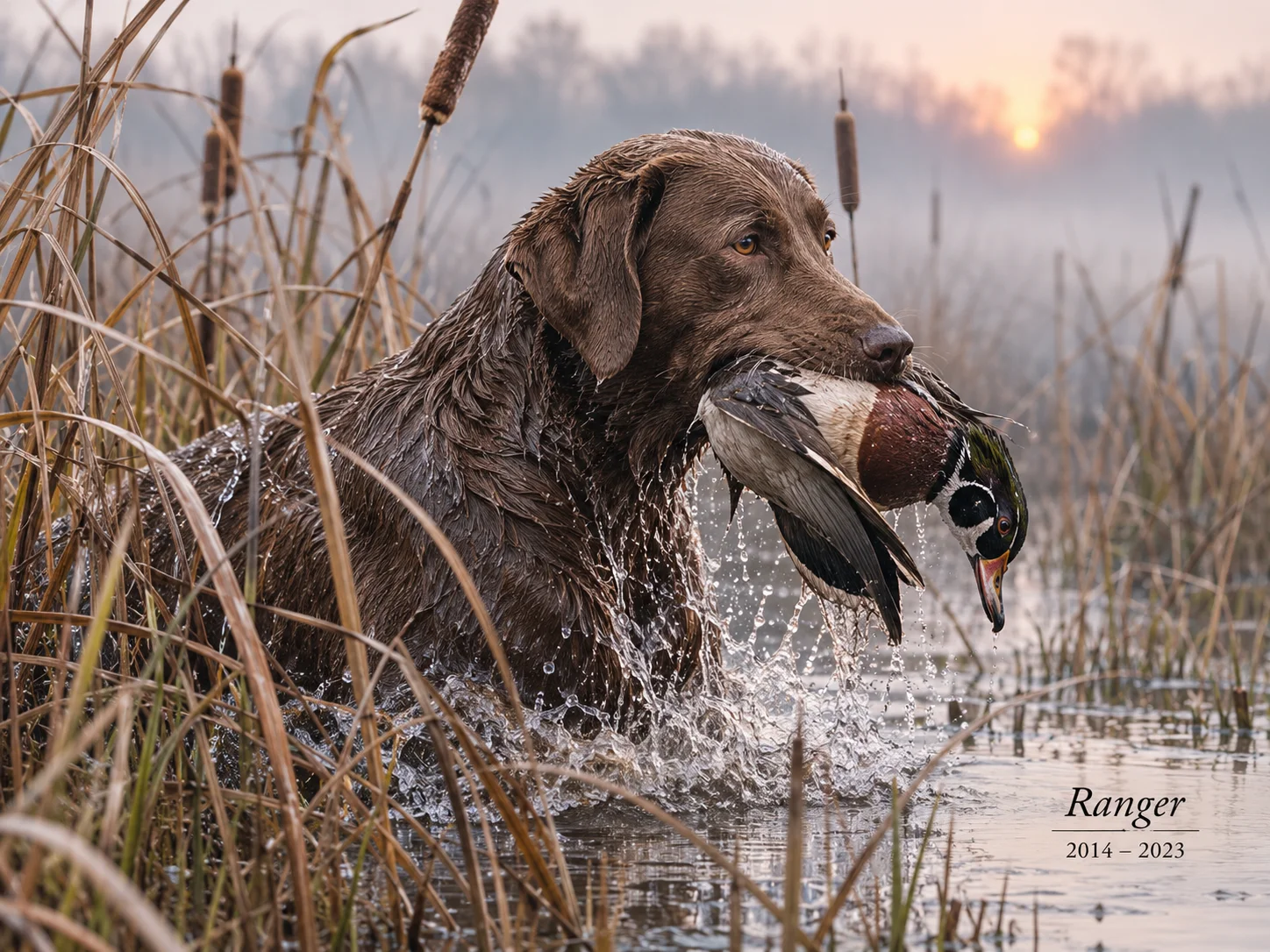
A Labrador or Chesapeake Bay retriever holding a bird, water still streaming from its coat, is the design that speaks to hunters who know the dog is the other half of the morning. These dogs put in more work than any hunter, and waterfowl communities on Reddit have shown finished sleeves where the retriever piece anchors the entire arm, often paired with a wood duck or mallard in the background.
Fine-line black ink handles this subject particularly well because fur texture responds to linework rather than block shading. The key detail most artists miss is the water: droplets flying from the coat, a splash ring at the dog’s chest, the cattail stems bending slightly. Those environmental elements are what separate a credible hunting scene from a pet portrait. Tell your artist you want the marsh in that image, not just the dog.
If you’ve lost a hunting dog, this design becomes something else. Many serious waterfowlers add the dog’s name, breed markings, or the year they hunted together as a small text element beneath or beside the piece. The WaterfowlChoke article on duck hunting tattoo ideas specifically identifies the retriever design as one of the most emotionally significant in the hunting tattoo space, precisely because the dog-and-hunter bond in waterfowling is so direct and so often cut short. Shoulder blade and chest placements are both popular here, giving the dog room to move across a larger canvas.
3. The Flooded Timber Silhouette at Dawn
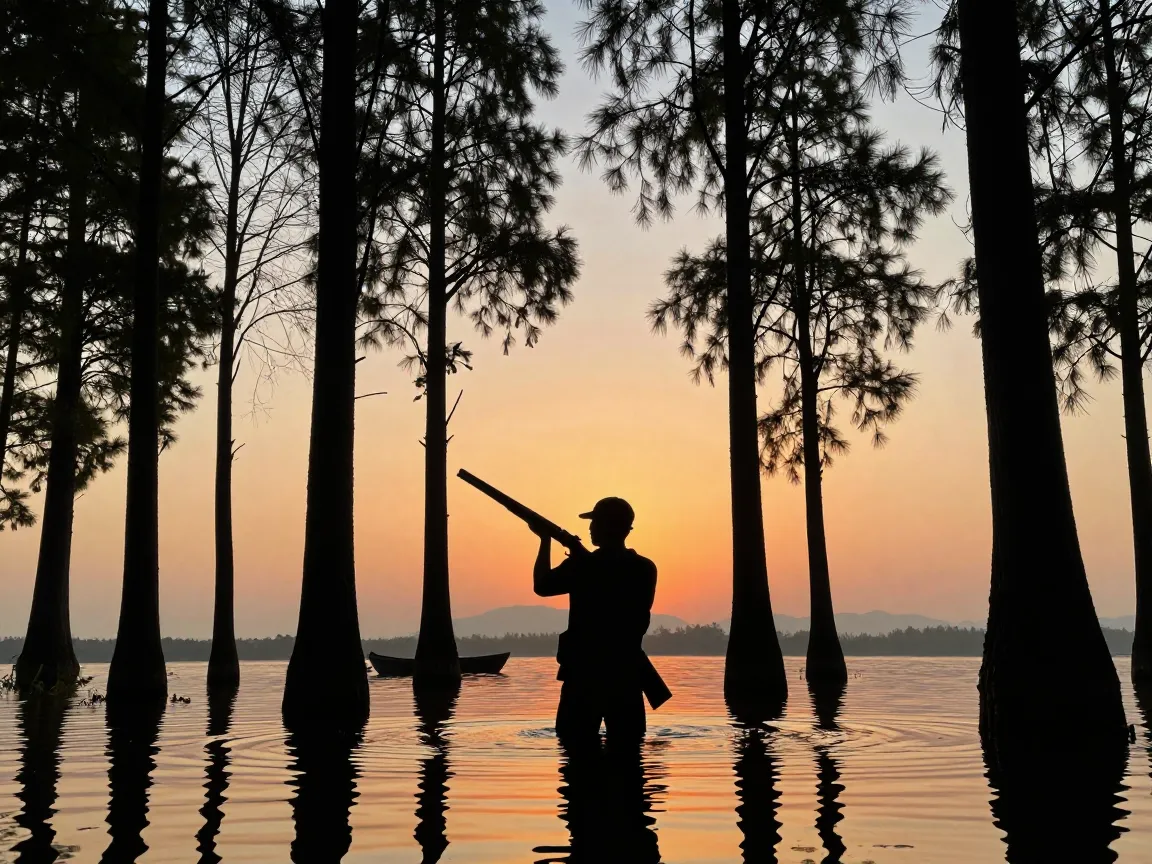
Few images in waterfowl hunting carry more atmosphere than a hunter standing waist-deep in flooded timber, shotgun up, with a sunrise bleeding through the canopy. As a tattoo, this design leans into silhouette work, which makes it one of the more forgiving choices technically while still producing striking results. The contrast between a fully blacked-out figure and a detailed, warm-toned sky is a composition that tattoo artists with any experience in illustrative work will understand immediately.
The key decision is whether to include color. A fully black-and-grey piece with just the suggestion of a horizon line reads as timeless and clean. Adding amber, orange, and pale blue to the sky turns it into something closer to a painting. Both approaches appear frequently in the r/Waterfowl and r/DuckHunting communities, where hunters post finished pieces and ask for feedback before committing. If you want color, go to an artist who specializes in color realism, not someone whose portfolio is mostly traditional bold-line work. Sunrise gradients done poorly fade into muddy browns within a few years.
Thigh and ribcage placements suit this design because the vertical format, tall cypress trees rising from water, maps naturally onto a taller, narrower body panel. Some hunters add a boat or blind outline at the base of the scene, grounding the silhouette in their specific hunting style. If you hunt flooded Arkansas timber, that detail is different from hunting a Saskatchewan pothole, and a good artist can capture that specificity if you bring reference photos of your actual location.
4. The Duck Band Close-Up
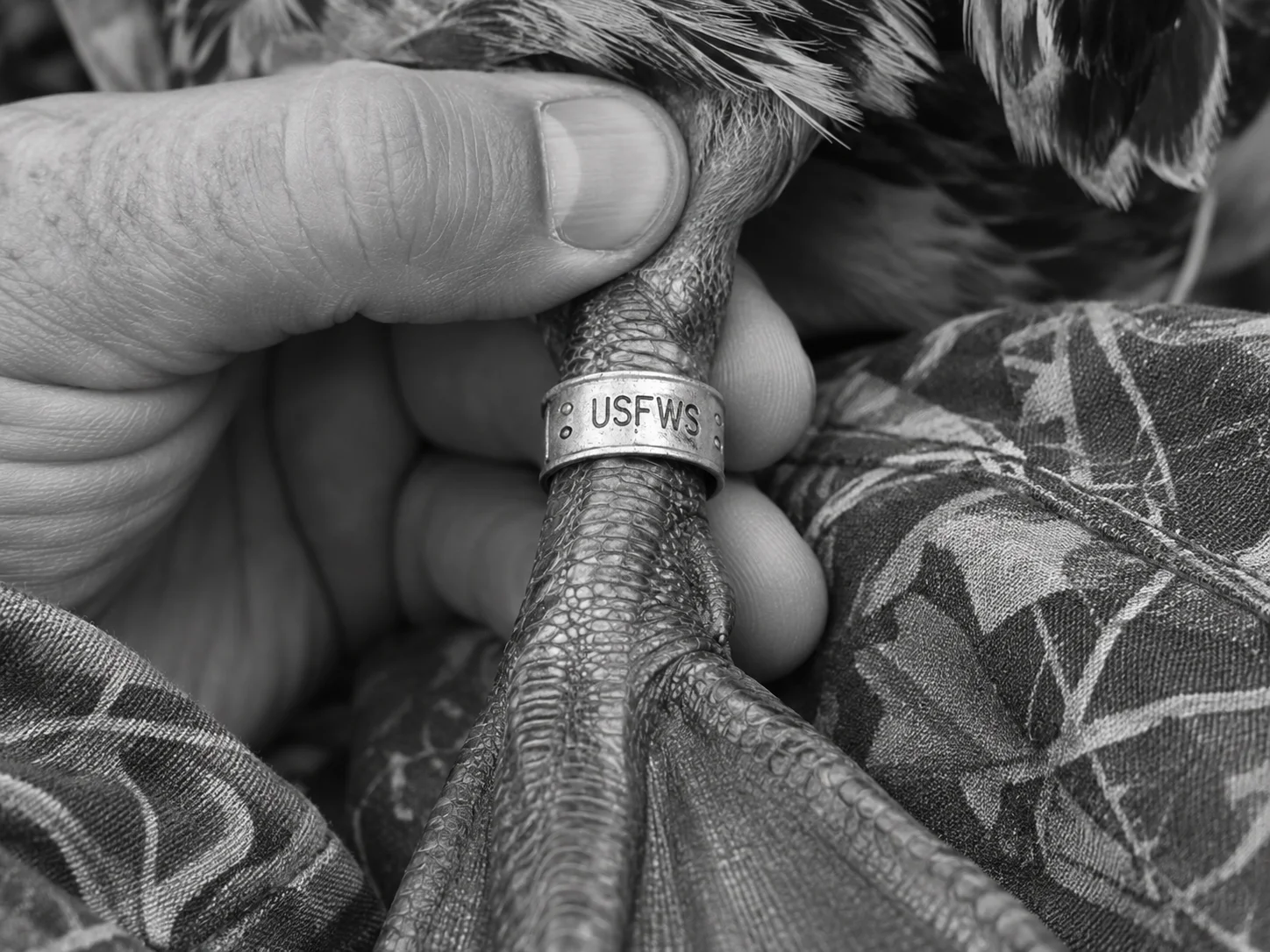
A banded duck leg is a small, specific image that communicates immediately to any serious waterfowler. Recovering a band is a genuine milestone. The U.S. Fish and Wildlife Service’s Bird Banding Laboratory has tracked millions of banded birds, and hunters who recover one typically register it, keep the band, and remember that bird. Getting that band tattooed, sometimes with the actual band number rendered in the design, is the waterfowl equivalent of a hunter’s trophy mount.
The image itself is compact. A scaly duck foot with a U.S. Fish and Wildlife aluminum band around the leg, perhaps held between a hunter’s fingers or resting on a camo sleeve, fits cleanly on a wrist, inner forearm, or calf. It doesn’t require a large placement to be recognizable, which makes it one of the few duck hunting tattoos that works as a standalone small piece rather than part of a larger sleeve or panel. Black-and-grey realism is the standard approach, though some hunters ask for a photorealistic rendering that includes the USFWS text on the band itself.
The personal story behind this design is usually specific: a particular season, a particular bird, a particular hunt with family. That backstory is worth writing down and sharing with your artist, because it often surfaces in small compositional choices. Where does the band sit in the frame? Is there a hand holding it? What’s in the background? The answers change based on the actual memory, and that specificity is what distinguishes a meaningful piece from a stock image transferred to skin.
5. The State-Outline Marsh Map
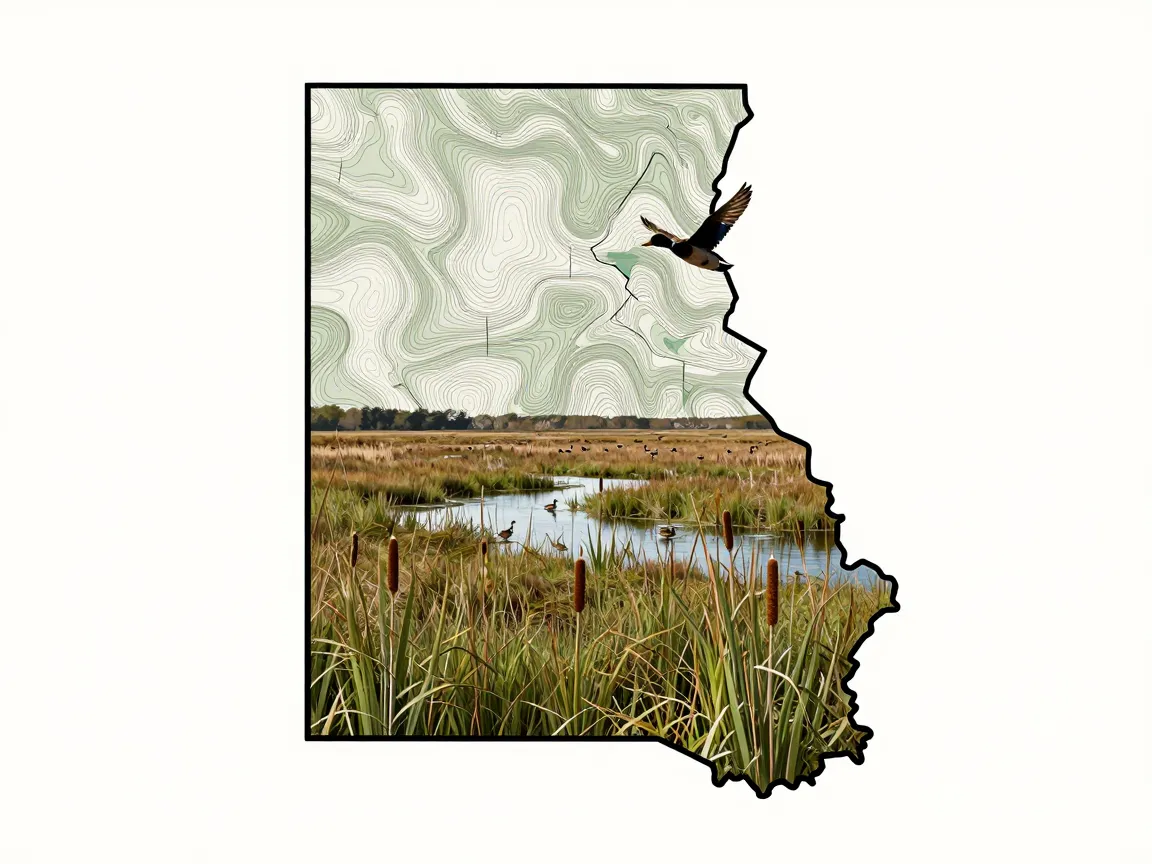
A state silhouette filled with a marsh scene, flyway lines, or a detailed wetland map is one of the fastest-growing formats in hunting tattoos generally, and waterfowlers have adapted it in ways that go beyond simple state pride. This design maps your hunting identity onto geography. If you grew up hunting the Mississippi Flyway out of Louisiana or chased divers on Lake Erie in Ohio, your state outline contains the whole story.
The interior fill is where this design becomes interesting. Some artists render the inside of the state as a topographic marsh map, pulling real contour lines from public land hunting areas. Others fill it with a silhouetted marsh scene including cattails, open water, and a flock of ducks on the horizon. The more adventurous versions include a DU-style flying mallard silhouette positioned over the specific county or region where the hunter actually spends most mornings. That level of specificity requires planning: bring a printed topo map or a screenshot from onX Hunt or Google Earth to your artist consultation.
Forearm and calf placements handle the state outline format well because both surfaces are roughly the right shape for most U.S. state silhouettes. Texas and California require a wider surface; a smaller state like Delaware works almost anywhere. If you hunt multiple states or spend your seasons chasing the full Pacific Flyway from Canada down through California, a composite design linking two or three state outlines along a flyway route turns the map concept into a migration narrative.
6. The Flying Duck Logo Silhouette With Personal Text
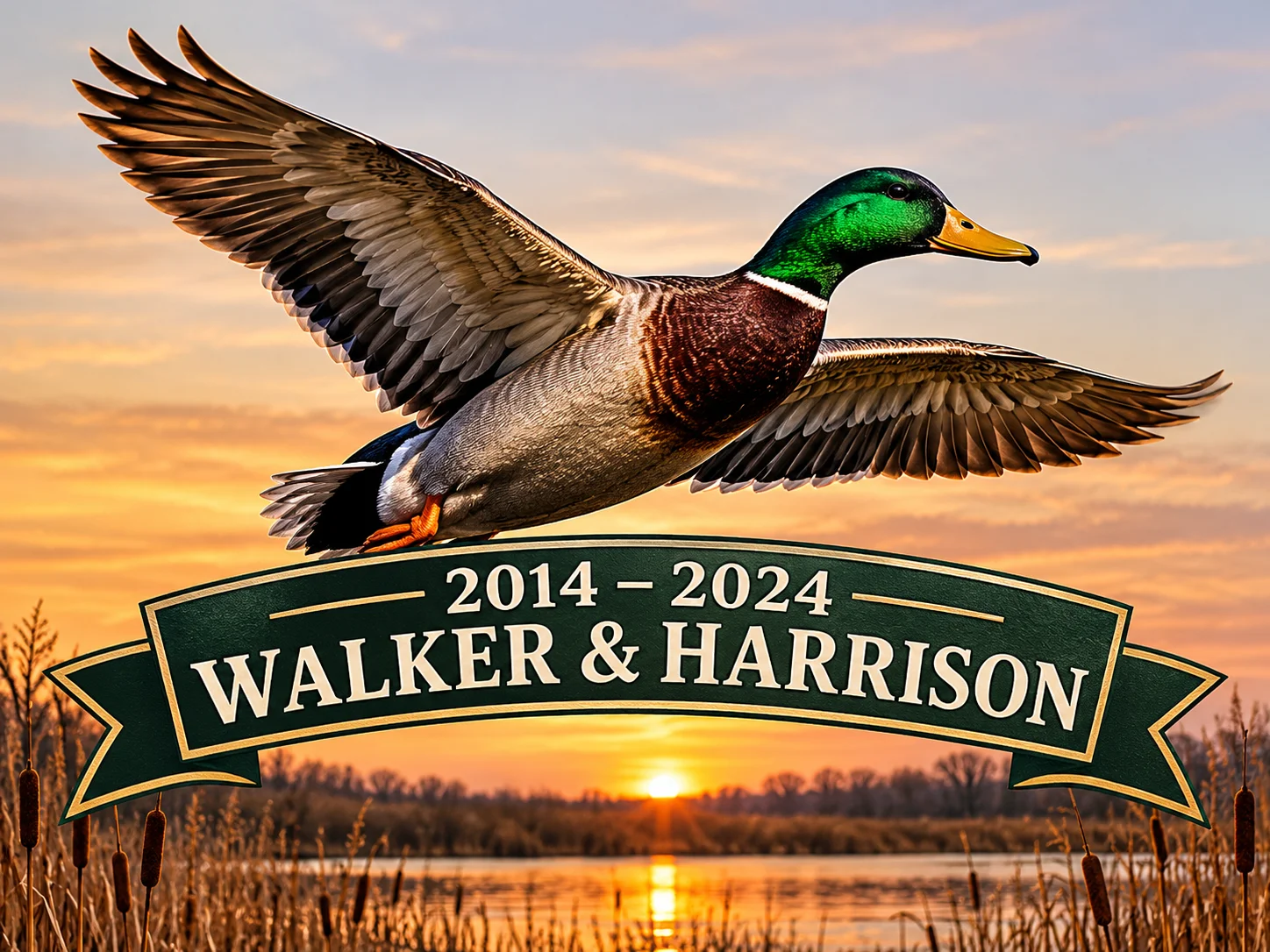
The flying mallard silhouette that anchors Ducks Unlimited’s visual identity is one of the most recognized images in conservation and waterfowl culture. As a tattoo, it functions as both a personal statement and a nod to the organization that has conserved more than 15 million acres of wetland habitat across North America. Hunters who’ve attended DU banquets for decades, who volunteer for local chapters, or who simply tie their identity closely to wetland preservation often want this image in their ink.
The silhouette itself is clean and bold enough to work at almost any scale, but most serious pieces add a personal text layer that gives the image its real weight. Season dates, a child’s birth year paired with the year they shot their first duck, a deceased father’s initials, a hunting lease name, the Latin name of the bird species, all of these have appeared in community posts from waterfowlers showing finished work. The text placement beneath or arching above the bird silhouette is a traditional format that tattoo artists call a banner, and it transfers naturally to this design.
Color is optional. A flat black silhouette with no fill reads clearly and ages well over decades. Adding color inside the bird’s body, the green head, the chestnut breast, the white neck ring, produces a more detailed piece that requires a larger canvas and a skilled colorist. For hunters who want something between the two, a stippled or dotwork rendering of the bird captures feather texture through dot density rather than color, which stays legible as the tattoo ages. Whatever direction you choose, verify that your artist has actually handled bird anatomy in their portfolio before committing to this design. Flying birds drawn from imagination often have anatomically implausible wing positions that will bother a waterfowler every time they look down.
Quick Comparison
| Design | Best Placement | Style Fit | Personal Element |
|---|---|---|---|
| Cupped Mallard Over Decoys | Forearm, upper arm | Realism or black-and-grey | Favorite decoy brand or location |
| Retriever Breaking Through Cattails | Shoulder, chest | Fine-line or realism | Dog’s name, years hunted |
| Flooded Timber Silhouette | Thigh, ribcage | Illustrative silhouette | Specific hunting location |
| Duck Band Close-Up | Wrist, inner forearm, calf | Black-and-grey realism | Actual band number, season |
| State-Outline Marsh Map | Forearm, calf | Detailed illustrative | Specific county, flyway route |
| Flying Duck Silhouette With Text | Upper arm, chest, back | Bold or stipple/dotwork | Season dates, family names |
Conclusion
These six designs cover most of what a dedicated waterfowler would want to put on their skin permanently: the bird itself, the dog, the place, the milestone, the geography, and the conservation identity that runs underneath all of it. The difference between a forgettable tattoo and one that holds meaning across decades is usually specificity. Bring your actual band number. Bring a photo of your dog. Bring a topo screenshot of your marsh. That detail is what turns a duck image into a record of a hunting life.
Before you book a consultation, spend time in the r/DuckHunting and r/Waterfowl communities looking at finished pieces others have posted. Those forums function as informal peer review where experienced hunters flag anatomical mistakes, praise well-rendered feather detail, and share what they wish they’d done differently. That research, done before you sit in the chair, is the most useful prep step you can take.