Wigeon Duck Mount Ideas To Showcase Your Trophy Bird
A well-executed wigeon mount can hold its visual interest for decades. The American wigeon in particular carries a lot to work with: a cream-to-russet forehead, a vivid iridescent green speculum, and chestnut flanks that photograph well under almost any light. The challenge is not whether to mount the bird, but how to pose and display it so the taxidermy actually does the plumage justice. These 6 wigeon duck mount ideas to showcase your trophy bird cover the full range of options, from turnkey wall hangings to custom habitat scenes, so you can match the display to your space and your budget.
Disclosure: This post contains affiliate links. As an Amazon Associate, we earn from qualifying purchases, and at no extra cost to you.
Key Takeaways
- Flying and banking poses are the most popular choice and best reveal the iridescent speculum.
- Standing tabletop mounts on wood or habitat bases offer a compact, versatile display for mantles and shelves.
- Landing and cupped-wing poses add motion and drama without requiring a large wall footprint.
- Habitat scene boxes and diorama mounts justify a higher budget when the finished piece needs to anchor a room.
- Pairing two birds or adding a Eurasian wigeon alongside an American wigeon creates a natural conversation piece.
- Pose selection at the time of field care sets the ceiling for what a taxidermist can achieve.
1. Banking Flying Wall Mount
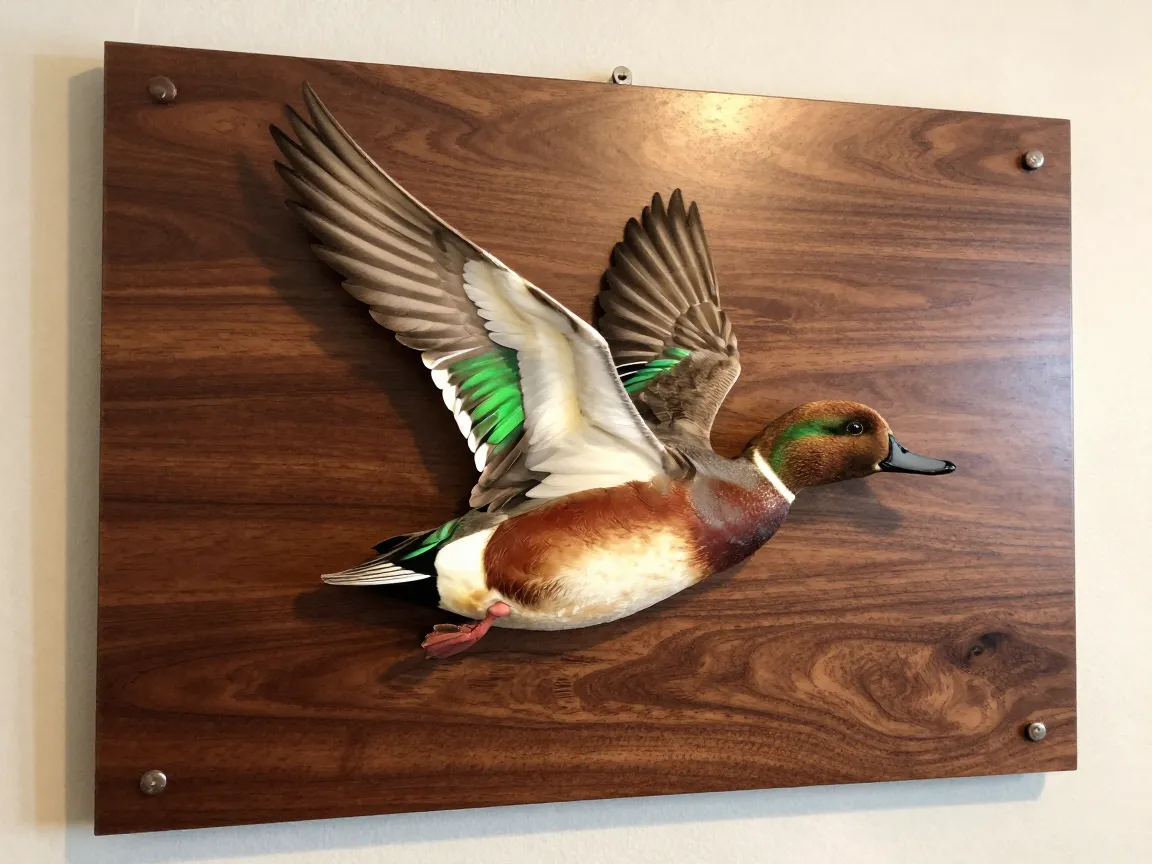
Most hunters who choose a flying pose go with straight level flight, which is a perfectly fine option but misses an opportunity. A banking mount, where the bird is caught mid-turn with one wing higher than the other, exposes the iridescent green speculum and the cinnamon-brown side plumage simultaneously. That combination is what separates a wigeon from most other dabbling ducks on a wall, and a straight-on pose can hide it entirely.
The technical demands are higher than for a standard mount. The taxidermist needs to wire and position each wing independently, and the skin around the speculum must be handled carefully during the caping process to avoid disturbing the feather lay. For this reason, field care matters more than many hunters realize. Keep the bird cool and dry, avoid folding the wings against wet feathers, and deliver it to the taxidermist as quickly as possible.
Commercial examples of this style exist as near-turnkey pieces: an American wigeon posed flying past a walnut wall plaque with faux water and habitat detail, designed to hang from a single drywall screw. Those ready-made options work for a hallway or a secondary room. For a primary trophy space, a custom banking mount built around your specific bird will show individual feather markings that no production piece can replicate. Expect to budget more and wait longer, but the difference in character is visible from across the room.
A useful application note: banking mounts read best when hung at or just above eye level, not up near the ceiling. The speculum detail is what you paid for, so position it where it can actually be seen.
2. Standing Tabletop or Mantle Mount on a Custom Base
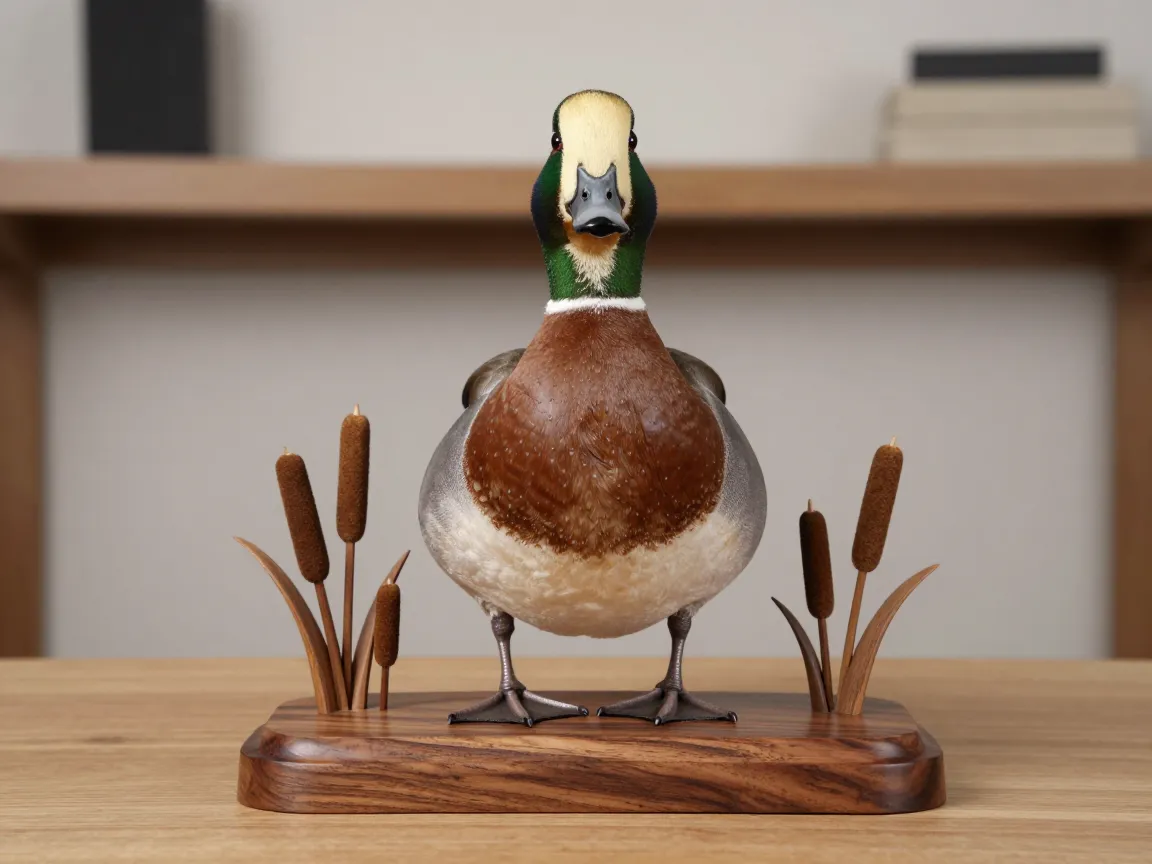
A standing mount does not require wall space, which makes it practical for apartments, offices, and rooms that are already gallery-heavy. It also tends to show the wigeon’s head pattern more clearly than any flying pose, because the viewer is looking at the bird face-on rather than from below.
The base material affects the finished tone of the piece as much as the pose does. A polished walnut base reads as formal and clean; a chunk of weathered driftwood reads as field-authentic; sculpted faux terrain with cattail accents and simulated water reads as a habitat reference. Eurasian wigeon mounts are frequently offered on custom walnut bases with habitat accents for exactly this reason, since the species deserves a display that reflects where it was taken.
Specialist bird studios offer multiple standing and walking configurations, including a walking-on-ice variant that uses a cast acrylic base to simulate a frozen marsh edge. That kind of base solves a practical problem: it anchors the bird securely while also communicating season and location. If you harvested your wigeon on an early-season marsh versus a late-season frozen flat, the base can tell that story without any additional text or plaque.
Pose attitude within the standing category is worth discussing with your taxidermist before you commit. Alert, with the head raised and eyes focused forward, communicates a different mood than a preening pose with the bill tucked toward the wing. For a first-time wigeon mount, an alert standing pose on a mid-tone wood base is a reliable choice that holds up well over years.
3. Landing or Cupped-Wings Mount for Dramatic Motion
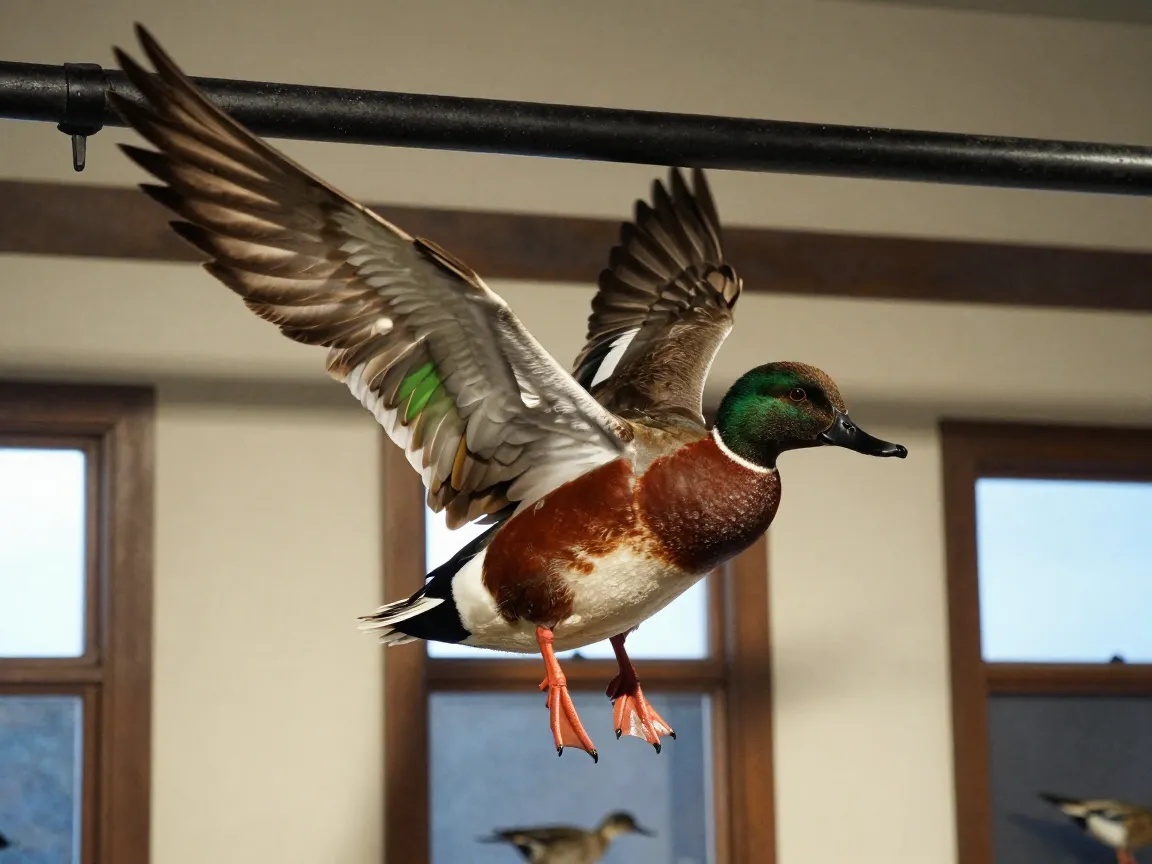
A cupped-wings landing mount is probably the most action-specific option on this list. The wings are spread and angled downward as though the bird is braking for final approach, feet dropped, head tilted slightly forward. When executed well, it captures the exact moment that most waterfowl hunters are watching for in the field.
There are at least three distinct variations worth knowing. A “cupped” mount shows wings fully spread and cupped, feet down, bird nearly vertical. A “landing downward” pose has the wings angled sharply toward the ground as the bird drops the last few feet. A “flushing” variant reverses the energy: wings up and open, as though the bird just launched. Each reads differently on a wall and suits a different room layout.
The cupped pose typically requires a horizontal wall bracket or a ceiling cable system because the wingspan of an American wigeon runs roughly 33 inches. That is wider than a standard wall section between two windows. Measure your space before committing to the pose, not after. A flushing mount can often be oriented more vertically and may fit tighter walls.
One practical note on this category: the head position determines where the viewer’s eye goes first. A head tucked slightly toward the chest as the bird drops into decoys reads as natural and focused. A head turned to the side adds a slight alertness that works better for the flushing variant. Tell your taxidermist which hunting scenario the bird came from, and let that guide the head angle.
4. Pedestal Mount with Habitat Scene Base
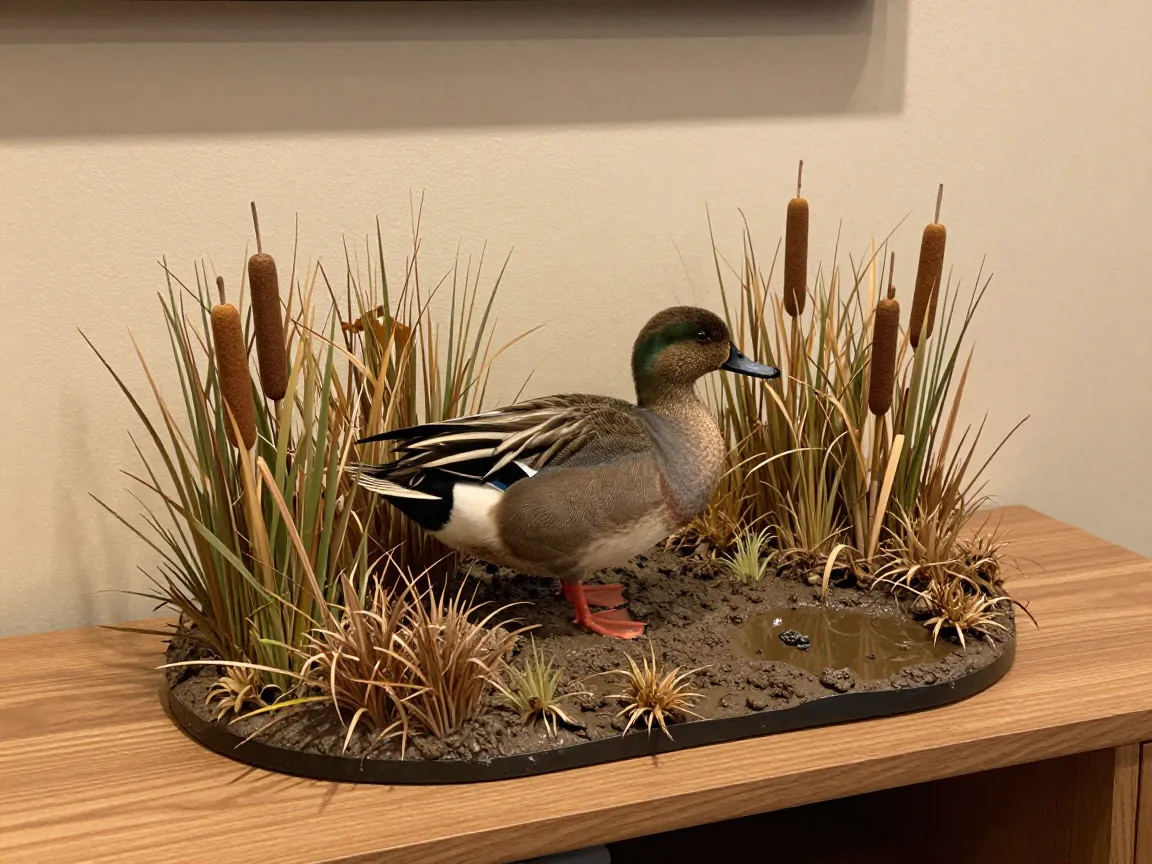
A pedestal mount elevates the bird, literally and visually, by placing it on a sculpted three-dimensional base rather than hanging it on a wall or setting it flat on a shelf. The base can include marsh grass, cattails, simulated mud, water, rocks, or ice, depending on the habitat where the bird was taken.
This format costs more than a simple standing or flying mount because the taxidermist is building two things: the bird itself and a detailed miniature environment. The payoff is a self-contained display that works as a room centerpiece rather than a wall accent. A wigeon on a sculpted marsh base with faux water and dried vegetation can sit on a sideboard or a pedestal stand and hold visual interest from every angle.
The choice of base material should connect to the actual hunt when possible. Wigeon are dabbling ducks associated with shallow coastal marshes, flooded agricultural fields, and prairie potholes. A base built from regional plant species or soil colors native to where the bird was taken makes the display more personal and more accurate. Some taxidermists who specialize in waterfowl stock regional grass and reed species for exactly this purpose.
One constraint to plan around: a detailed habitat base is not easily moved or stored. If you anticipate relocating in the next few years, a simpler walnut base may be more practical than an elaborate sculpted scene.
5. Paired or Multi-Bird Group Mount
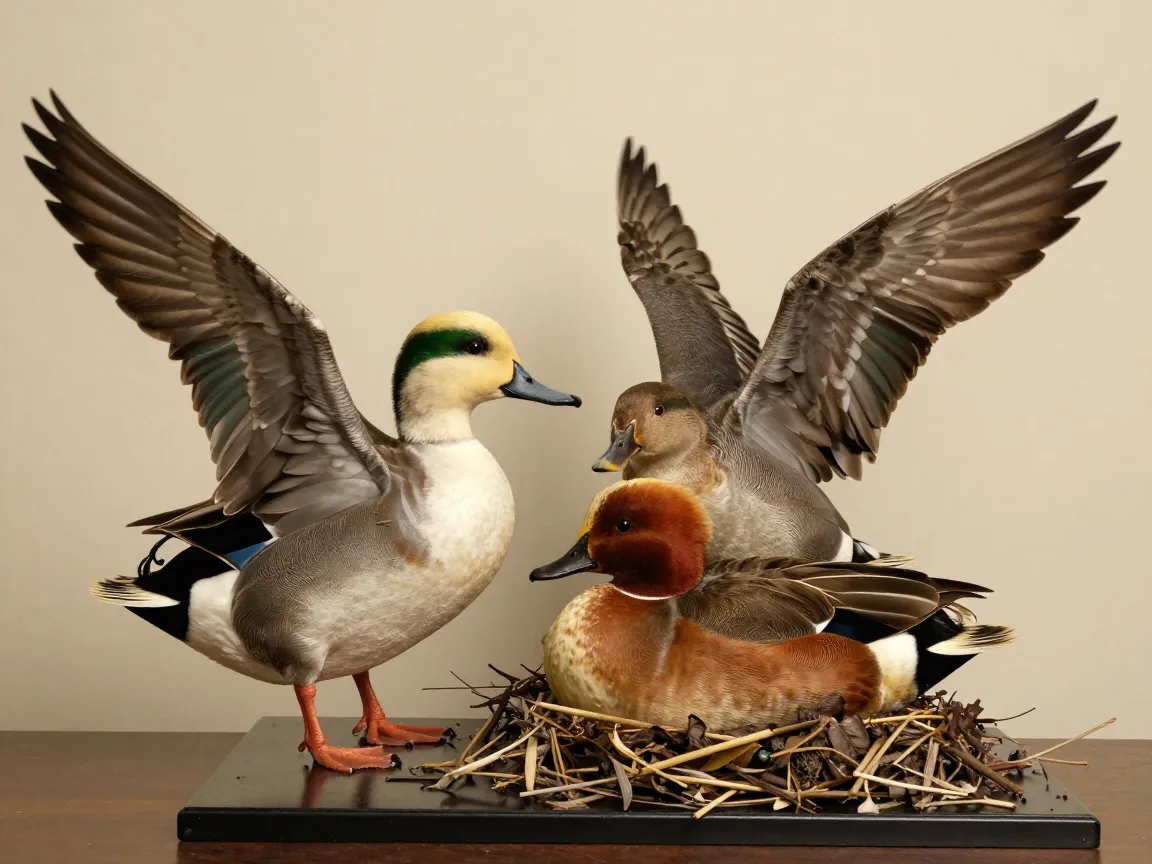
A single wigeon mount shows the bird. A paired mount tells a story. Two drakes grouped in a naturalistic position, one landing and one alert on a shared base, creates the kind of visual complexity that makes a display worth returning to. The interaction between the two birds carries narrative weight that a solo mount cannot.
The most interesting pairing for a wigeon collector is an American wigeon alongside a Eurasian wigeon. The two species are closely related, and placing them together on a single base lets the differences in head coloring speak without any label. The American drake carries a cream forehead and green eye patch; the Eurasian drake has a cinnamon-red head with a pale crown. Side by side, they make a natural comparison display.
Group mounts scale up in cost proportionally, but not always proportionally in wall space. A well-composed two-bird base can be more compact than two separate flying mounts because the taxidermist can nest the birds close together. Discuss the final footprint with your taxidermist during the planning phase, not after both birds have been prepared.
Field care for a paired mount requires the same attention doubled. If you’re planning a two-bird display across a hunting season, ask your taxidermist how to store the first bird while you pursue the second, and follow their freezing protocol precisely. Feather condition is the limiting factor for how good the finished group mount can look.
6. Shadow Box or Wall Diorama with Full Habitat Context
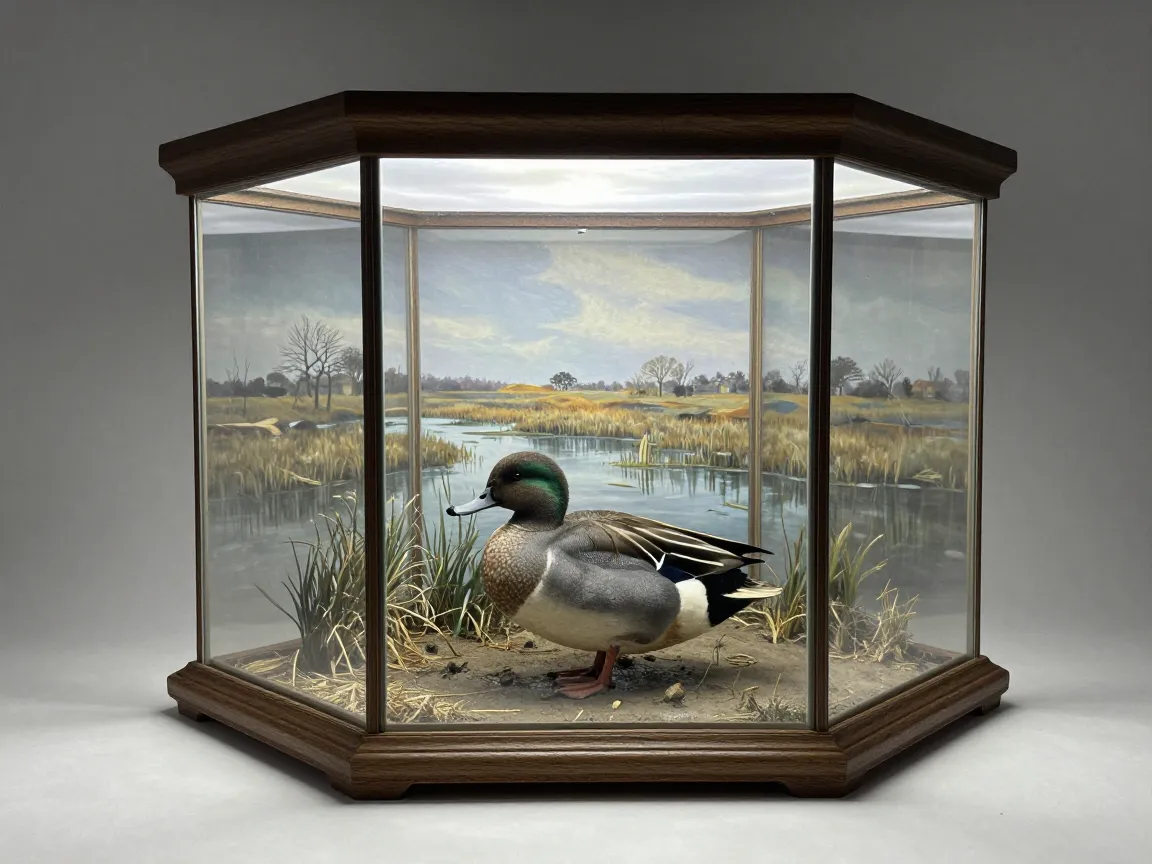
A shadow box mount frames the bird inside a three-sided display case, usually built from wood and glass, with a painted or photographed background depicting marsh, sky, or field habitat behind the specimen. The case itself becomes part of the display, and the bird occupies a defined visual stage rather than projecting out from a bare wall.
This format suits wigeon particularly well because the species’ fall migration routes pass through some visually distinctive landscapes: Pacific flyway marshes, Great Plains prairie potholes, and Gulf Coast coastal flats. A painted background showing open water under a gray November sky communicates season and geography without any caption.
The shadow box format also protects the mount from dust and handling damage over time. For a bird that will be displayed for 20 or 30 years, a sealed glass-front case extends the mount’s life noticeably. Taxidermists who specialize in bird work often partner with custom woodworkers to build the case, so budget for both trades if you go this route.
The tradeoff is rigidity. Once the bird is positioned inside the box and the habitat is set, the display is essentially fixed. This format rewards careful planning at the start. Decide on the background scene, the bird’s pose, and the box dimensions before any work begins, ideally with a rough sketch shared between you, the taxidermist, and the case builder.
Quick Comparison
| Mount Style | Wall Space Needed | Display Location | Relative Cost | Best For |
|---|---|---|---|---|
| Banking flying wall mount | Medium to large | Wall only | Medium-high | Showing speculum and plumage |
| Standing tabletop on base | Minimal | Shelf, mantle, table | Low-medium | Compact spaces, head detail |
| Landing or cupped-wings | Large (wingspan) | Wall or ceiling | Medium-high | Action and motion emphasis |
| Pedestal with habitat base | Minimal wall | Floor pedestal or sideboard | High | Room centerpiece |
| Paired or multi-bird group | Varies | Wall or table | High | Species comparison, narrative |
| Shadow box diorama | Medium | Wall | High | Long-term protection, habitat story |
Conclusion
The right mount for your wigeon depends on three things: the bird itself, the space it will occupy, and how much story you want the display to tell. A banking flying mount on a walnut plaque is a proven, visually strong choice for most trophy rooms. A shadow box diorama is the right call when protection and habitat context matter more than cost and flexibility.
Whatever direction you choose, prioritize field care from the moment the bird is in your hand. Keep it cool, keep it dry, and get it to a qualified waterfowl taxidermist quickly. No mount idea in this list can overcome feather damage from poor handling in the first few hours after the harvest.