Ducks Unlimited Banquet Outfit Ideas That Hit the Perfect Camo-Casual Balance
Roughly 700 Ducks Unlimited chapter banquets take place across the United States each year, and not one of them posts a dress code on the event page. That gap leaves a lot of attendees guessing. The 6 Ducks Unlimited banquet outfit ideas that hit the perfect camo-casual balance covered here are drawn directly from the venues, formats, and social contexts those chapters actually use, so you can walk in looking right for the room rather than over- or under-dressed.
Disclosure: This post contains affiliate links. As an Amazon Associate, we earn from qualifying purchases, and at no extra cost to you.
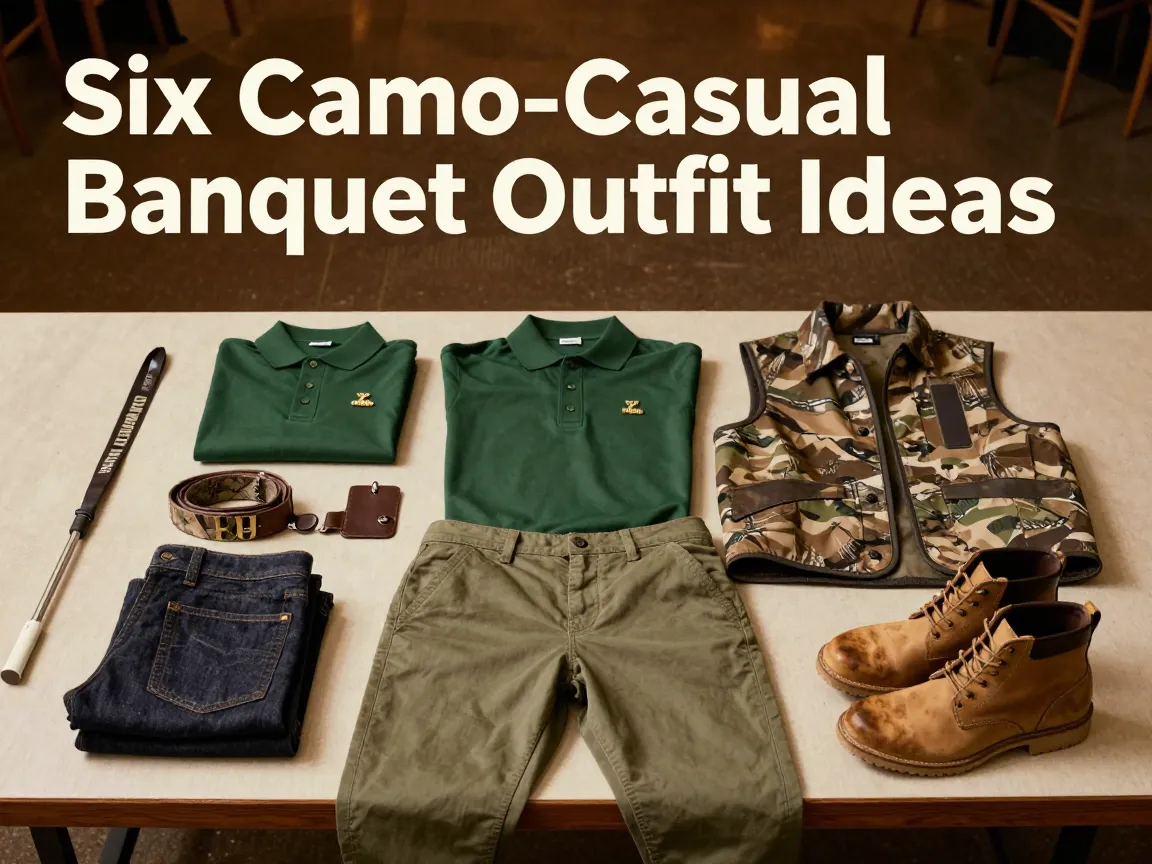
These are evening fundraisers with dinner, live auctions, and raffles. The venues range from resort dining rooms on Lake of the Woods in Minnesota to county fairgrounds expo buildings in Montana to civic halls in Nebraska. None of them require a tuxedo. All of them reward something cleaner than camo bibs.
Key Takeaways
- DU banquets are semi-casual fundraising dinners, not black-tie events, so the target is polished but relaxed.
- One camo element per outfit is enough to signal waterfowl culture without looking like you just stepped out of a blind.
- Venue type matters: a resort convention center calls for a step up from what a county fairgrounds expo building requires.
- Dark denim, chinos, leather or clean rubber-sole boots, and a collared shirt form the reliable base across all six looks.
- State-level and awards-format banquets can support a slightly dressier choice, such as a camo tie with a dress shirt and slacks.
1. Conservation Business Casual
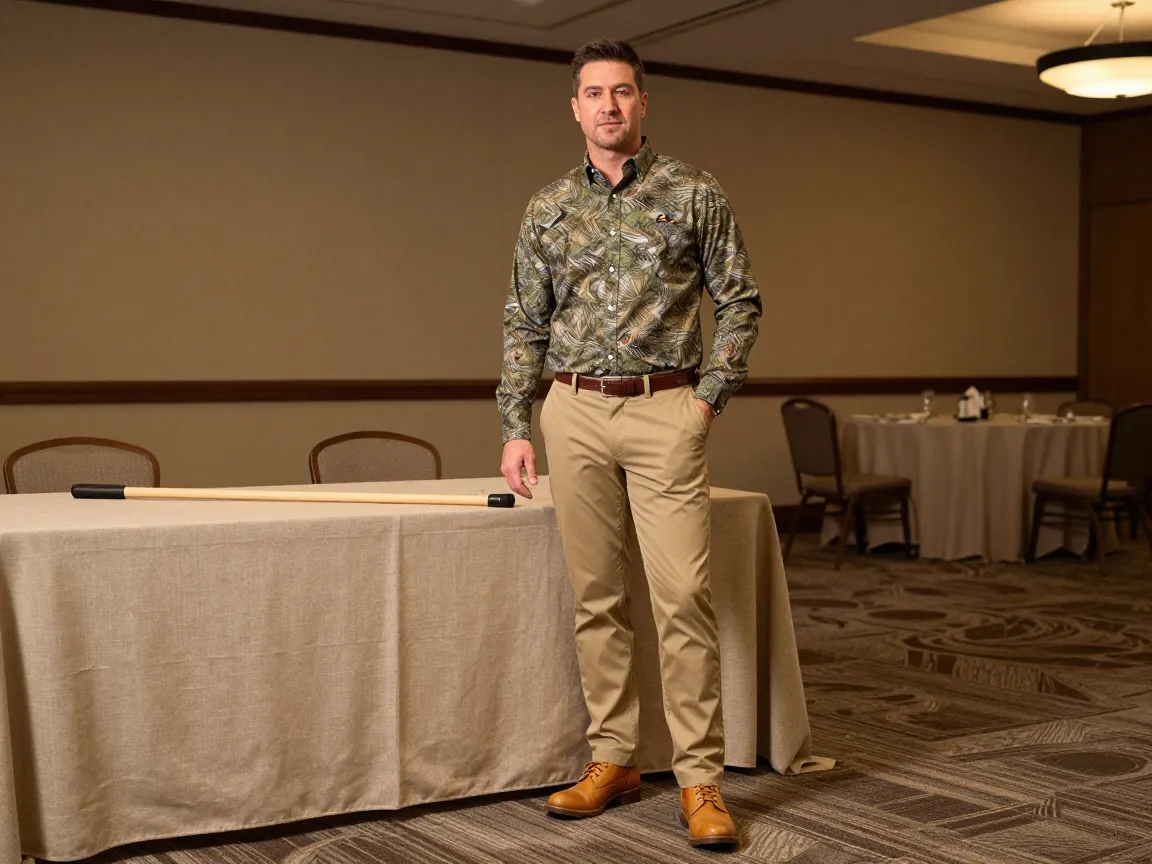
The most versatile starting point for a DU banquet is a waterfowl-themed button-down sport shirt paired with dark, non-distressed jeans or chinos and leather boots or loafers. This combination works across the widest range of chapter venues, from mid-scale hotel convention centers like the Stoney Creek Hotel where Oklahoma’s state-level DU fundraiser is held, to resort dining rooms. It reads as genuinely put-together without requiring a sport coat.
The key is choosing a shirt that carries the DU identity without being loud about it. A solid or subtly patterned button-down with a small DU mallard logo on the chest or a waterfowl-print woven fabric reads as themed rather than costumed. Pair it with chinos in khaki, olive, or dark navy, and the outfit holds up against anything from a buffet line to a standing auction paddle moment.
Footwear seals it. A clean pair of leather dress boots or leather loafers elevates the jeans enough that no one questions whether you dressed for the evening. Avoid distressed denim or athletic shoes here. Those two choices are the fastest way to drift below the room’s standard at a resort or hotel venue.
2. Subtle Camo Layers
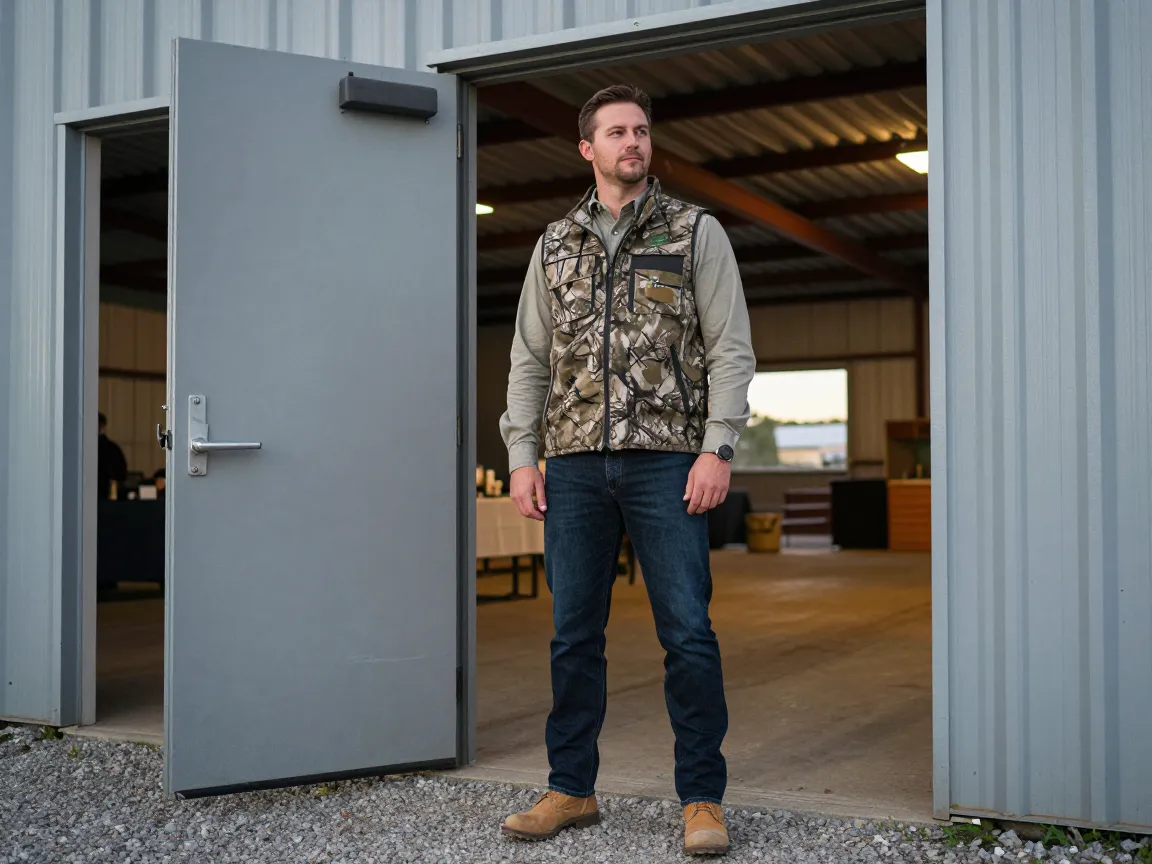
At banquets held in fairgrounds expo buildings or rural wineries, the atmosphere leans more community-outdoor than corporate-casual. Flathead County’s annual chapter banquet at a county fairgrounds expo center and Rockingham County’s event at a rural Virginia winery both fit this mold. The room gives you more latitude with pattern, and a layered camo approach makes the most of it.
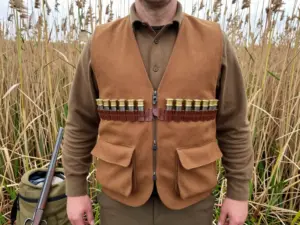
The structure is a solid-color henley or oxford shirt as the base, topped with a muted camo softshell jacket or vest. Realtree or Mossy Oak patterns in earth tones rather than digital or military-grade camo keep it social rather than tactical. The camo stays in one layer, which matters. When camo appears in more than one piece of an outfit, the look crosses from intentional into unplanned.
Clean dark jeans and casual leather or rubber-sole boots finish the look. Chukka boots in tan or brown work especially well here because they bridge the gap between field and dining room without trying too hard. The softshell or vest comes off easily if the room runs warm, which fairgrounds buildings often do.
3. Logo Polo and Field Jacket
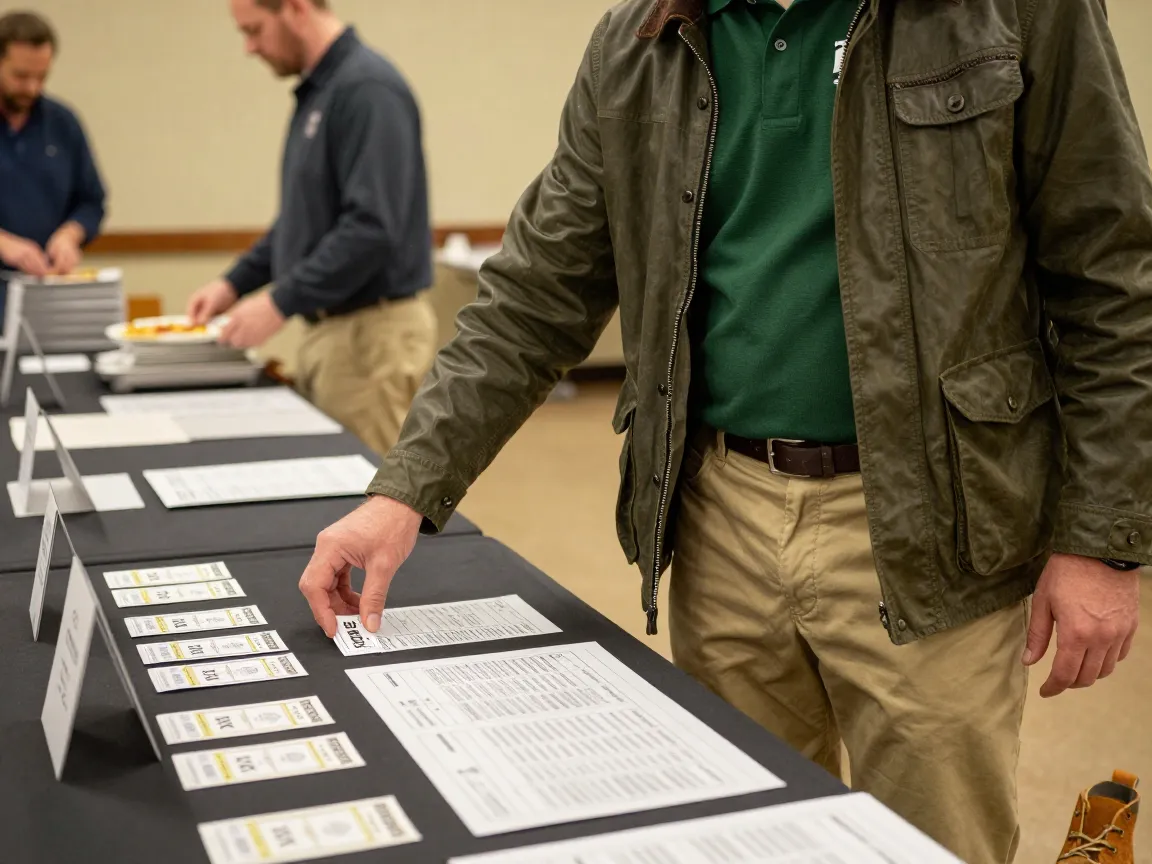
Early-evening conservation banquets with buffet dinners, live raffles, and door prizes involve a lot of standing, moving between tables, and reaching across auction displays. A DU logo polo shirt in a solid color paired with khaki or olive chinos and a lightweight field jacket handles that physical range better than a tucked button-down. This is a practical look, and practical reads well at community-driven fundraisers.
The field jacket does real work here. It signals outdoors credibility without being camo, it has pockets that actually hold raffle tickets and bid cards, and it keeps you comfortable during the early part of the evening when rooms haven’t warmed up yet. Look for a waxed cotton or ripstop nylon jacket in olive, tan, or dark brown rather than a fashion-forward cut. Functionality is part of the aesthetic.
Polo color is worth a deliberate choice. DU green or a muted teal reads as branded without needing the logo to do all the work. Pair it with chinos rather than jeans if the venue is on the nicer end of the community-hall scale. Clean leather or suede boots rather than sneakers keep the look on the right side of the dinner-table standard.
4. Plaid and Camo Accent
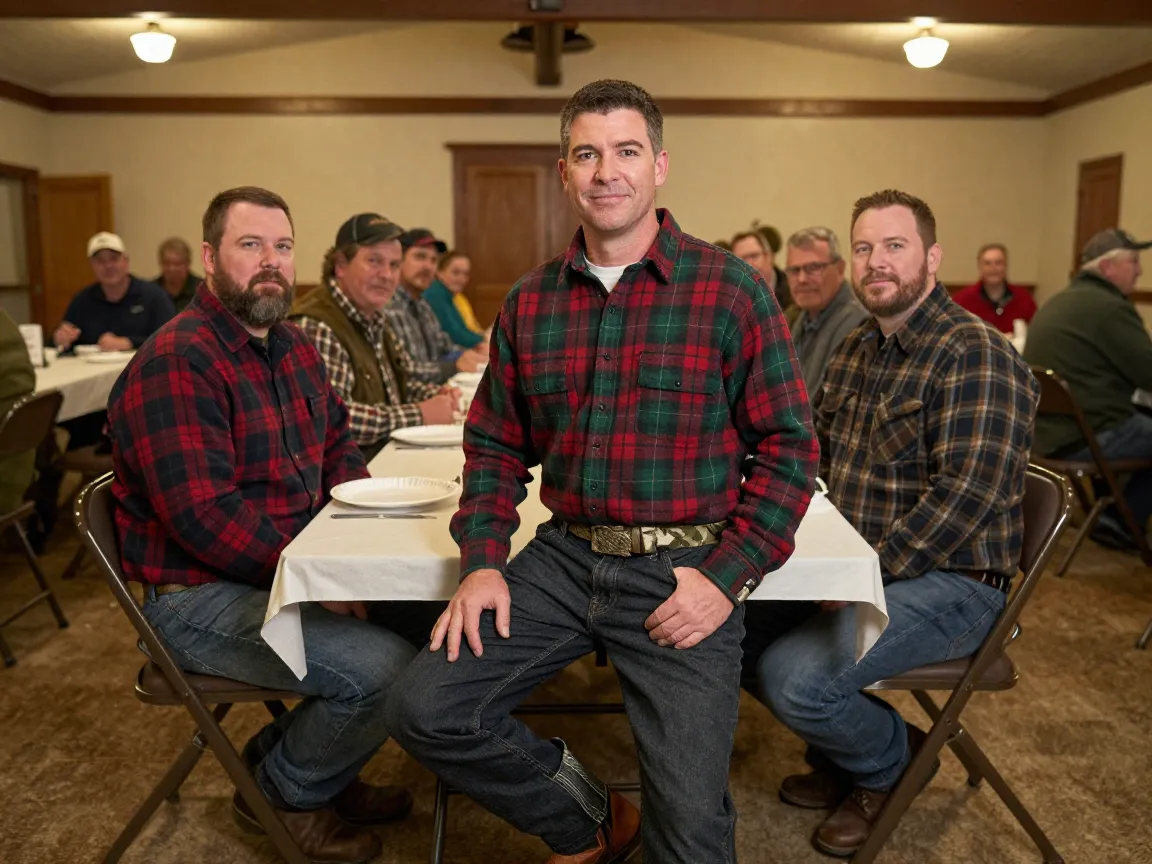
A well-fitted plaid flannel or cotton shirt, dark jeans, and leather boots is a classic rural-event combination that fits DU banquets in community halls, Knights of Columbus spaces, and civic centers. Union County’s Arkansas chapter banquet and O’Neill’s Nebraska chapter event both operate in these kinds of spaces, where the crowd skews toward working landowners and lifelong hunters who know the difference between dressed up and showing off.
The camo element in this outfit is intentionally small. A camo woven belt, a DU-branded cap worn until dinner starts, or a camo-patterned lanyard holding a name badge gives the look its waterfowl identity without competing with the plaid. One patterned piece at a time is a reliable rule across most outfit contexts. Plaid and camo together across shirt and pants is too much pattern for a dinner table.
Fit is the detail that separates this look from sloppy. A plaid shirt that fits across the shoulders and doesn’t pull at the buttons reads as intentional. The same shirt in a size too large reads as afterthought. Dark jeans with no visible wear marks, combined with pull-on leather boots or lace-up work boots in clean condition, complete the picture.
5. Dress Shirt with Camo Tie or Hat
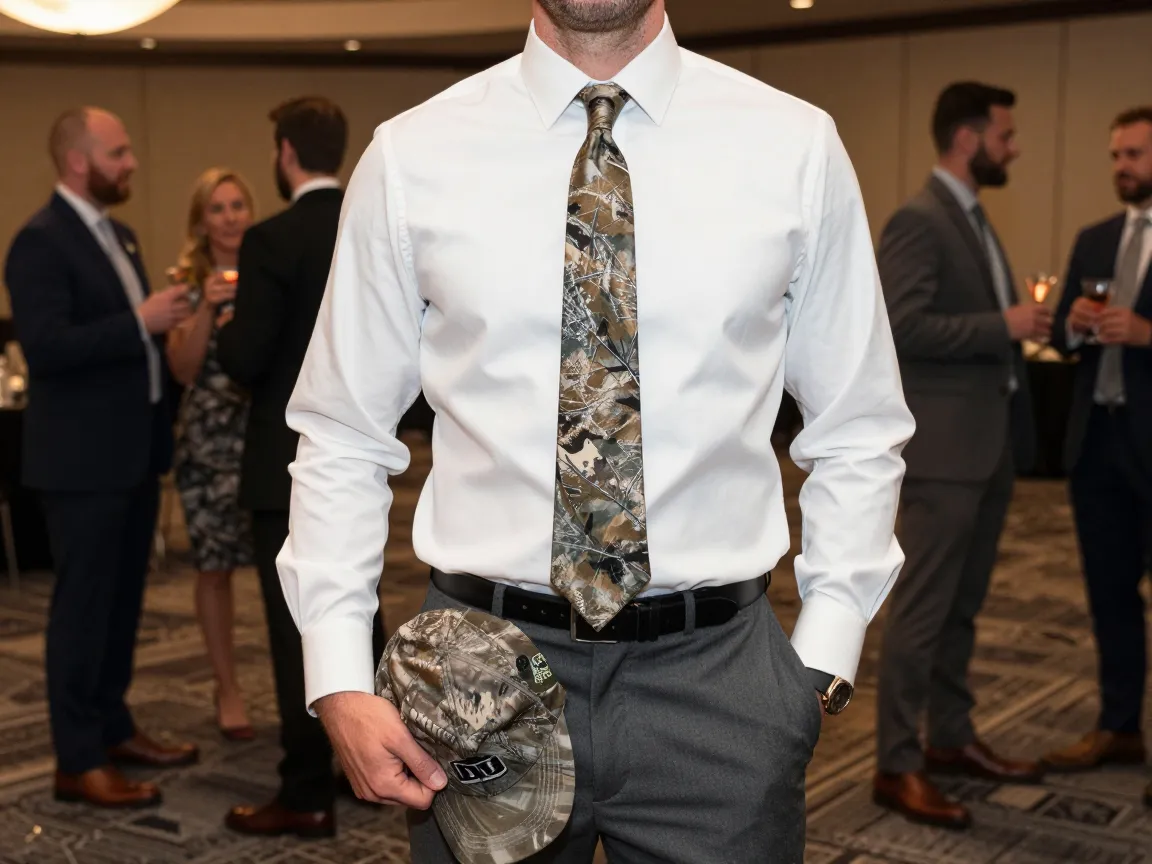
State-level DU banquets and awards-format events call for a step up. The Oklahoma State Convention awards banquet is an example where attendees include chapter leaders, state committee members, and long-tenured volunteers who may dress a notch above the typical chapter dinner crowd. A plain dress shirt with dress slacks and leather dress shoes or Chelsea boots is appropriate here, and a camo necktie or a DU-branded cap worn during the social hour before dinner provides the waterfowl connection.
The camo tie is a specific choice worth considering deliberately. A woven silk or polyester tie in Realtree or Mossy Oak pattern in a standard four-in-hand knot reads as intentional style rather than costume, especially against a solid white, pale blue, or chambray dress shirt. It is a recognized signal in waterfowl circles that you know the culture without needing to announce it in block letters.
If a tie feels like too much, the branded cap worn during the cocktail or raffle hour and set aside for the formal program and dinner achieves the same identity marker with less formality. Either way, the dress shirt and slacks base means you’re appropriately dressed for the room, and the camo element is an addition rather than the whole statement.
6. Dark Denim, Chambray, and Clean Boots
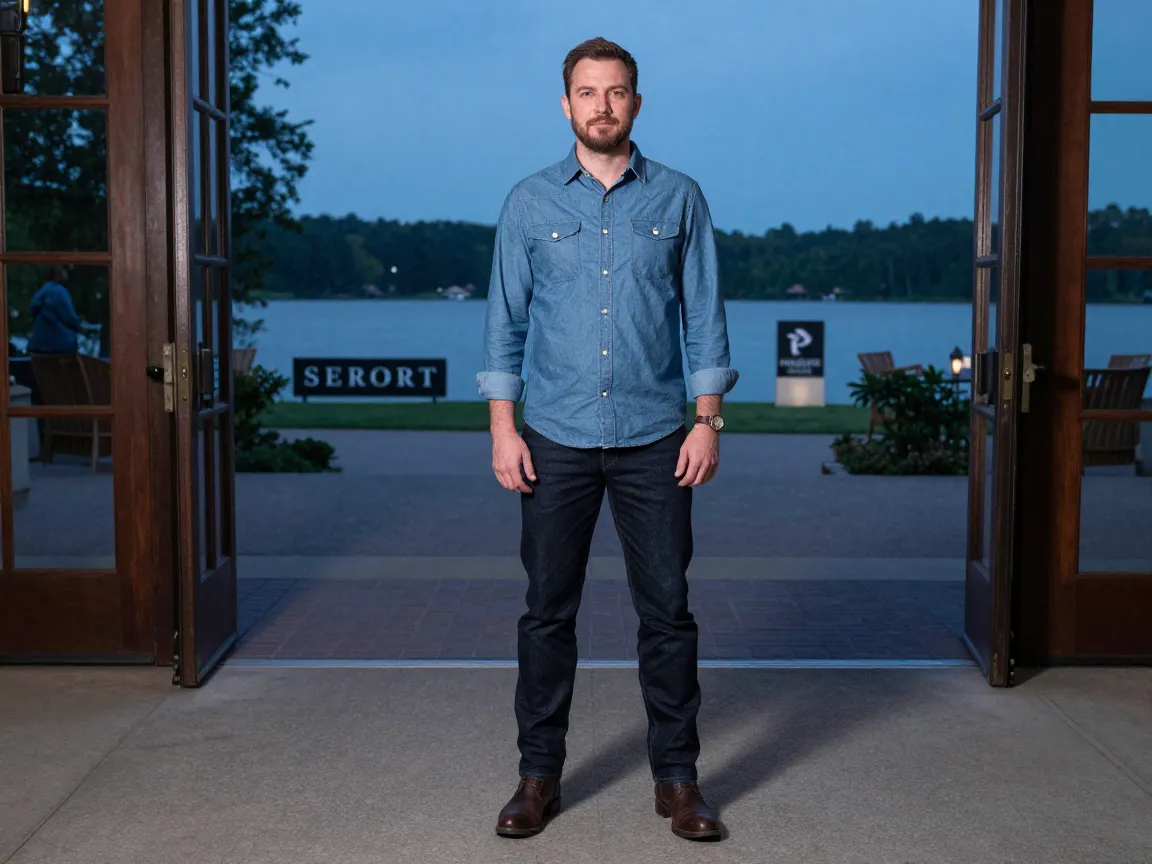
The sixth look is the simplest and probably the most common at mid-tier chapter banquets across the country, from the Warroad/NW Angle event at Springsteel Resort in Minnesota to the Salkehatchie River banquet in South Carolina, where doors open at 6 p.m. and the evening involves dinner, a live raffle, and conservation programming. Dark wash straight-leg or slim-straight jeans, a chambray or solid flannel shirt in blue, grey, or forest green, and clean leather or rubber-sole boots covers the dress standard at most of these events without any camo in the outfit at all.
The DU connection comes through in a simple accessory rather than the clothing itself. A DU pin on the shirt collar, a branded lanyard, or a DU trucker cap in hand communicates membership and mission without changing the outfit’s formality level. For attendees who aren’t interested in incorporating camo into their look at all, this is the honest version of the camo-casual balance: casual dress with a clear organizational identity signal.
What makes this look work consistently is the condition of the boots. A pair of Redwing or Wolverine boots in good condition or a clean pair of Blundstones in dark brown do more for this outfit than any logo or pattern. If the boots look like they just came out of a hunting blind, the whole look reads as under-dressed. A quick cleaning and conditioning before the event is the most return for the least effort of anything on this list.
Quick Comparison
| Look | Best Venue Type | Camo Presence | Formality Level |
|---|---|---|---|
| 1. Conservation Business Casual | Resort, hotel convention center | Logo only | Medium-high |
| 2. Subtle Camo Layers | Fairgrounds, rural winery | Vest or jacket | Medium |
| 3. Logo Polo and Field Jacket | Community banquet, civic hall | Logo only | Medium |
| 4. Plaid and Camo Accent | Community hall, Knights of Columbus | Belt or hat | Medium-low |
| 5. Dress Shirt with Camo Tie | State convention, awards banquet | Tie or cap | High |
| 6. Dark Denim and Chambray | Most chapter banquets | Pin or lanyard | Medium-low |
Conclusion
Every one of these looks starts from the same base: a collared shirt, dark or neutral-toned bottoms, and clean boots or dress shoes. The camo element, where it appears, stays in one piece. That discipline is what makes the difference between a cohesive banquet look and an outfit that belongs in a duck blind.
If you’re attending a DU banquet for the first time and don’t know the specific venue, start with look 1 or look 6. Both travel well across venue types. Once you’ve seen the room once, you’ll know exactly where you can push further toward look 2 or pull back toward look 5.