Duck Hunter Tattoo Designs That Capture Your Passion for the Blind
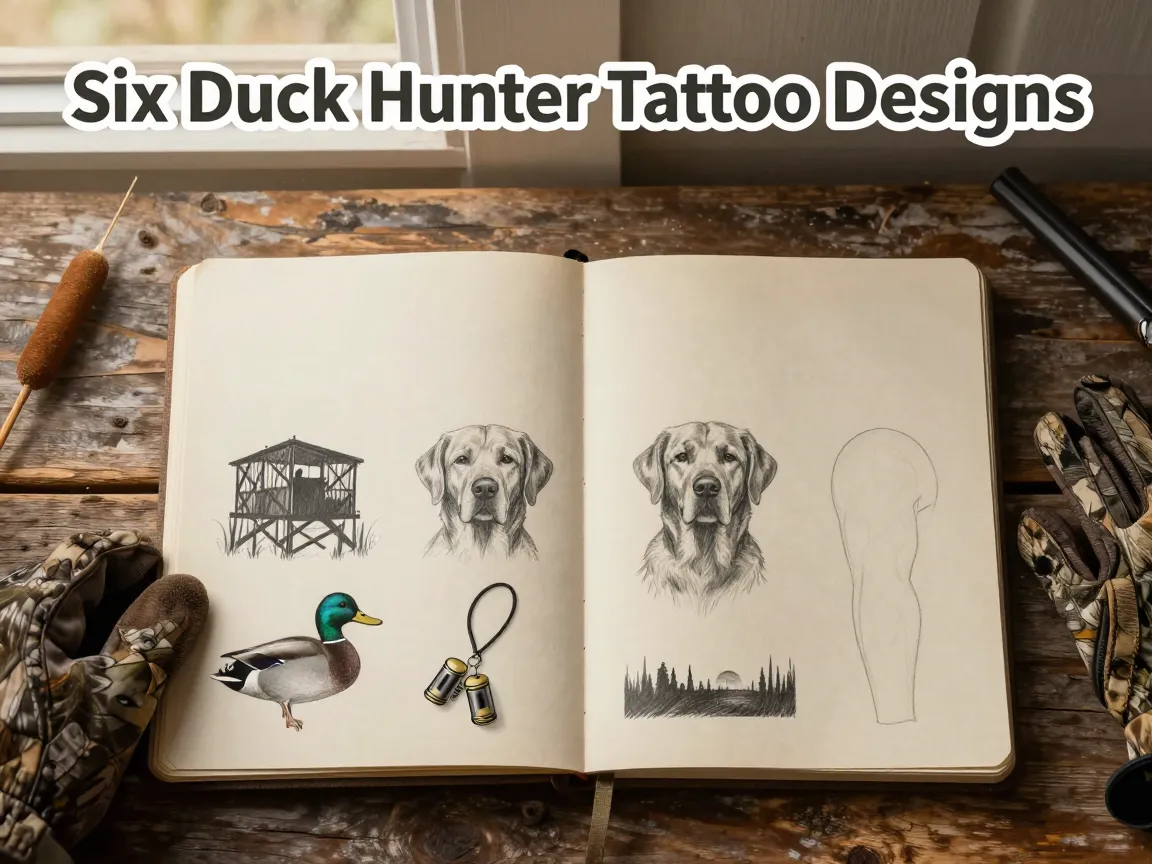
Over 10 million ducks and waterfowl are harvested in the United States every year, and for the hunters who wake before dawn to set decoys in freezing marsh water, that number represents a way of life, not a hobby. Tattoos have become one of the more permanent ways those hunters carry the blind with them. This guide covers 6 duck hunter tattoo designs that capture your passion for the blind, drawing from the most requested compositions appearing across major tattoo design platforms in 2026, as well as the lived experiences hunters actually encode into their ink. Each design is distinct in subject, style, and what it communicates about the person wearing it.
Disclosure: This post contains affiliate links. As an Amazon Associate, we earn from qualifying purchases, and at no extra cost to you.
Key Takeaways
- Full blind scene tattoos work best on large placements such as the back, chest, or full sleeve where the marsh environment has room to breathe.
- Realistic color mallards remain the most requested duck-hunter design for upper-arm and chest pieces.
- A retriever within the composition shifts the tattoo’s meaning toward companionship and personal history rather than the hunt itself.
- Gear-focused designs, duck calls, shotguns, shells, give hunters a compact option that still reads clearly as blind culture to anyone who knows it.
- Hybrid outdoor lifestyle sleeves that combine waterfowl, fishing, and upland hunting are growing fast among hunters who spend the full calendar year outdoors.
- Placement determines style: sleeves and backs accommodate realism and full scenes; forearms and calves suit tighter, cleaner compositions.
1. The Full Marsh Blind Scene
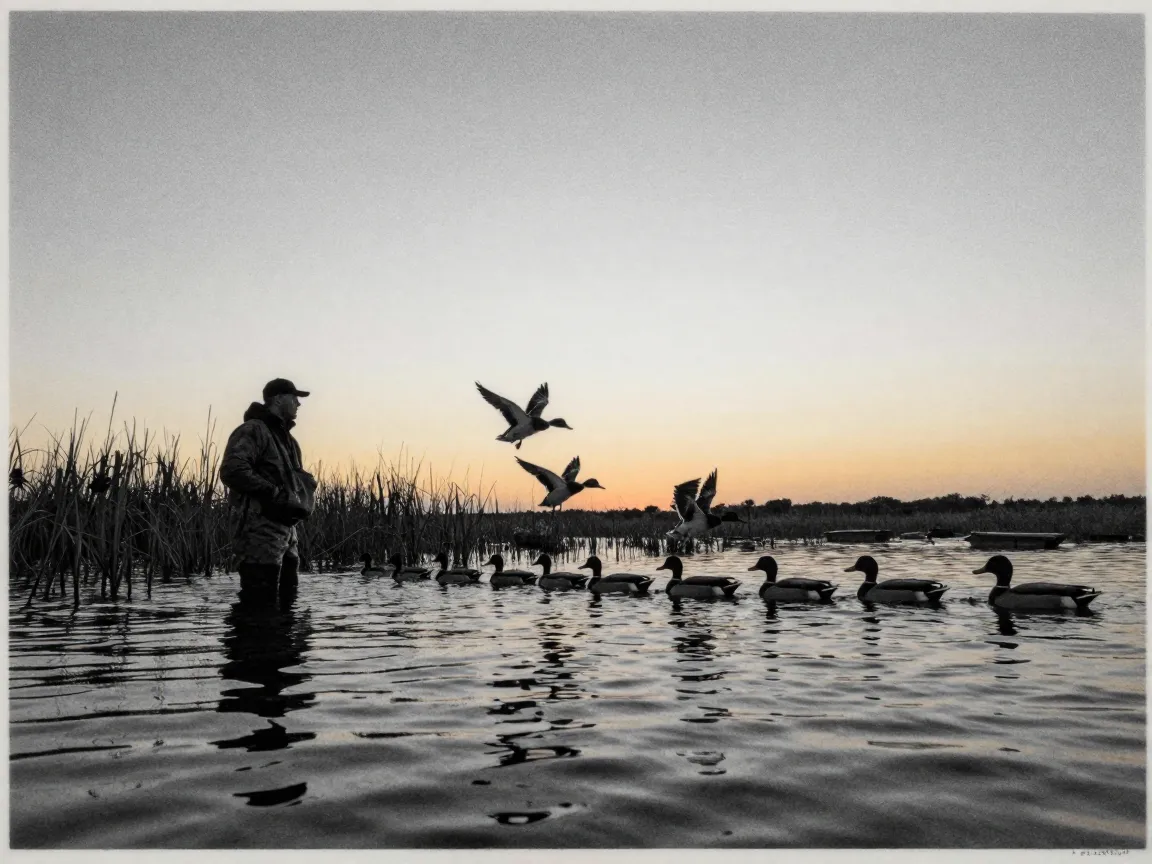
A silhouetted hunter standing in a marsh blind, water at knee level, ducks cupped and descending toward a decoy spread as the sun breaks the horizon, this is the composition that shows up most consistently when serious waterfowl hunters describe what they want on their body. The design works because it tells the whole story in a single frame: the blind, the birds, the light, and the water.
Black-and-grey realism is the preferred style for this composition. It handles the layered tones of a pre-dawn marsh well, dark water in the foreground, mid-tone cattails and blind structure, light bleeding through the horizon behind everything. Artists working in this style use stippling and fine-line shading to separate the duck silhouettes from the sky without color, which keeps the piece readable even as the ink ages. Some hunters add a subtle orange or gold wash to the horizon to replicate that exact moment of legal shooting light.
The back or chest is the natural home for a full blind scene. These placements offer enough square footage that the decoys on the water, the hunter in the blind, and the birds in the air can each occupy their own visual layer without crowding. Shoulder and upper-arm placements work too, though artists typically compress the background and push the blind structure to the edges to maintain composition quality in the smaller space. If you’re considering this design, bring reference photos of your actual blind location, the specific shape of the marsh, the tree line, the type of grass, because those details are what separate a generic hunting tattoo from a personal one.
2. Realistic Mallard Drake in Flight
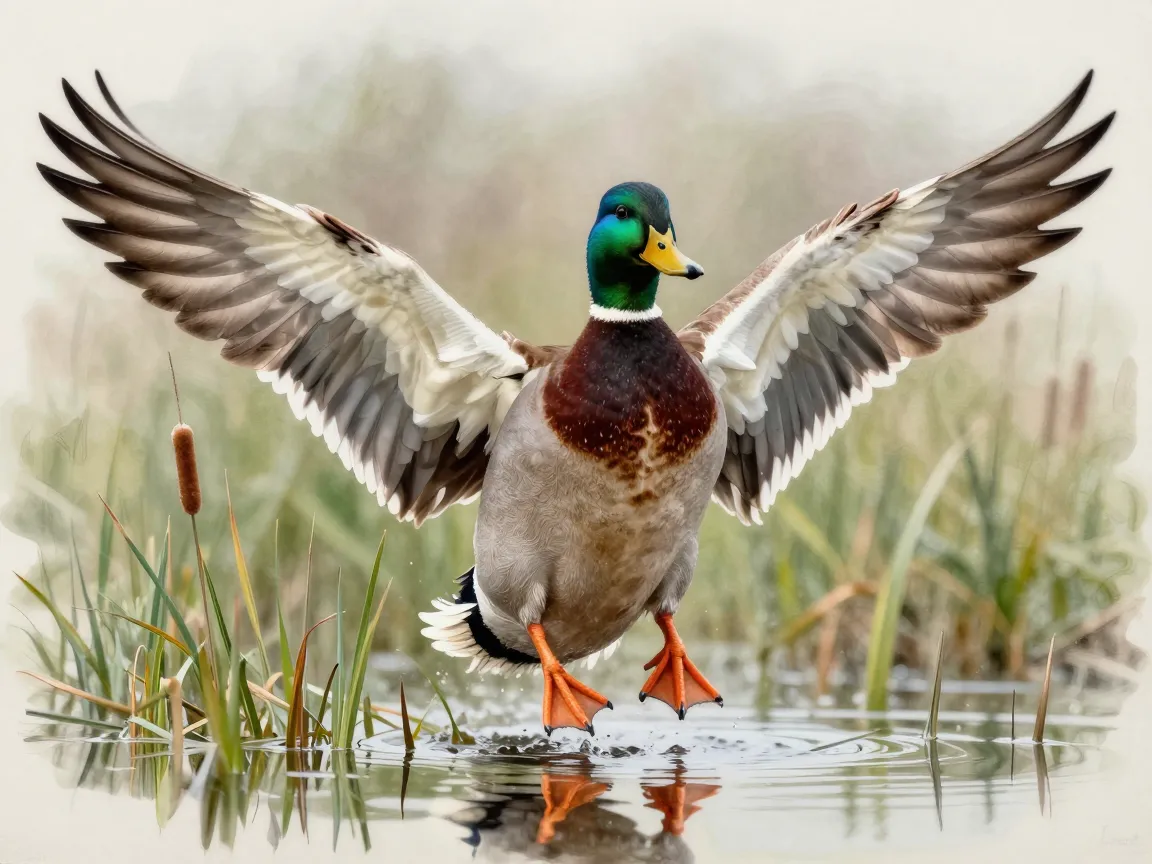
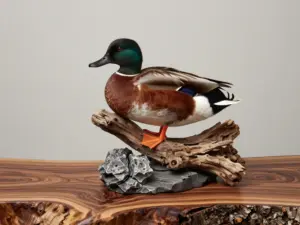
The mallard is the most recognized waterfowl in North America, and its color profile, iridescent green head, chestnut chest, white neck ring, curled tail feathers, makes it one of the most compelling subjects for realistic color tattoo work. A drake with wings cupped and feet dropped, caught in the last half-second before landing, is a composition hunters describe with physical recognition. That posture means the shot is about to happen.
Color realism is the obvious style choice here, and it demands an experienced artist. The green of a mallard’s head shifts from teal to nearly black depending on light angle, and that iridescence is what separates a technically correct bird from one that actually looks alive. Artists who specialize in wildlife realism use layered transparent washes of color to build that effect, working from dark undertones outward. Expect this type of piece to require multiple sessions and to cost significantly more than a comparable black-and-grey design, the color work is time-intensive.
Placement for a solo mallard in flight typically falls on the upper arm, chest, or upper back. The bird’s wingspan in a cupped position gives artists a natural horizontal shape that fills a chest panel cleanly, while a vertical drop from sky to water works well on a full sleeve. Some hunters pair the drake with a hen for a matched set, or position two or three birds at different distances to create a sense of depth and incoming movement. Adding marsh grass, cattails, or a water reflection below the bird converts a portrait into a scene without requiring full-sleeve real estate.
3. Retriever Portrait with Hunt Context
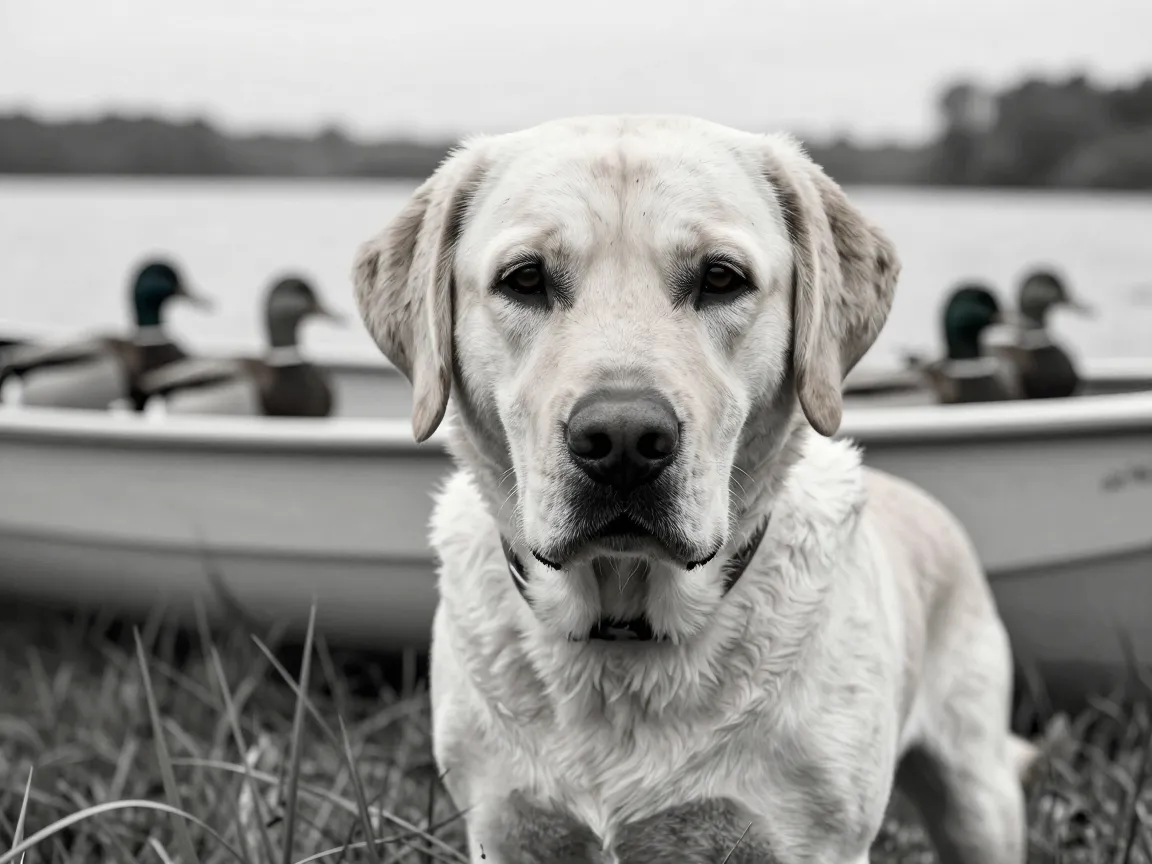
A Labrador or Chesapeake Bay Retriever nose-deep in marsh grass, or sitting at heel in a boat with ducks visible in the background, carries meaning that a pure hunting-action composition does not. Dogs in duck-hunting tattoos appear repeatedly in community posts and design galleries for a specific reason: for many hunters, the dog is the most direct emotional connection to time in the blind. Retrievers are present for every retrieve, every missed shot, every cold morning that turned into nothing, the dog is the one constant.
Portrait-style black-and-grey is the most common approach for retriever tattoos, with the dog’s face rendered in fine-line realism and the hunting context added in the background at reduced detail. This keeps the visual hierarchy clear: you’re looking at the dog first, the blind or the bird second. Some hunters go the other direction and treat the dog as one element in a larger scene, head breaking the water surface with a mallard in its mouth, decoys visible beyond, which shifts the piece toward action rather than tribute.
This design choice often carries a memorial dimension. Reddit posts from hunting communities show hunters getting retriever portraits to mark a dog that has passed, frequently including the dog’s name, years of service, or a date in the design. That personal context changes how the tattoo functions: it’s not just decoration but a record. If you’re incorporating a memorial element, be specific with your artist about what details you want preserved, the dog’s ear shape, coat color, collar, the particular water or blind you hunted together, because those specifics are what make the tattoo yours rather than anyone else’s.
4. Gear Still Life: Duck Calls, Shells, and Shotgun
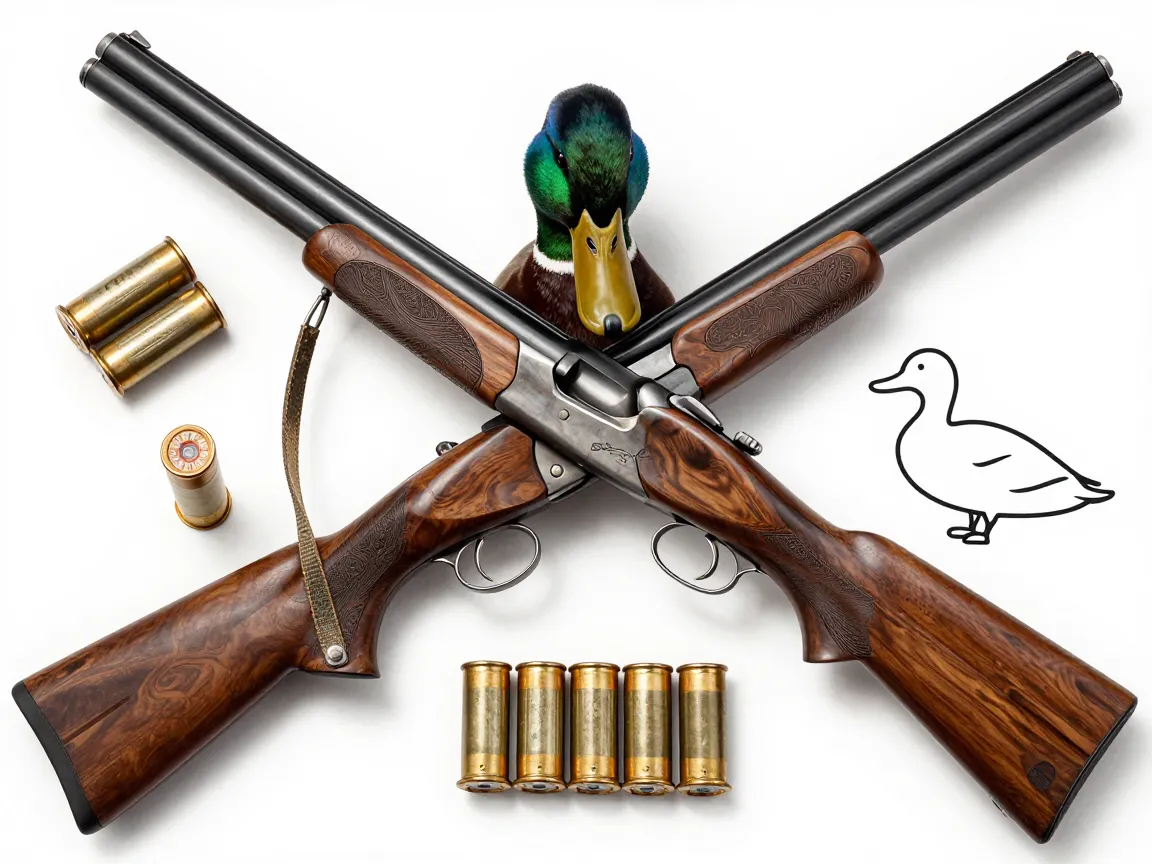
Not every duck hunter wants a full scene on their arm. Some want a composition that communicates blind culture without requiring a large placement. A tightly rendered arrangement of gear, a Benelli or Browning over-under, a lanyard of duck calls, spent 12-gauge shells, and perhaps the outline of a blind or a hand-carved decoy, delivers that in a format that fits a forearm, calf, or even a smaller upper-arm piece.
The appeal of a gear composition is partly practical and partly symbolic. Practically, it scales well: a crossed-shotguns layout with a mallard head centered between the barrels reads clearly at six inches. Symbolically, hunting gear represents the preparation and ritual of blind culture, the time spent rigging decoys, selecting calls, loading shells, as much as the moment the birds fly. For hunters who see the whole experience, not just the shot, as the point of being there, a gear-focused tattoo reflects that accurately.
Neo-traditional style suits this category particularly well. The bold outlines and reduced palette of neo-traditional work give mechanical and wooden objects a graphic weight that holds up over time and reads clearly across different lighting conditions. Duck calls, with their cylindrical shape and reed detail, benefit from the exaggerated form that neo-traditional allows. Shotgun barrels rendered in this style often incorporate engraving-style detail along the receiver that mimics actual hand-engraved gunmetal, a detail that experienced hunters and tattoo enthusiasts both notice. TattooMeNow’s existing “Duck Hunt Tattoo” examples show crossed rifles paired with a hound as a close analog; the waterfowl version of this layout follows the same compositional logic.
5. Sunrise or Sunset Silhouette Scene
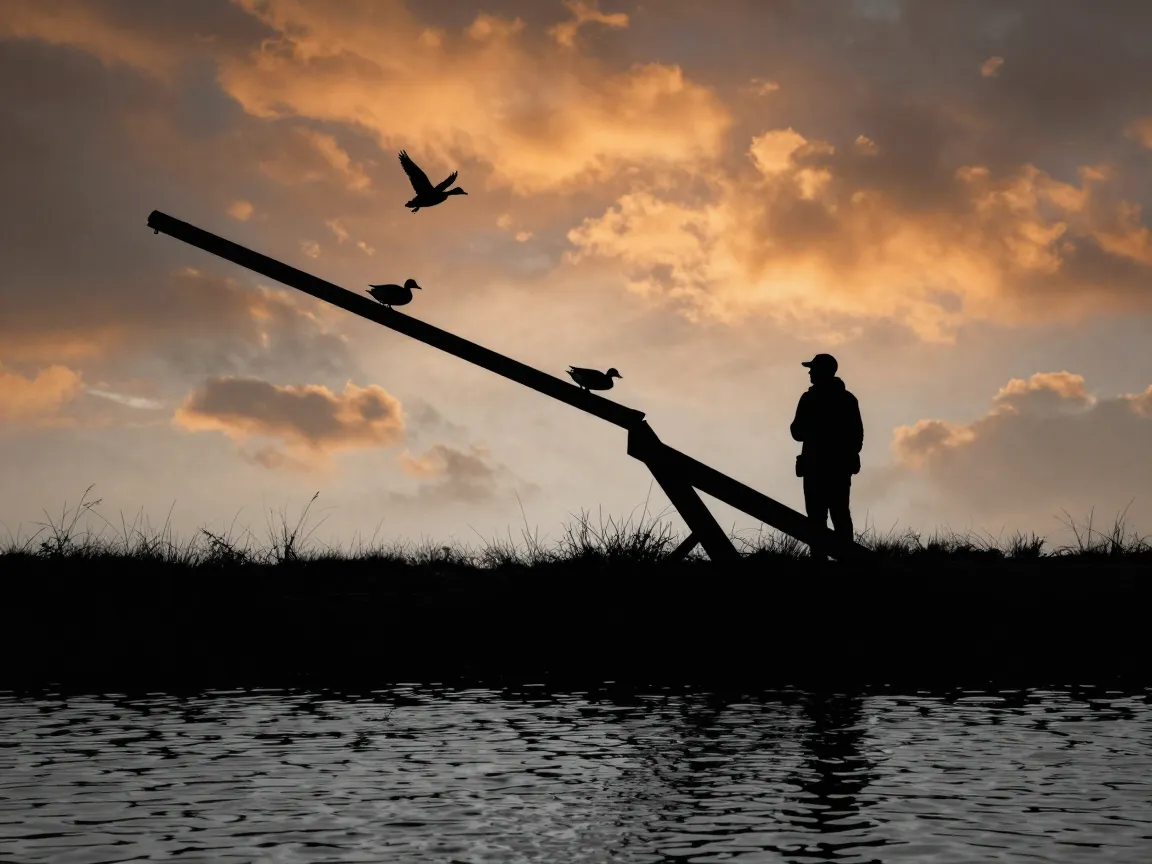
A simple, high-contrast silhouette of a blind, a hunter, and ducks against a burning sky is one of the oldest visual formulas in outdoor imagery, and it works in tattooing for the same reason it works in photography: the human eye reads the shape immediately without needing detail to understand the subject. The silhouette approach is different from the full realism blind scene in entry one because it trades detail for mood and graphic impact.
This style is well-suited to hunters who want the emotional resonance of a blind scene without the complexity and cost of full realism. A skilled artist using black-and-grey with a selective orange or warm gold highlight for the sky can produce a piece in one session that carries the same fundamental image as a multi-session realism piece. The tradeoff is in the specificity: a silhouette reads as “duck hunter in a blind” generically, while a realism piece can read as “this hunter, in this blind, on this water.”
Forearms and calves handle silhouette compositions particularly well because the stark contrast between the dark shapes and the lighter sky background doesn’t rely on gradients and blending at a microscopic scale. The piece stays legible. Some hunters extend the concept into a wraparound composition on the calf, with water at the ankle, blind structure mid-calf, and the sky and birds toward the knee, essentially a vertical landscape that follows the natural taper of the leg. This placement is growing in popularity among hunters who want something visible in the field during warmer seasons.
6. Hybrid Outdoor Lifestyle Sleeve
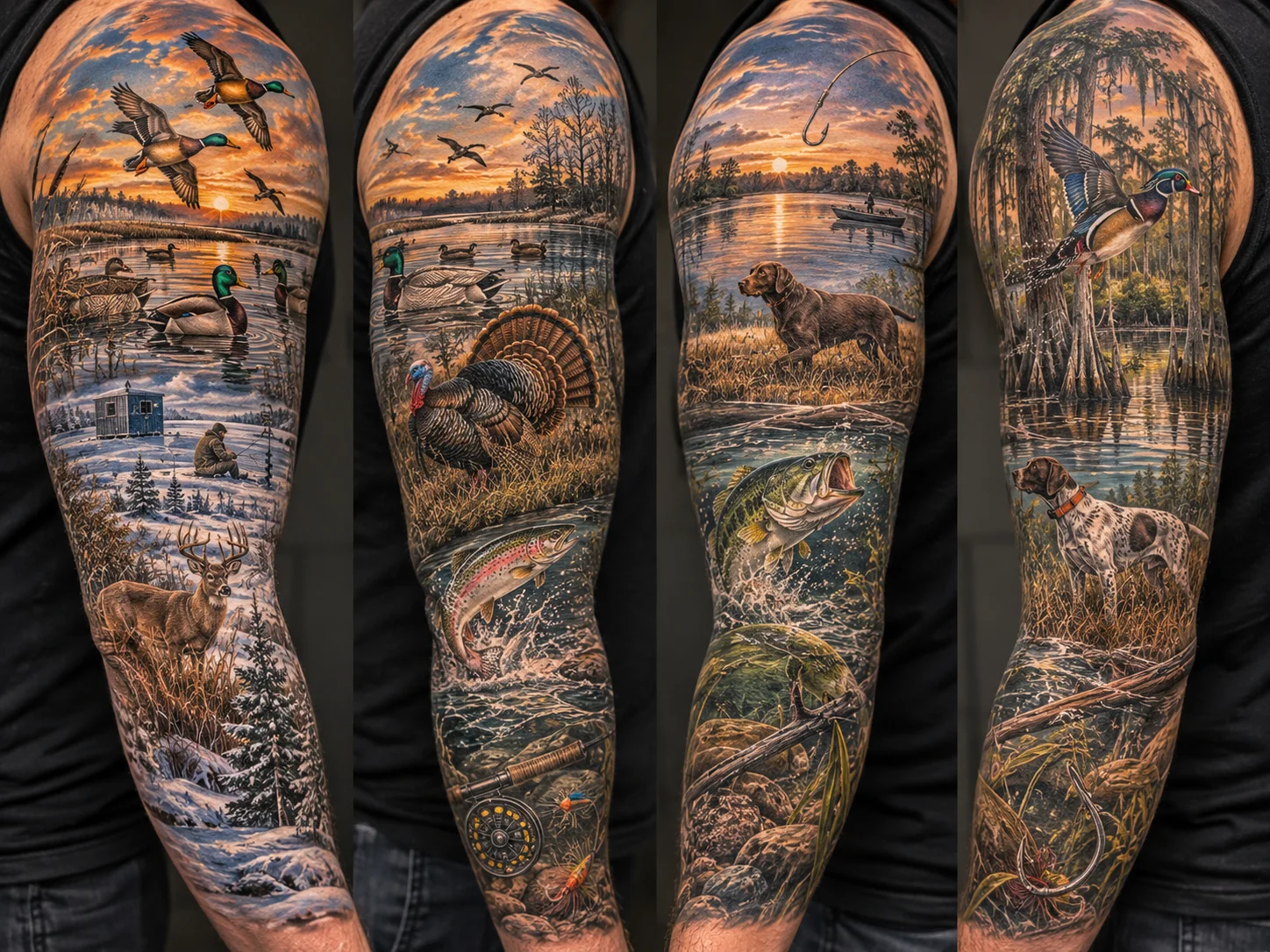
A full sleeve that narrates a hunter’s relationship with the outdoors across all seasons is the most ambitious entry on this list, and also the most personal. The structure typically moves chronologically or by season: waterfowl in the fall, ice fishing or whitetail in winter, turkey or trout in spring, and open water or upland birds in summer. Each scene connects to the next through shared background elements, a consistent water line, tree line, or horizon, so the sleeve reads as one continuous environment rather than a series of unrelated patches.
Waterfowl almost always anchors the fall segment of these sleeves, and the blind scene or mallard composition from the earlier entries functions as the visual centerpiece. BlackInk’s hunting-and-fishing collections updated in October 2026 show this exact format: ducks and decoys transitioning into fishing hooks and bass, then into upland birds and pointing dogs. The result is a visual autobiography of time spent outdoors, which is exactly what it’s intended to be.
This scale of tattoo requires planning over months, not weeks. The artist needs to design the full sleeve as a single composition before the first session, mapping where each scene lives and how the transitions work. Hunters who have done this describe the process as collaborative in a way that single-piece tattoos are not, the artist needs to understand not just what species you hunt, but where you hunt them, what time of year matters most, and which memories you want permanently visible. A wood duck in a cypress swamp reads differently from a mallard on a prairie pothole, and that specificity is the point. One 2024 community post describes a fishing-and-hunting sleeve that includes a wood duck alongside a silhouette of the poster and their father, the kind of detail that makes a sleeve a record rather than a gallery.
Quick Comparison
| Design | Best Style | Recommended Placement | Relative Complexity |
|---|---|---|---|
| Full Marsh Blind Scene | Black-and-grey realism | Back, chest, full sleeve | High |
| Realistic Mallard Drake | Color realism | Upper arm, chest | High |
| Retriever Portrait | Fine-line black-and-grey | Upper arm, back | Medium, High |
| Gear Still Life | Neo-traditional | Forearm, calf | Medium |
| Silhouette Scene | Black-and-grey with highlight | Forearm, calf, sleeve wrap | Low, Medium |
| Hybrid Outdoor Sleeve | Mixed realism/illustrative | Full sleeve | Very High |
Conclusion
The right starting point among these 6 duck hunter tattoo designs that capture your passion for the blind depends on two things: how much of your personal story you want encoded in the piece, and how much real estate you’re willing to give it. If you’re unsure, start with a contained design, the gear still life or the silhouette scene, and find an artist who has tattooed wildlife realism before. Bring reference photos of your actual blind, your dog, your water. The designs that hold up over decades are the ones specific enough that a stranger couldn’t wear them without explanation.