Duck Hunt Fanart Pieces Every Retro Gamer and Hunter Will Love
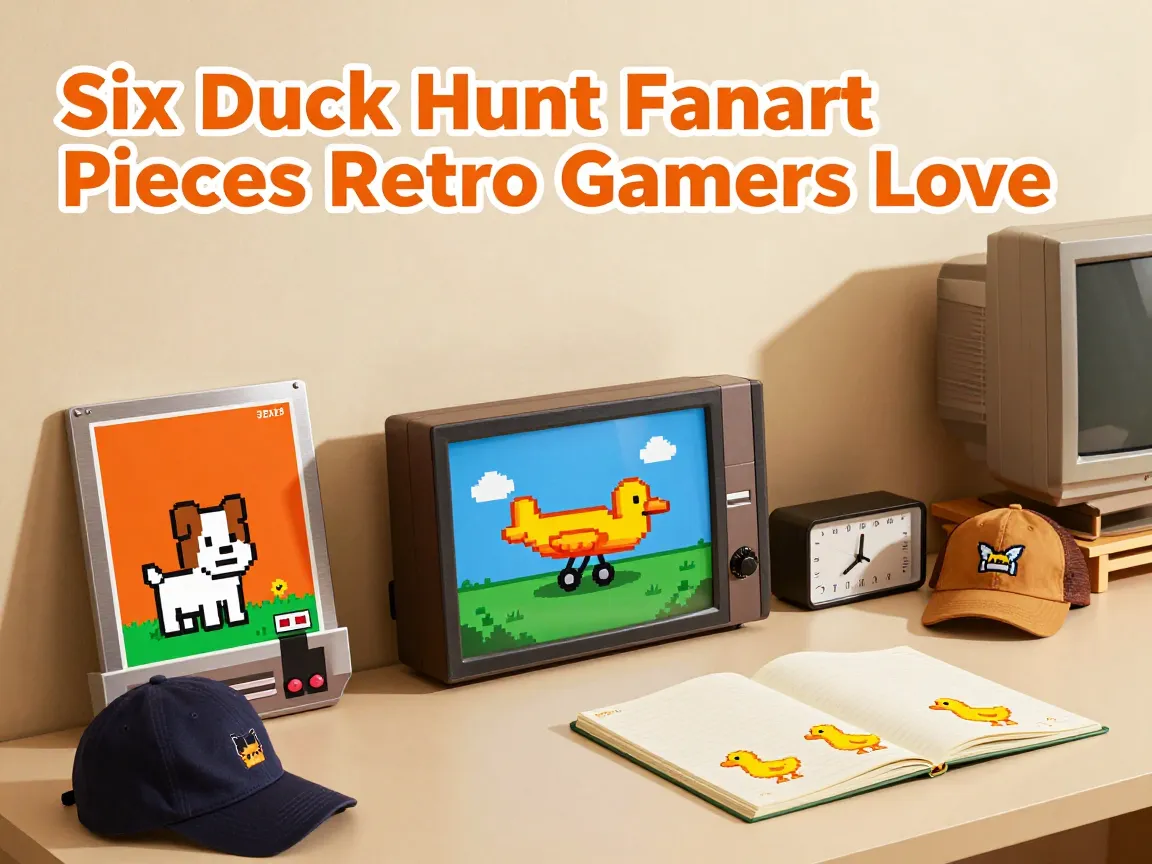
The original Duck Hunt cartridge sold alongside the NES in 1985, and four decades later fan creators are still making art from it. That staying power is not nostalgia alone. The game’s visual vocabulary, the orange gun, the laughing dog, the pixelated ducks against a blue sky, translates cleanly into almost every medium a fan artist might pick up: metal print, shadow box, pixel canvas, 3D filament. The 6 Duck Hunt fanart pieces every retro gamer and hunter will love span that full range, from a 32-pixel-wide cartridge illustration built on a rare color palette to a physical 3D diorama deep enough to cast shadows on your wall.
Disclosure: This post contains affiliate links. As an Amazon Associate, we earn from qualifying purchases, and at no extra cost to you.
Key Takeaways
- Duck Hunt fan art has expanded well beyond flat prints into 3D-printed wall pieces, shadow-box dioramas, embroidered caps, and wall clocks.
- Pixel-art interpretations using constrained palettes, such as the 16-color PICO-8 set, are among the most technically disciplined entries in the fan community.
- Marketplaces like Etsy host dozens of active listings as of 2026, meaning most pieces are available to buy rather than just admire online.
- DeviantArt archives crossover and 3D-model fanart dating back to 2005, showing the community’s long continuity.
- The audience for Duck Hunt fanart splits roughly between retro gaming collectors and actual waterfowl hunters, and the strongest pieces speak to both.
1. IanSkelskey’s 32×32 Pixel NES Cartridge on Lospec
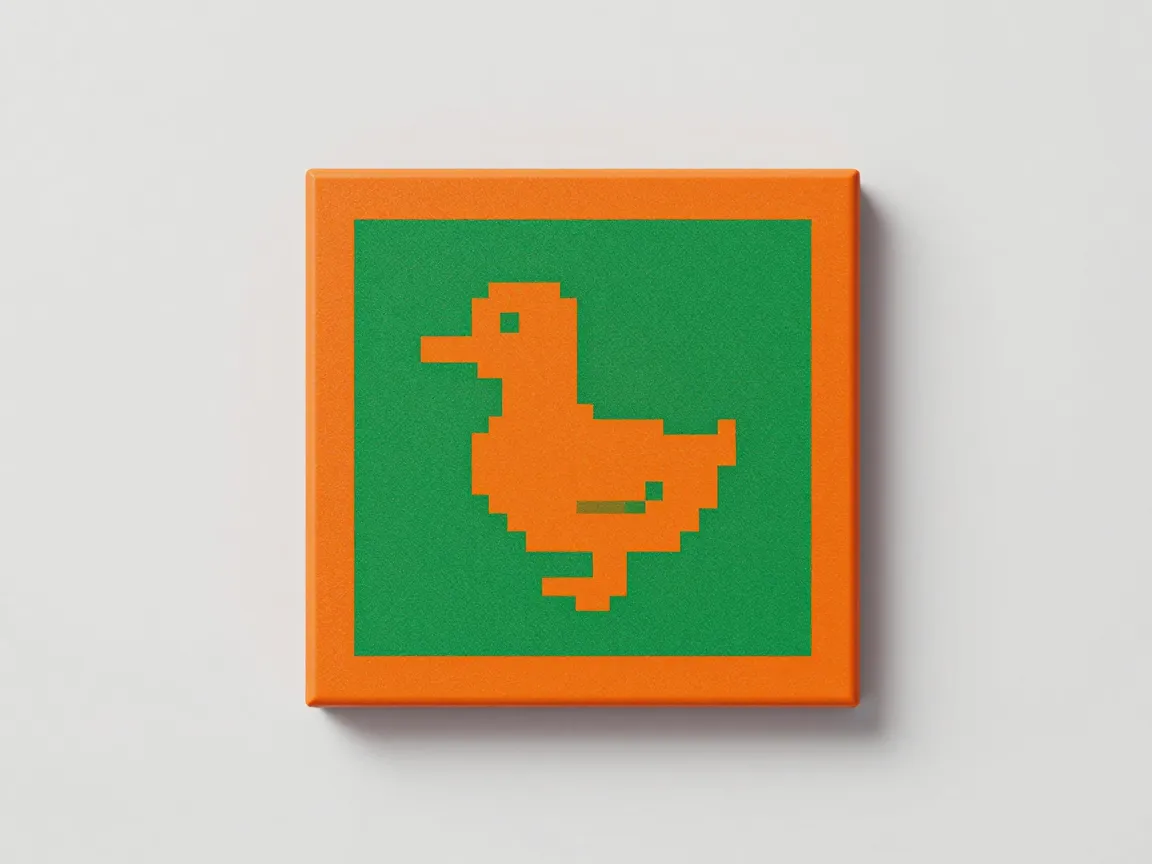
Pixel art has a size problem. The smaller the canvas, the harder it is to communicate detail without it becoming mush. IanSkelskey solved that on a 32×32 grid by recreating the Duck Hunt NES cartridge label in exactly 16 colors pulled from PICO-8’s standard and “secret” palettes, a palette most pixel artists know well because it was baked into the PICO-8 fantasy console and forces creative constraint rather than offering infinite choice.
The result, hosted on the Lospec Pixel Art Gallery, holds the cartridge’s recognizable orange-and-green color blocking at a scale where most artists would abandon recognizable detail entirely. At that resolution, every single pixel is a decision. The callout on the Lospec listing notes the last update as November 25, 2026, meaning the piece is still being maintained in the gallery’s active collection rather than archived.
What makes this relevant to both audiences in the article’s title is its specificity. A retro gamer sees the cartridge label and immediately reads “NES launch title.” An actual duck hunter sees the duck silhouette rendered in roughly eight pixels and reads something closer to a hunting patch or brand logo. That dual legibility is rare and worth seeking out if you’re looking for art that hangs in a room used by both kinds of people.
If you want to follow IanSkelskey’s method, Lospec publishes the palette reference files alongside the artwork. The PICO-8 palette is free to download, and the “secret” extended palette adds 16 additional colors, giving you 32 total, though IanSkelskey used only half of them here.
2. MAHESA’s Duck Hunt Metal Poster Print
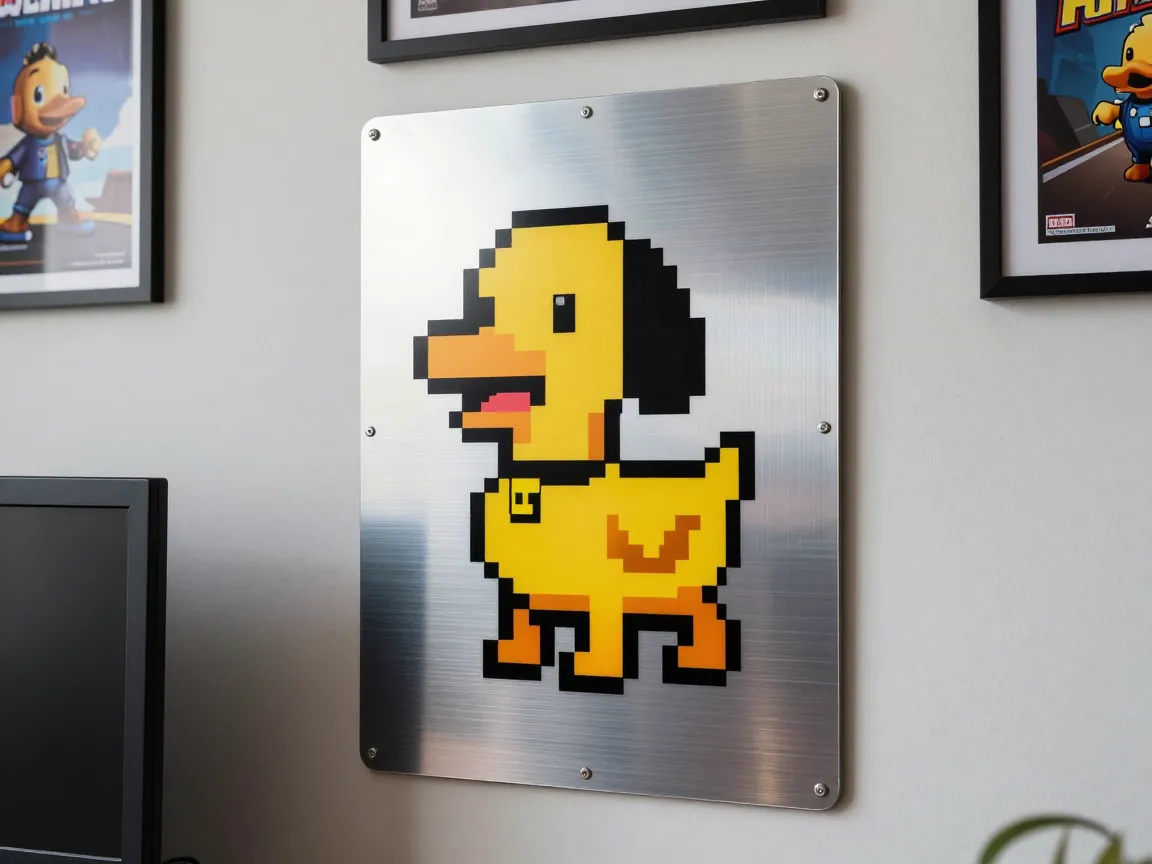
A standard paper print ages. Metal does not. The poster by artist MAHESA on a major print-on-demand platform takes the pixelated Duck Hunt dog, that grinning, collar-wearing retriever that has haunted NES players since 1985, and prints it directly onto a brushed metal substrate marketed explicitly as retro gaming wall decor.
The listing, dated November 17, 2026, positions the piece squarely in the game-room category: the kind of wall art that goes above a CRT monitor or beside a framed Contra box art reprint. Metal printing captures the chunky pixel edges cleanly because there’s no paper fiber to soften or blur the boundary between colors. The dog’s expression, which is the entire emotional payload of the original game, reads at a distance in a way that a matte paper print of the same subject often does not.
For hunters specifically, the dog is the hook. A laughing retriever is not far from a hunting camp inside joke. That’s not an accident, the original designers at Nintendo R&D1 built the dog as a reaction character, something that acknowledged your failure with personality. Seeing that character on a metal poster carries the same compressed joke, and it lands whether the person looking at it played the game or just owns a hunting dog.
The metal format also has a practical edge for game rooms: it’s durable, wipes clean, and doesn’t require glass framing. If your room gets humid, a basement game den, a hunting camp common room, metal holds up where paper warps.
3. The 536-Plus Duck Hunt Wallpaper Collections
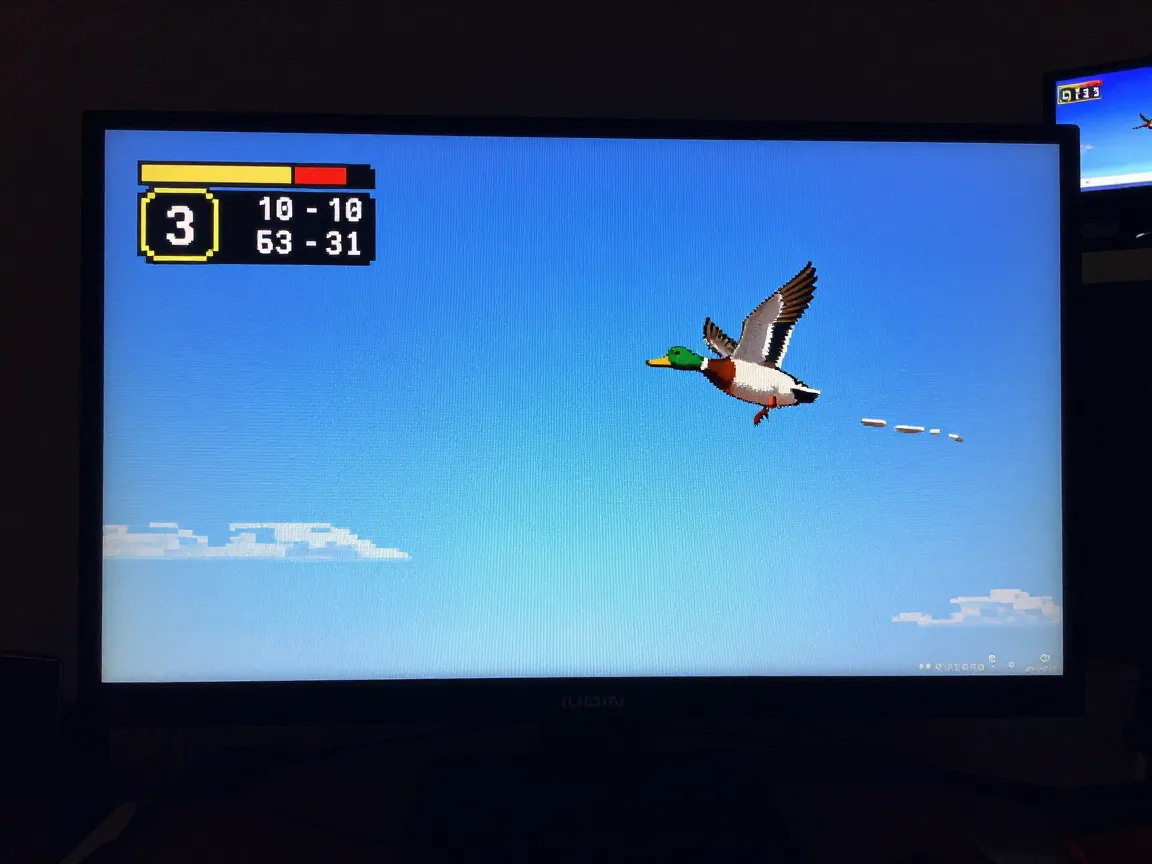
Not every fan expression requires a physical object. One dedicated wallpaper provider lists more than 536 Duck Hunt backgrounds as of November 25, 2026, covering everything from a cartoon dog running alongside a purple duck to straight recreations of the NES cartridge cover with a light gun icon to in-game hunting scenes with visible score statistics intact.
A second wallpaper site curates a smaller themed selection, including “Duck Hunt Classic Game Wallpaper,” “Duck Hunt Logo On Black Background Wallpaper,” and “Duck Hunt Duck Chase Wallpaper”, with metadata showing a last update on October 3, 2026. The variety matters here because wallpaper collections serve a different kind of fan than a wall print does. These are for the person who wants the aesthetic present in their daily screen environment without committing wall space or money.
The score-stat wallpapers deserve attention. They screenshot the game’s HUD, the round count, the hit percentage, the duck flying away when you miss, and present that as the art itself. For retro gamers, that’s a compressed autobiography: anyone who played Duck Hunt remembers exactly what a missed shot looked like on that screen. For hunters, the score display functions like a field log, the kind of tally a hunting party might keep on a whiteboard at camp.
The practical use case for wallpapers is broader than it might appear. Game streamers use themed backgrounds in their overlays. Retro gaming collectors use them on second monitors set to static display. Teachers who run retro-gaming electives have used them as classroom backgrounds. At zero cost and instant download, the barrier is low enough that there’s no reason to settle for a generic desktop.
4. The Etsy 8-Bit Duck Hunt Art Print for Retro Gaming Nostalgia
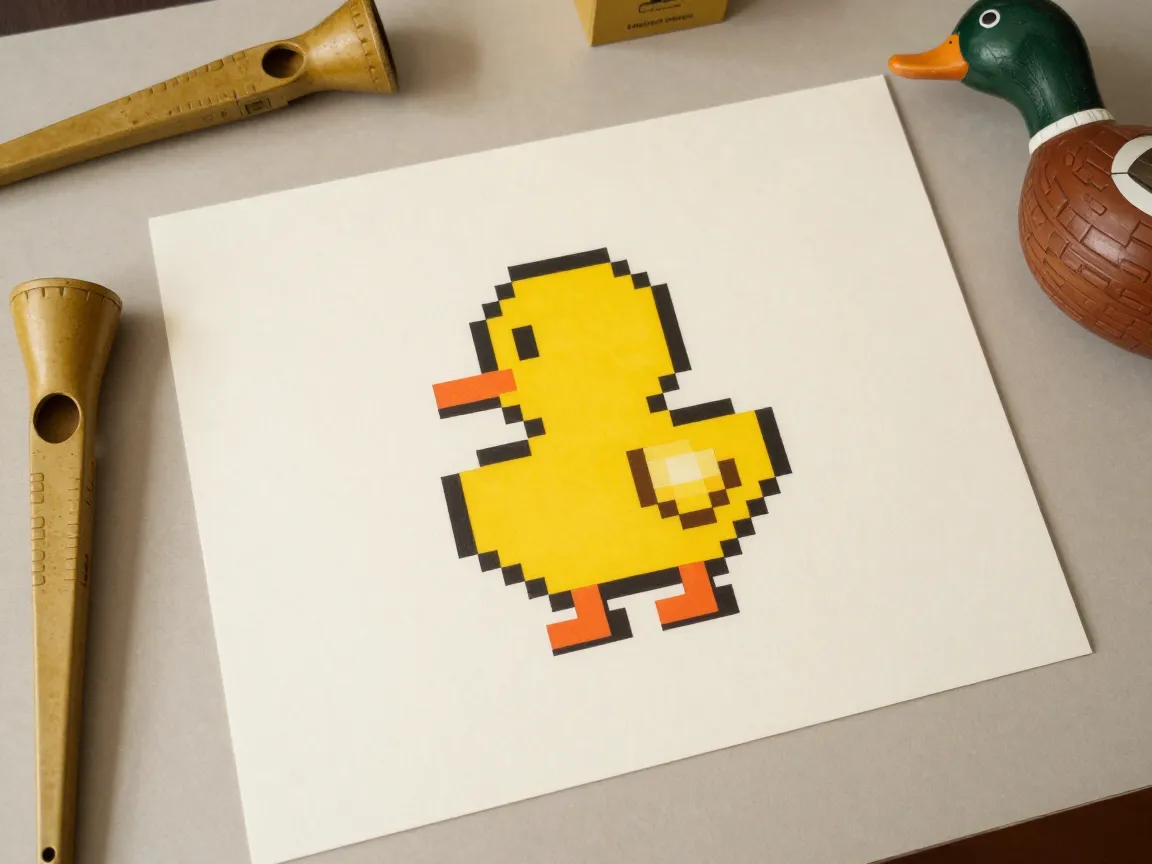
Physical art bought directly from an independent creator carries a provenance that a corporate poster does not. An Etsy listing for an “8-Bit Duck Hunt Art Print: Retro Gaming Nostalgia”, also described by its seller as “Pixel Hunter Duck”, targets three distinct buyer types in its own product copy: retro gamers, hunting memorabilia collectors, and fans of 80s decor.
That framing is deliberate. The seller recognized the crossover audience and wrote the listing accordingly, with an estimated delivery window of late November to early December 2026 and an update timestamp of November 19, 2026. The print style aligns with classic NES sprite rendering: blocky colors, no anti-aliasing, the kind of edges that come from drawing on a grid rather than a vector path.
What separates this from a generic retro print is the hunting memorabilia angle. A hunting collector who has never owned an NES can still appreciate an 8-bit duck print alongside a vintage duck call or a carved decoy. The pixel aesthetic reads as “vintage” to that audience just as naturally as a 1950s waterfowl lithograph does. The two aesthetics are separated by thirty years and completely different production methods, but they occupy the same emotional register: a duck, frozen in a moment, made into art.
If you’re buying this as a gift, the seller’s own language gives you the pitch. It bridges three communities at once, which means it has a reasonable chance of landing well even if you’re not certain which category the recipient falls into.
5. The 3D Shadow Box Diorama and 3D-Printed Wall Art
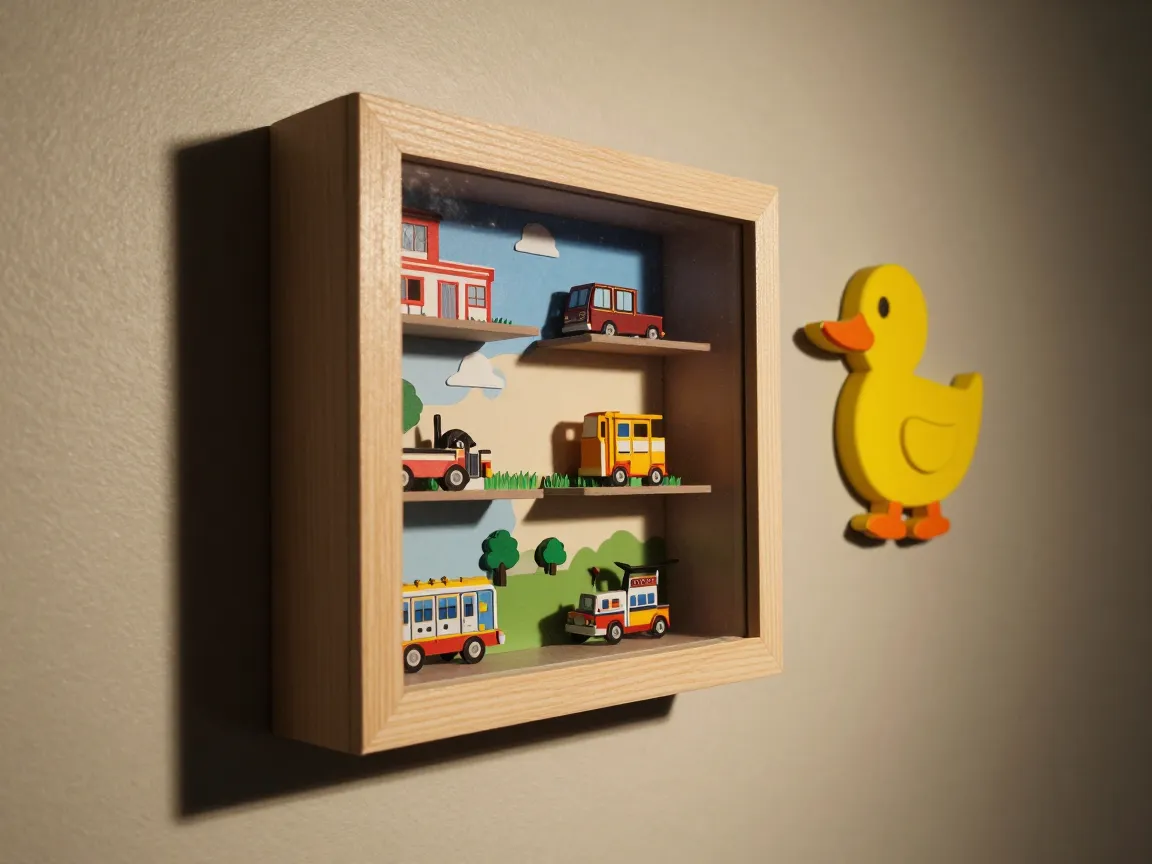
Two distinct three-dimensional Duck Hunt fan pieces have emerged as a growing niche in retro-gaming home decor as of 2026, and they’re worth treating as a pair because they achieve depth through completely different methods.
The first is a handmade 3D shadow-box diorama measuring 10.5 inches by 10.5 inches by 2.5 inches deep, listed on Etsy’s gaming art category page. The box recreates a Duck Hunt scene in layered paper or acrylic planes, each element of the NES scene sits at a slightly different depth inside the frame, so the whole thing casts actual shadows when lit from the side. The effect makes a flat 8-bit image into something with physical dimension, which is a reasonable metaphor for what good fan art does to source material in general.
The second piece is a fully 3D-printed NES Duck Hunt wall art mount, listed on Etsy with an October 22, 2026 date. The seller describes it as “retro gaming nostalgia” and “3D-Printed Wall art Inspired by the NES game Duck Hunt,” and the platform notes that the marketplace supports carbon offsets and electric delivery trucks, details that reflect where the independent craft marketplace sits in 2026 regardless of whether they affect your purchase decision.
Both pieces work in the same spaces: game rooms, man caves, hunting lodges, or any room where the occupant wants something on the wall that isn’t a flat print. The shadow box skews handmade and artisanal. The 3D-printed version skews maker-culture and reproducible. Neither is better in absolute terms, but the shadow box is the one you display in a living room and the printed mount is the one you mount in a garage game den.
The LaunchBox fan community also hosts high-resolution background artwork for Duck Hunt at resolutions up to 6827×3840 pixels for the combined Super Mario Bros./Duck Hunt cartridge, tagged with October 2026 updates. That community uses these assets primarily for digital displays and game-front-end interfaces, but the files are large enough to serve as source material for anyone printing large-format physical art.
6. The DeviantArt Crossover Pieces
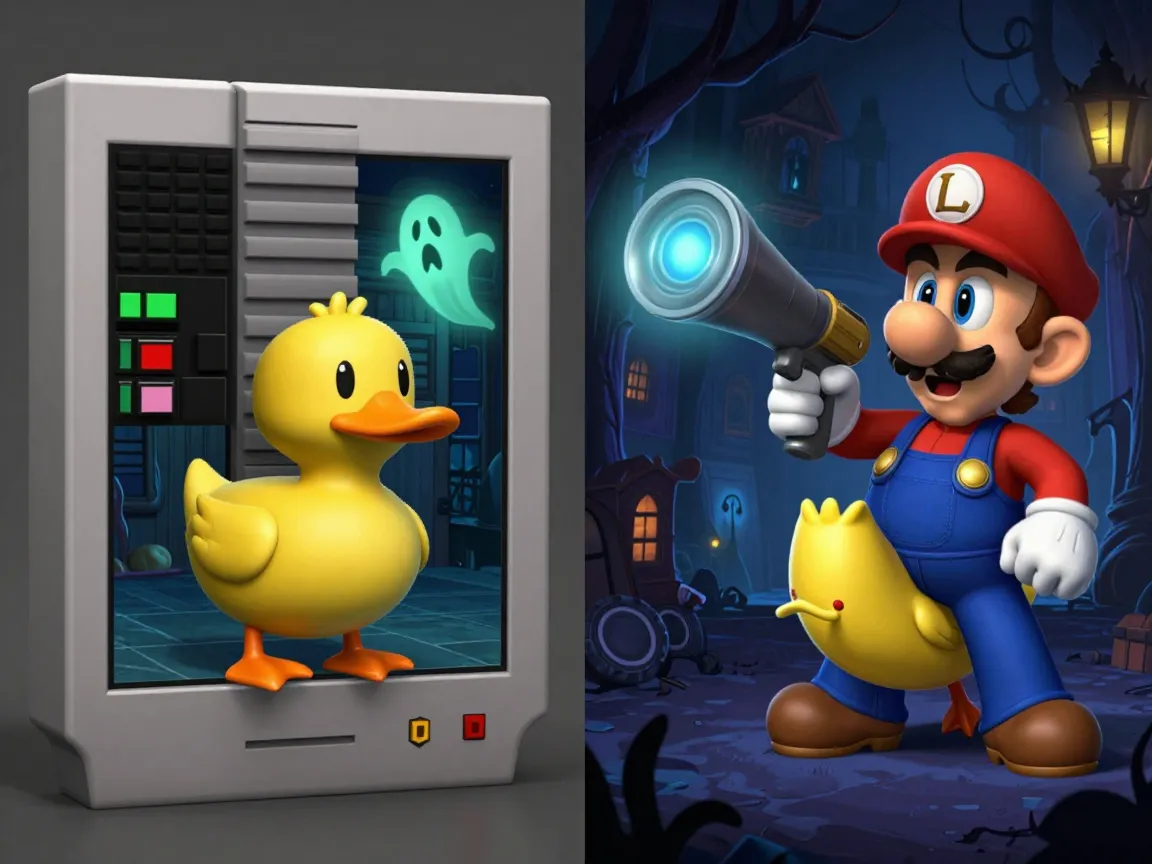
DeviantArt has hosted Duck Hunt fanart continuously since the platform launched, and two pieces illustrate the range the community reaches. The first is a Duck Hunt 3D model posted in 2005 that translates the NES sprite work into a 3D Studio Max render, an early example of a fan taking a 2D pixel character and asking what it would look like if it had geometry. At the time, that was a technically demanding project. Viewed now, it functions as a time capsule of what 3D fan rendering looked like at the mid-2000s skill ceiling.
The second is “Duck Hunt: Mutt-ergeist,” posted in 2020, which places the Duck Hunt dog in a Luigi’s Mansion scenario, equipping him with the Poltergust vacuum and framing him as a ghost-hunting antagonist. The concept works because both games hinge on the same character dynamic: a dog that reacts to your performance, either laughing at you or hunting alongside you. Moving him into a haunted house setting keeps that dynamic intact while adding a layer that only someone who played both games would fully catch.
DeviantArt reports over 115 million registered members and more than 790 million hosted art pieces across all categories, which means the Duck Hunt archive there is deep enough that a single afternoon of browsing will surface pieces that never made it onto any curated list. The crossover category is especially worth exploring: fans have paired the Duck Hunt dog with characters from Pokémon, Star Fox, and Metal Gear, usually playing on that same laughing-dog energy.
For retro gamers, the crossover pieces are the most replayable category of fan art. They reward recognition, you have to know both source materials to get the joke, and they tend to generate the kind of comments that turn into actual conversations about which games shaped a generation. For hunters without that gaming background, the 3D model is the more accessible entry: a recognizable dog breed, rendered in three dimensions, with no prior context required.
Quick Comparison
| Piece | Format | Physical or Digital | Best For |
|---|---|---|---|
| IanSkelskey pixel cartridge | 32×32 pixel art | Digital (Lospec gallery) | Pixel art fans, NES collectors |
| MAHESA metal poster | Metal print | Physical | Game rooms, humid spaces |
| 536-plus wallpaper collection | Desktop wallpaper | Digital | Streamers, daily screen use |
| Etsy 8-bit art print | Paper print | Physical | Retro gamers, hunting collectors |
| 3D shadow box / 3D-printed mount | Dimensional wall art | Physical | Game rooms, hunting lodges |
| DeviantArt crossover pieces | Digital illustration | Digital (DeviantArt) | Community browsing, crossover fans |
Conclusion
The six pieces above cover the full spectrum from a 32-pixel cartridge to a hand-layered shadow box, which means the right choice depends entirely on where it’s going and who’s looking at it. If you’re buying for a wall, the metal poster or 3D-printed mount will outlast a paper print in any room that gets temperature swings. If you’re looking for something to give a fan who already has wall art, the DeviantArt crossover archive is free and deep enough to find something they haven’t seen. Start with the Etsy category search for “Gaming Art Duck Hunt”, the aggregated listings as of 2026 include clocks, shadow boxes, embroidered caps, and ornaments, so you’ll cover the full range in one browse.