Trout Fishing Gear Essentials That Belong in Every Angler’s Pack
Trout fishing consistently ranks as one of the most widely pursued freshwater activities in North America, yet the gap between anglers who catch fish regularly and those who come home empty-handed almost always comes down to what is in their pack, not how hard they try. The 6 trout fishing gear essentials that belong in every angler’s pack are not exotic or expensive. They are specific, proven choices that match how trout actually behave in streams, stocked ponds, and open lakes across different seasons.
Disclosure: This post contains affiliate links. As an Amazon Associate, we earn from qualifying purchases, and at no extra cost to you.
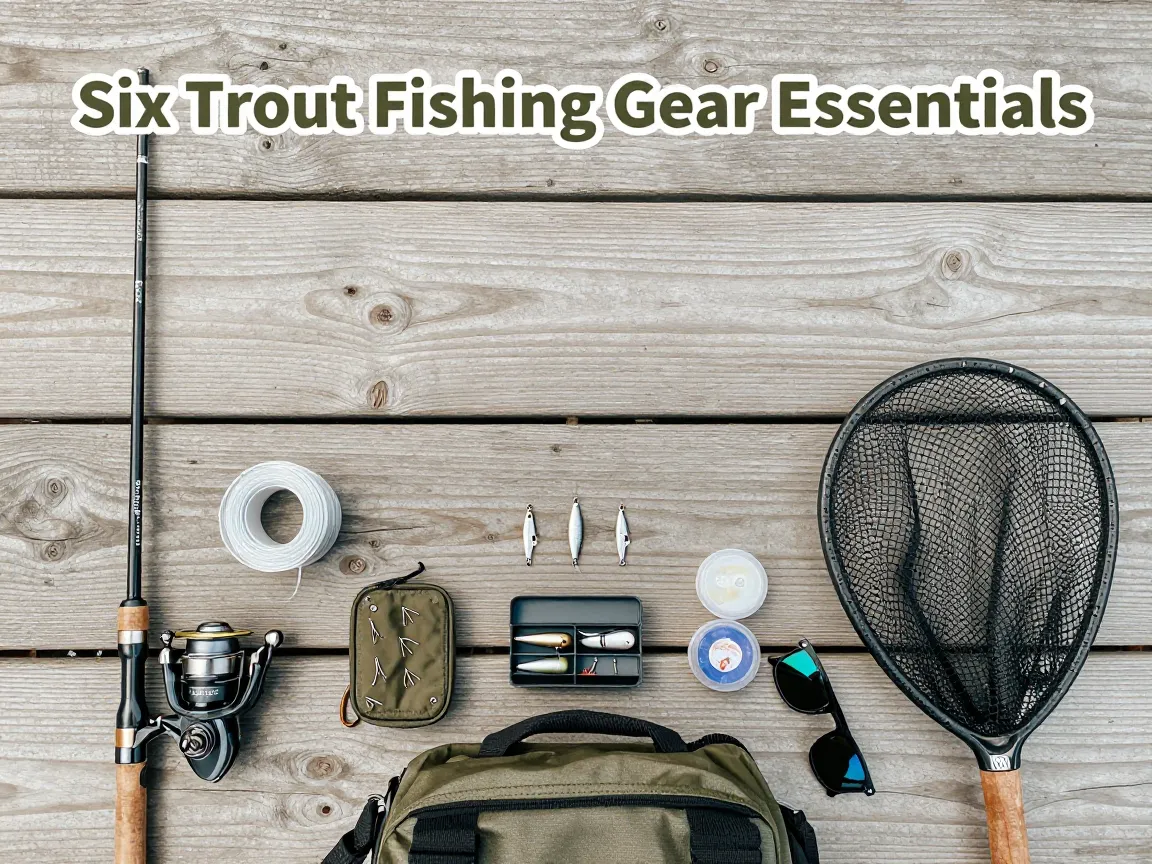
This guide covers each essential in full, including the exact specs that matter and the practical reasons behind every recommendation. Whether you are heading to a put-and-take stocked stream or working a wild river, these six items cover the situations you will actually face.
1. A Light Spinning Rod and Reel Combo
A 6-foot light spinning rod paired with a 1000-size reel is as close to a universal trout solution as the sport offers. The length works in tight, wooded stream corridors without snagging overhead brush, while still giving you enough reach to lay a lure across a pool on a small lake. Light power means the rod loads during the cast with lures as small as 1/16 oz, which is exactly the range where most effective trout presentations live.
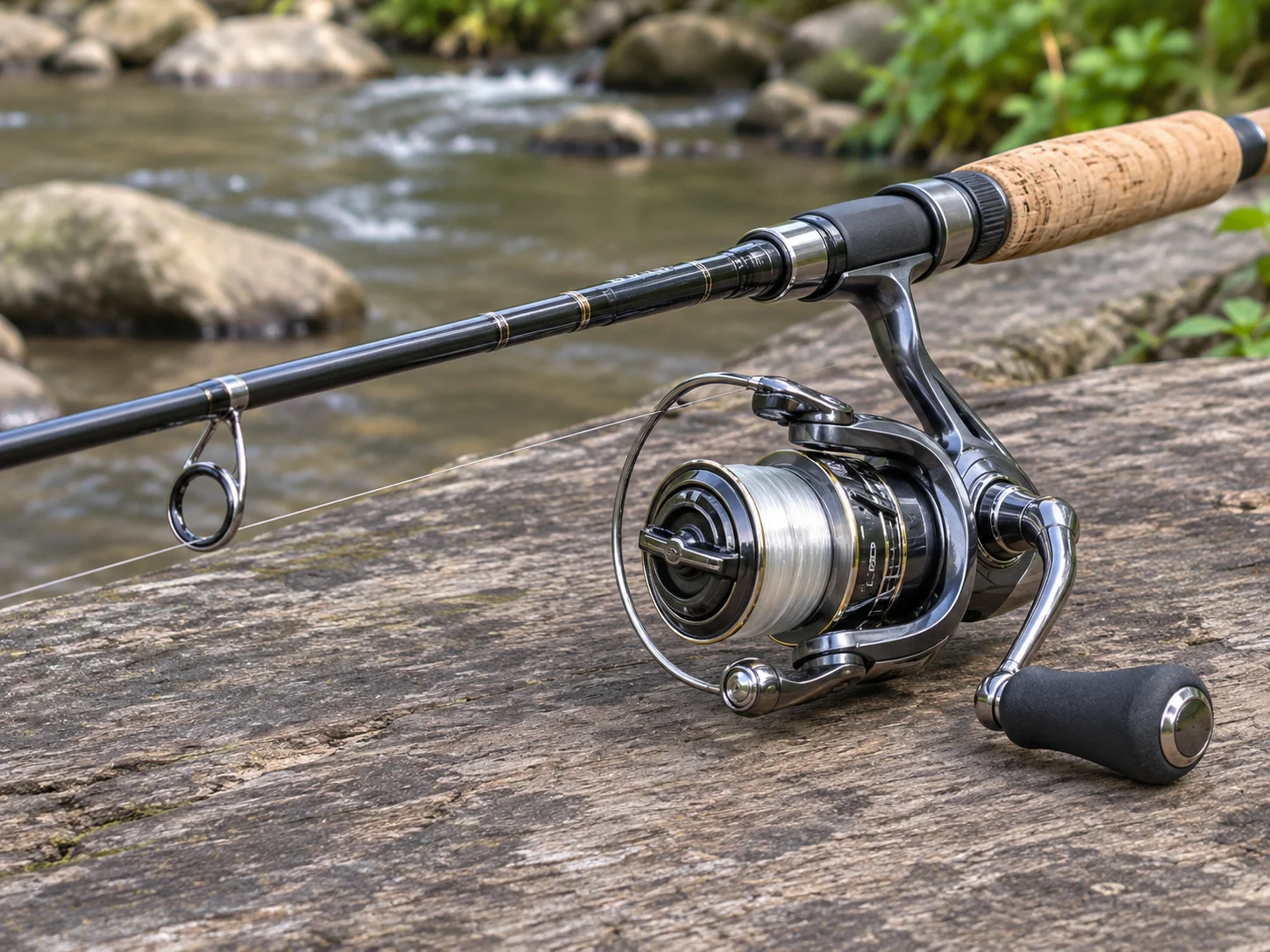
The 1000-size reel matters more than many anglers realize. It is physically small, so it balances properly with a 6-foot light rod rather than making the setup feel tip-heavy. It also holds an adequate amount of 4 to 6 lb monofilament, the line weight that fits this setup. Larger reels add unnecessary bulk and change how the rod feels in hand during long sessions walking stream banks.
If you plan to pursue trout in rivers with strong current or large lake trout in deep open water, a 7-foot medium-light rod gives more reach and slightly more backbone. For the majority of trout fisheries in 2026, though, the 6-foot light combo does the job without compromise. Fly fishing anglers who want one alternative should look at a 9-foot 5-weight rod and reel, which is comparably versatile on moving water and handles everything from small brookies to larger browns.
The build quality of the rod does not need to be premium. A solid mid-range graphite blank with stainless steel guides handles trout fishing without issue. What matters is that the action is light, not medium or heavy, because heavier rods cannot transmit the subtle take of a cautious wild trout.
2. The Right Fishing Line for Trout Conditions
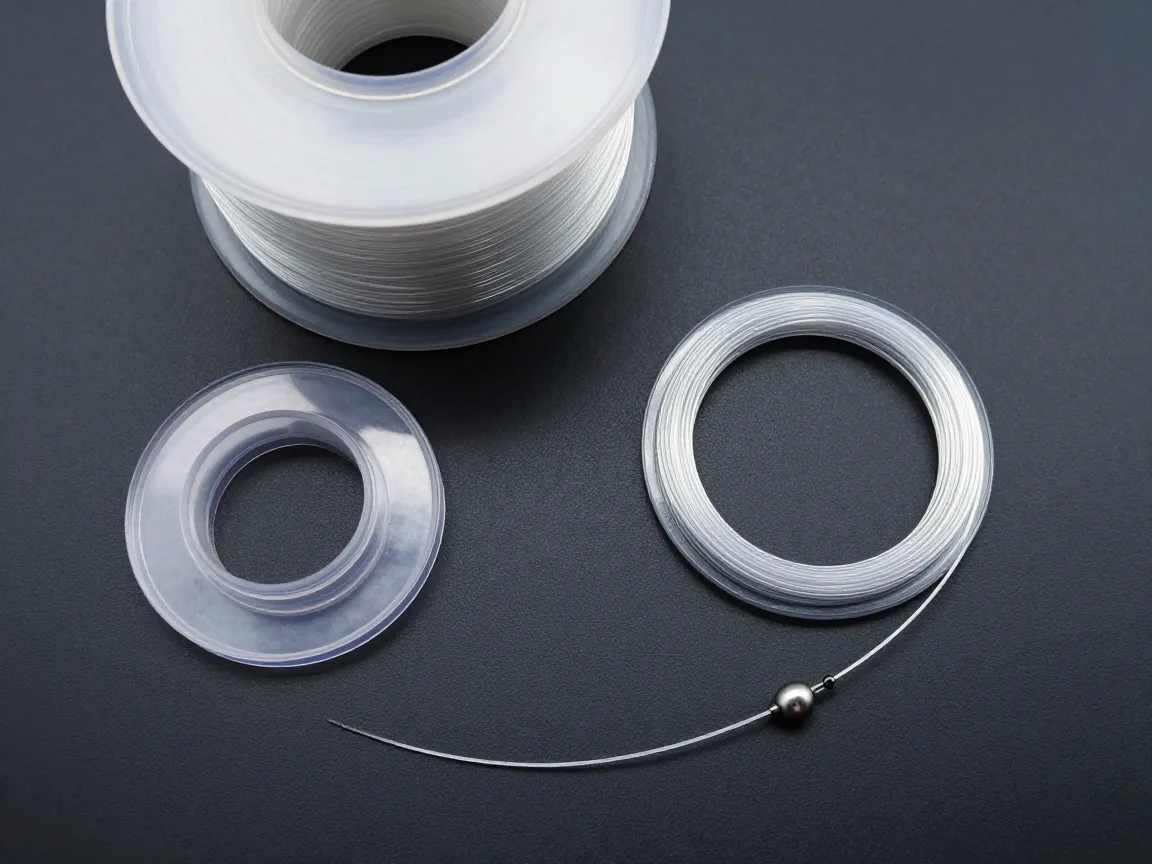
Line choice directly affects how many fish you hook, and 4 to 6 lb monofilament is the standard for most trout spinning setups. That range is light enough to avoid spooking wary fish in clear water and strong enough to handle the brief, aggressive runs of a 15-inch stocked rainbow or a wild brown. Monofilament has natural stretch that absorbs shock during hooksets, which helps when you are using light wire hooks that can straighten under sudden pressure.
For general put-and-take fisheries, a 4 lb monofilament main line covers the majority of situations. If you are fishing rivers with heavy current or targeting larger holdover fish, stepping up to 6 lb is sensible without meaningfully increasing visibility. Some anglers fishing heavily pressured, gin-clear autumn streams add a 24-inch fluorocarbon leader in the same 4 to 6 lb range. Fluorocarbon has a refractive index close to water, making it harder for fish to see, and it sinks rather than floating, which helps keep natural bait presentations down in the water column where trout are feeding.
Avoid heavy monofilament on a trout spinning rig. Lines above 8 lb start to coil noticeably on a 1000-size reel and reduce casting distance with small lures. They also create more visible drag in current, which makes presentations look less natural. On the opposite end, dropping below 4 lb with beginners or in areas with snags risks break-offs that leave terminal tackle in the water and sometimes in the fish.
A 300-yard spool of a Trilene-style monofilament gives you a full season of fishing with room to re-spool after any significant abrasion from rocks. Inspect the last few feet of line after each session and trim back any section that feels rough or looks kinked.
3. Small Spinners and Spoons
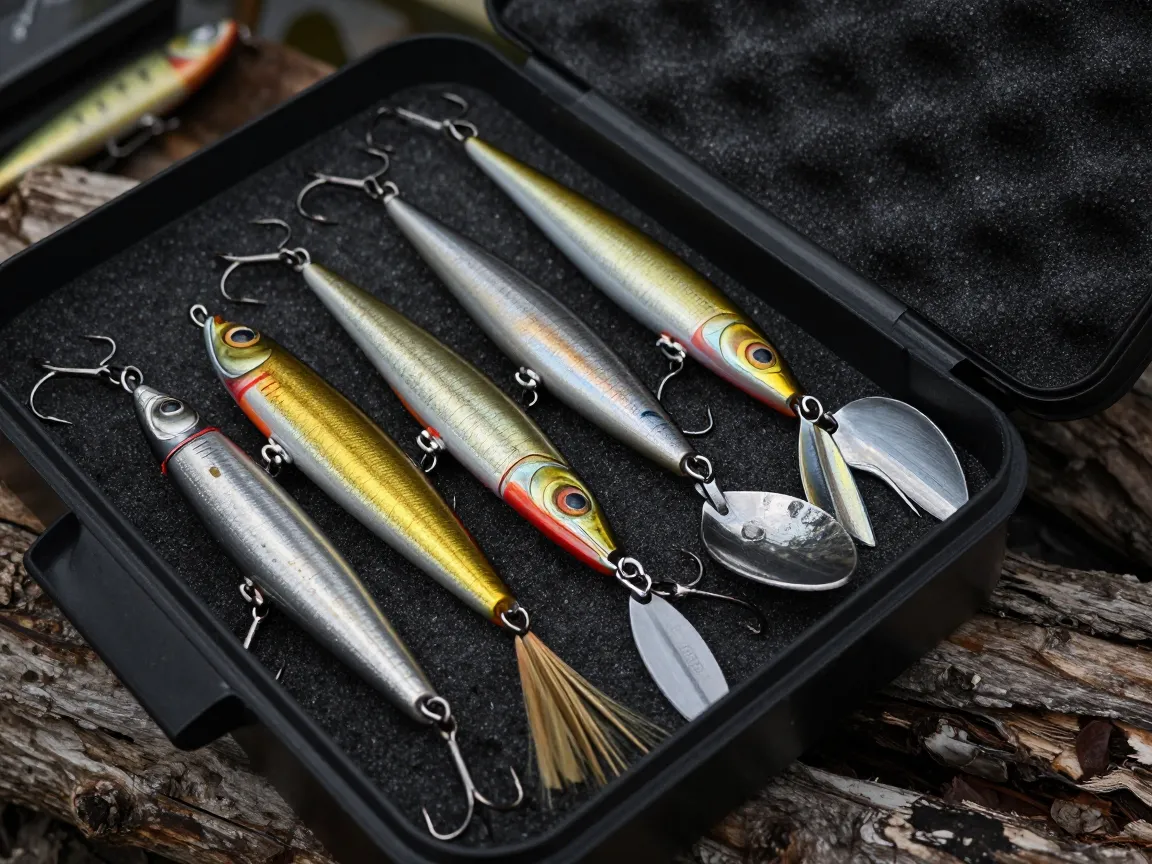
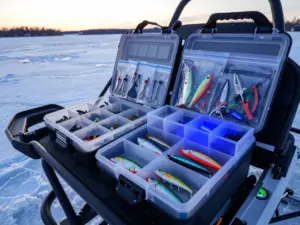
If you carry only one type of artificial lure for trout, small spinners in the 1/16 oz range are the most versatile starting point across stocked ponds, rivers, and natural lakes. The rotating blade generates flash and vibration that trout respond to in both clear and slightly murky water. A slow, steady retrieve keeps the blade spinning at low speeds, which is what you want when water temperatures are cold and fish are less willing to chase.
Spoons in the 2 to 3 inch range add a different action. They flutter and wobble on the fall, which triggers strikes from trout that follow but do not commit to a spinner. In managed trout ponds and reservoirs, spoons under 2 grams are considered a bare essential by area-trout specialists, particularly for rainbow trout in mid-depth water. The difference between a spinner and a spoon matters because each produces a different water displacement signature. Having both covers situations where fish are keyed in on one type of movement.
Small crankbaits round out the artificial side of the pack. A 2-inch floating crankbait lets you work very shallow water and rocky edges where trout stage in the morning. The buoyancy means you can pause the retrieve and let the lure rise slightly, imitating a struggling baitfish. This is particularly effective in lakes with minimal current where a straight retrieve can feel unnatural to pressured fish.
Color selection is a secondary concern compared to size. Start with natural finishes like silver, gold, or olive patterns that match small minnows and insects. Bright colors like chartreuse work in stained water or during overcast conditions when contrast visibility is reduced.
4. Terminal Tackle: Hooks, Split Shot, Swivels, and Bobbers
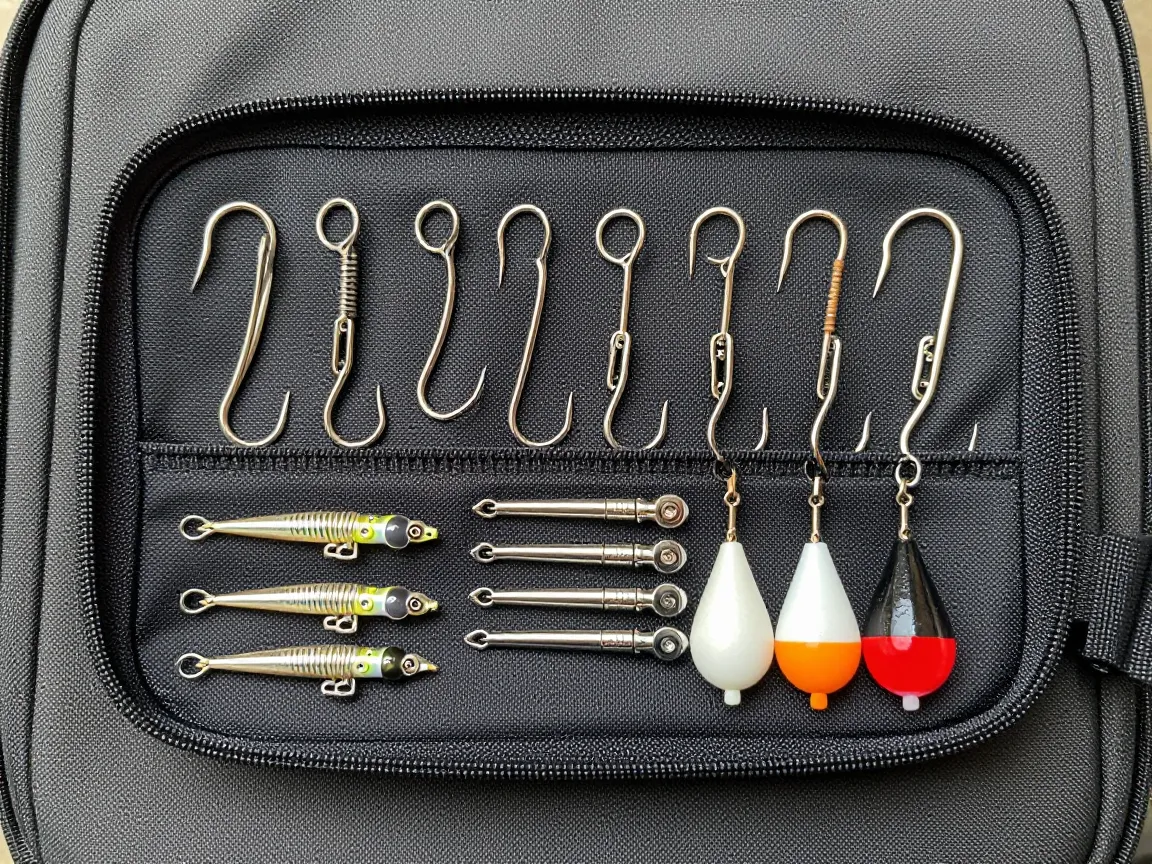
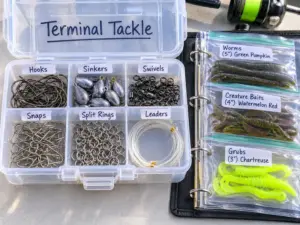
Terminal tackle is the category most anglers underpack, and it is the one that most often determines whether a good bait presentation works or fails. The core items are size 10 to 12 light wire hooks, BB to SSG split shot sinkers, size 10 snap swivels, and a small selection of bobbers in the 1 to 1.5 inch range.
Light wire hooks in size 10 or 12 are the right choice for stocked trout fishing with bait. The light wire penetrates easily on a soft hookset, which matters when you are using flexible monofilament that absorbs shock. Wide-gap designs hold powerbait-style dough bait more securely than standard wire hooks without requiring you to pack multiple styles. Carry at least a dozen in a small zippered pouch because snags, bottom structure, and the occasional toothy fish will cost you hooks over a full day.
Split shot sinkers allow you to adjust the depth and weight of your presentation without retying. Crimping a single BB-size shot 8 to 10 inches above your hook puts the bait slightly off the bottom in still water and keeps it in the strike zone without anchoring it unnaturally. Using too much weight pins the bait in one spot and prevents the natural movement that triggers feeding. The ability to add or remove shot quickly as conditions change is one of the small tactical advantages that separate consistent anglers from occasional ones.
Snap swivels in size 10 prevent line twist when using spinners and spoons. Without a swivel, the rotating blade of a spinner winds your monofilament into a useless coil after thirty minutes of fishing. A swivel also makes lure changes faster. Bobbers in the 1 to 1.5 inch range work for suspending a worm or dough bait at a set depth, particularly in still ponds where a bottom rig would sink into soft sediment and hide the bait from cruising fish.
5. Bait Essentials: Dough Bait, Worms, and Mealworms
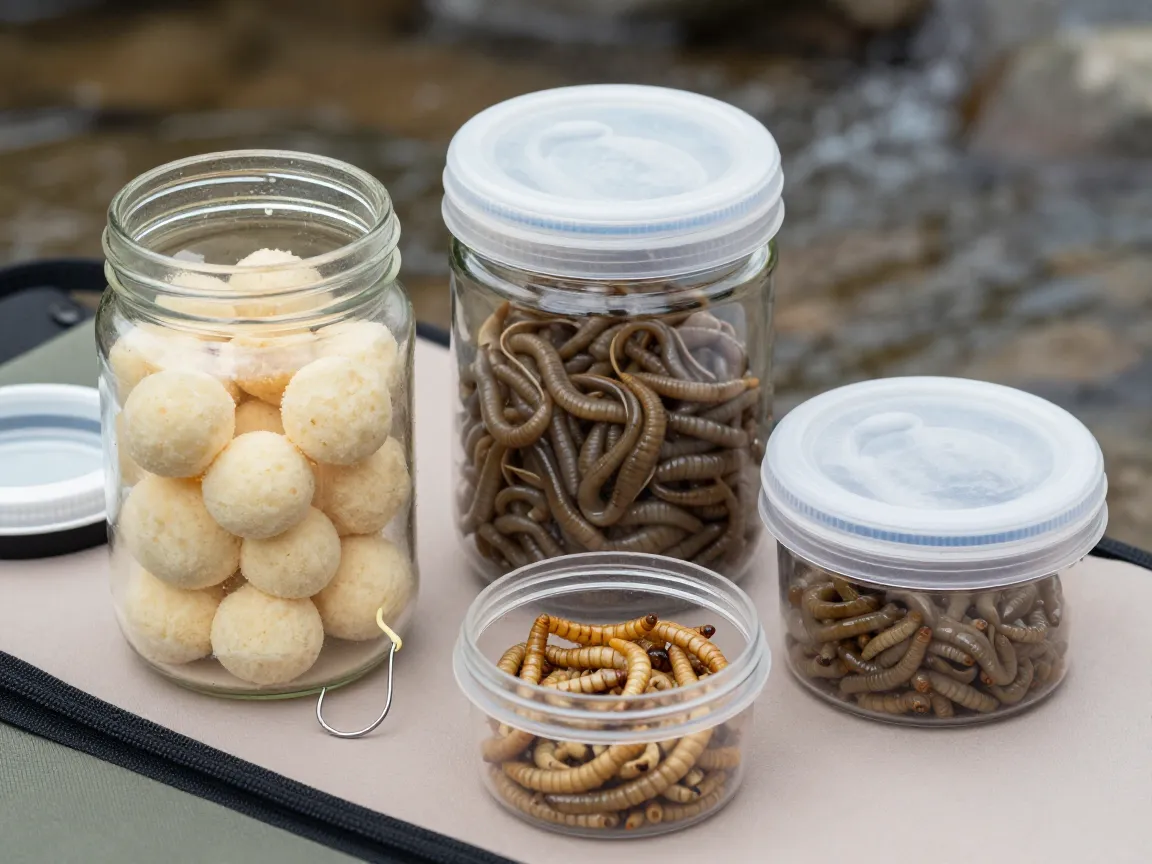
Stocked trout are conditioned on pellet feed before they reach a fishery, which makes floating dough baits in the PowerBait style consistently effective on them. The buoyancy is the key feature. When rigged on a light wire hook with just enough split shot to cast the setup, the dough floats up slightly off the bottom where stocked rainbows cruise at eye level, making it far more visible than a worm or other bait sitting in the sediment.
Worms remain the single most versatile trout bait across both stocked and wild fisheries. Brown trout and brook trout that rarely respond to brightly colored dough baits will take a small piece of nightcrawler or a whole garden worm presented naturally. Thread the worm onto a size 10 hook without leaving excessive tail hanging off the end. Wild trout are accustomed to seeing natural food items move naturally in current and will follow a dragging worm without committing if the presentation looks wrong.
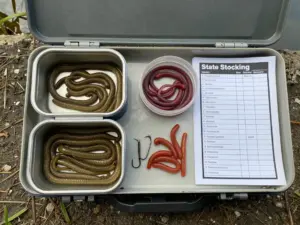
Mealworms offer a compact, low-mess alternative for anglers who do not want to carry a container of worms. They work particularly well on stocked brook trout and rainbows in lakes and ponds. Store them in a small sealed container with a lid to prevent escape. Combined with floating dough bait and a standard worm supply, you have three distinct natural presentations that cover different feeding moods and species preferences without overloading your pack with redundant options.
Carry your bait in separate sealed containers to prevent cross-contamination of scents. Keep dough bait away from direct sunlight as heat breaks down the texture and makes it slide off the hook during casting. A belt pouch with individual compartments handles all three bait types without the bulk of a full tackle box.
6. Polarized Sunglasses and a Landing Net
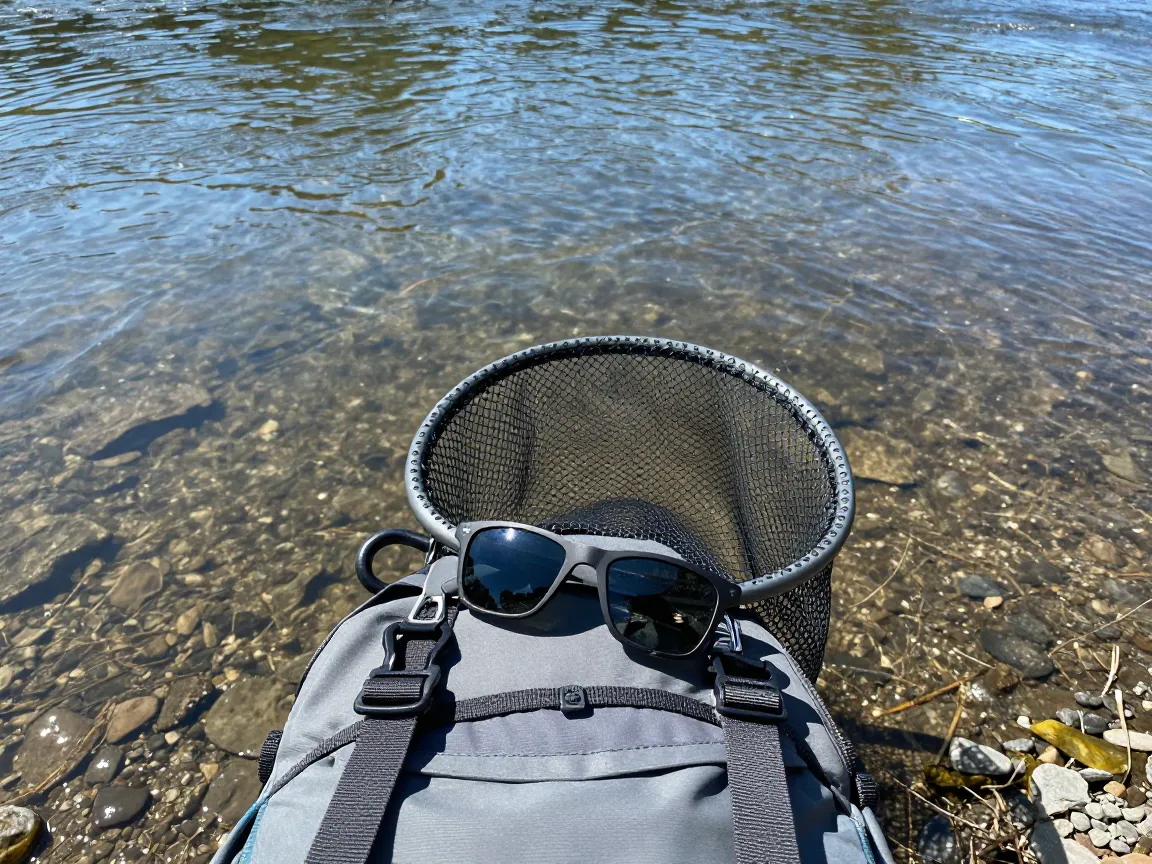
These two items do not fit neatly into a single category, but dropping either from your pack consistently costs fish. Polarized sunglasses cut surface glare on the water, allowing you to see trout holding in pools, feeding lanes, and shallow flats that you would otherwise walk past. On a bright day over a clear stream, the difference between polarized and non-polarized lenses is the difference between spotting a 14-inch brown trout against a gravel bottom and seeing nothing but reflected sky.
Sight-fishing to visible trout is fundamentally different from blind-casting. When you can see the fish, you cast ahead of it rather than into its face, work the retrieve speed to match what gets a reaction, and avoid the dozens of unproductive casts that go into areas where fish are not. Anglers fishing stocked ponds benefit similarly. Trout in still water form loose groups and move in predictable patterns; seeing those groups before you cast determines where your first lure lands.
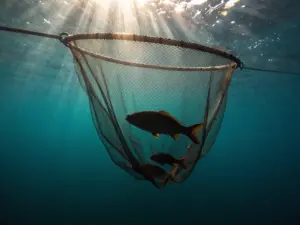
A rubber-mesh landing net with a fixed handle of 20 to 24 inches is the right size for stream trout. Rubber mesh causes less damage to the fish’s protective slime coat than knotted nylon, which matters if you are practicing catch and release. The fixed handle length is long enough to reach a fish at arm’s length without you needing to wade closer and disturb the pool, but short enough to store in a daypack without catching on brush. Collapsible magnetic nets with a folding frame are a viable alternative for anglers covering long distances on foot, since they compress to a fraction of the full size.
Carry the net clipped to a D-ring on your pack strap rather than strapped to the outside. Outside clips get snagged on streamside vegetation repeatedly over a full day and slow you down when you need the net quickly at the moment a fish is tiring.
Conclusion
These six categories, a matched rod and reel, appropriate line, proven artificial lures, organized terminal tackle, targeted bait options, and functional optics with a landing net, solve the actual problems that come up during a trout fishing day. None of them require significant spending, and all of them fit in a mid-size daypack alongside water and snacks.
The single most useful next step for any angler building this kit from scratch is to start with the rod and reel combo and line before purchasing anything else. Every other item on this list only works as well as the delivery system allows. Get the rod and line weight right first, and the rest of the pack builds logically from there.