Game-Changing 3D Printed Fishing Gear Ideas Worth Trying
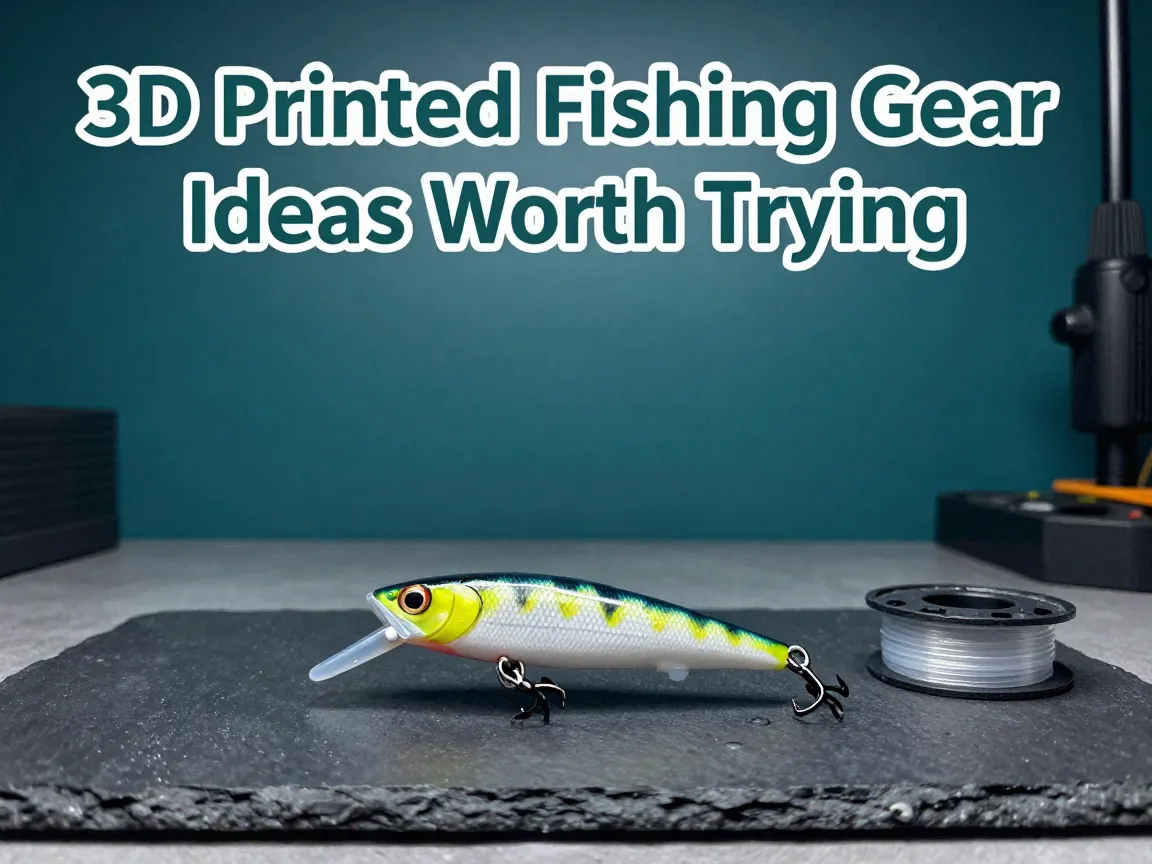
Roughly 46 million Americans go fishing at least once a year, yet most of them buy the same mass-produced lures stocked in the same big-box aisle. A desktop FDM printer, a spool of PLA, and a freely available STL file can change that completely, producing tackle tuned to a specific water body, season, or target species at a fraction of retail cost. The 6 game-changing 3D printed fishing gear ideas worth trying outlined below cover everything from browser-designed custom lures to closed-loop sustainable filament, and each one is accessible to anglers with no background in manufacturing.
Disclosure: This post contains affiliate links. As an Amazon Associate, we earn from qualifying purchases, and at no extra cost to you.
1. Browser-Designed Custom Lures With Exportable STL Files
For years, designing a lure from scratch required either CAD software fluency or an expensive industrial partnership. LURINK, a Japanese platform that launched a browser-based lure configurator in November 2026, removed that barrier entirely. You adjust body length, lip angle, hook-hanger placement, and tail profile directly in a web interface, then export a print-ready STL file without opening a separate CAD program.
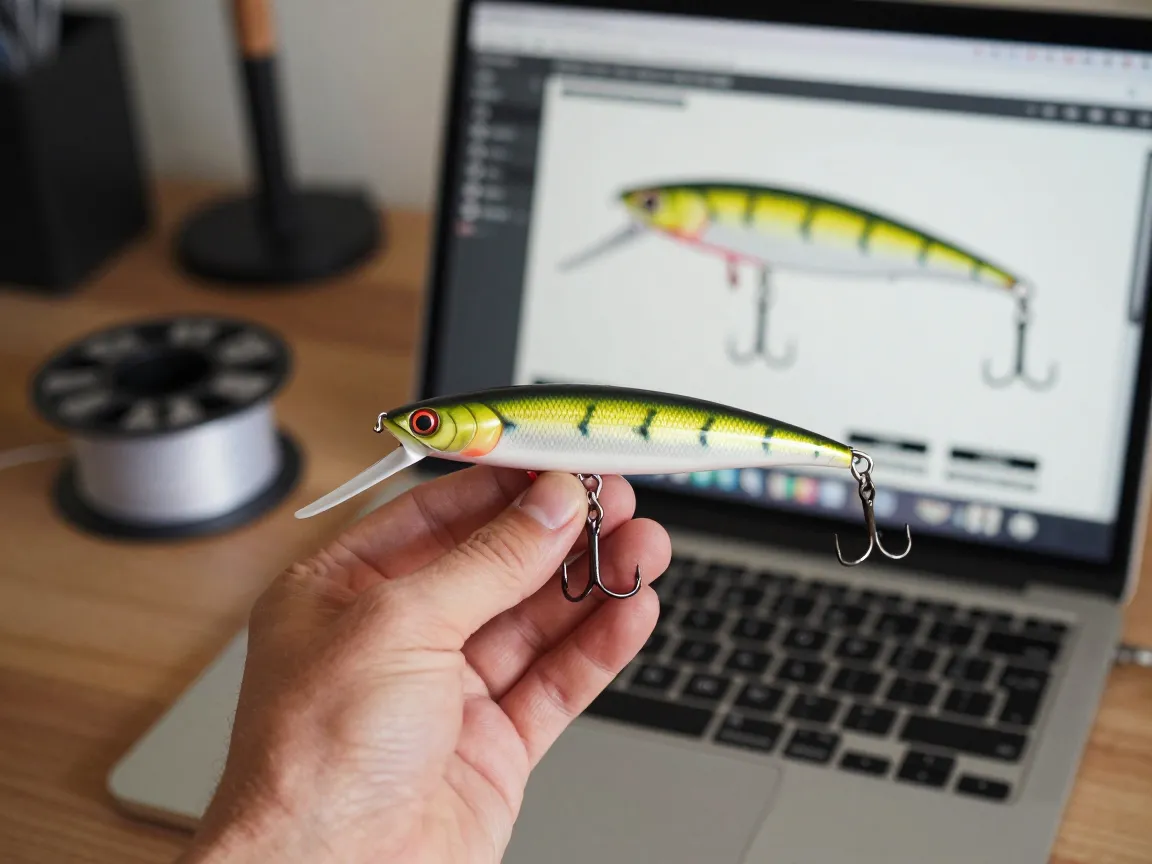
The practical upside is not just convenience. When you dial in a specific diving depth for a lake you fish every weekend, you are building institutional knowledge about that water into the tool itself. A 65 mm crankbait with a 15-degree lip angle dives to roughly 1.5 meters on a standard monofilament retrieve, data you can lock into a reusable file and share with a fishing partner.
Material choice matters here. PLA is easy to print and forgiving for beginners, but it absorbs water over time and becomes brittle after repeated exposure. Research published between March and October 2026 on 3D-printed lure performance consistently pointed to PETG and ASA as better long-term options for lure bodies, both are more impact-resistant and handle temperature swings in cold-weather fishing without warping. If you are printing a lure you plan to use for a full season rather than a single trip, spending the extra time dialing in a PETG profile is worth it.
One underused feature in browser-based tools like LURINK is the ability to export multiple color-zone layers. Multi-color printers such as the Bambu Lab X1C with the AMS accessory can print distinct body zones, a white belly, a chartreuse flank, and a dark dorsal stripe, in a single uninterrupted print job. That is not cosmetic novelty; color contrast between belly and back mimics baitfish countershading, which fish have responded to since before anyone was selling lures.
2. Modular Tackle Organization Systems From Specialist Brands
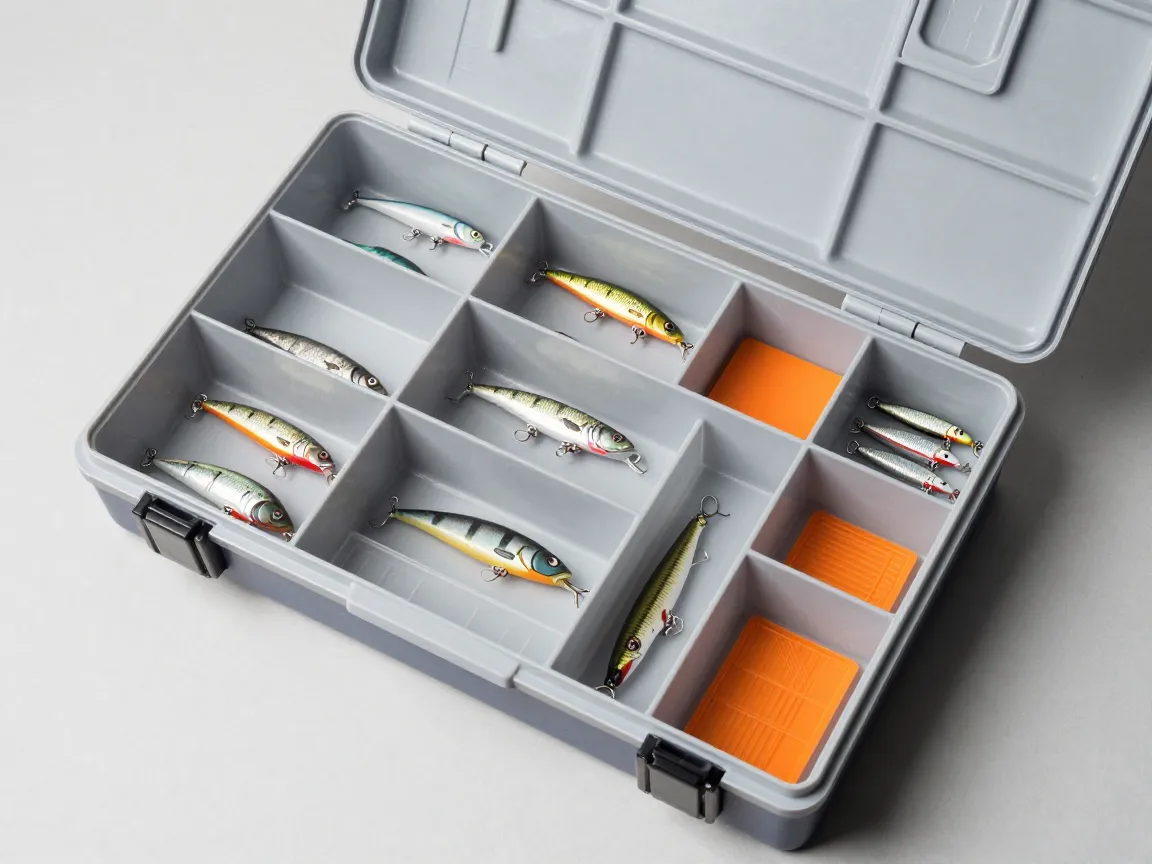
Tackle3D, a UK-based company that has been shipping 3D-printed fishing accessories since 2024, publishes a library of modular tackle-management components designed specifically for anglers who want a customized storage system without buying an entirely new tackle box. Their parts include adjustable divider inserts, snap-fit weight trays, and hook-holder rails that mount inside standard-sized Plano-style boxes.
The appeal here is granularity. A bass angler carrying 40 different soft-plastic sizes needs a different internal layout than a fly fisherman organizing tippet spools and leader wallets. Off-the-shelf foam inserts address neither scenario well. A printed divider system, by contrast, can be resized in CAD in under ten minutes and reprinted overnight.
Tackle3D’s approach also illustrates a wider trend in the 3D-printed fishing accessories space through 2026: the most commercially successful printed products are not lures but supporting infrastructure, the unglamorous brackets, clips, rod holders, and line guides that boat manufacturers never quite get right. Printed rod-holder adapters for kayak rail systems, for instance, solve a persistent fitment problem that has frustrated kayak anglers for years, because kayak brands use slightly incompatible rail standards and aftermarket hardware rarely bridges the gap perfectly.
For anyone starting out with this idea, the entry point is simpler than it looks. Download a free parametric divider template from Printables or Thingiverse, measure your existing tackle box interior dimensions, adjust the parameters in a slicer like Bambu Studio, and print in PETG at 20% infill. The result is a tray that fits your box exactly and costs less than two dollars in filament.
3. Ice Fishing Electronics Shuttles Printed as Integrated Frames
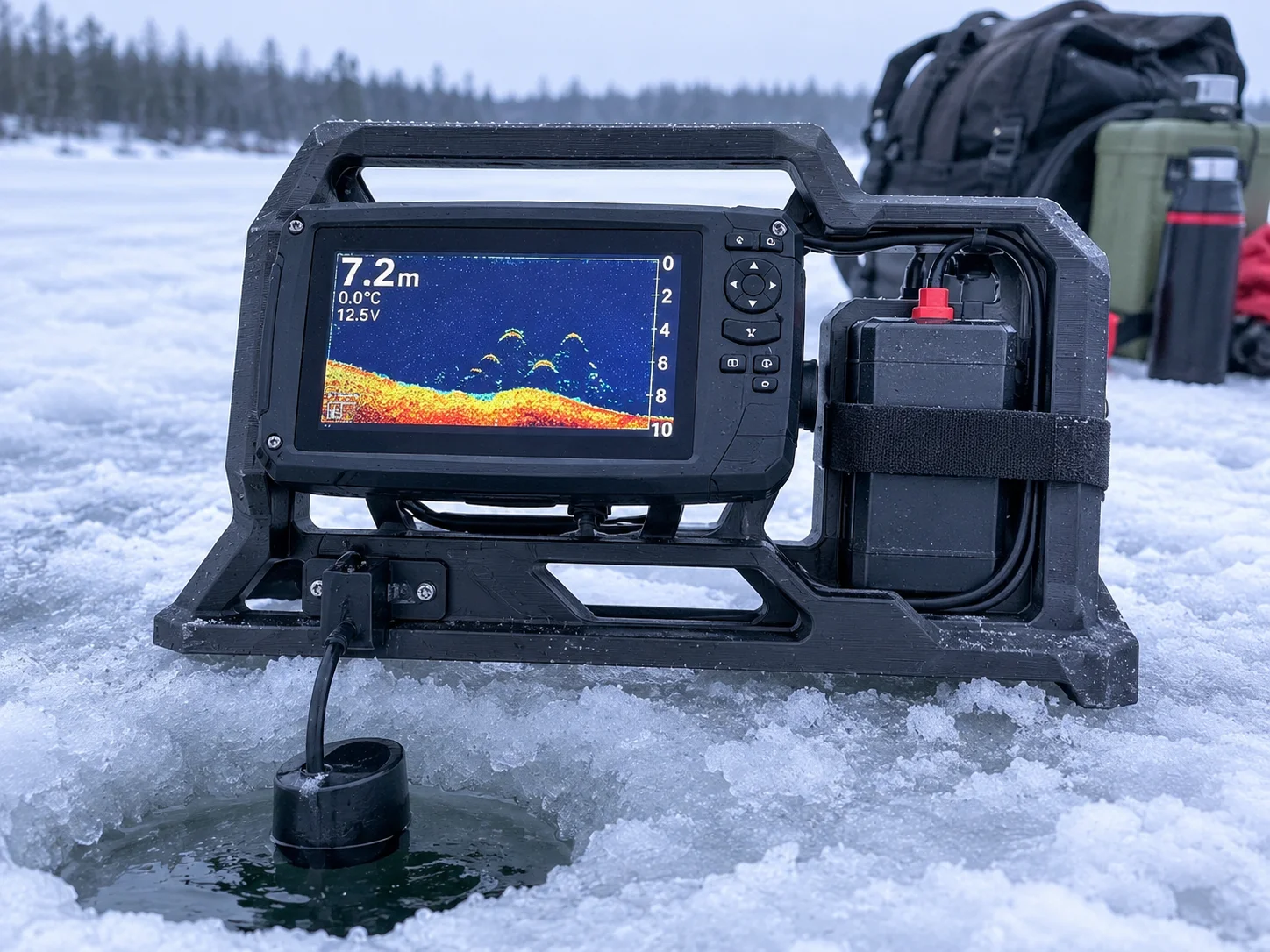
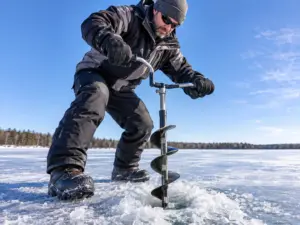
Traditional ice fishing sonar setups involve a tangle of loose components, transducer, battery pack, display unit, cable coils, that gets worse every time it goes in and out of a bag at 6 AM in sub-zero temperatures. A3D Outdoors addressed this directly with the Ice Power Shuttle, a single-frame printed assembly that holds the transducer, routes the cable internally, and cradles the battery in a fixed position so the whole unit moves as one piece.
The design philosophy behind the Ice Power Shuttle is worth understanding because it applies to any DIY electronics project, not just ice fishing. When you print a frame that integrates cable routing channels, you eliminate the zip-tie-and-hope approach that most field-built electronics setups rely on. Cables do not fatigue at the same point repeatedly, connectors do not get yanked, and the whole assembly can be dunked in a slush hole without immediately separating.
A3D Outdoors makes the shuttle available as a retail product, but the concept is replicable with open-source sonar hardware if you have intermediate CAD skills. The main design constraint is thermal: PETG handles cold better than PLA, but at sustained temperatures below -20°C, most FDM-printed frames get brittle at layer boundaries. Nylon PA12, which requires a more capable printer with an enclosure, is the right material if you fish in genuinely harsh northern climates.
The integration angle also matters for weight. A single printed frame that replaces a bag, three separate mounts, and assorted velcro straps typically saves 150 to 200 grams of carry weight on a setup anglers lug across a frozen lake. That is not trivial when you are walking two kilometers to a productive spot.
4. Lure Libraries and Downloadable Model Collections for Rapid Testing
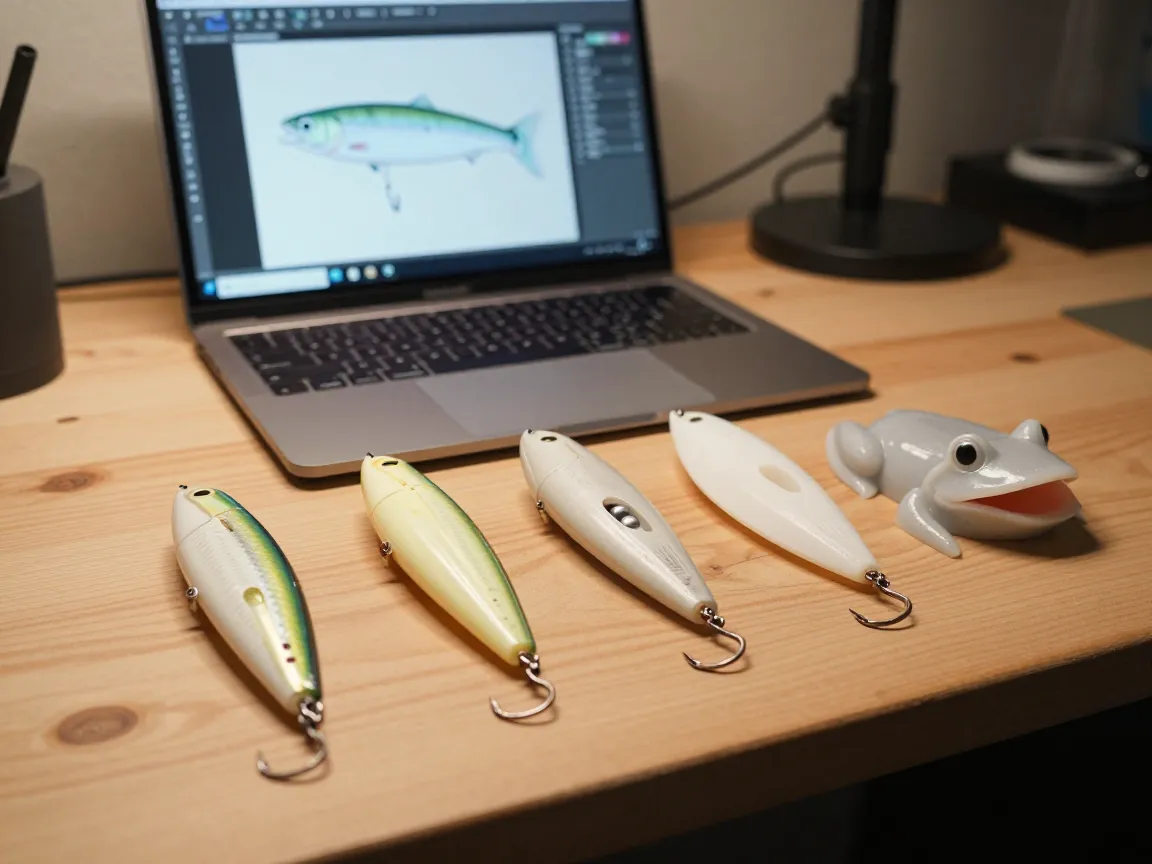
SelfCAD, a browser-based CAD platform, maintains a library of eight documented lure types with downloadable 3D models and modification guides, a resource that lets anglers prototype variations on proven designs without starting from a blank file. The library includes poppers, swimbaits, jerkbaits, spinnerbait bodies, and topwater frogs, each built with editable geometry so body proportions can be adjusted without advanced modeling skills.
The practical use case here is rapid testing. If you fish a river where the resident trout respond to a specific baitfish at a specific time of year, you can iterate through five or six lure profiles in a single weekend, longer body, shorter body, wider lip, no lip, and find out what triggers strikes faster than any retail shopping cycle would allow. Each prototype costs roughly one dollar in PLA and takes two to three hours to print.
What makes lure libraries genuinely useful rather than just convenient is the documentation layer. A well-maintained library includes recommended hook sizes, ballasting positions for proper swimming action, and material notes, the difference between a lure that runs straight at 1.5 mph and one that rolls onto its side because the weight distribution is wrong. The Alibaba design resource published in March 2026 noted that ballast placement is the single most common failure point in novice-designed printed lures, and that placing a small tungsten weight in a recessed belly channel during the print, rather than drilling it in afterward, produces consistently better action.
For anglers who want to contribute back, SelfCAD allows users to upload modified versions. That community feedback loop, where someone who fishes Pacific salmon shares a modification that works in fast current, is something a commercial lure manufacturer structurally cannot replicate.
5. Sustainable Filament Made From Recovered Ghost Fishing Gear
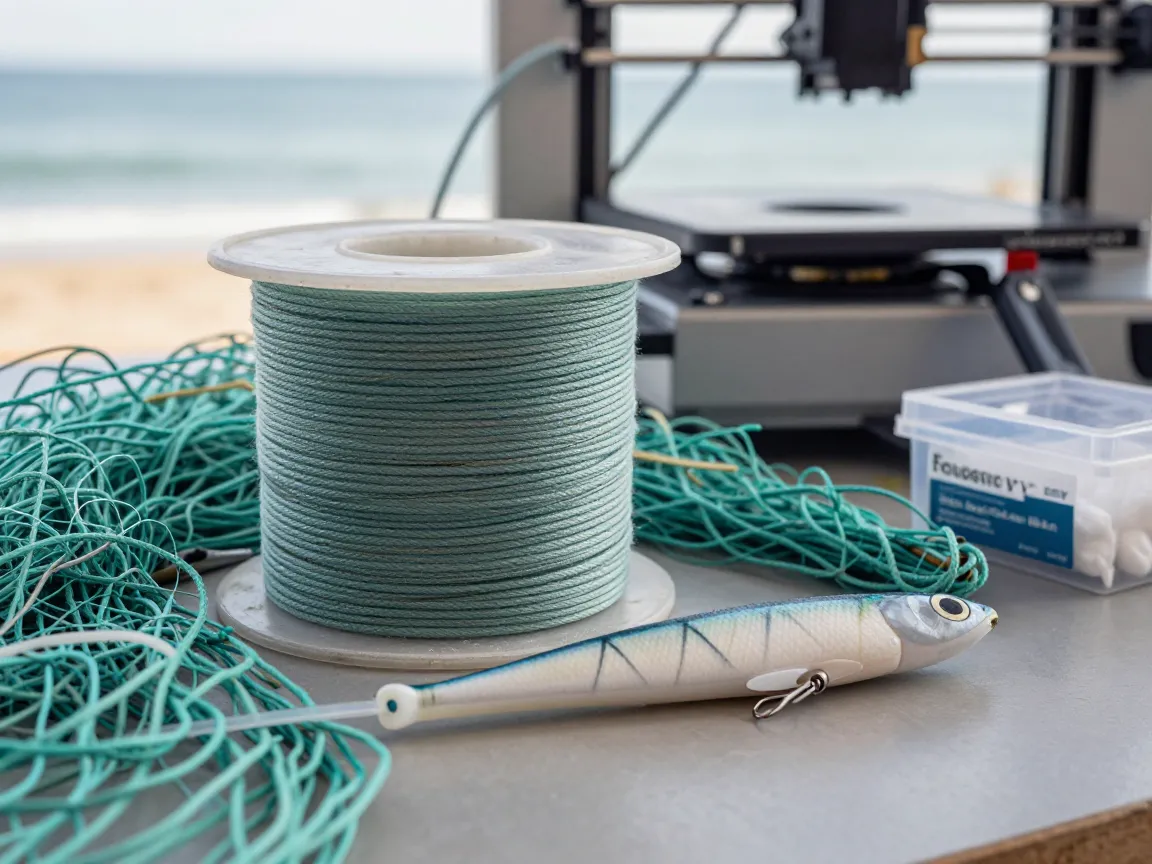
Between April and November 2026, several materials companies and ocean cleanup initiatives began processing recovered ghost fishing nets, abandoned nets that continue catching marine life indefinitely, into 3D printing filament. The resulting nylon-based material prints at temperatures close to standard nylon PA6 and produces parts with mechanical properties comparable to virgin nylon, though with slightly more variation in diameter consistency that requires careful moisture management before printing.
The closed-loop logic here is direct: fishing gear that was damaging marine ecosystems gets turned into new fishing gear that replaces petroleum-derived plastic. Carpe Diem Fishing and similar brands have used reclaimed ocean plastic in product lines since the early 2020s, but printable filament from ghost gear is a newer development that puts the circular-economy decision in the hands of individual anglers rather than corporate supply chains.
From a printing standpoint, ghost-gear nylon requires a few adjustments. It is hygroscopic, it absorbs moisture from the air within hours of opening the spool, so printing straight from a sealed, desiccant-equipped dry box is not optional, it is necessary for consistent layer adhesion. An enclosed printer with a heated chamber above 50°C handles the material reliably. For anglers already printing in standard nylon, the transition is incremental.
The performance outcome is worth the extra handling effort. Nylon lure bodies are more flexible than PLA, which means they absorb impact differently when a fish strikes. Soft, slightly flexible swimbaits that mimic the feel of real baitfish are a category where printed nylon has a clear functional advantage over rigid PLA prototypes. Making that nylon from recovered ghost gear converts a material-performance upgrade into an environmental one at the same time.
6. Multi-Color, High-Speed Lure Printing for Production-Level Output
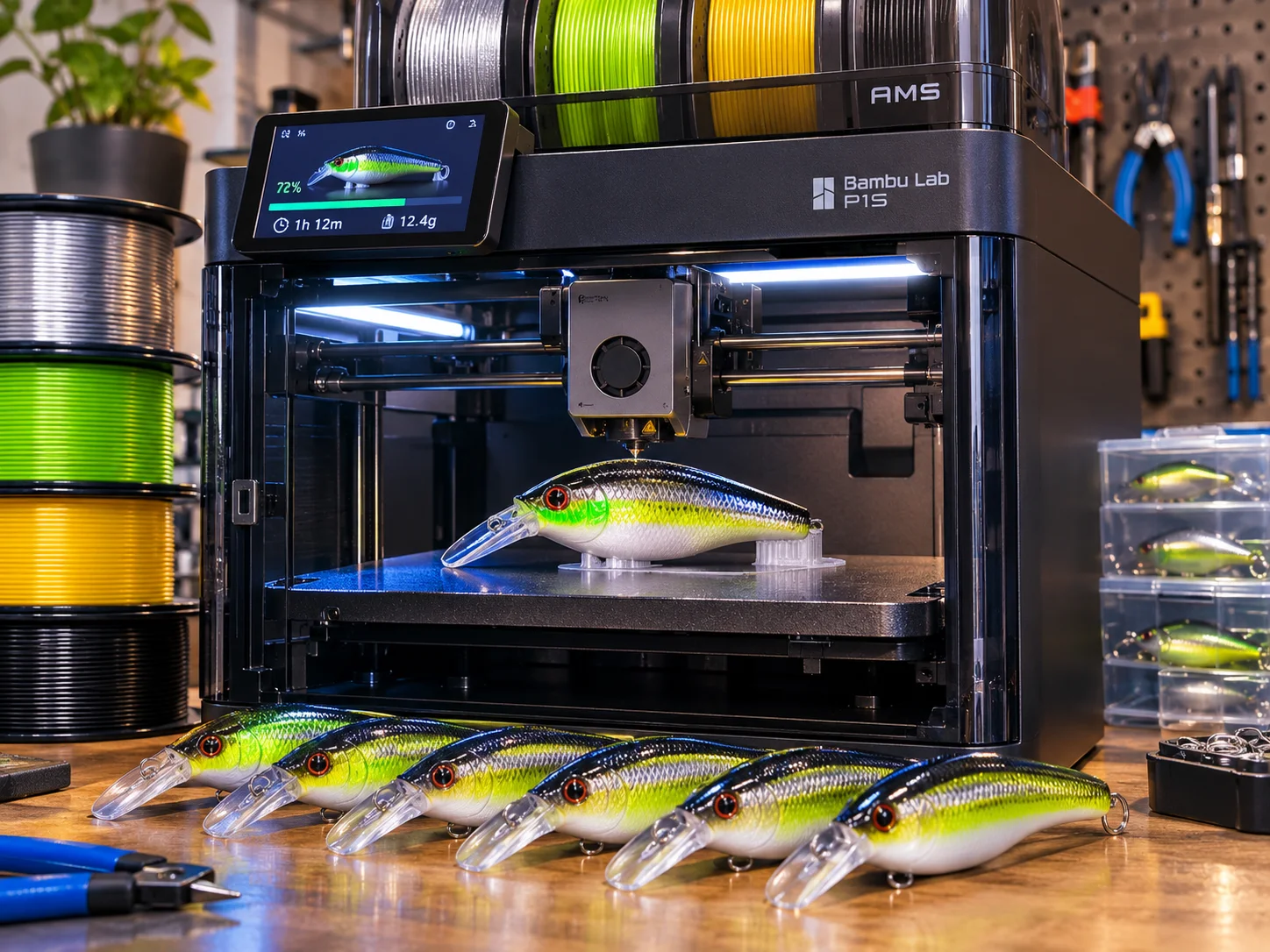
The 3D printer market heading into 2027 includes machines like the Bambu Lab P1S and X1C, the Creality K2 Plus, and the Elegoo Neptune 4 Pro that print at speeds between 500 and 600 mm/s, a figure that would have seemed implausible on a desktop machine three years ago. At those speeds, a standard 70 mm crankbait body takes under 45 minutes. With a multi-material unit like Bambu’s AMS, up to four colors print in the same job without manual filament changes.
Speed changes the economics of the hobby materially. At 45 minutes per lure, an angler can print an entire season’s worth of a specific pattern in a single weekend rather than waiting days per piece. That throughput also makes it reasonable to treat printed lures as semi-disposable: throw them into heavy cover where you would hesitate to risk a ten-dollar store-bought crankbait, because losing the lure costs you forty cents in filament and the time to press print again.
Multi-color printing matters for realism beyond simple aesthetics. A holographic or metallic filament printed on the flank of a baitfish-pattern lure refracts light underwater in a way that solid-color lures do not. Lure designers in the maker community have documented that inserting a single layer of silver or gold metallic PLA at the lateral line position, printed as a color change mid-job, adds flash that approximates the flicker of a live fish’s scales.
The practical constraint at high print speeds is layer adhesion quality. Printing PLA at 500 mm/s requires well-tuned pressure advance settings and a hot end capable of sustaining the required volumetric flow rate. Machines that advertise high speeds but ship with stock hot ends often throttle back at precisely the small cross-sections found in detailed lure geometry. If you plan to push speed with a lure-printing workflow, verify that the printer’s stock hot end supports at least 20 mm³/s of volumetric flow, Bambu’s hardened steel hot end does; many budget machines do not until you upgrade the nozzle assembly.
The trend data from 2026 shows printed fishing gear brands growing alongside this hardware improvement cycle rather than despite it. As machines become faster and more capable of multi-material output, the gap between a printed lure and a factory-molded one narrows. That gap is now primarily in surface finish, a sandable epoxy coat applied after printing closes most of it.
Conclusion
The most direct next step for anyone new to this space is to start with a downloadable lure model from SelfCAD or Printables, print it in PETG rather than PLA, and fish it alongside a comparable store-bought lure in conditions you already know well. The comparison tells you more about what printed gear can and cannot do than any specification sheet, and it gives you a specific starting point for iteration.