Large Mouth Bass Fish Drawing Ideas for Anglers and Artists
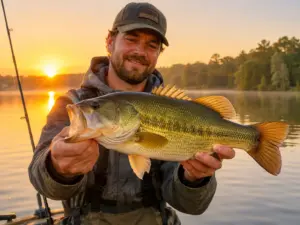
Largemouth bass are the most pursued freshwater game fish in North America, yet remarkably few anglers ever try to draw the species they spend hundreds of hours chasing. That gap between obsession and artistic expression is exactly what the 6 large mouth bass fish drawing ideas for anglers and artists in this guide are designed to close. Whether the goal is a youth fishing club handout, a tournament patch, or a framed piece of wall art, each idea below is grounded in proven drawing techniques, current illustration trends, and the visual language that bass anglers immediately recognize and trust.
Disclosure: This post contains affiliate links. As an Amazon Associate, we earn from qualifying purchases, and at no extra cost to you.
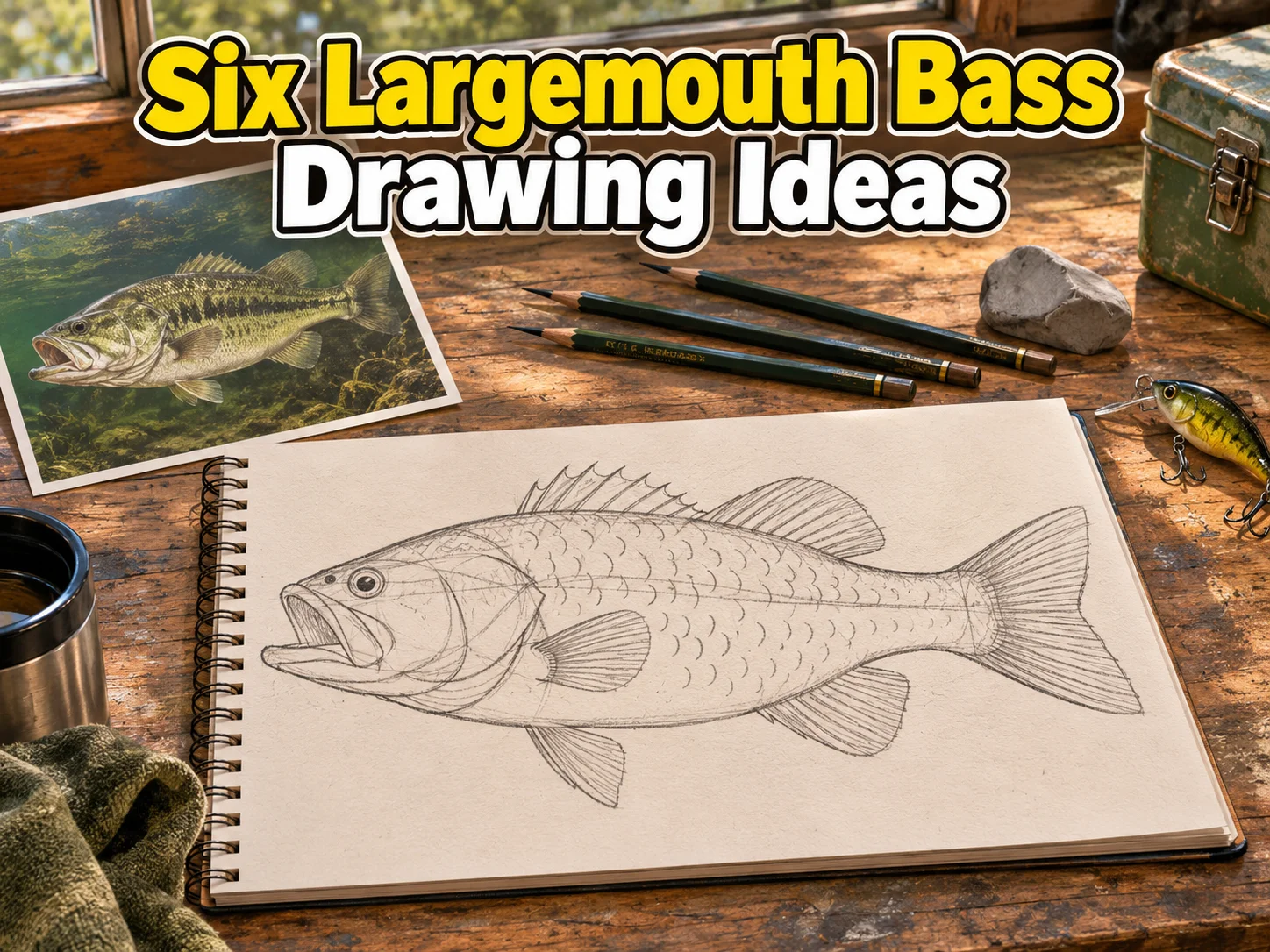
1. Classic Construction Method Bass Drawing
The most reliable way to draw a convincing largemouth bass starts with geometry. Begin with a circle for the head area and a wider oval for the body, then connect the two shapes into the fish’s recognizable tapered profile. From that skeleton, the defining features emerge naturally: the dramatically curved open mouth that extends past the eye line, the tall spiky first dorsal fin, the softer second dorsal behind it, the deeply forked tail, and the strong lateral line running from gill cover to tail base.
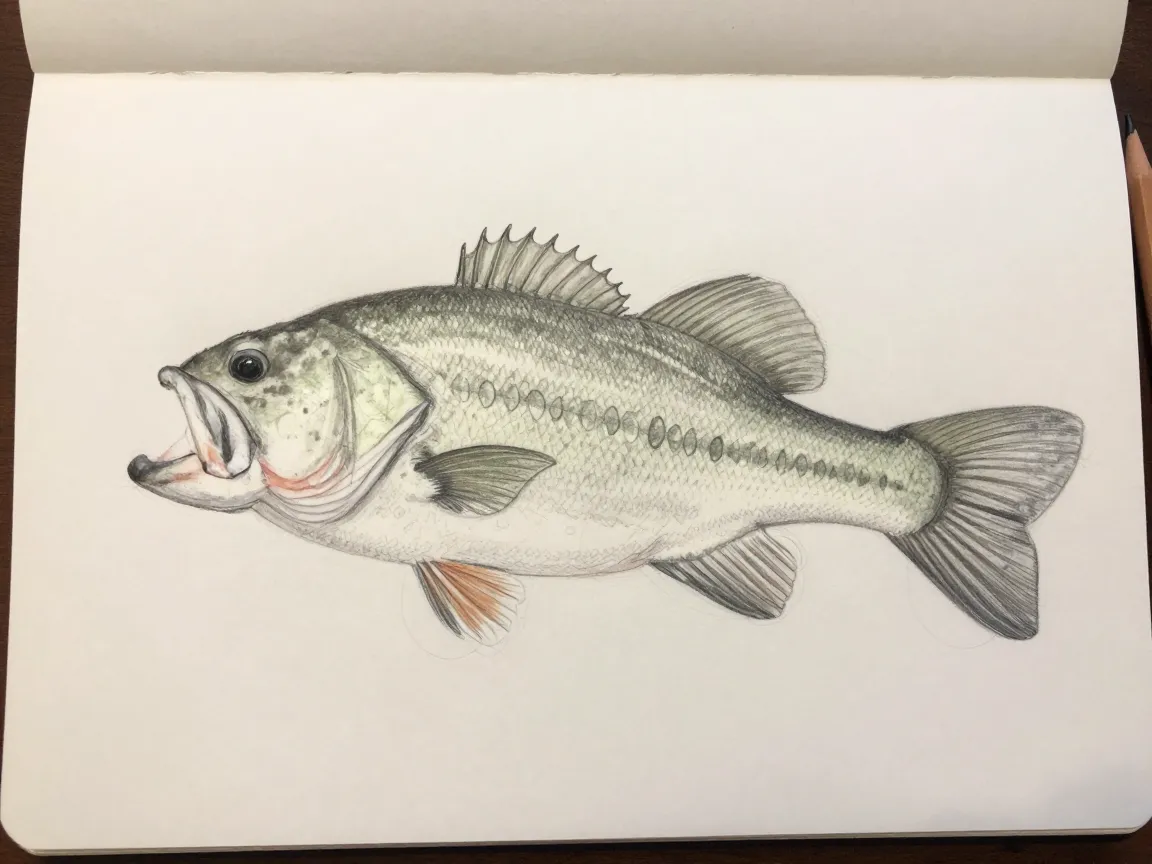
Once the main silhouette is clean, scattered crescent-shaped scale marks along the flank add texture without demanding the artist render every individual scale. A few short parallel lines on each fin suggest rays, and a curved gill line anchors the head to the body. This construction method is not just for beginners. Professional wildlife illustrators return to the circle-and-oval foundation because it keeps proportions honest, particularly the relationship between the large head and the relatively compact rear body that defines the species.
For anglers teaching drawing at a youth fishing camp or club event, this method has a practical advantage: it is forgiving. Kids who place the head circle too far left or right can still recover a recognizable fish by adjusting the connecting lines. The finished drawing is also flexible enough to serve as a coloring sheet, a reference sketch, or the first draft of something more ambitious. Start simple, get the proportions right, and the character of the fish follows naturally.
2. Easy Largemouth Bass for Beginners Using a Centerline Guide
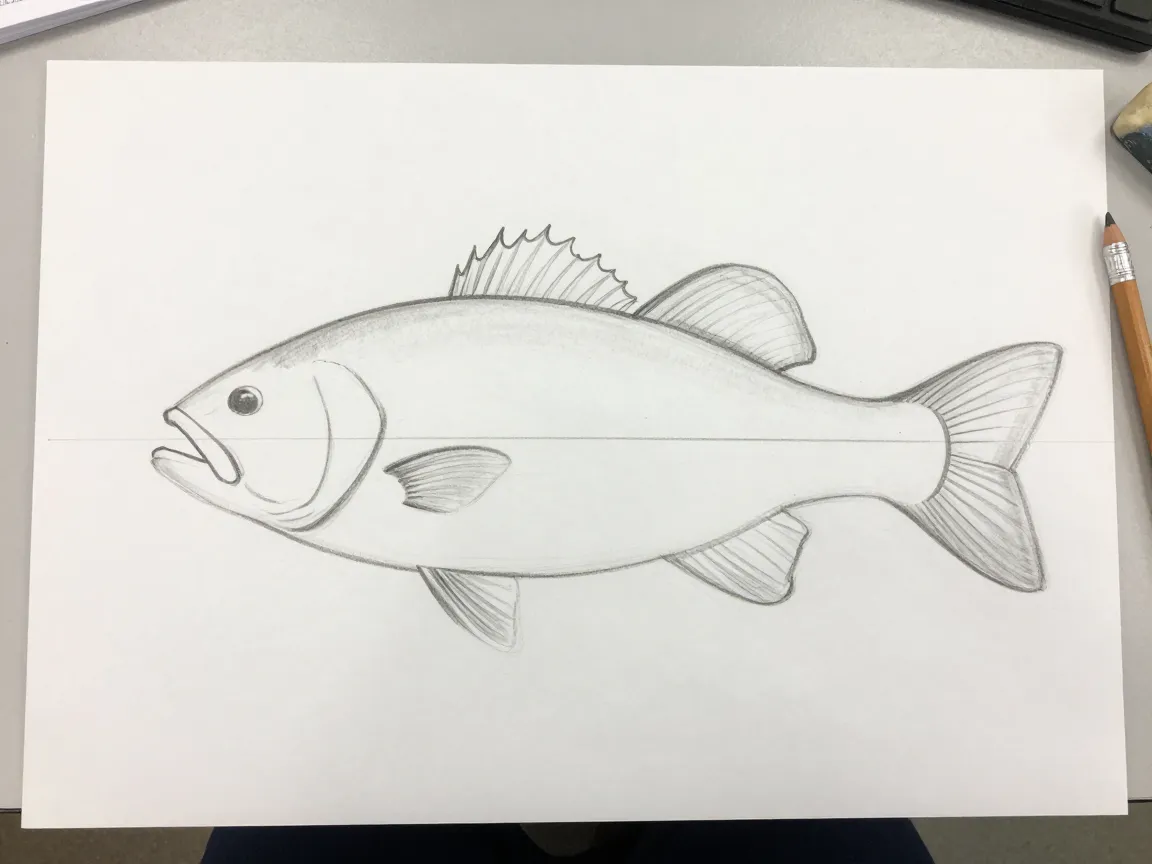
A centerline-based approach simplifies the drawing process even further and is particularly effective for anyone who has never drawn a fish before. Draw a single horizontal guideline across the page, then build a long oval body around it, adding a rounded snout and the species’ signature protruding lower jaw at the left end. The centerline keeps the fish level and prevents the common beginner mistake of drawing a bass that curves upward like a banana.
From the centered body, the fins are added in sequence: the two-part dorsal fin on top, clearly separating the spiny front section from the softer rear section; the broad pectoral fin just behind the gill; the small pelvic fins underneath; and the anal fin near the tail. Simple hatching or short curved lines suggest scales along the upper flank where the olive-green pigmentation is typically darkest. After the guidelines are erased, light shading on the belly and under the jaw gives the fish a rounded, three-dimensional look.
This approach is well suited for fishing club events and educational settings because each step is discrete and teachable. An instructor can walk a group through the centerline, then the body oval, then the fins one at a time, pausing at each stage so everyone stays on track. The finished drawing communicates the species clearly enough to be used in newsletters, event flyers, or classroom fishing-education materials. It is also the natural starting point for anyone who wants to progress toward more detailed work later.
3. Close-Up Big-Mouth Portrait
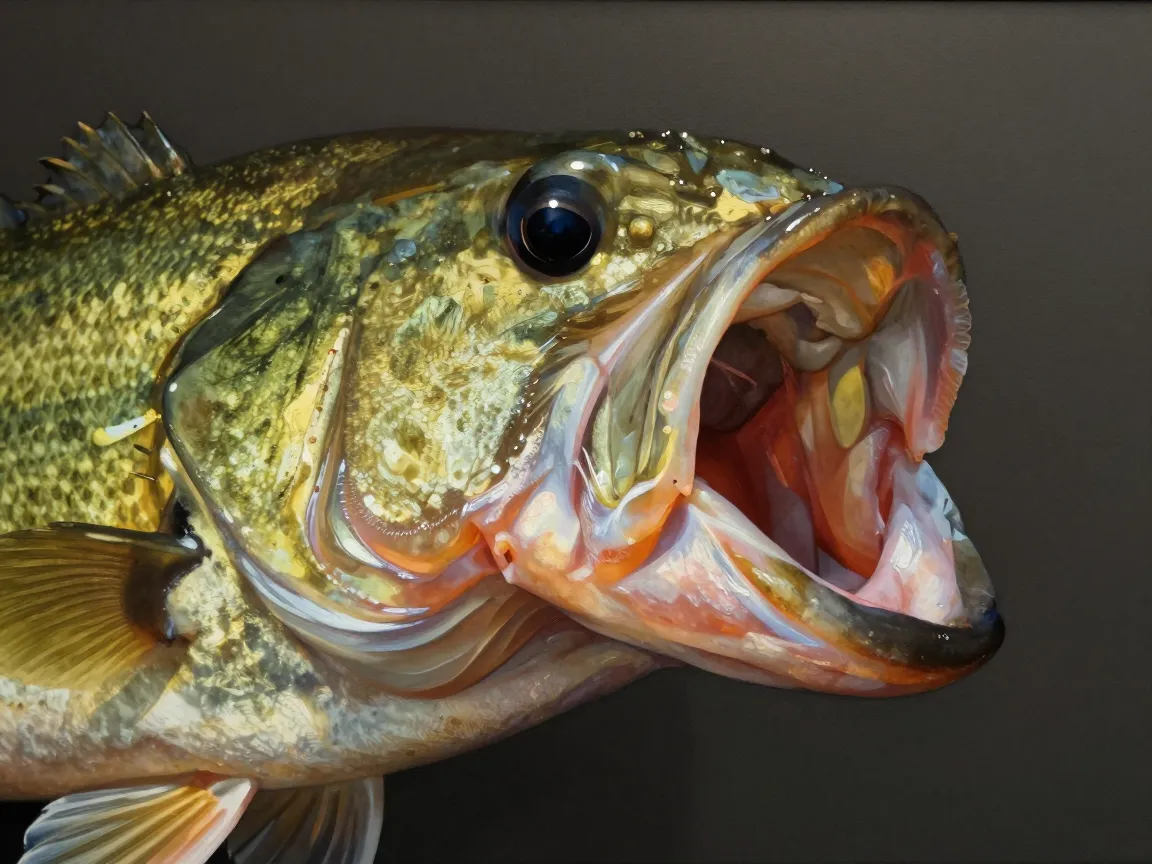
The largemouth bass earns its name from one unmistakable feature, and a portrait composition that places that enormous open mouth front and center is one of the most visually striking ideas any angler-artist can pursue. In this concept, the fish fills most of the picture plane, with the gaping jaw occupying the left third of the composition and the eye positioned prominently near the center. The goal is to make the mouth feel genuinely large, nearly dominating the image, while still reading as a fish and not an abstraction.
Rendering the mouth convincingly requires attention to the interior: thin lines suggesting the fleshy folds inside the jaw, the dark throat receding into shadow, and the firm lower lip that every bass angler knows from the thumb-and-forefinger grip at landing. Around the mouth, the gill cover fans outward with short layered lines, and small bumpy marks along the jaw line hint at the rough texture that gives the fish its grip on a lure. The eye, depicted with a sharp highlight, connects the creature to the viewer.
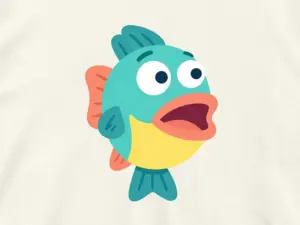
This portrait idea adapts well to both realistic and caricatured styles. A realistic version suits wildlife prints, cabin art, or magazine illustration. A caricatured version, where the mouth is pushed even larger and the eye made rounder and more expressive, works perfectly for tournament logos, kids’ fishing program branding, and apparel graphics. Artists working in either direction benefit from studying reference photos of a bass with its mouth open, paying particular attention to the angle of the jaw hinge and the relationship between the maxilla and the lower lip.
4. Minimal-Line Silhouette for Logos and Patches
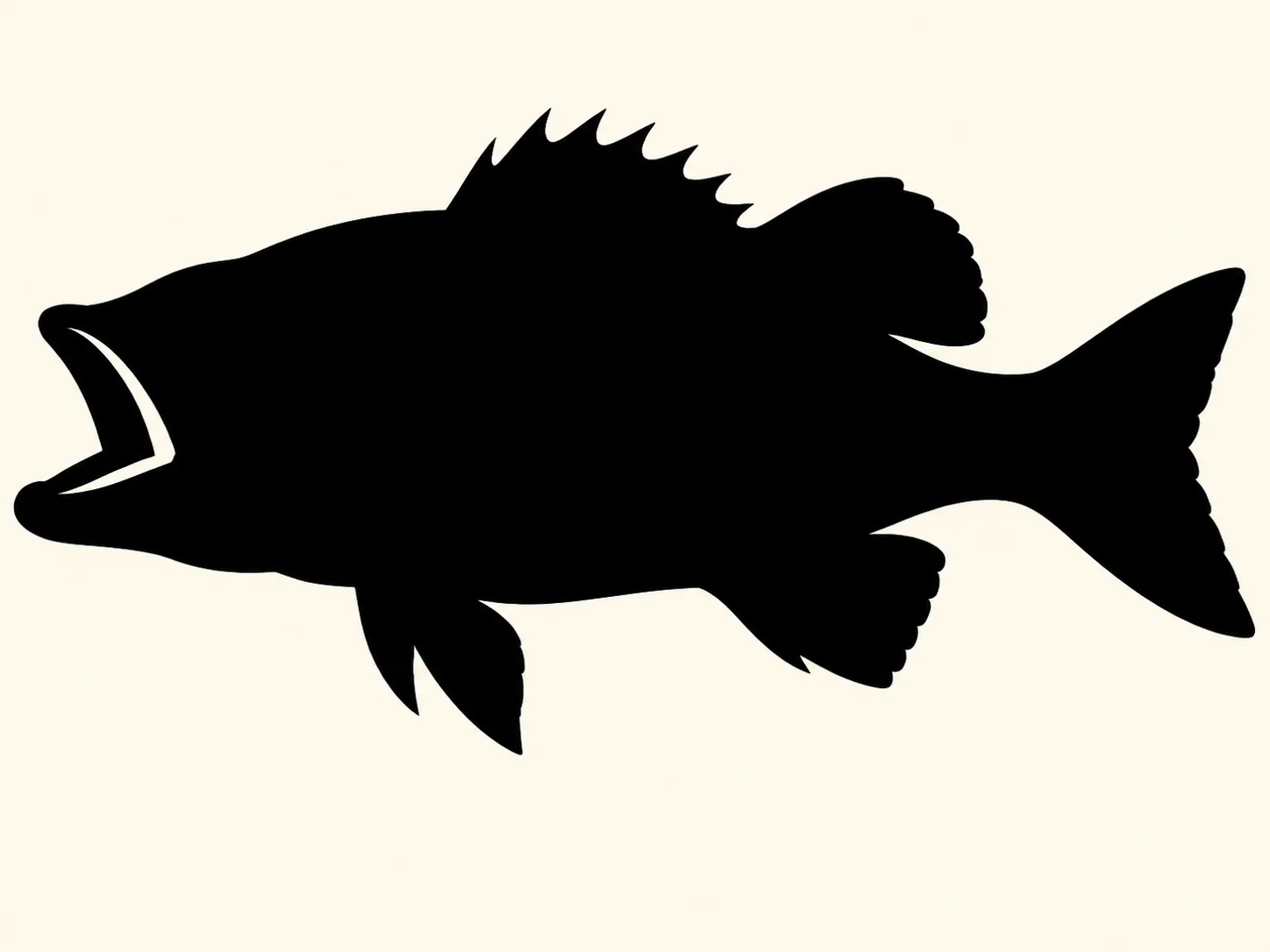
Not every bass drawing needs shading, detail, or a background. Some of the most commercially useful and visually powerful largemouth bass illustrations are built from the fewest possible lines, reducing the fish to a clean, readable silhouette that works at any scale. This minimal-line approach uses two ovals of different sizes as the starting structure, then refines the outline into a bass shape without adding internal detail beyond the most essential elements: the open mouth, the dorsal fin profile, and the forked tail.
The result is a graphic form rather than a naturalistic drawing, and that distinction matters for specific applications. Tournament organizations, fishing clubs, tackle brands, and youth angling programs all need imagery that reproduces cleanly on hats, shirt embroidery, boat decals, stickers, and social media profile images. A detailed realistic bass drawing loses legibility at small sizes or when printed in a single color. A well-constructed silhouette does not. Current visual trends in bass fishing branding favor bold outlines, exaggerated open mouths, and dynamic body curves that read instantly even as a half-inch embroidered patch.
Artists pursuing this idea should resist the urge to add more detail once the basic silhouette is locked in. The discipline of working with minimal lines forces a focus on proportion and gesture that actually improves drawing skills over time. A useful exercise is to draw the same silhouette at several sizes, from thumbnail to full-page, and check whether the fish remains recognizable at every scale. If a fin or the mouth shape becomes ambiguous at small sizes, simplify further until the form is unambiguous.
5. Bass in Habitat Scene with Structure and Vegetation
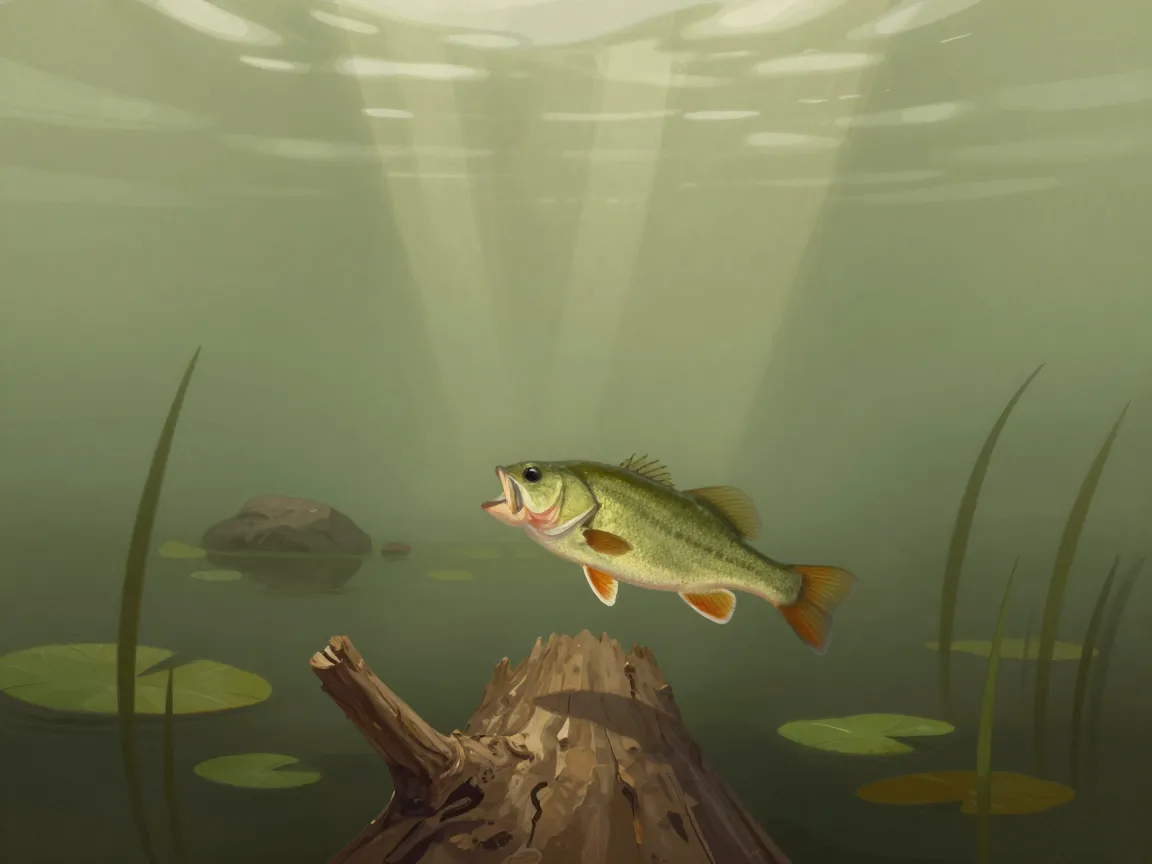
A single fish floating in white space tells part of the story. A largemouth bass positioned near a sunken log, hovering at the edge of a lily pad field, or nosing through submerged reeds tells the whole story and communicates immediately to anyone who has ever fished for bass. Habitat scenes are the most narratively rich of all the drawing ideas here, and they resonate most strongly with experienced anglers because the environmental details are as meaningful as the fish itself.
Composing a habitat scene requires some planning. The bass should be the visual anchor, typically positioned using a rule-of-thirds placement slightly off center, with structural elements like a submerged log or rock pile leading the eye toward the fish. Lily pads and emergent reeds can be sketched with simple repeated shapes that do not compete with the fish for attention. Light rays filtering through the water surface, suggested by diagonal parallel lines converging upward, create depth and atmosphere without requiring advanced technique.
For anglers, the habitat details carry specific meaning. A bass near a submerged log is not just compositionally interesting; it is behaviorally accurate. Bass use woody structure as ambush points, and an angler viewing the drawing immediately understands the fish’s intent. This kind of informed specificity is what separates a bass drawing made by an angler from a generic fish illustration. Artists who fish have an inherent advantage in this idea because they can draw from direct observation and memory rather than relying entirely on reference images.
6. Dynamic Action Shot: Bass Striking or Leaping
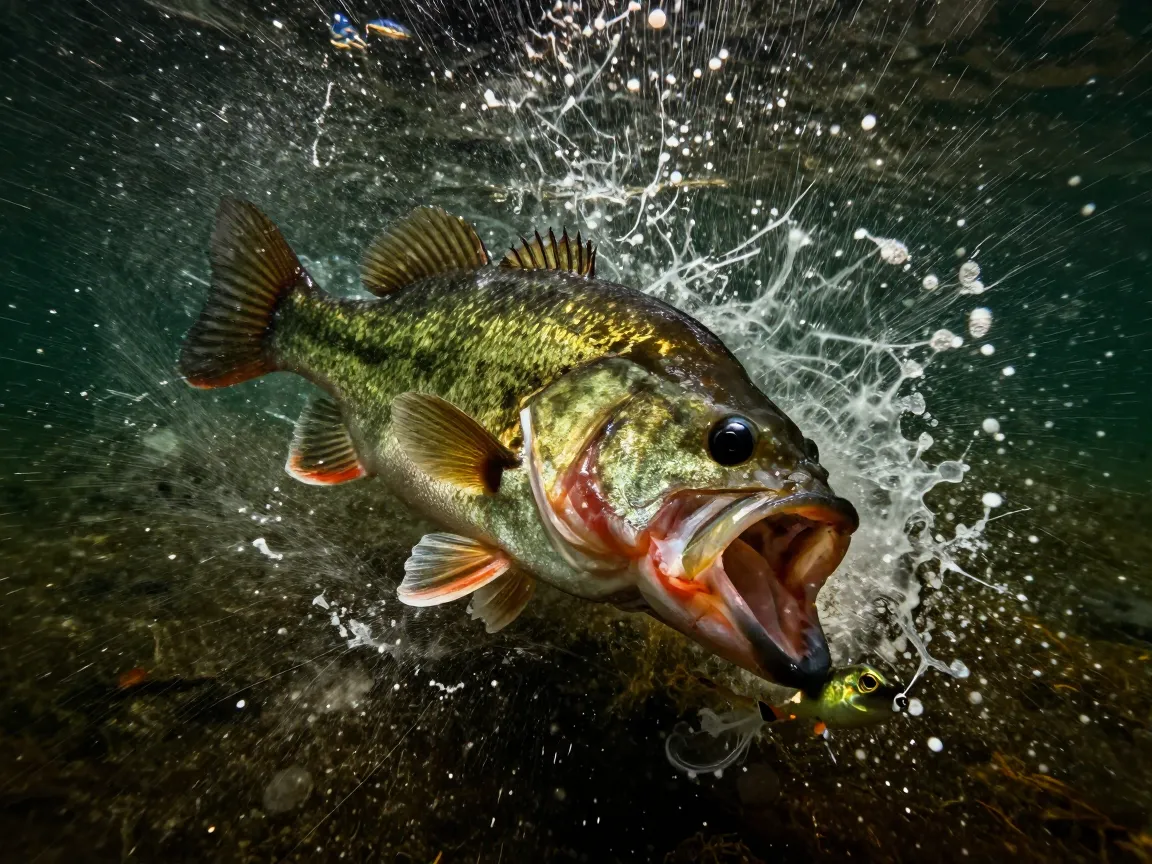
The most dramatic and energetically charged of all the drawing ideas here captures the largemouth bass in a moment of explosive action, either erupting through the water surface to meet a topwater lure or lunging forward in a strike. These are the images that stop scrolling on social media, win art contests, and command the highest prices on print-on-demand platforms. They are also the most technically demanding, requiring the artist to suggest motion, water displacement, and tension in a single frozen frame.
Water spray is the key expressive element in a leaping bass drawing. Rather than attempting to draw every droplet realistically, effective artists use loose, radiating lines of varying weight to suggest the explosion of surface water around the fish. The bass itself should be rendered with its body in a curved arc, mouth open, gill covers flared, and fins fanned out wide. A lure, whether a surface frog, crankbait, or spinnerbait, glimpsed near the mouth adds narrative specificity and makes the image immediately recognizable to tackle-savvy anglers.
For a strike composition where the bass stays below the surface, a low-angle or head-on perspective creates maximum visual impact. The fish appears to lunge directly toward the viewer, mouth agape, with the underwater habitat receding behind it. High-contrast color treatment with explosive greens and deep golds along the flank, set against darker olive shadows, amplifies the sense of energy. Contemporary bass illustrators working in this vein regularly use color exaggeration as a deliberate artistic choice, pushing saturation beyond photographic realism to match the emotional intensity of the moment every angler remembers from the strike.
A repeat-pattern variation of this idea also has strong commercial potential. Tileable bass strike motifs, with the fish rendered consistently across a repeating grid, work well for fabric prints on wading apparel, boat-wrap graphics, and fishing gear accessories. Designing the repeat requires thinking about how the negative space between fish shapes reads as a secondary pattern, which is an interesting compositional challenge that pushes drawing skills in a new direction.
Conclusion
The six ideas above span a wide range from a beginner’s first guided construction to a commercially polished silhouette to a full-color action illustration, which means there is a genuinely useful entry point for every skill level and application. The single most effective next step is to pick the idea that matches the current skill level and a specific end use, whether that is a club newsletter, a tournament patch, or a piece of wall art, and work through it with reference photos of actual largemouth bass nearby. Getting the proportions of the jaw, eye, and dorsal fin right from the start saves revision time and produces a drawing that any bass angler will recognize and respect immediately.