Survival Techniques and Life Hacks That Work in the Wild
Roughly 2,000 search-and-rescue operations are conducted every year in U.S. national parks alone, and the data consistently shows that the people who survive unexpected nights in the backcountry are not the ones with the most gear, they are the ones who knew three or four specific, practiced skills before they needed them. These 6 survival techniques and life hacks that work in the wild are drawn from that same body of evidence: methods that wilderness medicine instructors, search-and-rescue coordinators, and survival educators keep returning to because they produce results under pressure, with minimal equipment.
Disclosure: This post contains affiliate links. As an Amazon Associate, we earn from qualifying purchases, and at no extra cost to you.
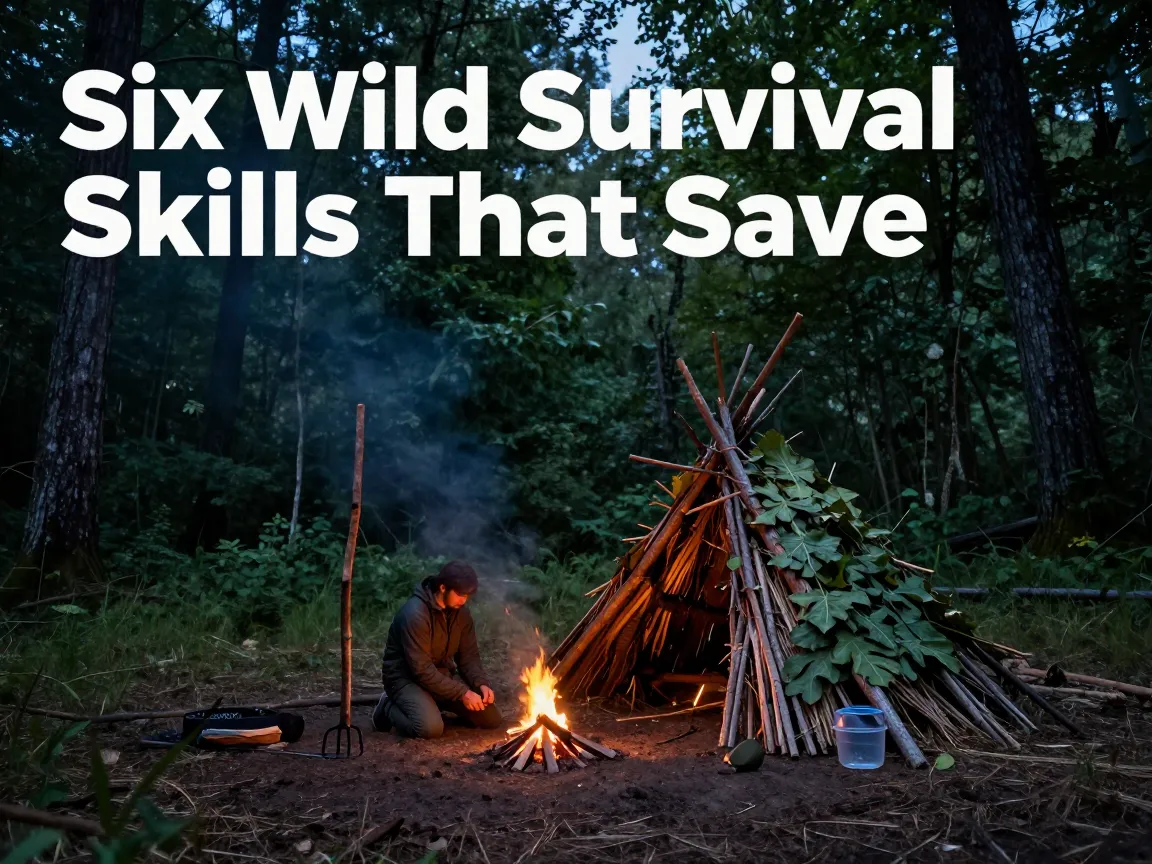
The article covers each technique in enough depth to make it actionable, not just recognizable.
Key Takeaways
- Shelter is the first physical priority in most temperate environments; hypothermia kills faster than thirst or hunger.
- A fire-starting kit that includes a ferrocerium rod and pre-prepared tinder removes the most common failure point in firecraft.
- Boiling water for one full minute at elevations below 2,000 meters eliminates all biological pathogens; chemical treatment is a reliable backup.
- The shadow-stick navigation method requires no tools and works anywhere the sun casts a visible shadow.
- A small signal mirror can reflect visible light to aircraft up to 16 kilometers away on a clear day.
- The Rule of 3s is a decision framework, not a countdown, it tells you what to prioritize, not how long you have.
1. Build Shelter Before You Think You Need It
Temperature regulation is the fastest path to incapacitation in the wild. The human body loses core temperature quickly when wet and exposed to wind, even at temperatures well above freezing. A person in 10°C (50°F) ambient air with wet clothing and a 15 mph wind faces an effective wind-chill temperature near freezing. Waiting until you feel cold to build shelter is waiting too long.
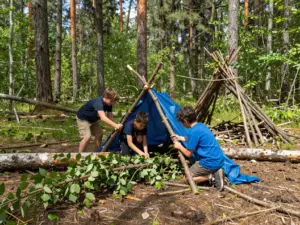
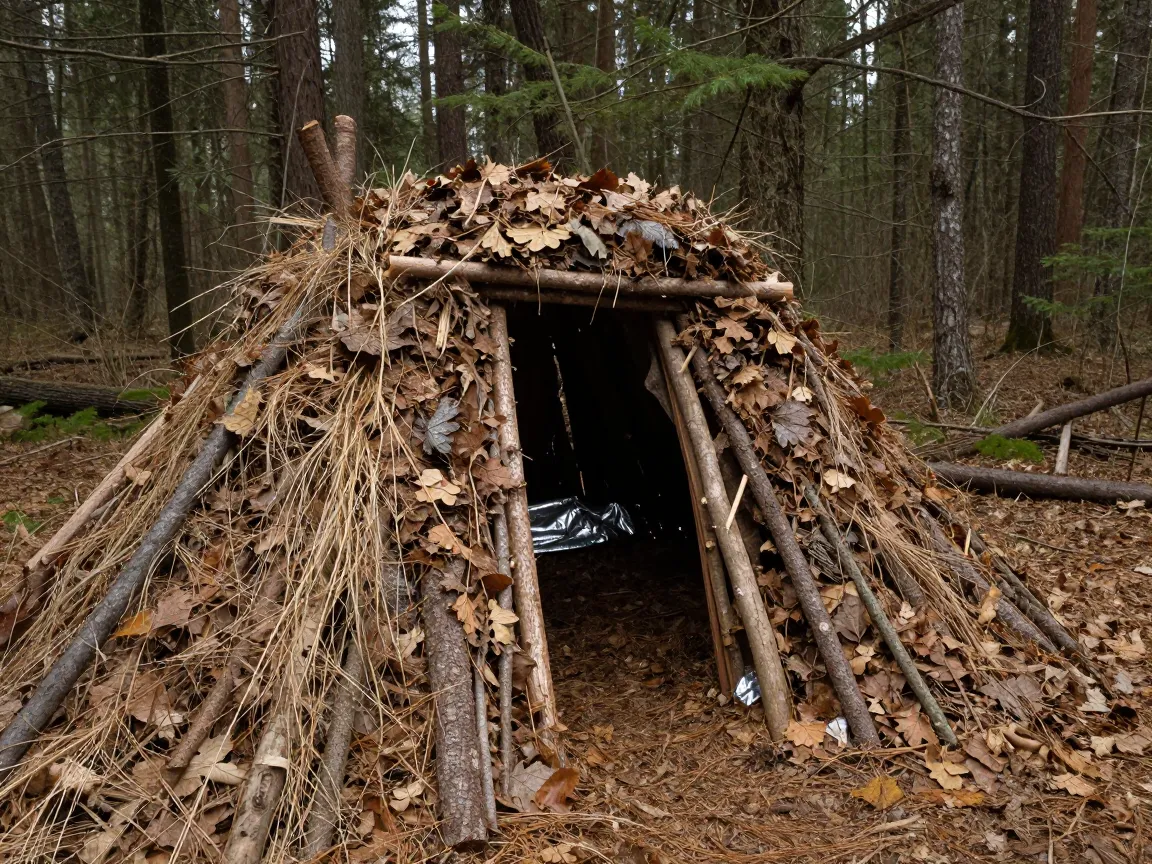
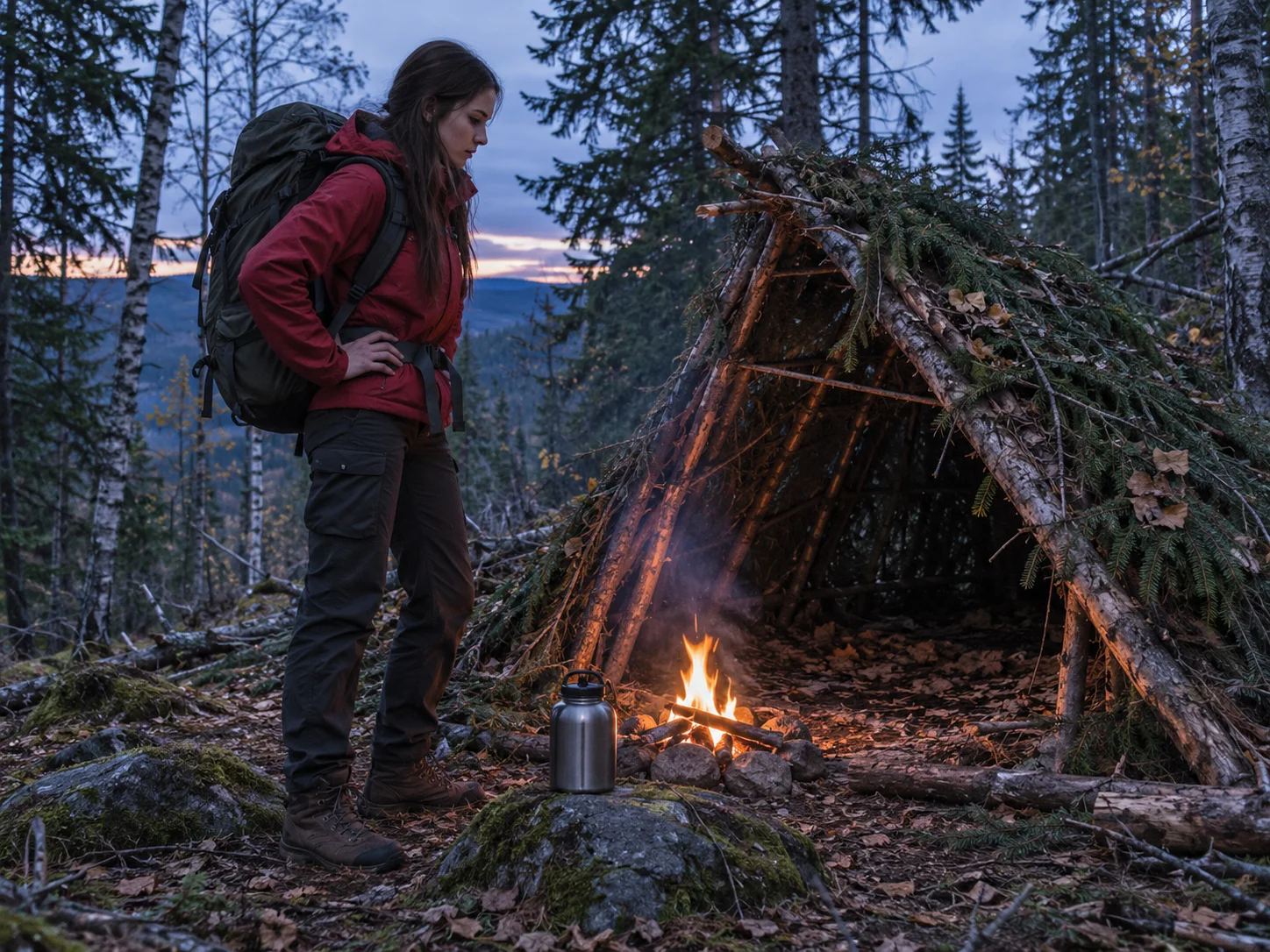
The most reliable emergency shelter when no gear is available is a debris hut. Find two forked sticks about knee-height, connect them with a ridgepole roughly two body-lengths long, and lean branches against either side of the pole to form an A-frame. Pack dead leaves, dry grass, bark, and pine needles over the frame until the layer is at least 60 centimeters thick, the same principle as a sleeping bag’s loft. That depth traps enough dead air to hold body heat through a cold night.
Two details matter more than the frame design. First, the interior should be barely large enough to fit your body; a larger space means more air volume your body has to heat. Second, the ground beneath you needs insulation more than the walls do, roughly 30 percent of body heat loss in a prone position goes into the ground. Pile at least 15 centimeters of dry material beneath you before you close the door end with more debris.
If you have a space blanket or emergency bivy, the debris hut still matters: a reflective layer inside a debris shell is dramatically warmer than either alone, because the debris stops wind convection and the reflective layer bounces radiated heat back inward.
2. Master the Fire Triangle Before You Carry a Lighter
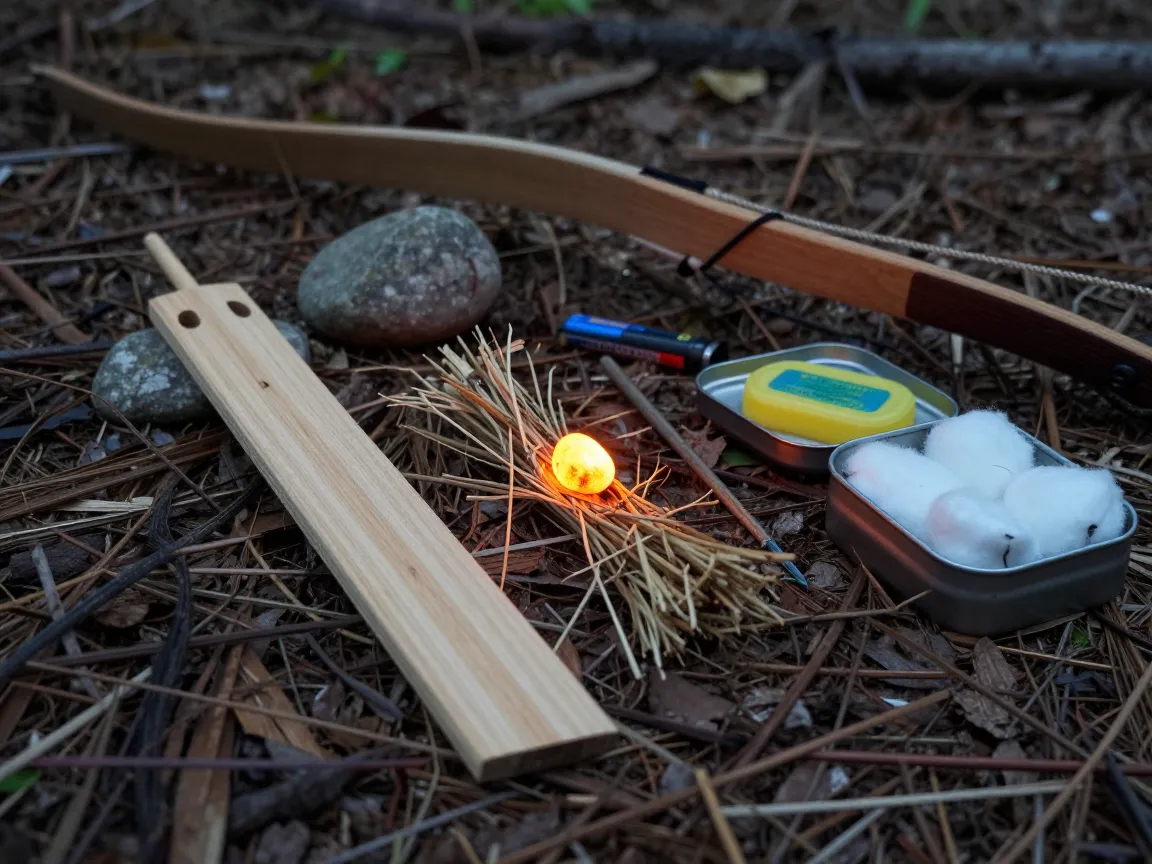
A lighter is the most practical fire-starting tool you can carry. It fails when wet, depleted, or lost. That is why survival instructors teach the fire triangle, fuel, heat, oxygen, as a mental model rather than a shopping list, and why practicing friction fire before you depend on it is not optional.
The bow drill method works with materials found in temperate forests. The pairing of wood species matters: a soft, dry fireboard and an equally dry spindle of similar or slightly harder wood produces the friction needed to generate an ember. Willow, cottonwood, cedar, and basswood are reliable choices. Hardwoods like oak do not work reliably for friction fire. The bow drill produces a small coal, typically the size of an aspirin tablet, that you transfer into a tinder bundle of shredded dry grass or cattail fluff and blow into flame.
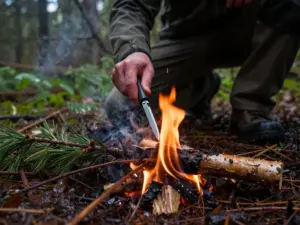
Modern firecraft in 2026 emphasizes a layered approach: carry a ferrocerium rod as a primary backup to a lighter, and store a small amount of pre-made tinder in a waterproof container. Commercial tinder cubes or homemade petroleum-jelly cotton balls both ignite from a single spark even when ambient conditions are damp. That combination removes the two most common failure points, no ignition source and no dry tinder, without adding meaningful weight to a kit.
One practical hack used by wilderness guides: carry a 35mm film canister or a small metal tin packed with vaseline-soaked cotton balls. Each ball burns for three to five minutes, long enough to light wet kindling from the outside in. The entire supply weighs under 30 grams.
3. Find and Treat Water Without Getting Sick
The human body can survive roughly three days without water under moderate exertion, but cognitive impairment from dehydration begins well before that, typically within 24 hours in a warm environment. Finding water is usually possible in wilderness environments; treating it is non-negotiable.
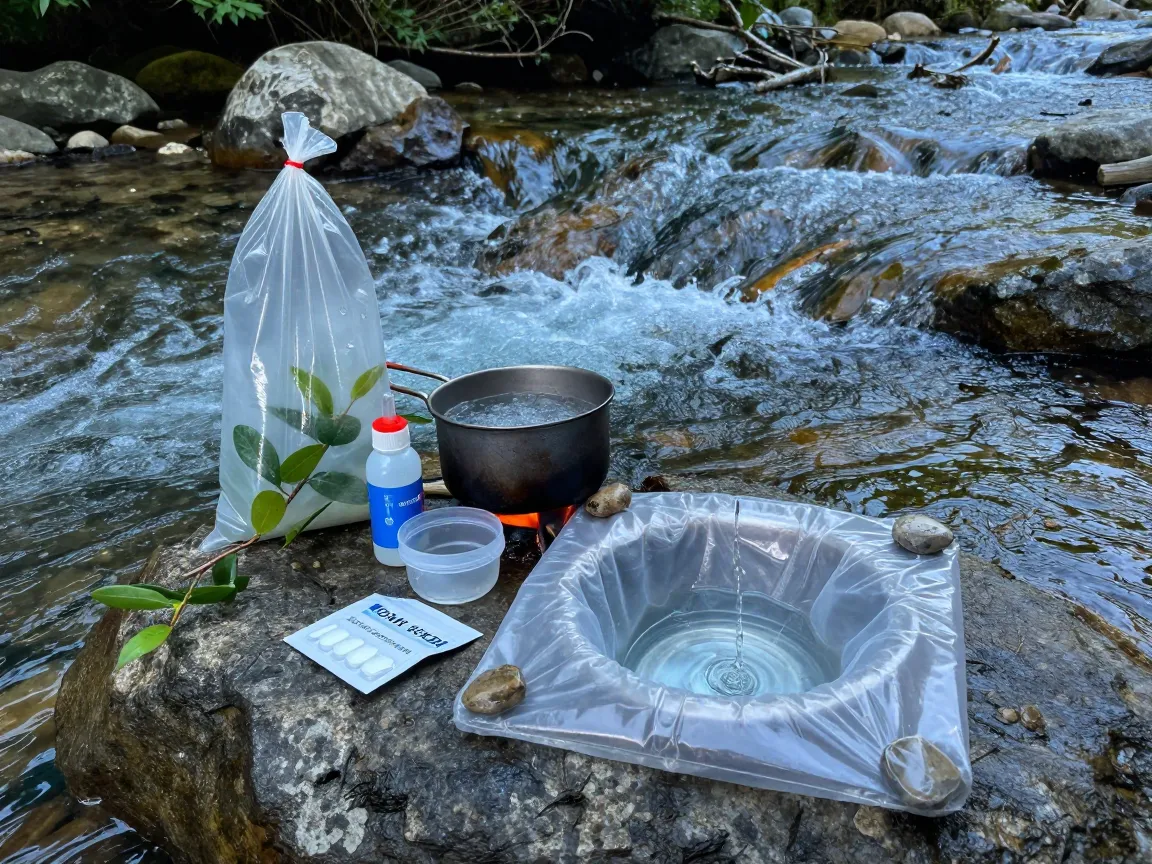
Running water over rocks is safer than standing water, but neither is safe to drink untreated without knowing the watershed. Giardia lamblia and Cryptosporidium are the two most common waterborne pathogens encountered in North American backcountry water sources, and both survive in clear, cold, fast-moving streams. Boiling water at a rolling boil for one full minute at elevations below 2,000 meters kills all biological pathogens. At elevations above 2,000 meters, boil for three minutes to compensate for the lower boiling point.
Chemical treatment with iodine or chlorine dioxide tablets is a reliable backup when fuel for boiling is limited. Chlorine dioxide tablets are preferable to iodine for extended use because they are effective against Cryptosporidium, iodine is not. A standard dose of chlorine dioxide requires 30 minutes of contact time in clear water and four hours in cold or turbid water.
A less-known water procurement technique is the solar still. Dig a bowl roughly 90 centimeters wide and 45 centimeters deep in ground that receives full sun. Place a container in the center, cover the hole with a sheet of clear plastic, weight the edges, and place a small stone at the center so the plastic dips toward the container. Ground moisture evaporates, condenses on the plastic, and drips into the container. Output is modest, typically 0.5 to 1 liter per day in dry soil, but in a true emergency with no other water source, that volume matters.
Transpiration bags offer a faster alternative when leafy vegetation is available. Tie a clear plastic bag over a live branch with green leaves and leave it in direct sunlight for several hours. The plant releases moisture that collects in the bag. In a healthy deciduous tree, a large bag can collect 100-300 milliliters per session.
4. Navigate Without a Compass Using the Shadow-Stick Method
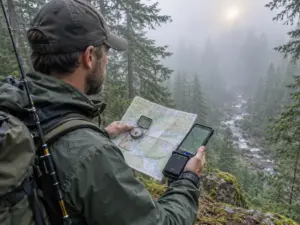
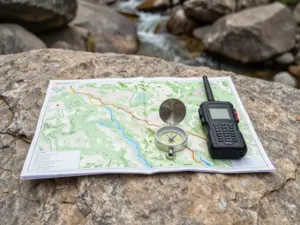
GPS devices fail when batteries die. Phone batteries deplete faster in cold weather, lithium-ion batteries lose significant capacity below 0°C. A compass needle can be affected by nearby metallic objects. The shadow-stick method requires nothing but a straight stick and sunlight, and it has been used accurately by navigators for centuries.
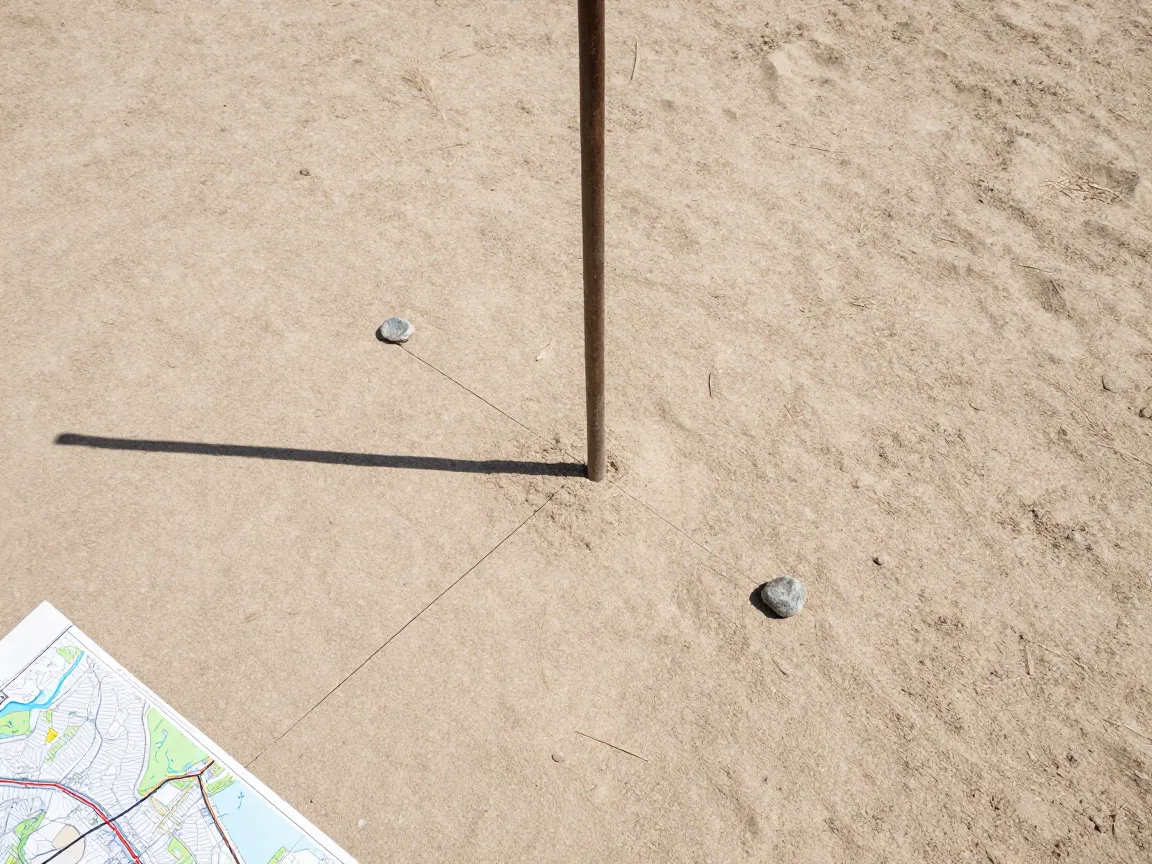
Push a straight stick vertically into flat, open ground. Mark the tip of its shadow with a small stone. Wait 15 to 20 minutes, then mark the new tip of the shadow with a second stone. Draw an imaginary line between the two stones. The first stone is west; the second is east, in both northern and southern hemispheres. Standing with your left foot on the first stone and right foot on the second, you are facing north.
The accuracy of this method increases with longer intervals between shadow marks and when performed closer to solar noon, when the sun’s arc is most predictable. At high latitudes in summer, when the sun barely sets, the method still works as long as a shadow is visible.
A related navigation hack used in wilderness courses: an analog watch can approximate north in the northern hemisphere. Point the hour hand at the sun; north lies halfway between the hour hand and the 12 o’clock mark. This is less precise than the shadow-stick method but faster when you need a rough bearing to maintain direction of travel.
Knowing your direction is only useful if you pair it with terrain association, identifying ridges, drainages, and prominent landmarks on a map or from memory and matching them to your physical surroundings. Survival educators in 2026 increasingly teach these two skills together because direction without terrain context leads people to walk in straight lines away from water, trails, and roads.
5. Signal for Rescue With Tools You Already Have
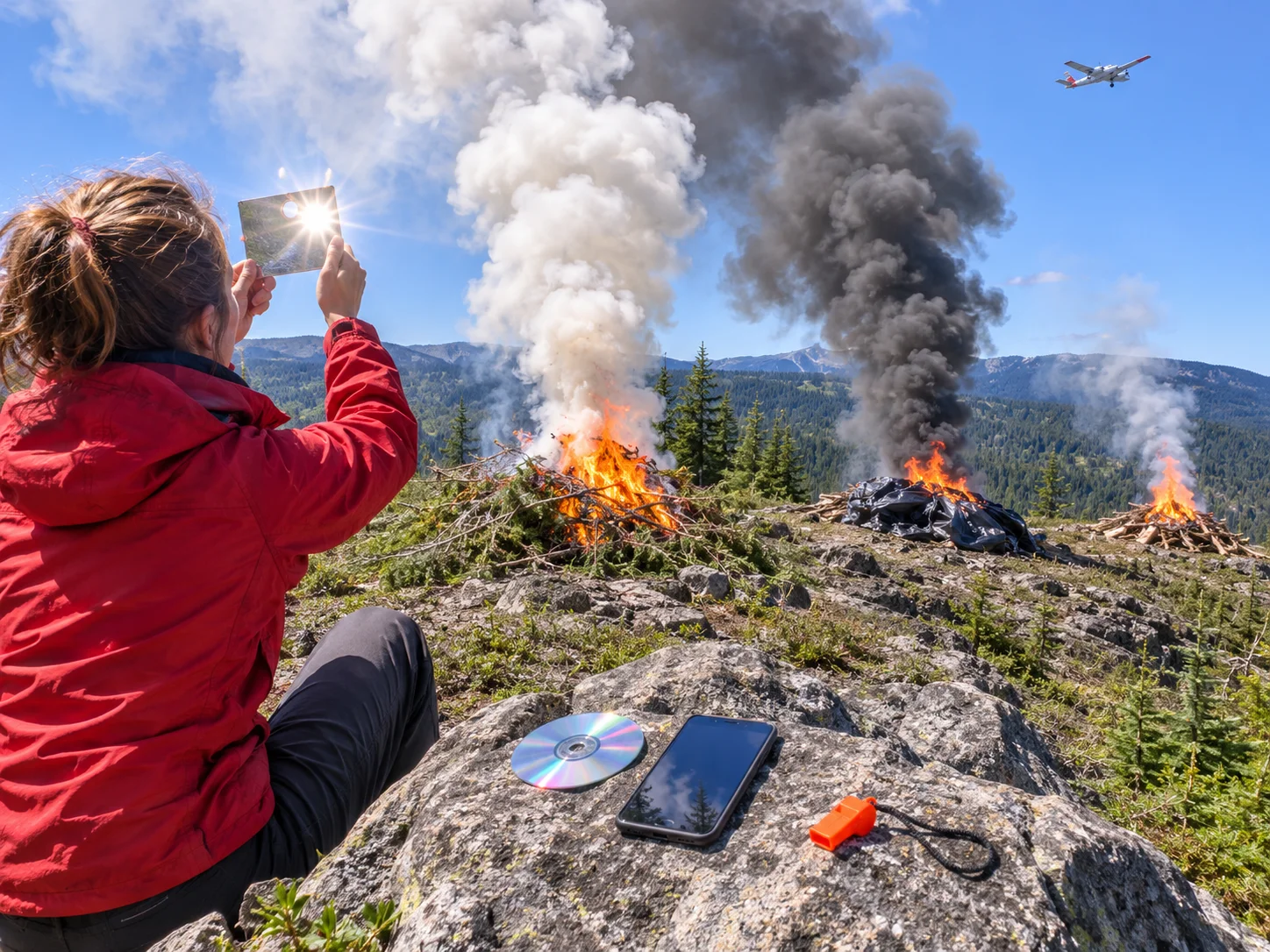
Search-and-rescue teams report that many survivors who were eventually found alive did one thing that passive survivors did not: they actively signaled. A signal mirror is the most underrated piece of survival gear available. A standard glass signal mirror with a sighting hole can direct a reflective flash visible to aircraft at distances up to 16 kilometers on a clear day. The technique requires no power, no battery, and no line of sight, a skilled user can aim flashes through haze by tracking the reflection off the sighting hole.
If you don’t have a signal mirror, the reflective surface of a CD, a phone screen, or any polished metal can substitute. The goal is to produce a flash that is visible from above and from multiple angles as aircraft or other searchers change position.
Three of anything is the universal distress signal in wilderness contexts: three whistle blasts, three fires arranged in a triangle approximately 25 meters apart, three shots fired in sequence. The spacing of three fires matters, too close and they appear as one point of light from altitude. Twenty-five meters creates a triangle large enough to be recognizable from search aircraft.
Smoke signals work during daylight. Green vegetation on a hot fire produces white smoke visible against dark forest. Black plastic or rubber on a fire produces dark smoke visible against open sky or snow. Switching between the two by alternating fuel types creates a distinctive pattern that distinguishes a signal fire from a natural fire or campfire.
One practical hack: before entering remote terrain, leave a detailed trip plan with a contact person who knows when to call for help if you don’t check in. Search-and-rescue teams can be deployed hours or days faster when a last-known location, route, and expected return time are on file. That single step, filing a trip plan, consistently appears in after-action reports for successful rescues.
6. Apply the Rule of 3s as a Decision Framework
The Rule of 3s is a mnemonic taught in wilderness first aid and survival courses that ranks threats by how quickly they become fatal: three minutes without air, three hours without shelter in a harsh environment, three days without water, three weeks without food. The numbers are approximations, not precise physiological limits, but that is the point, they give you a decision-making sequence when stress and cognitive load make prioritization difficult.
In practice, the rule means that most people rescued after unplanned overnights in the backcountry were never at risk of starvation. They were at risk of hypothermia within the first night, and of dehydration by day two. Food is almost always the last concern in a short-term survival scenario, yet it is often the first thing people spend energy worrying about. The Rule of 3s reorders that priority stack.
Mindset is treated as a formal skill in 2026 wilderness survival curricula. STOP, Stop, Think, Observe, Plan, is the standard protocol taught to anyone who realizes they may be lost or in a survival situation. Stopping prevents the most common self-rescue error, which is continuing to move deeper into unfamiliar terrain while expending energy and generating sweat that leads to rapid heat loss. Thinking and observing establish what resources are immediately available. Planning creates a simple sequence of actions based on the Rule of 3s priority order.
One specific application of this framework: if you are lost near dark with limited water and no shelter, the Rule of 3s tells you to spend the remaining daylight building a shelter, not searching for water or attempting to navigate out. You will not die of thirst tonight; you could die of hypothermia. That single priority decision, made correctly once, accounts for a significant portion of the survival margin that separates people who are found alive from those who are not.
Quick Comparison
| Technique | Primary tool needed | Time to implement | Most common failure |
|---|---|---|---|
| Debris shelter | None | 1-2 hours | Too large an interior space |
| Fire starting | Ferrocerium rod + tinder | 15-45 minutes | Wet tinder, wrong wood pairing |
| Water procurement | Container + heat source | 10 min (boiling) | Not treating clear-looking water |
| Shadow-stick navigation | Straight stick | 20 minutes | Too short a wait between marks |
| Signaling | Mirror or reflective surface | 2-5 minutes | No trip plan filed before departure |
| Rule of 3s decision-making | None | Immediate | Prioritizing food over shelter |
Conclusion
The six techniques covered here, shelter construction, layered firecraft, water treatment, shadow-stick navigation, active signaling, and the Rule of 3s decision framework, are not theoretical. They appear repeatedly in documented survival accounts and in after-action analyses from search-and-rescue teams. The single most useful next step is to practice at least one of them in a low-stakes setting before you need it. Build a debris shelter in your backyard. Practice a bow drill until you produce a coal once. Carry a ferrocerium rod and a tin of petroleum-jelly cotton balls on the next hike. Each practiced skill reduces the cognitive load in an actual emergency, and reduced cognitive load is what keeps the Rule of 3s usable when it matters most.