Strongest Fishing Knots That Won’t Fail Under Pressure
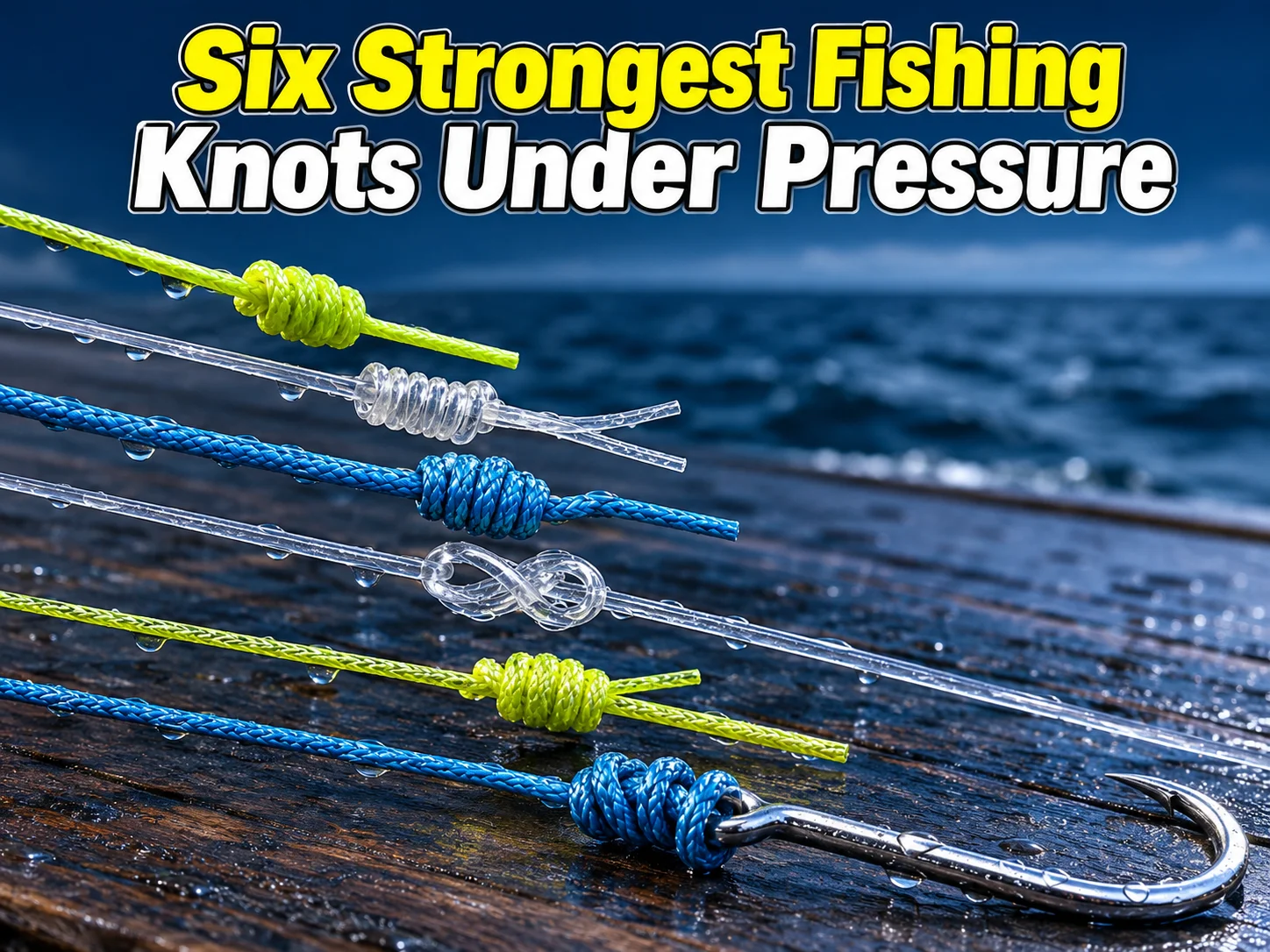
Roughly 70% of fish lost during a fight are lost not because the line broke, but because a knot failed. That single fact should change how seriously you treat the two minutes it takes to tie a connection. The 6 strongest fishing knots that won’t fail under pressure covered in this guide are not arbitrary picks. Each one has been validated in tensile testing on IGFA-calibrated machines, and each serves a specific role where a weaker knot costs you a fish or a whole rig.
Disclosure: This post contains affiliate links. As an Amazon Associate, we earn from qualifying purchases, and at no extra cost to you.
Key Takeaways
- No single knot is strongest for every job. The right knot depends on whether you’re connecting braid to a leader, attaching a hook, or building a doubled main line.
- PR Bobbin and FG knots are the top two performers for braid-to-leader connections, retaining up to 99% and 98% of line strength respectively.
- The Bimini Twist is the only knot that can exceed 100% of rated line strength when tied correctly in a doubled configuration.
- Palomar and Trilene knots dominate hook-to-line connections, holding between 89% and 97% of real line strength in independent testing.
- Double Uni and Surgeon’s knots, though popular for their simplicity, retain only 40-75% of line strength and should not be used where pressure is a concern.
1. FG Knot
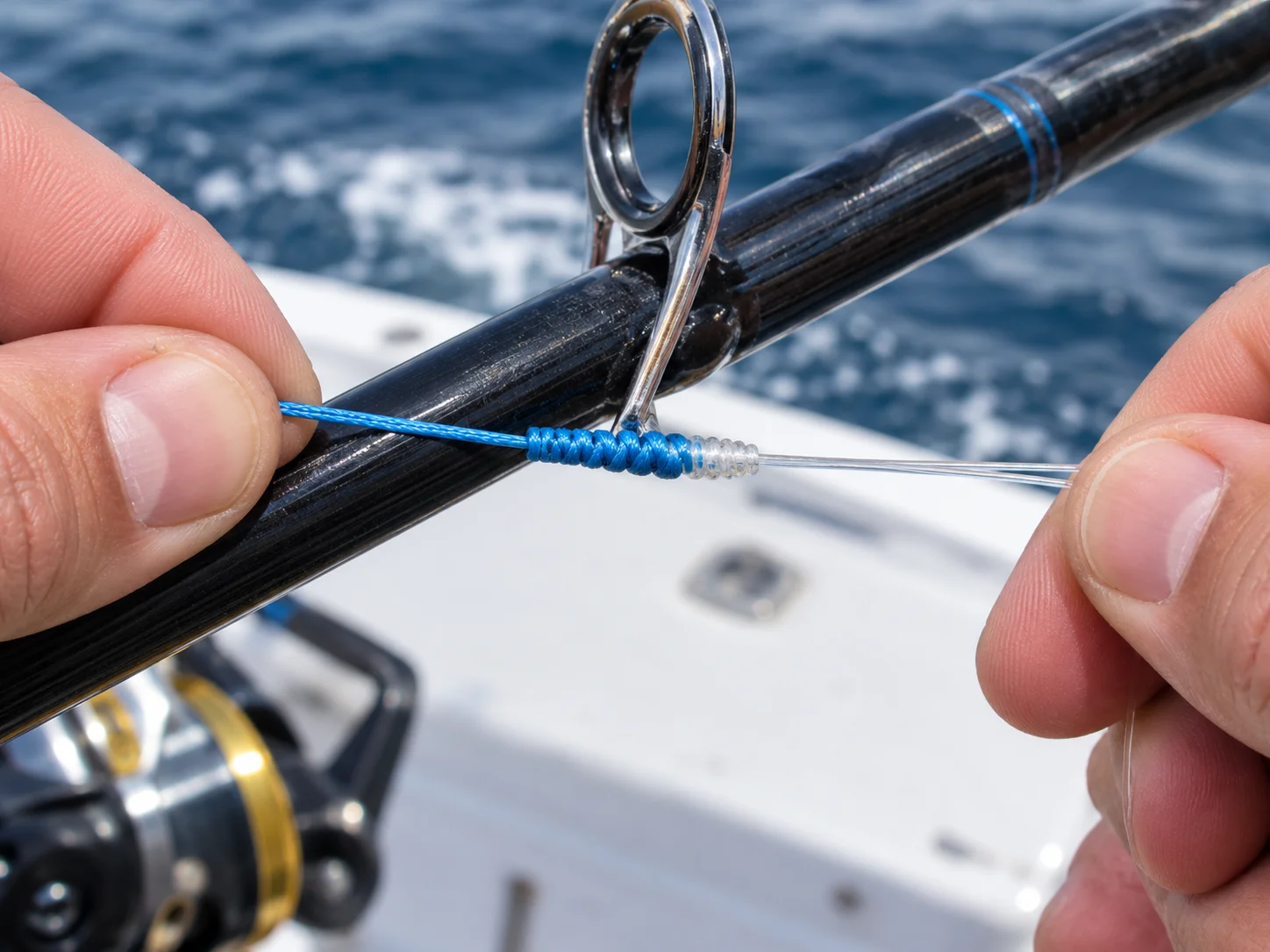
The FG knot has earned its place at the top of braid-to-leader rankings through consistent lab results, not reputation. In multiple independent pull tests, it retains 80-98% of line strength depending on line class, and it produces a profile so slim that it passes through rod guides under heavy drag without catching. Salt Strong’s ranking of best fishing knots places FG second overall, just behind the PR Bobbin, specifically because of that combination of strength and practical usability without tools.
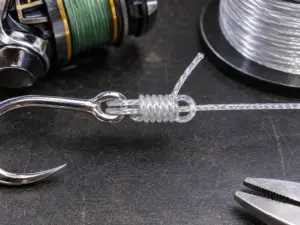
The knot works by creating a series of alternating hitches that the braid wraps tightly around the fluorocarbon leader. Those hitches distribute load across the contact length rather than concentrating stress at a single point, which is what causes most connector knots to fail. When you finish with two half hitches and a final locking wrap, the structure grips tighter as tension increases rather than loosening.
For everyday saltwater and freshwater anglers fishing braid to fluorocarbon leaders, the improved FG is the practical first choice. It can be tied by hand, seated against the rod or held in a knot-tying tool, and the technique can be learned in one session on the water. The main constraint is that it takes longer to tie than a Double Uni and requires consistent tension throughout. Rush it, and you get loose hitches that collapse under a hard run.
2. PR Bobbin Knot
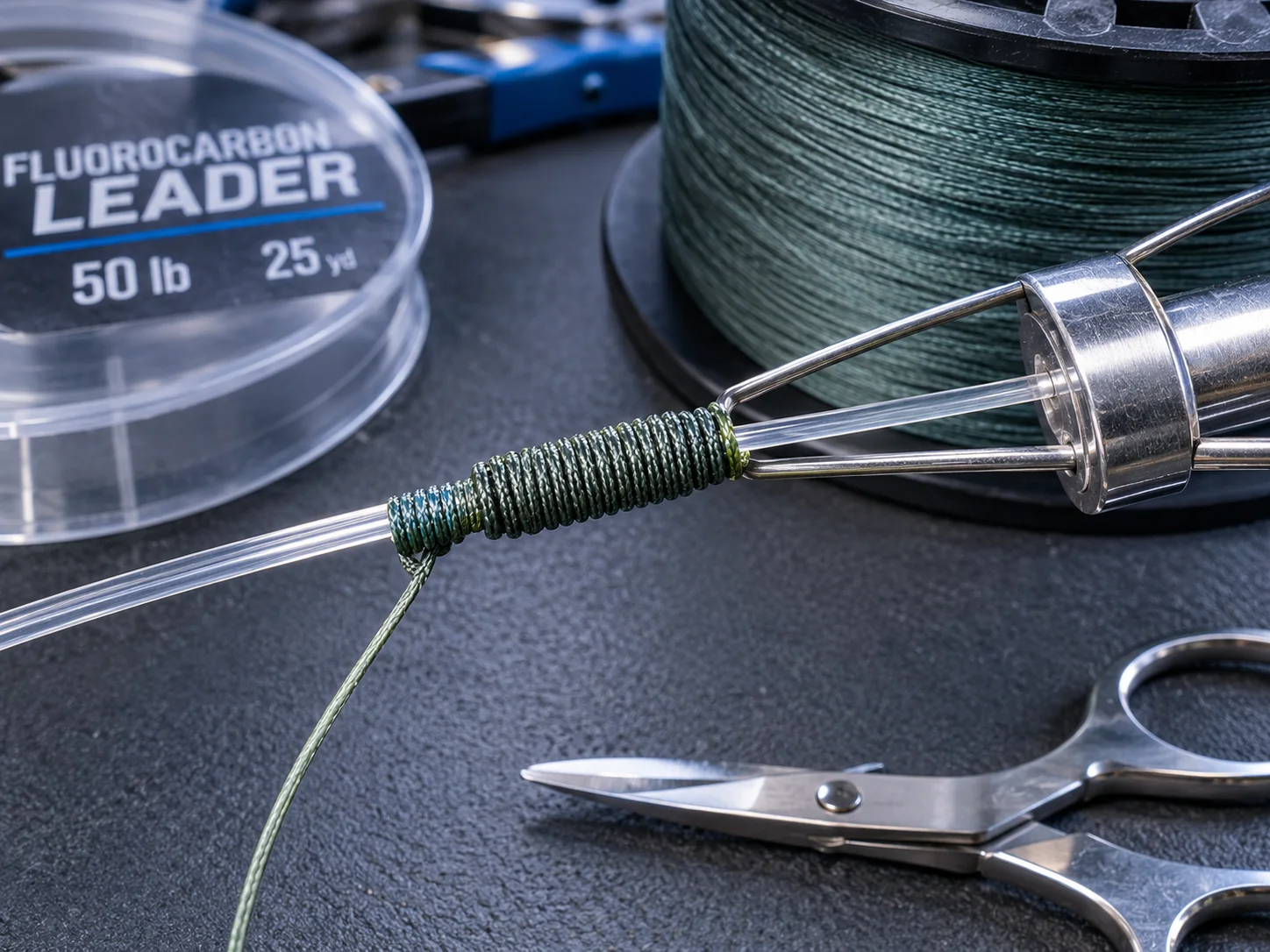
Pull tests rank the PR Bobbin knot as the single strongest braid-to-leader connector available, retaining 84-99% of line strength across line classes. In heavy jigging and offshore applications tested on IGFA tensile machines, it outperforms every hand-tied alternative. Salt Strong lists it as the top knot of all time for exactly this reason.
The knot requires a bobbin tool to build the uniform, densely packed wraps that give it its strength. That tool dependence is the trade-off. Most guides and offshore captains tie PR during pre-trip prep, not streamside, and that’s the right approach. The bobbin allows far more consistent wrap pressure than fingers alone, which is why the knot’s break strength is reliably at the high end of the range rather than variable.
Where PR matters most is 50 lb braid or heavier, offshore jigging, or any scenario where a leader failure ends the day. For inshore light tackle, most anglers find FG sufficient and faster to rig. If you’re targeting bluefin, yellowfin, or large GT, the extra five minutes to rig a PR Bobbin before departure is not optional.
3. GT Knot
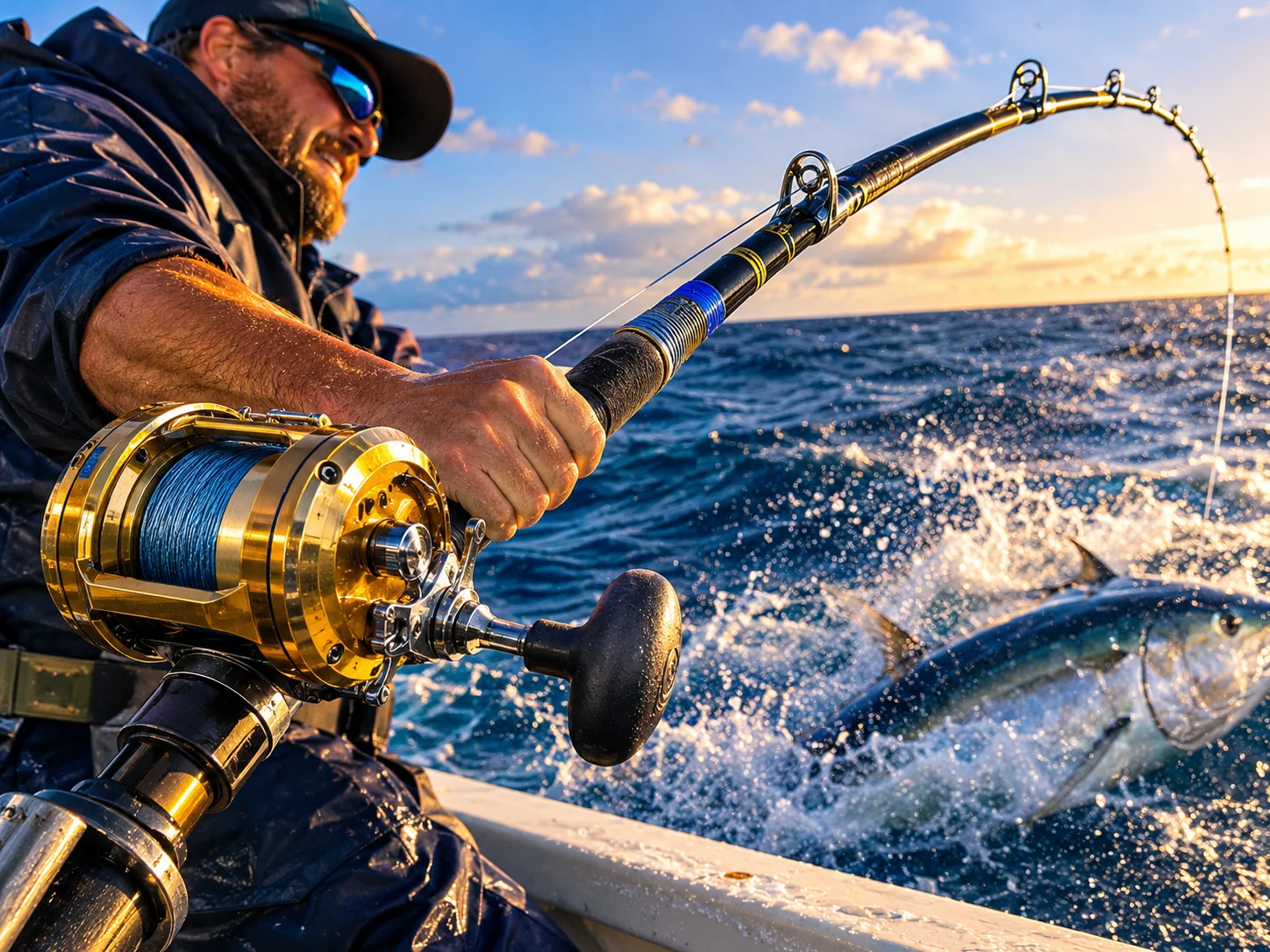
The GT knot is the most situation-specific entry on this list, but in its target configuration it outperforms every other knot. Sport Fishing’s IGFA machine tests found the GT knot achieving approximately 100% break strength when connecting 50 lb braid to 80 lb fluorocarbon leader, a combination common in heavy inshore and light offshore work. In that specific setup, it beat both PR and FG.
The GT is a relatively newer knot to reach wide adoption, and its design prioritizes shock resistance under heavy drag rather than general versatility. The structure uses a series of wraps with a locking finish that handles the kind of sudden load spike you get when a large fish takes a live bait at speed or surges during a boat-side run.
The practical limit of the GT knot is that it performs most reliably in the heavier line classes where it was tested. Anglers running lighter leaders may not see the same margin over FG that the Sport Fishing data shows in the 50/80 configuration. Use it when you’re targeting species that make violent, short runs against heavy drag, marlin, large tuna, trophy amberjack, and you want maximum shock resistance at the leader junction.
4. Bimini Twist
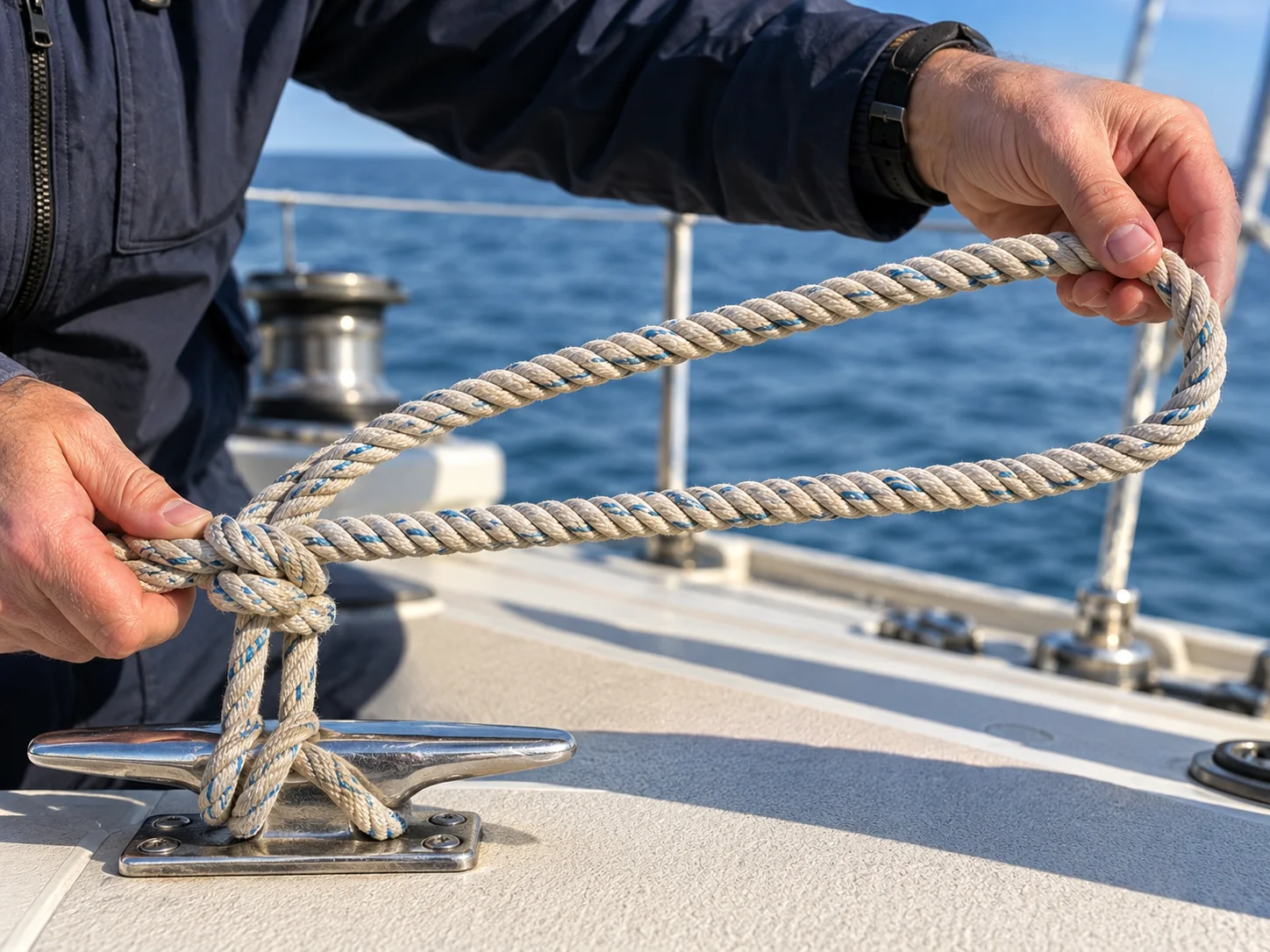
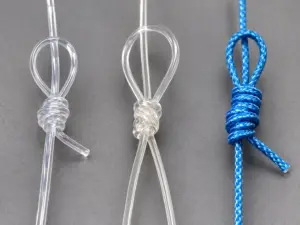
The Bimini Twist occupies a different category from the other five knots here. It doesn’t connect line to a hook or leader; it creates a doubled section of main line that serves as the foundation for all the connections above it. A properly tied 40-turn Bimini Twist in braid or mono breaks at roughly 100.9% of the line’s rated strength, meaning the line itself breaks before the knot does. Sport Fishing’s updated double-line testing calls it the dominant doubled-line knot.
That 100%-plus result is worth understanding. When you double the line before tying a terminal connection, you shift where failure happens. Under extreme load, the doubled section distributes force across two strands instead of one, and the Bimini’s loop preserves nearly all the rated strength. Offshore billfish and tuna anglers build their entire terminal rigging system on a Bimini loop because losing line strength at the double is not acceptable when the fish weighs more than the rod is rated for.
Tying a Bimini Twist requires practice. The 40-turn version demands consistent tension on the twists while the loop is spread and the half-hitches are seated. Most anglers learn it on a cleat or a partner’s hand before it becomes reliable. Once learned, it’s the starting point for any serious offshore rig.
5. Palomar Knot
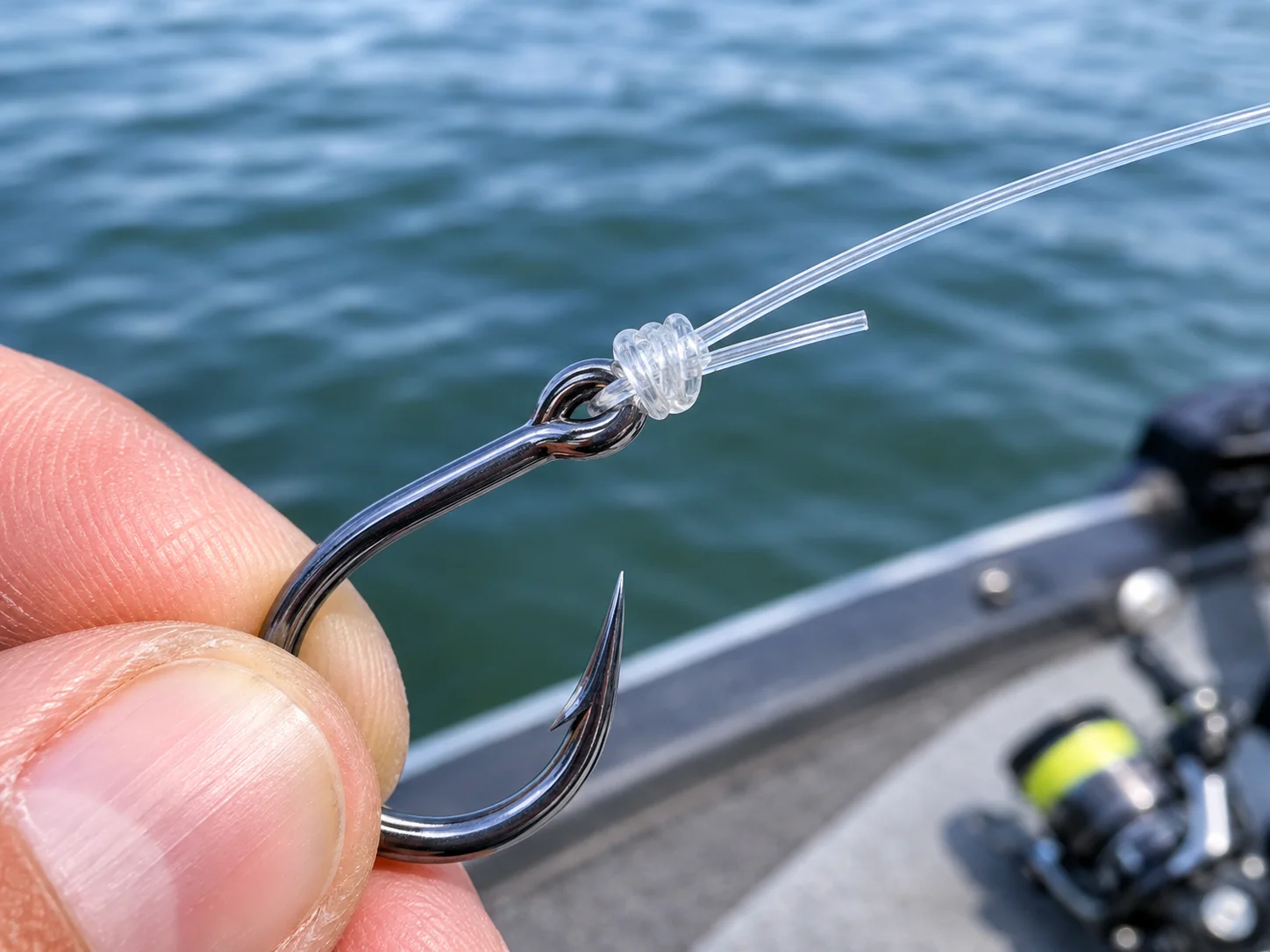
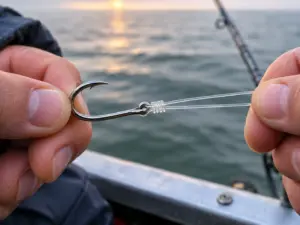
For tying directly to a hook, lure, or swivel, the Palomar knot holds 89-97% of real line strength on monofilament and fluorocarbon in independent hook-knot testing. That places it at or near the top of every hook-connection test published in 2026, and its reputation as the most reliable general-purpose fishing knot is backed by the numbers.
The Palomar’s design passes a doubled line through the eye before forming an overhand knot and looping the hook through, which spreads load across two strands at the most vulnerable point. That doubling effect is why it consistently outperforms Clinch and Improved Clinch in direct comparisons, particularly on fluorocarbon, which is stiffer and more prone to cutting under a single-strand connection.
One constraint worth noting: the Palomar requires passing the hook or lure through the loop, which means it can’t be tied to large treble-hooked lures without the hooks catching the loop. For single hooks, swivels, and jig heads, it’s the first choice. The knot is fast to tie, needs no specialized technique, and holds up in cold wet conditions when hands are numb.
6. Trilene Knot
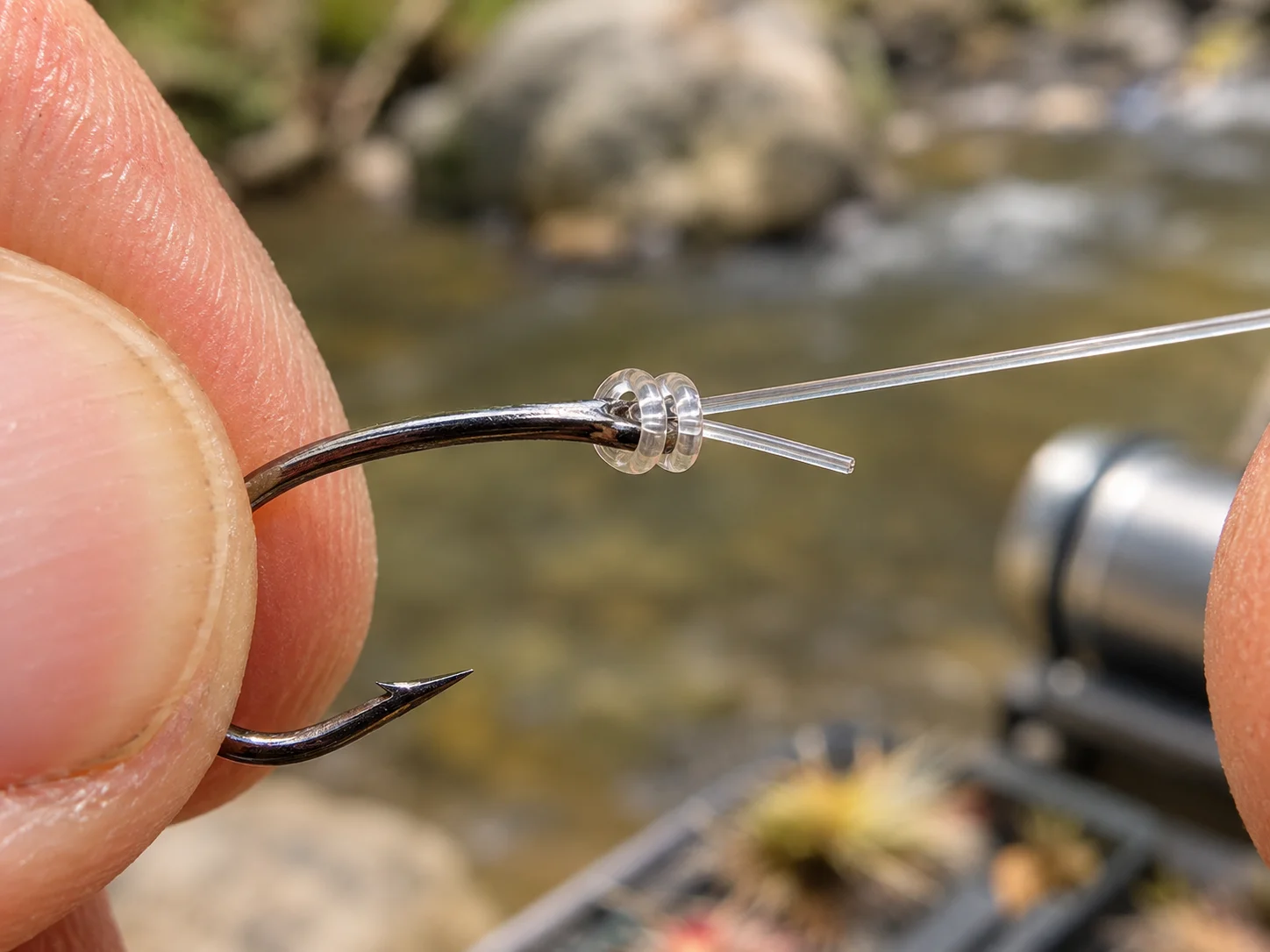
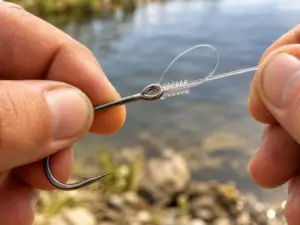
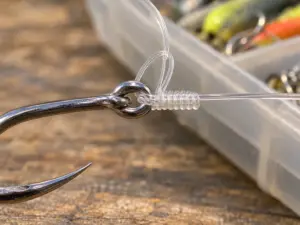
The Trilene knot, sometimes called the two-turn Clinch, was tested by Field & Stream at approximately 96% strength when tying a lure to 10 lb monofilament. That result puts it on par with Palomar for hook and lure connections, and it earns its place on the list as the stronger alternative when Palomar’s doubling-through-the-eye isn’t practical.
The Trilene differs from a standard Improved Clinch by passing the line through the hook eye twice before forming the wraps, creating a double wrap at the eye that prevents the knot from slipping under load. That small structural difference accounts for the meaningful strength advantage over a single-pass Clinch.
Anglers who fish mono or fluorocarbon to small hooks or flies, where the doubled-pass in a Palomar is too bulky, will find the Trilene a cleaner option that sacrifices almost nothing in holding power. It works particularly well with 6-17 lb monofilament where the stiffness is low enough to form the double-pass through the eye without kinking. At 20 lb and above, the Palomar’s simpler geometry starts to handle better.
Quick Comparison
| Knot | Primary Use | Strength Retention | Tool Required |
|---|---|---|---|
| FG Knot | Braid to fluorocarbon leader | 80-98% | No |
| PR Bobbin | Braid to leader (heavy) | 84-99% | Yes (bobbin) |
| GT Knot | Heavy braid to heavy leader | ~100% | No |
| Bimini Twist | Doubled main line loop | ~100.9% | No |
| Palomar | Hook, lure, swivel | 89-97% | No |
| Trilene | Hook, lure (mono/fluoro) | ~96% | No |
Conclusion
These six knots cover every critical connection point in a fishing rig: the doubled main line, the braid-to-leader junction, and the terminal hook or lure attachment. The clearest next step is to identify which connection in your current setup uses a weaker knot, Double Uni, Surgeon’s, or basic Clinch, and replace it with the appropriate knot from this list. Start with the one connection where failure cost you a fish and work from there.