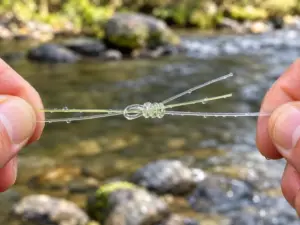
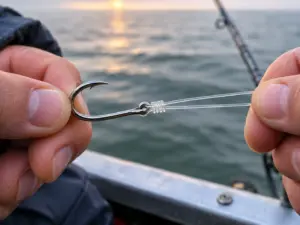
Best Fishing Knot Contenders for Maximum Strength and Reliability
Anglers lose fish most often not because of the rod, the reel, or the lure, they lose them at the knot. Lab pull-tests run throughout 2026 show that a poorly chosen or poorly tied knot can reduce your line’s rated strength by 30 to 40 percent before a fish ever loads the rod. The 6 best fishing knot contenders for maximum strength and reliability outlined here are the knots that survive those tests with the fewest concessions, covering terminal connections, leader splices, and shock loops across mono, fluorocarbon, and braid.
Disclosure: This post contains affiliate links. As an Amazon Associate, we earn from qualifying purchases, and at no extra cost to you.
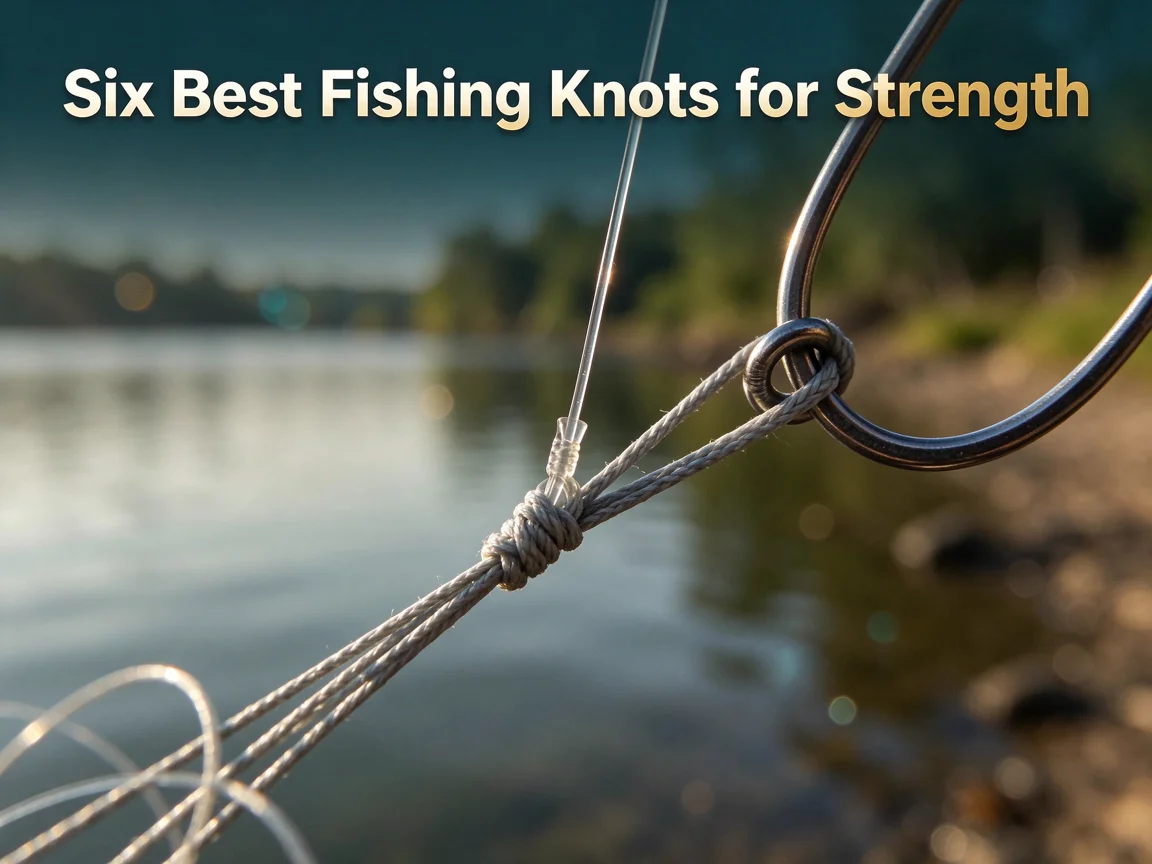
Key Takeaways
- The FG knot leads braid-to-leader connections with roughly 94 to 98 percent tensile retention and the slimmest profile through micro guides.
- Palomar is the strongest widely used terminal knot, testing at 95 to 97 percent across fluorocarbon, braid, and mono in multiple 2026 pull-test series.
- The PR Bobbin knot matches or slightly exceeds FG in raw break strength but requires a dedicated bobbin tool, making it a specialist choice.
- San Diego Jam and Trilene fill specific roles, the Jam dominates fluorocarbon bass fishing; Trilene leads in monofilament-to-lure tests.
- Bimini Twist remains the standard double-line shock loop for offshore and heavy inshore work, where absorbing sudden load is more important than a slim profile.
1. FG Knot
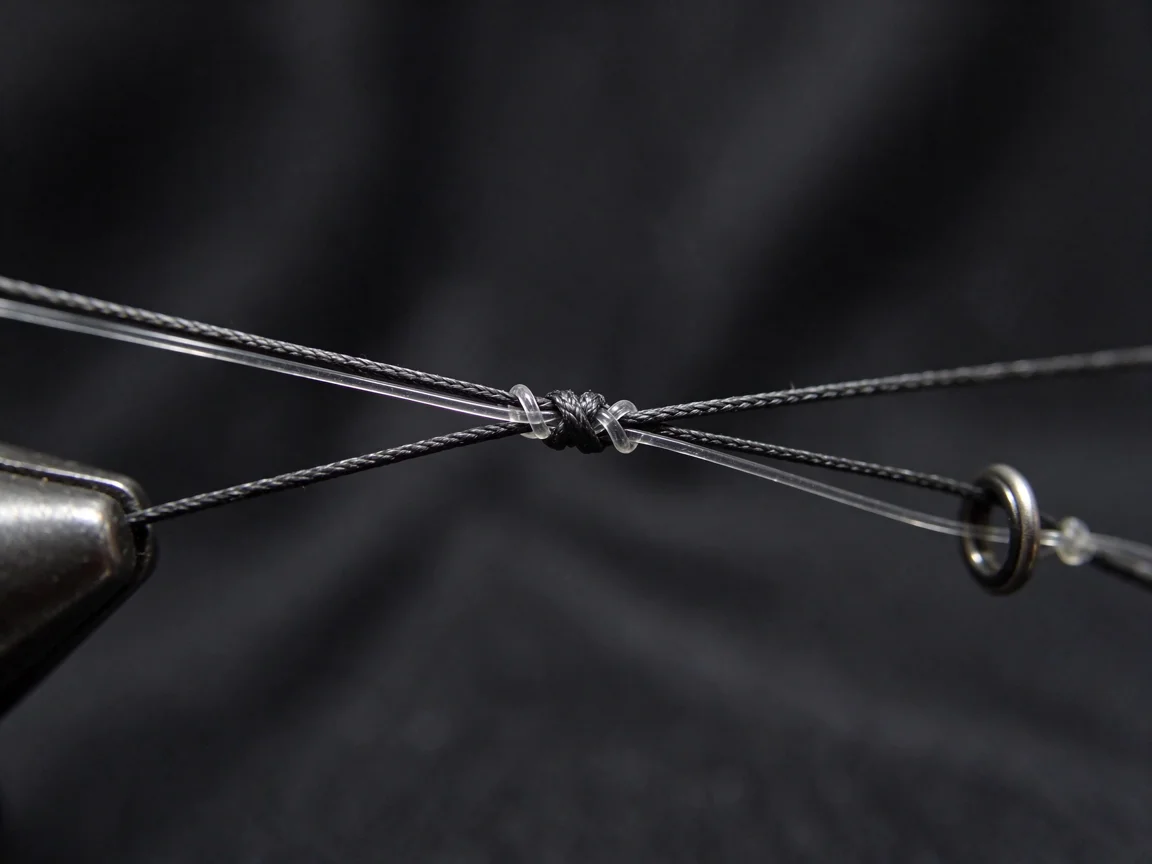
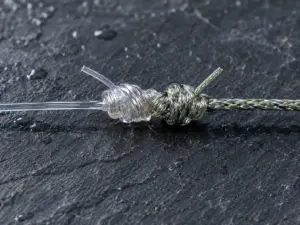
The FG knot is the benchmark braid-to-leader connection in 2026 for one measurable reason: it passes through micro-guides. Where a bulky double uni creates a hinge that slaps through each guide ring and can cost you ten feet of casting distance, the FG sits nearly flush against the main braid. A dedicated knot-strength calculator testing braid-to-fluorocarbon leader reported the FG at 94 percent wet tensile strength, and broader knot charts put expected retention as high as 98 percent, with a 90 percent floor as the minimum acceptable threshold for well-tied specimens.
Tying it takes practice. The knot is built by holding the leader at tension and crossing the braid over and under it in alternating half hitches, usually 20 wraps, then finishing with two half hitches and a locking clinch. Rushed wraps or inconsistent tension collapse the grip and drop retention significantly. Most guides who fish this knot daily recommend practicing on larger test line first until muscle memory settles the spacing.
Where the FG genuinely earns its ranking is in heavy fluorocarbon pairing. When you’re running 50-lb braid to a 25-lb fluorocarbon leader for snook or redfish around structure, no other non-mechanical knot keeps both diameter and strength closer to theoretical line rating. One mid-2026 deep-dive test described it as “blowing other braid-to-leader knots out of the water on shear strength.” That’s not hyperbole, the data supports it. The only knot that consistently edges FG on raw break strength in that category is the PR Bobbin, covered next.
2. PR Bobbin Knot
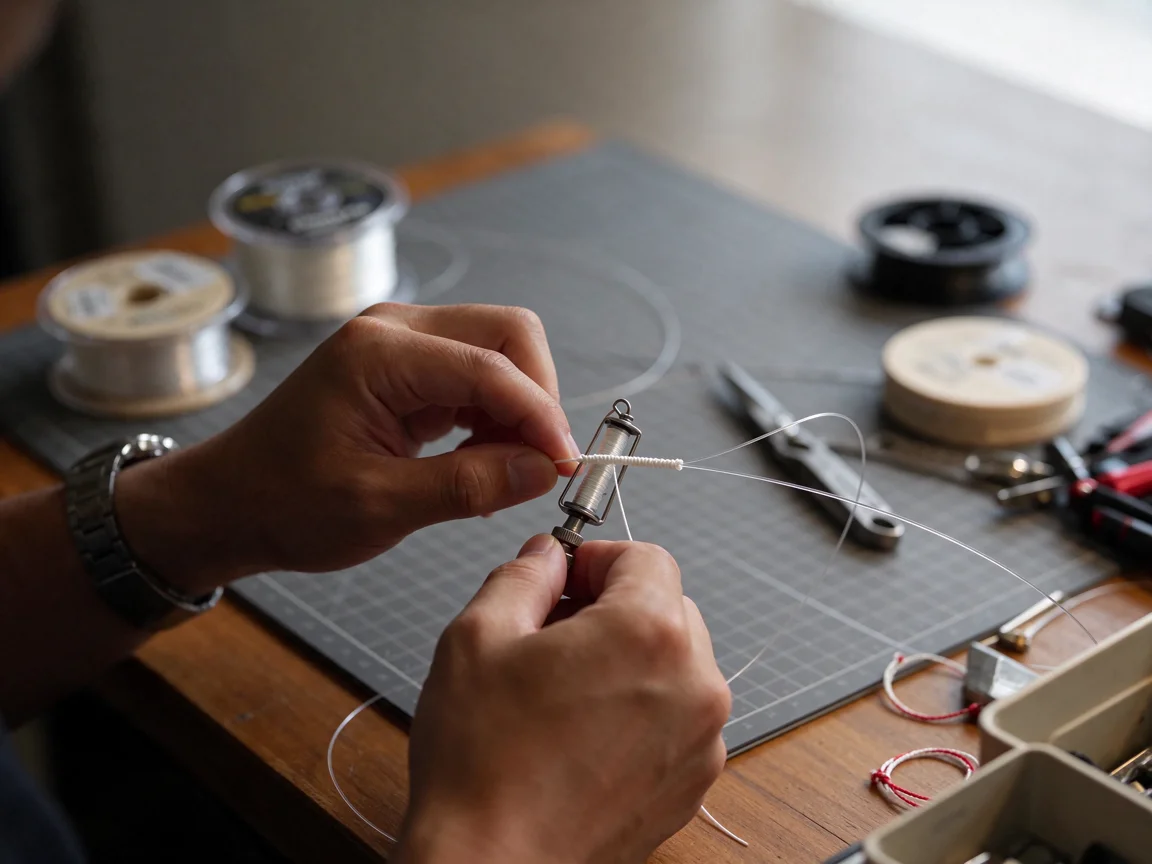
A February 2026 ranking of the strongest fishing knots placed the PR Bobbin first overall, ahead of FG, citing near-100 percent line retention and an almost total resistance to slippage under sustained load. The knot works by using a small plastic or aluminum bobbin to wrap the braid around the leader hundreds of times under consistent, tool-controlled tension, something hand-tying cannot replicate with the same consistency.
That tool requirement is the reason most anglers never tie it. For tournament bass anglers or surf casters who can rig leaders before launching, it’s not an obstacle. For someone wading a river at dusk who snaps a leader on a rock, it’s a dealbreaker. The PR Bobbin belongs on the short list for maximum strength specifically because it removes the variable of hand tension from the equation. When tied correctly, it performs in saltwater applications where the leader is loaded and released repeatedly over long fights.
Consider it the knot for pre-rigged setups where you want the absolute highest confidence in your leader splice and have two to three minutes at the tackle table to do it right. Anglers targeting large pelagics on light tackle, tuna, kingfish, large jack, use it precisely because there’s no acceptable drop in strength when the fish runs 200 yards in four seconds. Paired with 50-lb PE braid and a 40-lb fluorocarbon leader, a properly set PR Bobbin knot approaches the line’s rated strength so closely that the knot is rarely where the system breaks.
3. Palomar Knot
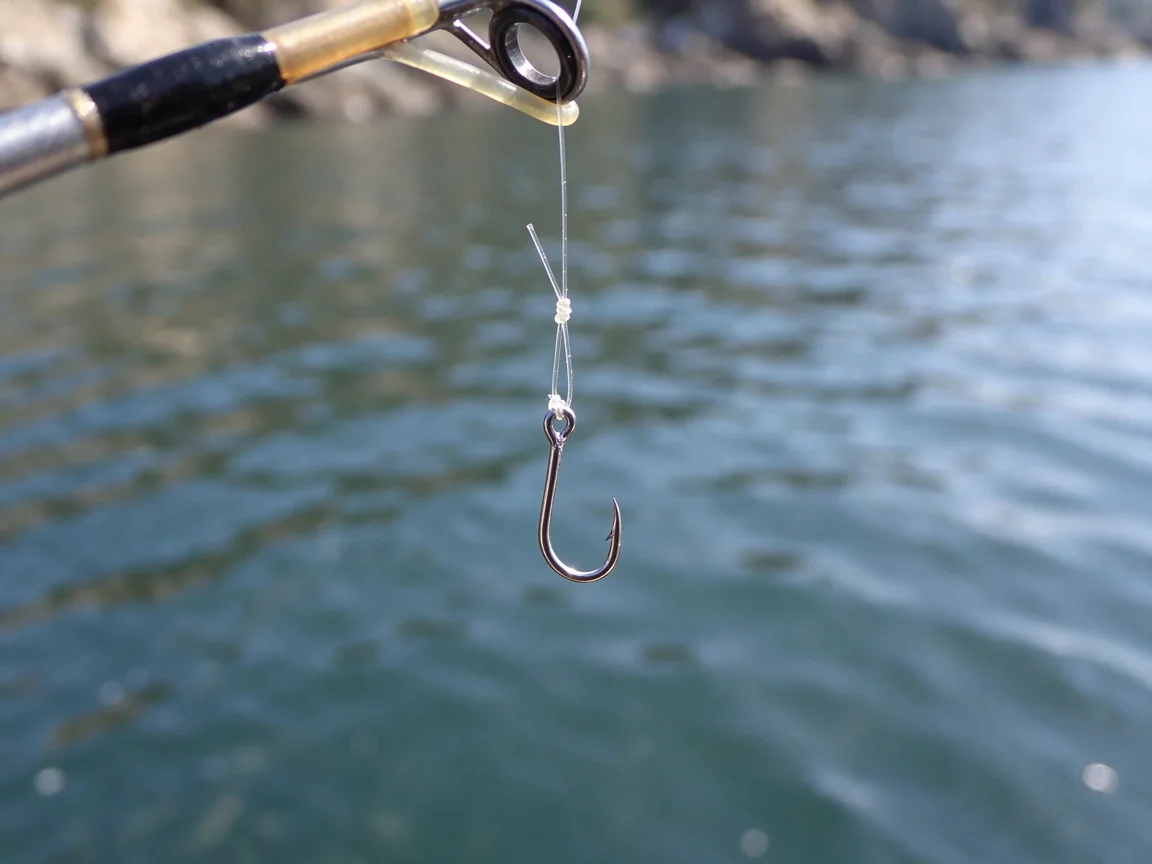
Of all knots in this list, the Palomar has the strongest case for being the one to learn first. In a 2026 controlled pull-test on five hook knots tied in 12-lb fluorocarbon, Palomar tested at 97 percent, the highest of the group, beating improved clinch at 90.5 percent, uni at 86.4 percent, and non-slip mono loop at 82.6 percent by a meaningful margin. Separate strength guides put its expected retention at 95 percent or better across mono, braid, and fluorocarbon, with a minimum acceptable threshold of 88 percent for weaker ties.
The tying sequence is short: double the line, pass the loop through the hook eye, tie a simple overhand knot, then pass the hook through the loop and snug down. That’s it. The double line entering the eye is what gives it structural durability; it distributes stress across two parallel strands rather than one, which is why it retains strength near the rated line value even on braid, where other terminal knots cut themselves under load. A June 2026 knot-testing site ranked Palomar at 95 percent or better as the strongest all-around terminal knot across hook, lure, and snap applications.
The one constraint worth noting is hook eye size. Small hook eyes, size 10 and below, or tight ring swivels, make it difficult to pass the doubled line cleanly, especially with 20-lb fluorocarbon. When that’s the case, the San Diego Jam becomes the more practical alternative without a significant strength trade-off. For everything else, Palomar is the default.
4. San Diego Jam Knot
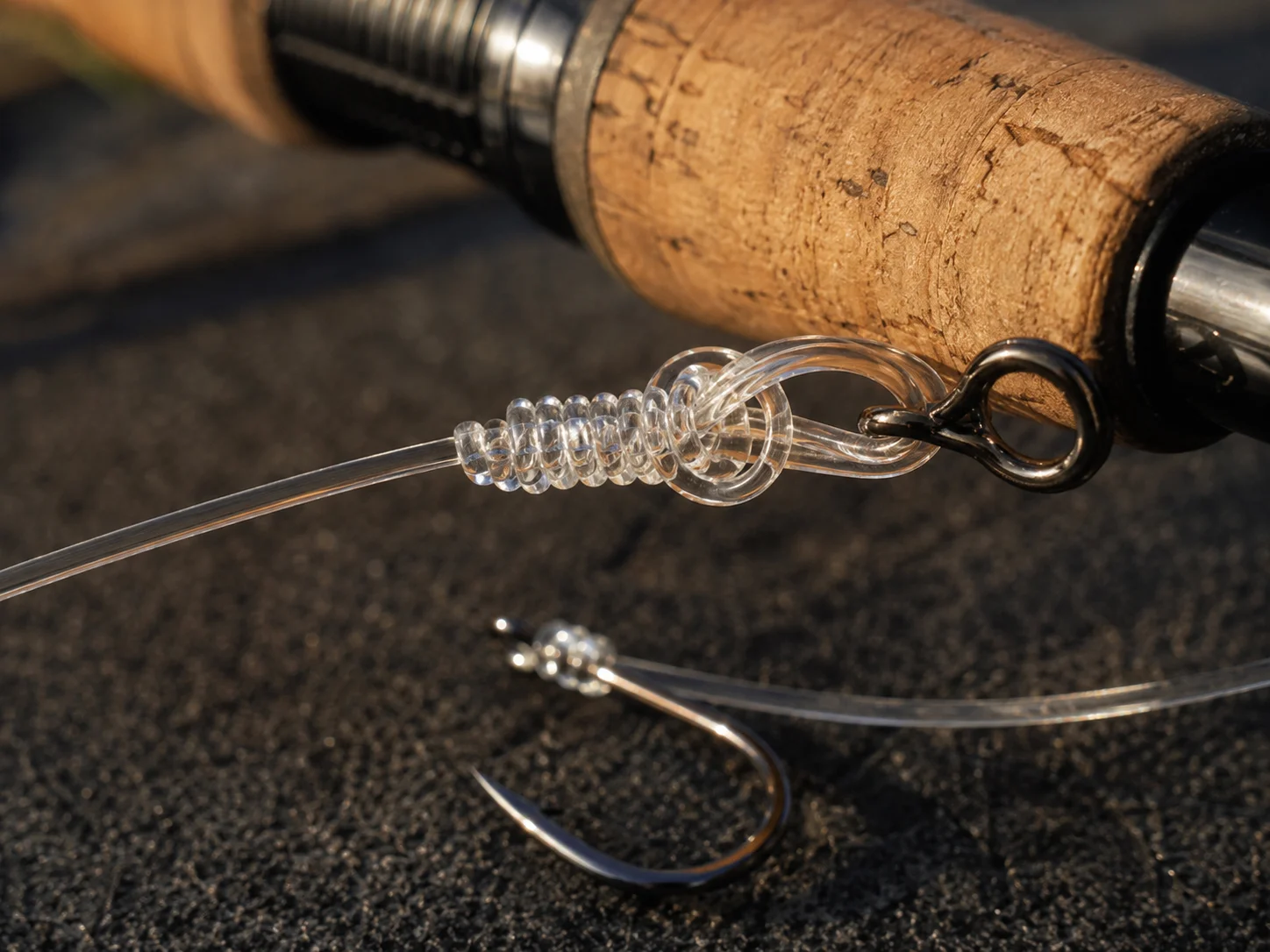
Bass anglers fishing heavy fluorocarbon have largely standardized on the San Diego Jam because it handles the stiffness of 15 to 20-lb fluoro better than most alternatives. A July 2026 guide to the best fishing knots called it the most dependable knot in bass fishing specifically for fluorocarbon, and strength charts back that up with expected retention around 95 percent and some lab measurements showing the knot exceeding 115 percent of nominal line rating when tied in stiffer line types.
That 115 percent figure deserves explanation. It doesn’t mean the knot is stronger than the line, it means that in controlled break tests, the line snapped somewhere other than the knot, and the force required exceeded the line’s rated value. This happens because stiff fluorocarbon behaves slightly differently than mono in a tensile tester, and some knot geometries in that material distribute stress so efficiently that the line’s weakest point shifts away from the connection. San Diego Jam achieves this more reliably in heavy fluoro than Palomar does, which is why it holds its own ranking here rather than being treated as a Palomar backup.
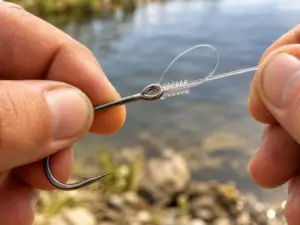
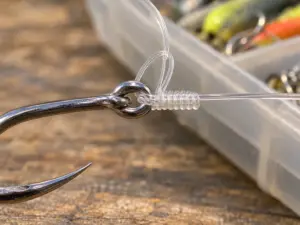
Tying it involves passing the line through the eye, wrapping six turns around the standing line, then feeding the tag end back through the loop near the eye and through the large loop formed by those wraps. The finish is tighter than a clinch and the wraps are slightly longer, which is what creates that effective grip on stiff material. For drop-shot rigs, Carolina rigs, and any terminal connection in 15-lb fluoro or heavier, it consistently outperforms improved clinch in both strength and consistency.
5. Trilene Knot
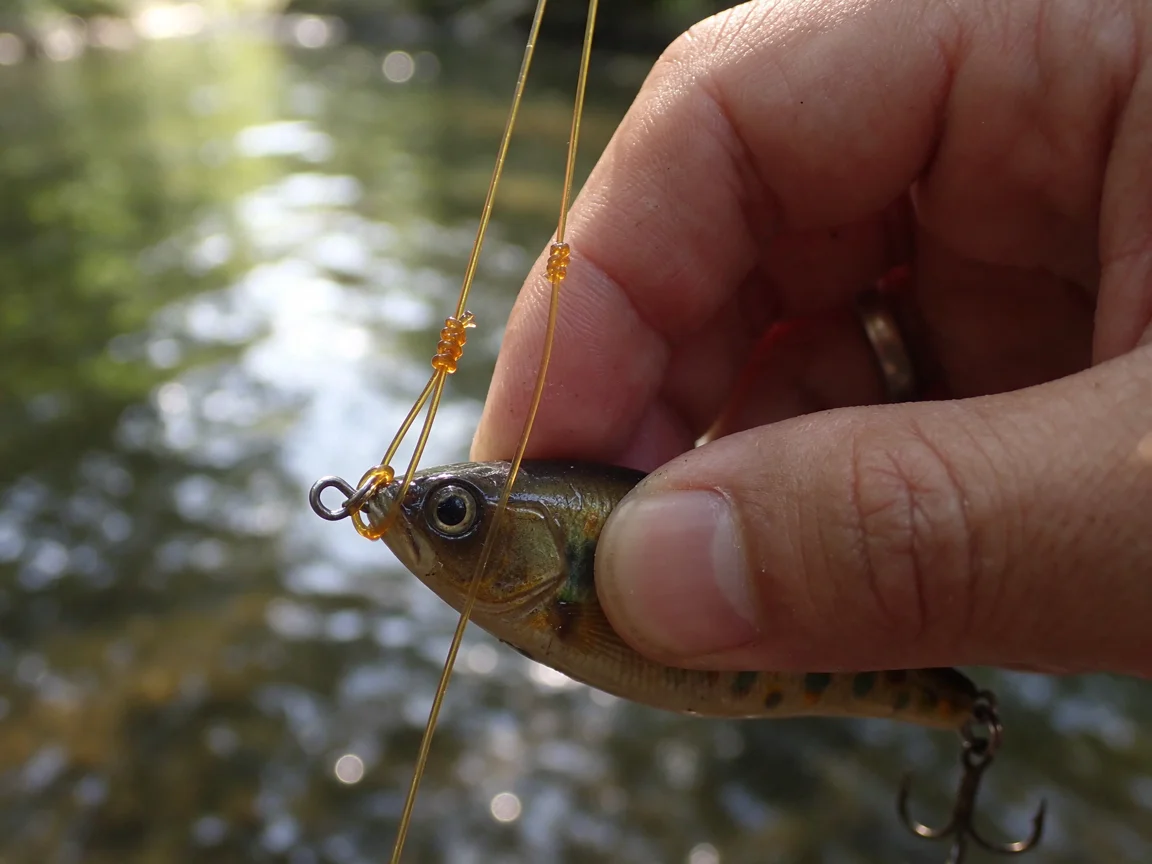
A November 2026 test from a major fishing magazine put the Trilene knot at 96 percent strength for monofilament-to-lure connections, beating four other competing knots in the same test with 10-lb mono to a hard bait. That’s the specific environment where Trilene stands apart from Palomar: monofilament, in lighter test, tied to lures or hooks with standard-sized eyes.
The structural feature that drives this performance is a double-pass through the hook eye at the start of the tie. Standard clinch-style knots pass once; Trilene passes twice, creating a doubled anchor at the eye before the wraps begin. This reduces the acute-angle stress that cuts into mono as the knot cinches, which is exactly where improved clinch knots fail under load. A broad-strength guide updated in October 2026 found Palomar and Trilene “consistently test at 95 to 100 percent” of rated line strength, grouping them together as the two terminal knots that most reliably stay in that range.
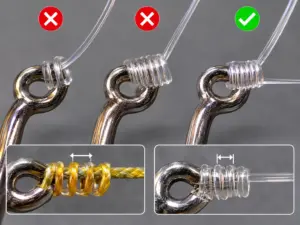
For trout, panfish, and light-tackle inshore fishing where monofilament is still the right choice, either for visibility management or for the stretch properties that protect light wire hooks, Trilene is the knot to reach for. It’s also more forgiving with thin diameter line than Palomar is, because the double eye-pass anchors the connection before you’ve committed to the loop geometry. Tie it with five wraps in line above 12-lb test, six wraps in anything lighter, and always moisten the wraps before seating.
6. Bimini Twist
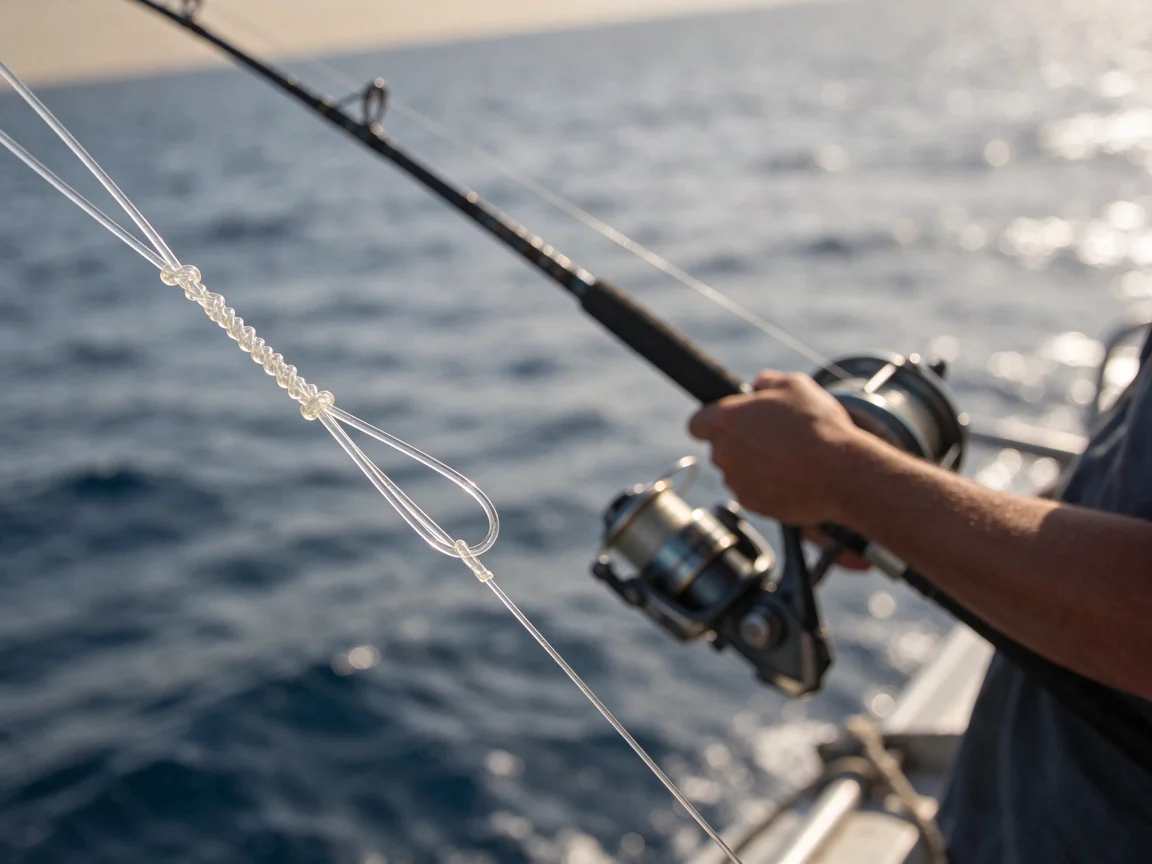
The Bimini Twist doesn’t connect a hook to a line. Its job is different and specific: it creates a double-line loop, typically 1 to 3 feet long, at the end of your main line, giving you a shock-absorbing structure before any leader or terminal connection. When a large fish surges and the line loads suddenly, the Bimini’s twisted double section stretches more uniformly than a single strand and absorbs that impulse without sending the full shock directly to the knot at the hook end.
Strength retention on a correctly tied Bimini is effectively 100 percent, because the knot doesn’t create a stress point, it redistributes the load across two parallel strands. IGFA record rules recognize it as the standard double-line construction for a reason. Offshore trolling, heavy surf fishing, and any situation where the leader-to-main-line connection needs to handle repeated shock loading all benefit from starting with a Bimini base.
The tying process is the most involved of the six: 20 twists minimum, rolled back over themselves with controlled tension, then a ratchet wrap and locking half hitches to close. It genuinely takes about fifteen minutes to learn correctly. Once learned, it’s tied in under three minutes. The practical constraint is that it makes most sense when the fish you’re targeting can hit the line hard enough that 95 percent retention isn’t sufficient, when you need the full line rating and a margin for shock. Paired with a PR Bobbin or FG leader splice above a Bimini loop, the resulting rig has no weak point that falls below 95 percent of rated strength anywhere in the system.
Quick Comparison
| Knot | Primary Use | Approx. Strength Retention | Key Constraint |
|---|---|---|---|
| FG | Braid-to-leader splice | 94-98% | Requires practice, 20+ wraps |
| PR Bobbin | Braid-to-leader splice | ~100% | Needs bobbin tool |
| Palomar | Terminal (hook/lure/snap) | 95-97% | Tight eyes limit use |
| San Diego Jam | Terminal, heavy fluorocarbon | 95-115% | Six-wrap sequence |
| Trilene | Terminal, monofilament | 95-96% | Light-line specialist |
| Bimini Twist | Double-line shock loop | ~100% | Setup time, not a terminal knot |
Conclusion
The 6 best fishing knot contenders for maximum strength and reliability are not interchangeable. Each one solves a specific problem in the system between your reel and the fish. FG and PR Bobbin handle the braid-to-leader transition; Palomar, San Diego Jam, and Trilene cover the terminal end for different line types and test weights; Bimini Twist sits upstream of everything else when shock absorption matters more than a slim profile.
The practical next step is to pick one knot from each category, one leader splice and one terminal knot, and tie each one 20 times before you need it on the water. Strength retention numbers mean nothing if the wraps slip because the knot was rushed. A Palomar tied clean at 97 percent beats an FG tied sloppy at 60 percent every time.