Fishing Photo Frame Ideas That Turn Your Best Catch Into Wall Art
Over 50,000 results appear when you search “fishing decor” on major e-commerce platforms in 2026, and the fastest-growing segment is not mass-produced prints, it’s framed personal catch photos. Anglers are moving their trophy shots off phones and onto walls, and the range of formats available now makes that easier than it has ever been. This guide covers the most effective fishing photo frame ideas that turn your best catch into wall art, from rustic cabin setups to large-format metal-and-canvas mixed displays.
Disclosure: This post contains affiliate links. As an Amazon Associate, we earn from qualifying purchases, and at no extra cost to you.
Key Takeaways
- Personalized catch photos can be turned into wall art using rustic wood frames, custom canvas collages, metal silhouette pairings, and multi-panel panoramic prints.
- Major decor marketplaces list tens of thousands of fishing-themed frame and display products in 2026, so coordinating your personal photos with ready-made pieces is straightforward.
- Fish-shaped collage canvases and wood fishing-pole frame displays are designed specifically to hold multiple catch photos as a single art piece.
- Mixing framed personal photos with metal silhouettes, printed art, and fishing-pattern wallpaper creates a cohesive themed wall rather than a scattered bulletin board.
- Offshore and freshwater catch photos have different scale and color profiles, matching those to the right frame style and wall context matters for the final look.
Why Framing a Catch Photo Takes More Planning Than You’d Think
A trophy fish photo taken on the water rarely translates directly to great wall art. The original shot is often horizontal, shot in flat midday light, and composed around the fish rather than the frame it will eventually sit in. Knowing this upfront saves you from ordering a large canvas and finding it looks like a snapshot instead of a piece of art.
Resolution is the first gate. For a print above 16×20 inches, you need a source file of at least 150 pixels per inch at the final output size. Many smartphone photos clear this threshold, but anything shot in a compressed social-media format may not. Run the numbers before you commit to a large-format order.
The second factor is color temperature. Freshwater bass and trout photographs are often green-heavy from surrounding vegetation. Saltwater catches, yellowfin tuna, mahi-mahi, marlin, sailfish, carry blues and silvers. Those color profiles respond differently to warm wood frames versus cool metal or white gallery frames. A warm walnut frame tends to deepen greens and amber tones, which suits freshwater shots. Brushed silver or matte black metal frames read better against the high-contrast blues of an offshore catch.
Fishing Photo Frame Ideas That Turn Your Best Catch Into Wall Art
The six ideas below are ranked by complexity, starting with the simplest single-frame upgrade and moving toward full gallery-wall builds. Each one is a real product category or design approach available from retailers and custom print services in 2026.
1. Single Rustic Wood Frame With a Mat
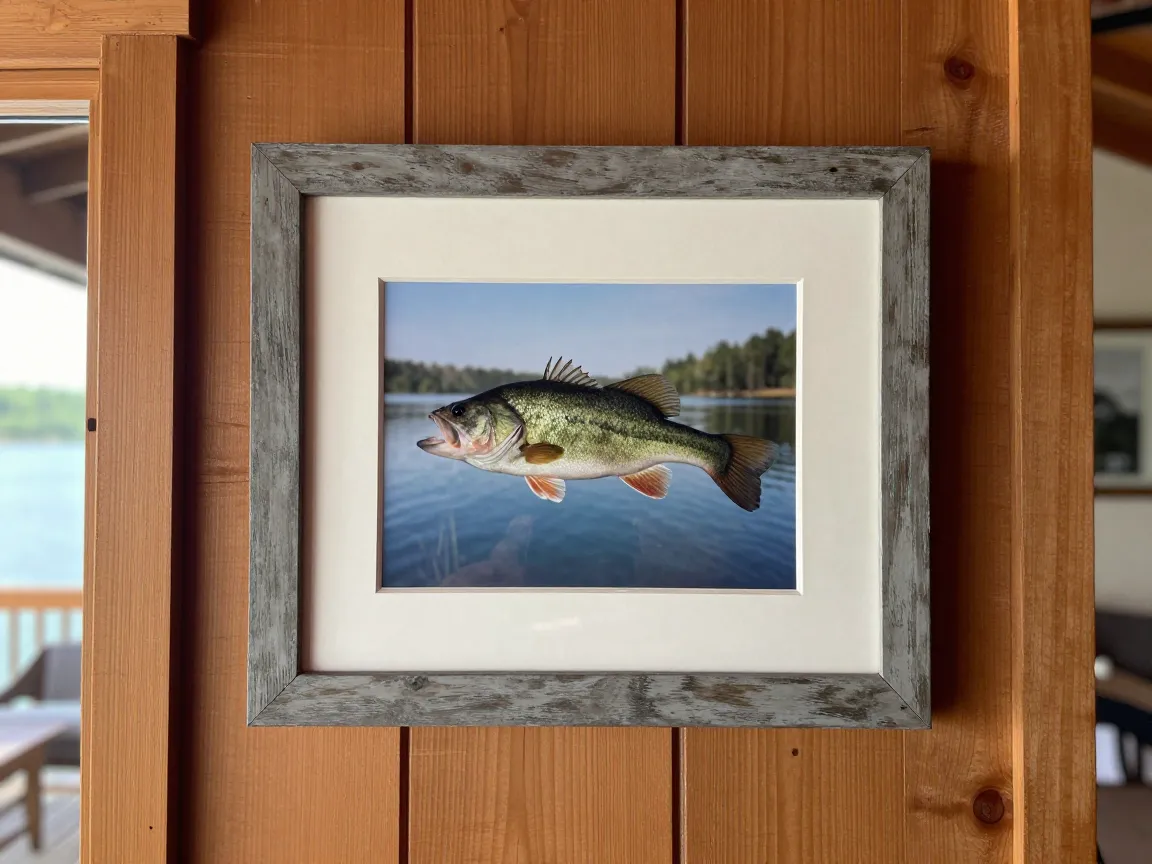
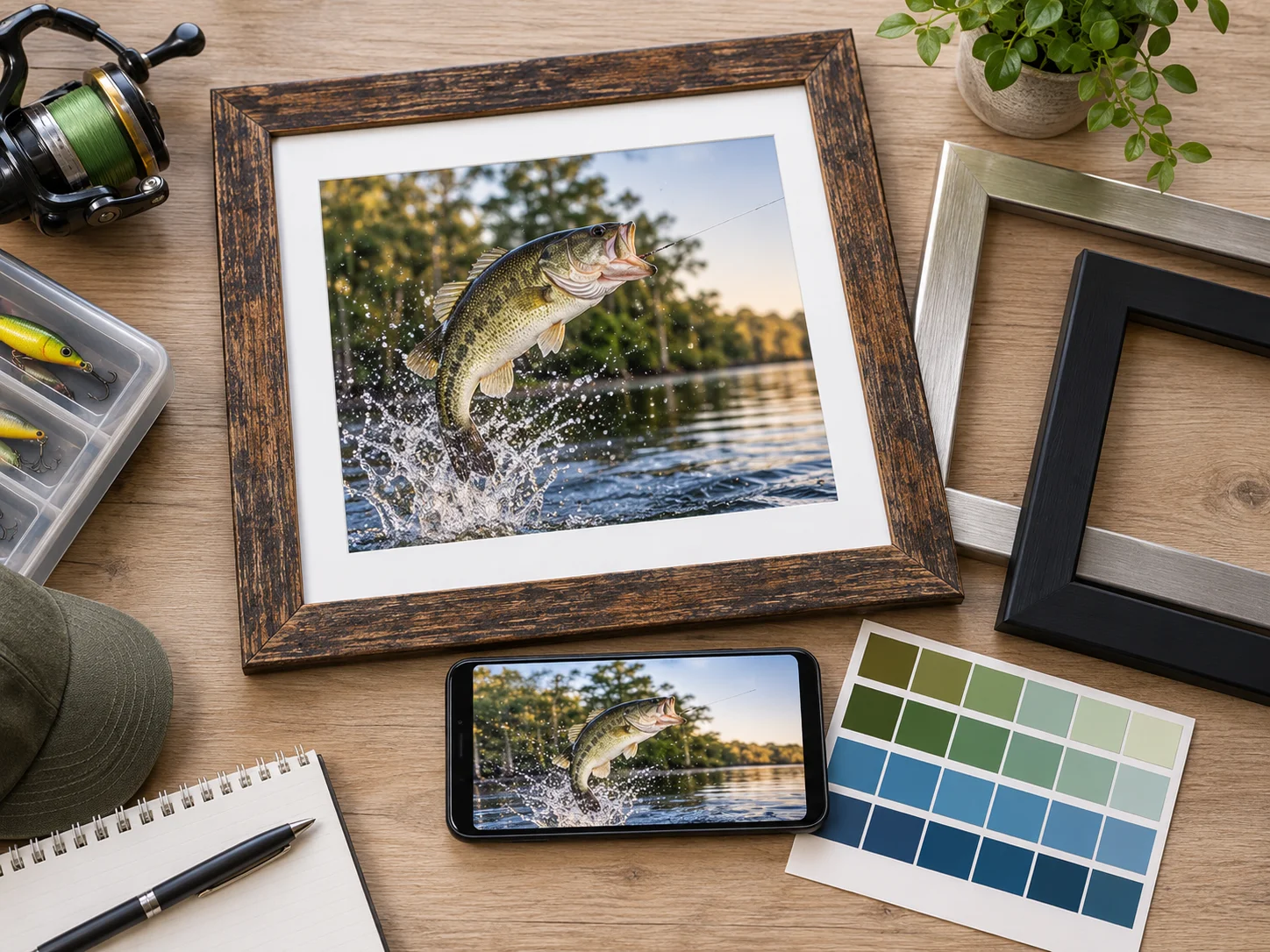
A properly matted catch photo in a distressed wood frame is the entry point for anyone who wants their fishing photos to read as wall art rather than snapshots. The mat creates visual breathing room between the photo edge and the frame, which is the difference between a framed photo and a displayed photograph. Standard mat width for a 5×7 print in an 8×10 frame is two to three inches; go wider for larger prints.
Rustic wood frames dominate the lake house and cabin retail segment in 2026. Weathered grey finishes, barn-wood textures, and dark walnut stains are the three most common options. All three work with freshwater catch photography. The key is matching the mat color to either the highlight or shadow tones in the photo, not to the wall color.
2. Wood Fishing Pole Picture Frame Display
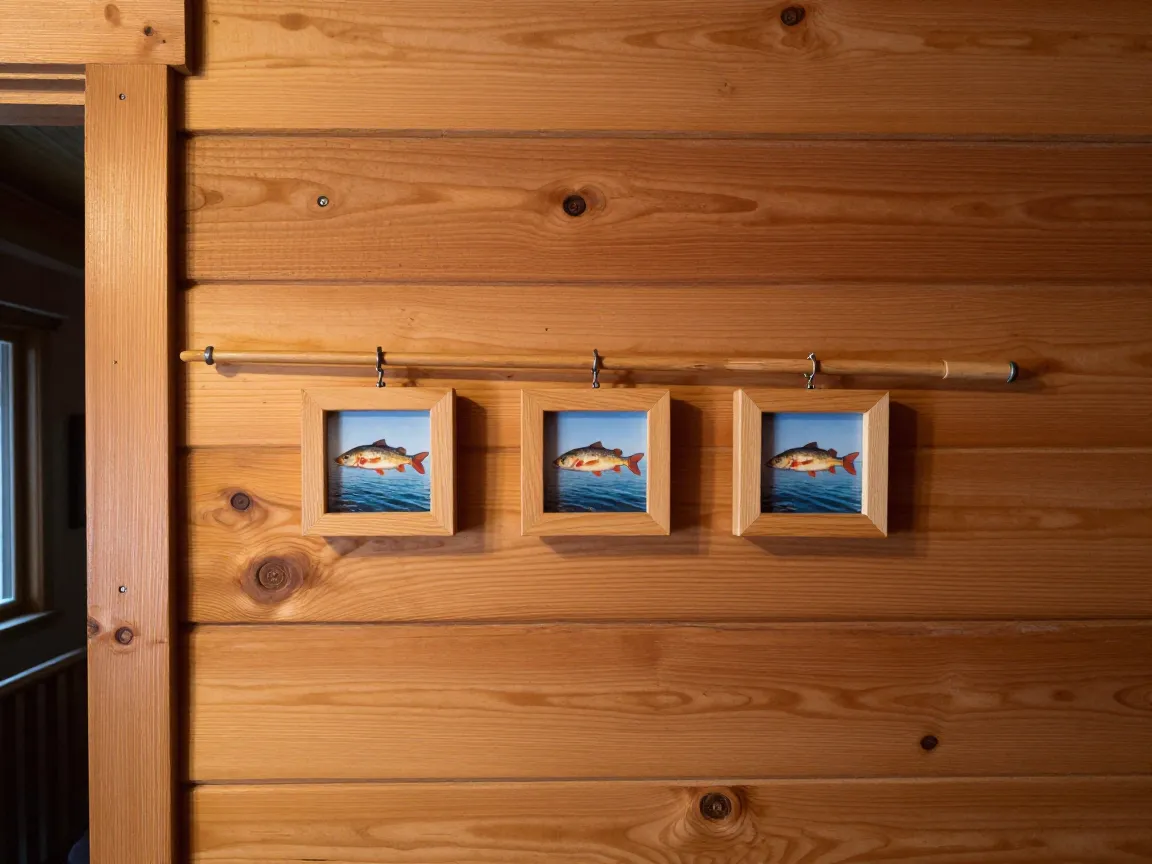
A wood fishing pole frame display combines three 4×4 inch frames mounted on a hanging wooden rod that mimics a fishing pole. The result is a mini-series of catch photos arranged as a coordinated hanging piece, which reads as intentional wall art rather than three separate frames.
This format works well for showing a fishing trip as a sequence: the cast, the catch, the release. It also suits the “fishing dad gift” market that dominates late-2026 holiday retail, though the display works in any cabin or lake house context. The 4×4 format is a constraint, it means cropping your photos to square, which often means centering the fish and cutting peripheral detail.
3. Custom Fish-Shaped Collage Canvas
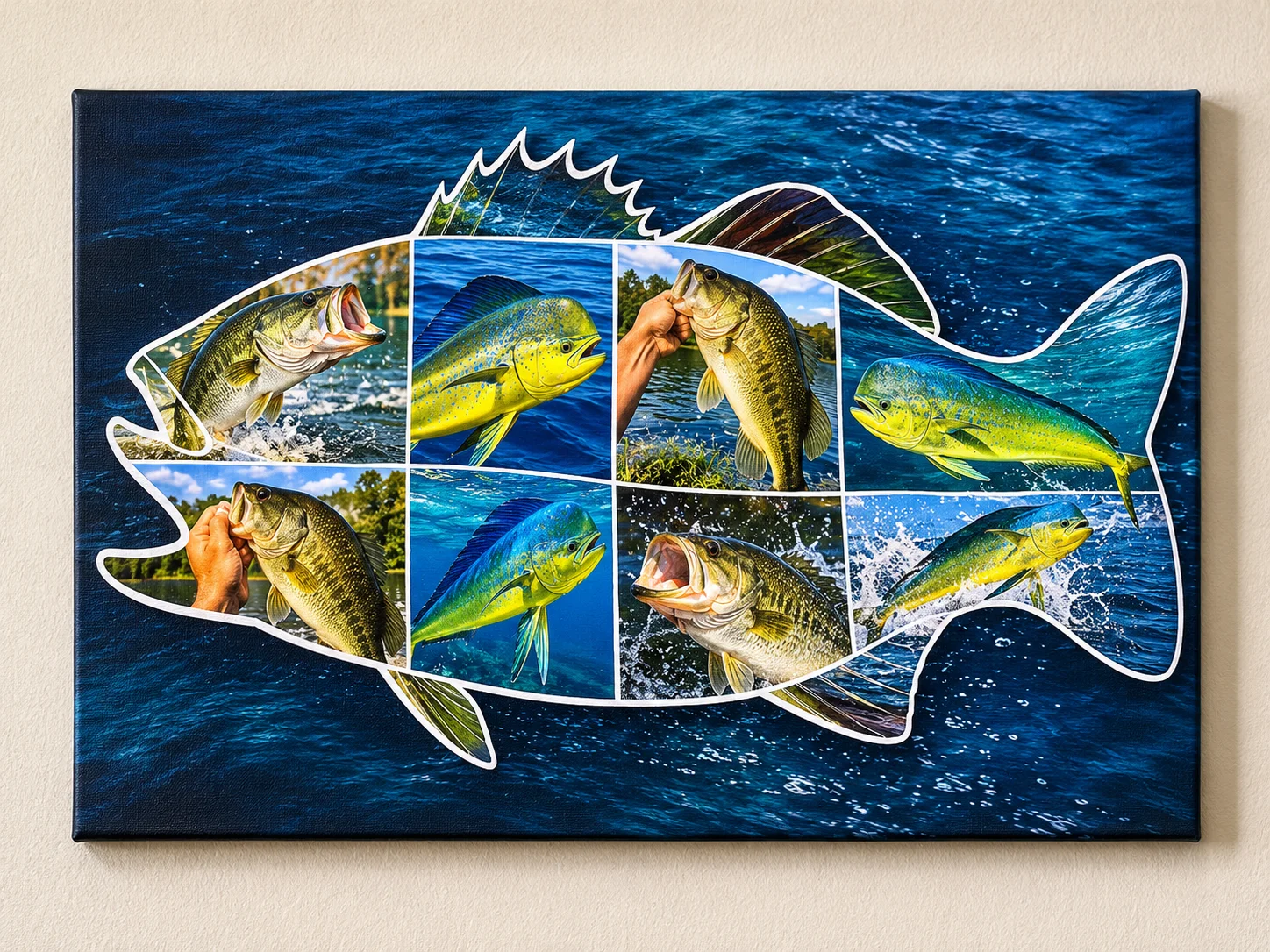
Custom gift marketplaces now list products explicitly described as “Custom Fishing Photo Collage Canvas,” where multiple catch photos are arranged inside a fish silhouette outline printed on canvas. The final piece shows anywhere from four to twelve photos tiled within the fish shape, treated as a single art object.
These canvases range from 12×16 inches to 20×28 inches on most platforms. The more photos included, the smaller each individual image appears, so this format favors shots with strong color contrast and clear subject-to-background separation. A pale fish against pale water will disappear at thumbnail size within a collage. High-contrast shots, a bright largemouth against dark water, a vividly colored mahi-mahi, read best.
4. Large-Format Single-Panel Canvas Print
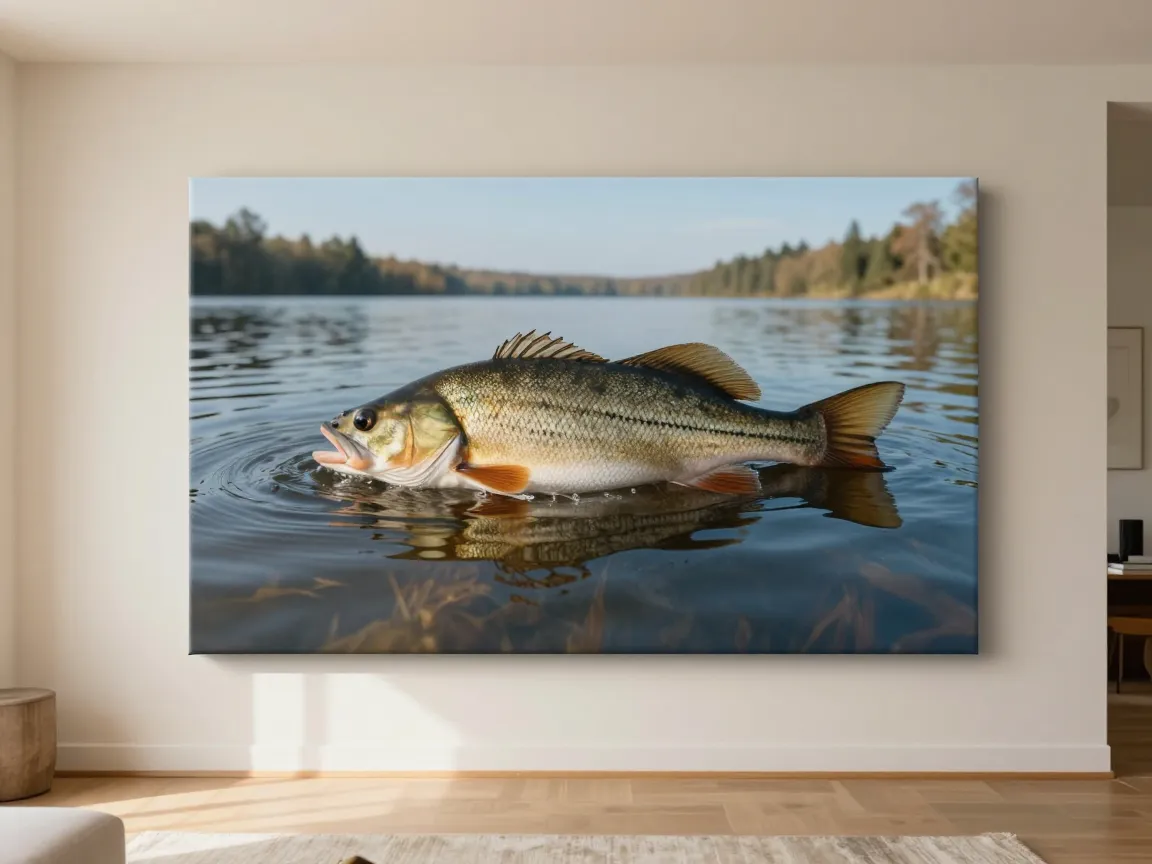
Retailers in 2026 prominently feature large rustic bass prints at 20×40 inches as ready-to-hang decor. That format is directly applicable to a personal catch photo: order a high-resolution image printed on canvas at that scale and it becomes the dominant element of whatever wall it occupies.
The practical requirement is a source photo with enough resolution to hold up at 20×40 without pixelation. Most modern smartphone cameras shooting in native resolution can support this. The composition matters more at this size, a tightly cropped fish-in-hands photo with no background context can look clinical at large scale. Photos that include water surface, surrounding landscape, or the angler’s figure tend to read better as large-format wall art because they carry environmental context.
5. Three-Panel Split Canvas
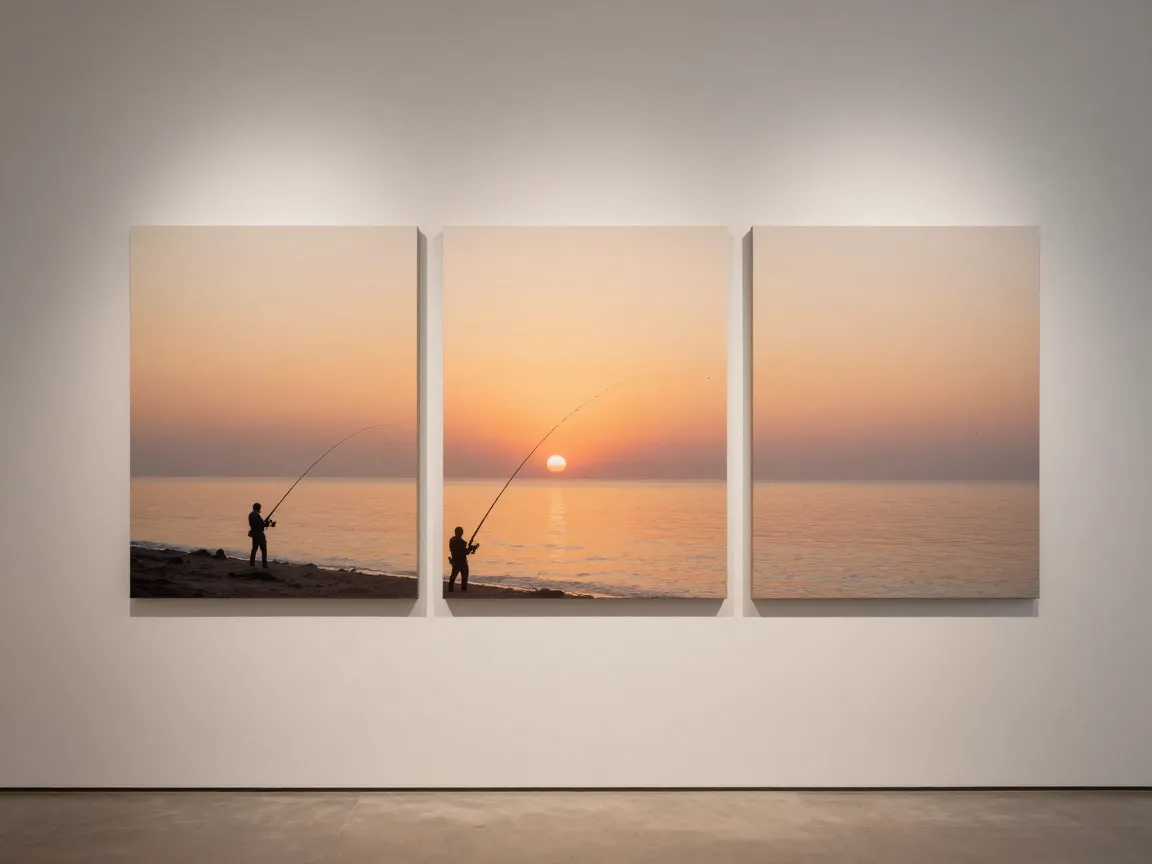
Three-piece fishing canvases are actively marketed in 2026 as ready-to-hang sets. The same concept applies to a personal catch photo: a single panoramic image split across three panels with narrow gaps between them creates depth and a gallery-installation feel that a single framed print cannot match.
The ideal source photo for this treatment is wider than it is tall, a horizontal image of an angler fighting a fish, a boat on open water at sunrise, or a wide-angle shot of a river scene. Split-panel printing services will divide the image at equal thirds. Mount spacing matters: panels hung too far apart look like three separate photos; panels hung too close lose the visual effect of the split. A 1.5-inch gap between panels is a standard starting point.
6. Mixed-Media Gallery Wall With Metal Silhouettes
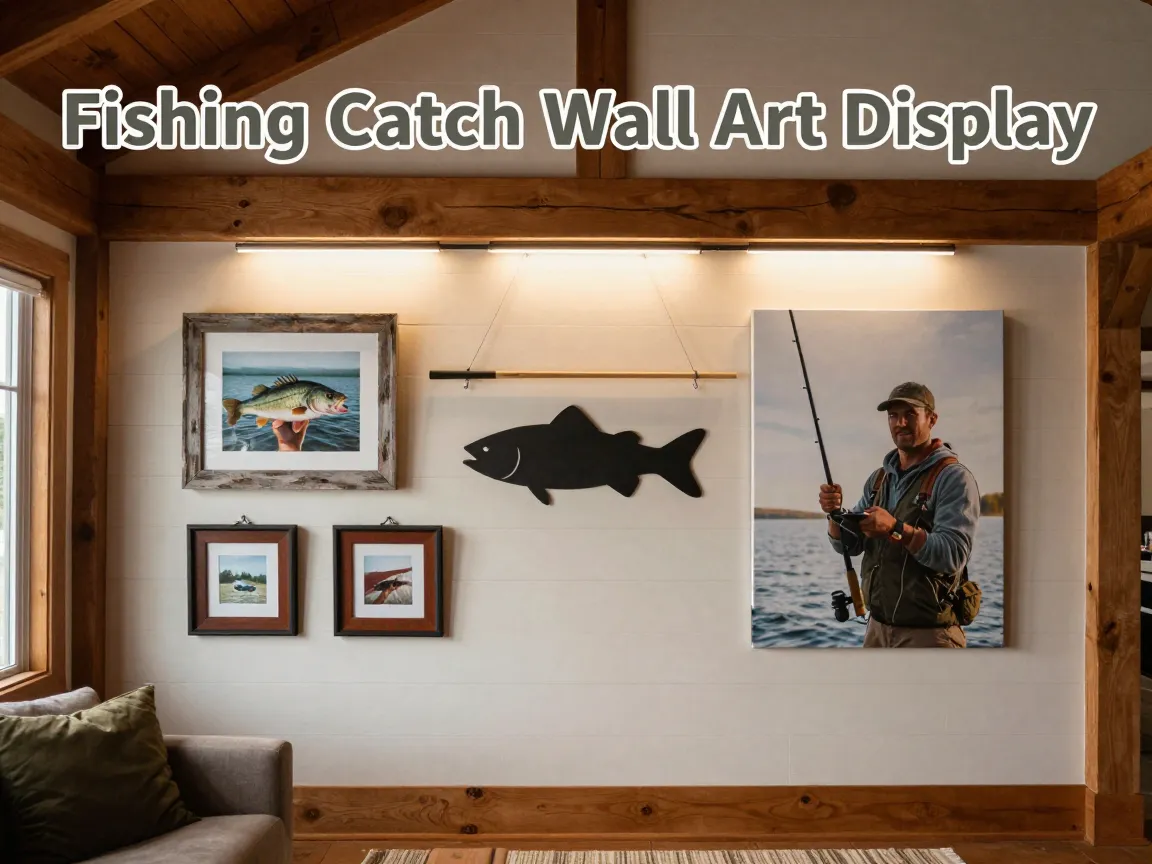
Large-format metal fishing silhouettes, some at 35×29 inches, depicting fish or boat scenes with detailed cutouts, are positioned in late-2026 retail as statement pieces. When combined with smaller framed personal catch photos, they create a mixed-media display where the metal piece anchors the wall and the framed photos provide personal context.
The arrangement that works is treating the metal silhouette as a focal point at eye level and clustering two to four framed catch photos around it asymmetrically. Frame sizes should vary, mixing an 8×10 and two 5×7s creates more visual movement than three identical frames. Matching the metal finish of the silhouette to the frame hardware (matte black silhouette, matte black frames) ties the display together without making it look over-coordinated.
How to Build a Cohesive Fishing-Themed Feature Wall
A feature wall works when every element shares a visual logic. The mistake most people make is adding framed catch photos to a bare wall one at a time until the wall is full. That produces a cluttered look. Starting with a plan for the whole wall before hanging anything is the more effective approach.
| Element | Role on the Wall | Best Position |
|---|---|---|
| Large metal silhouette (35×29 in) | Focal anchor | Center, eye level |
| Large canvas print (20×40 in) | Background plane | Center or slightly left/right |
| Framed catch photos (8×10, 5×7) | Personal narrative | Flanking the focal piece |
| Wood pole frame display | Textural accent | Corner or beside door |
| Fishing-pattern wallpaper panel | Background texture | Behind focal piece |
Fabric and wallpaper platforms listed over 17,000 fishing-pattern items for home decor use by mid-2026. That range means you can find patterns that coordinate with the specific tones in your catch photos rather than defaulting to generic fish-print wallpaper. A trout fly-fishing pattern in muted olive and rust will tie a freshwater gallery wall together in a way that a cartoonish tropical fish pattern will not.
Lighting is the element most people overlook. A picture light mounted above the focal canvas or metal piece, a simple bar light with warm-white bulbs, changes a fishing wall from a decoration to a display. It costs less than most of the frames involved and has a larger impact on how the wall reads in a room.
Matching Frame Style to Room Type
The room context should guide frame choice more than personal preference. Cabin and lake house rooms with exposed wood beams, shiplap, or tongue-and-groove paneling read best with natural wood frames, rope accents, and warm-toned metal. A finished basement or man cave with drywall and darker paint can handle bolder frame finishes, matte black, gunmetal, or high-contrast white gallery frames.
Coastal rooms built around saltwater fishing themes, marlin, sailfish, mahi-mahi, align naturally with the broader nautical wall-art lines that major retailers carry in 2026. White or bleached driftwood frames, circular rope-wrapped accent mirrors, and circular cast nets hung alongside framed catch photos all reinforce the coastal context without competing with the photos themselves.
Sizing and Spacing Rules That Actually Work
Treat the wall as a grid even if the final arrangement is asymmetrical. Mark out the total display area on paper first, most gallery walls occupy a space between 36×36 inches and 60×48 inches. Within that area, no single frame should take up more than 40% of the total space unless it’s the intentional focal piece.
Gap spacing between frames should be consistent: 2 to 3 inches between smaller frames, 3 to 4 inches between larger pieces. Mixing gaps, some tight, some wide, is the most common reason a gallery wall looks accidental rather than designed.
Turning Offshore Catch Photos Into Wall Art
Saltwater anglers have historically had fewer framing-focused decor options than freshwater anglers, but that gap has closed in 2026. Retailers are now expanding yellowfin tuna, marlin, mahi-mahi, and sailfish themes through metal signs, posters, and large canvas prints. That expansion gives offshore anglers concrete reference points for how their own catch photos might look when professionally printed and framed alongside complementary pieces.
The challenge with offshore catch photography is scale. A 200-pound marlin photographed at the stern of a sport-fishing boat involves a lot of deck, rigging, and crew that may not add to the image. Tight crops around the fish’s most distinctive features, the bill, the iridescent flank coloring, work better in frame than a wide shot where the fish is one element among many.
Vintage scientific illustration prints of offshore species are a natural companion piece for a framed marlin or sailfish catch photo. The illustration provides historical context and visual contrast; the personal photo provides the story. Hung side by side in matching frames, they create a pairing that reads as curated rather than decorative.
Gifting a Framed Catch Photo
The gift market in late 2026 connects fishing photo frames directly to Father’s Day, birthdays, and holiday gifting for anglers. Listings use terms like “Fishing Dad,” “Fisherman,” and “angler gift” to describe frame and canvas products that accept personal photos. That framing (in both senses) is worth taking seriously: a custom fish-shaped collage canvas built from someone’s season of catches is a more specific gift than a generic plaque.
Custom canvas collage services typically require you to upload photos through an online tool, select a template, and specify canvas size. Turnaround times in 2026 range from five to fourteen business days depending on the service. Order early for holiday delivery.
For a grandfather or long-time angler, a three-panel split canvas using their single most memorable catch photo, printed at large scale, tends to have more impact than a collage of smaller images. It treats the photo as the subject rather than as raw material for decoration.
Conclusion
The best fishing catch deserves a better home than a camera roll. The six approaches covered here, single rustic wood frames, wood pole displays, fish-shaped collage canvases, large single-panel prints, three-panel splits, and mixed-media gallery walls, cover every budget and room type. Start by identifying the one or two photos you’d most want to see on a wall, check their resolution at the intended print size, and pick a frame style that fits the room rather than the fish.
If you’re building a gallery wall, plan the full arrangement before ordering anything. Use the table in this article to assign roles to each element, and treat lighting as a required component rather than an afterthought. For gifting, the fish-shaped collage canvas and the large single-panel print are the two formats most likely to be used rather than stored.
The market for fishing-themed wall art in 2026 is large enough that you won’t struggle to find coordinating pieces for any catch photo you want to display. The harder work is editing your photo selection down to what’s worth printing at scale.