Vintage Fishing Photos Ideas to Recreate That Timeless Angler Look
Roughly 95,000 retro fishing images are actively cataloged on major stock photography platforms as of 2026, and the category keeps growing. That volume is not nostalgia for its own sake. Photographers, outdoor apparel brands, and social media creators are pulling from a specific visual grammar that developed across a century of angling culture, and they are applying it to new shoots. This article breaks down 6 vintage fishing photos ideas to recreate that timeless angler look, drawing on verified archival sources including the Library of Congress “Fish and Fishing” collection, mid-century editorial archives, and documented stock photography trends, so every suggestion here is grounded in what actually appeared in historical images rather than a romanticized guess.
Disclosure: This post contains affiliate links. As an Amazon Associate, we earn from qualifying purchases, and at no extra cost to you.
Key Takeaways
- The most recognizable vintage angler looks share three elements: unbranded or period-appropriate gear, natural or simple backdrops, and clothing that reflects the actual workwear of the era.
- Archival collections at the Library of Congress and major stock platforms offer free-to-reuse reference images spanning the 16th through 21st centuries, making accurate styling research straightforward.
- Women anglers were well documented in mid-20th-century photography, and recreating those looks requires a different wardrobe approach than the more commonly referenced male-angler template.
- Still-life and gear-focused setups are among the easiest vintage angling shots to stage without a large crew or location permit.
- Ice fishing imagery offers a distinct visual template that most creators overlook, giving your work an immediate point of difference.
- A mild color grade, whether sepia or desaturated film tones, is more historically accurate than heavy digital filters.
1. The Family Dock Portrait with the Day’s Catch
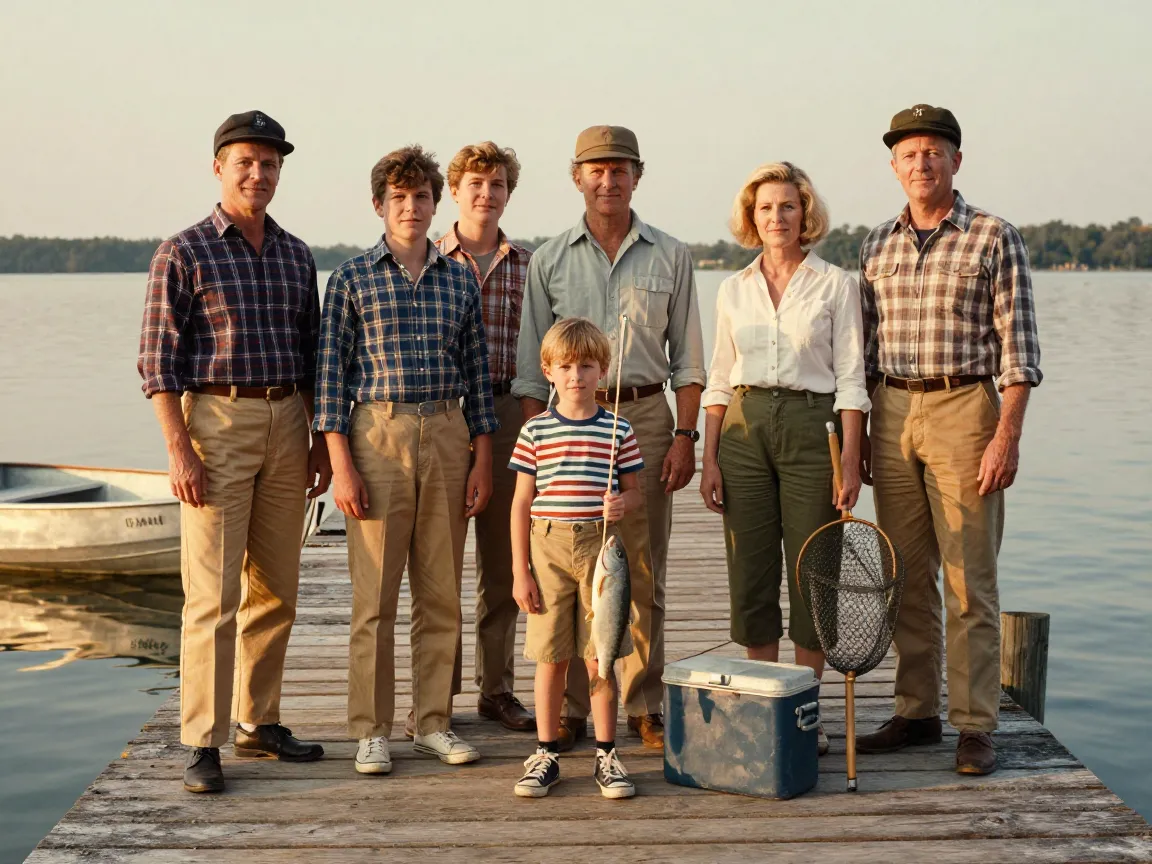
The family dock portrait is probably the single most common motif in vintage American fishing photography. Stock archives updated in 2026 list thousands of examples: 1980s lake-cabin family groups arranged on wooden piers, grandparents at sunset with a stringer of bass, father-and-son shots beside aluminum johnboats. The consistent visual ingredients are a stringer or flat of fish displayed prominently, casual clothing in plaid or chambray, simple caps, and an absence of synthetic-logo outerwear.
To recreate this look, start with the clothing. Men and older boys typically wore work-weight cotton pants in tan or olive, paired with plaid or solid flannel shirts with the sleeves rolled to the elbow. Kids in documented 1960s and 1970s images appear in striped T-shirts or denim, often barefoot or in canvas sneakers. Women in family scenes favored cotton blouses, capri pants, or simple day dresses. None of these garments had visible brand logos, so check that any modern substitutes are turned or cropped out of frame.
For props, a metal or enamel cooler, a wood-handled net, and an aluminum boat visible in the background all read as period-correct across the 1950s through 1980s. Shoot in the last 90 minutes of daylight. The soft, warm-toned light in archival prints is not purely a filter effect. It reflects the actual conditions when most families took these photos, and replicating that light gives you the color temperature before any post-processing. Apply a mild color fade or slight sepia shift in editing rather than a heavy Instagram-style preset, which tends to look processed rather than aged.
The composition follows a simple rule found across decades of real family fishing photos: the fish are front and center, often held by the smallest child, with adults flanking. Nobody is performing. They are looking at the camera with the flat, casual confidence of people who do this every summer.
2. The Women Angler on a Pier or Bridge
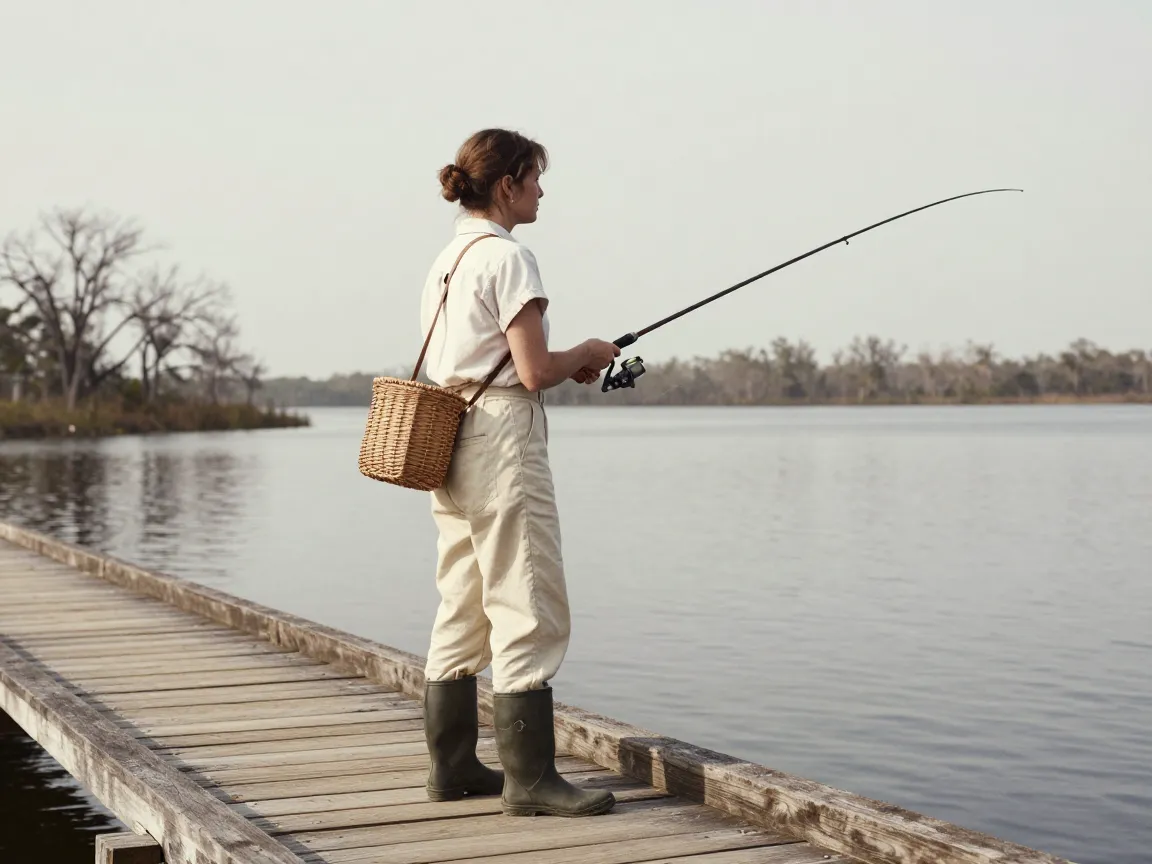
The mid-20th century produced a distinct category of women’s fishing photography that blends practical gear with the fashion sensibility of the era. A well-documented 1946 photograph of women fishing on a pier in Saint Augustine, Florida shows dresses and simple sandals alongside standard rod-and-reel setups. Publicity photographs from the same period, including shots of actress Ava Gardner fishing in waders, pair glamorous styling with fully functional tackle. These two registers, the everyday and the editorial, give you two different directions to take a recreation.
For the everyday version, the wardrobe centers on high-waisted cotton trousers or a midi skirt, a light short-sleeved blouse with the collar open, and low rubber boots or simple leather shoes. A wicker creel worn on a shoulder strap and a single spinning rod complete the setup. The posture in archival images is active, not decorative: the subject is looking at the water, checking the line, or reacting to a catch. A posed smile into the camera is less period-accurate than a three-quarter profile toward the rod tip.
The bridge or pier location matters. Open piers and low wooden bridges over streams appear repeatedly in archival illustration sets, and a bridge-side setup with a light dress and a single cane or fiberglass rod is one of the most immediately recognizable “timeless angler” compositions available. Keep the background simple: water, planks, and perhaps a few distant trees. No modern infrastructure in the frame if you can avoid it.
For the editorial or publicity direction, replace the casual blouse with a fitted sweater or collared shirt, keep the waders or tall rubber boots, and shoot from a low angle to emphasize the subject’s posture against an open sky or water background. The key distinction from a modern outdoor-brand photo is the absence of technical fabrics, zippers, and mesh. Period materials were wool, canvas, rubber, and plain cotton, and that texture reads differently on camera.
3. The Weathered Gear Still Life
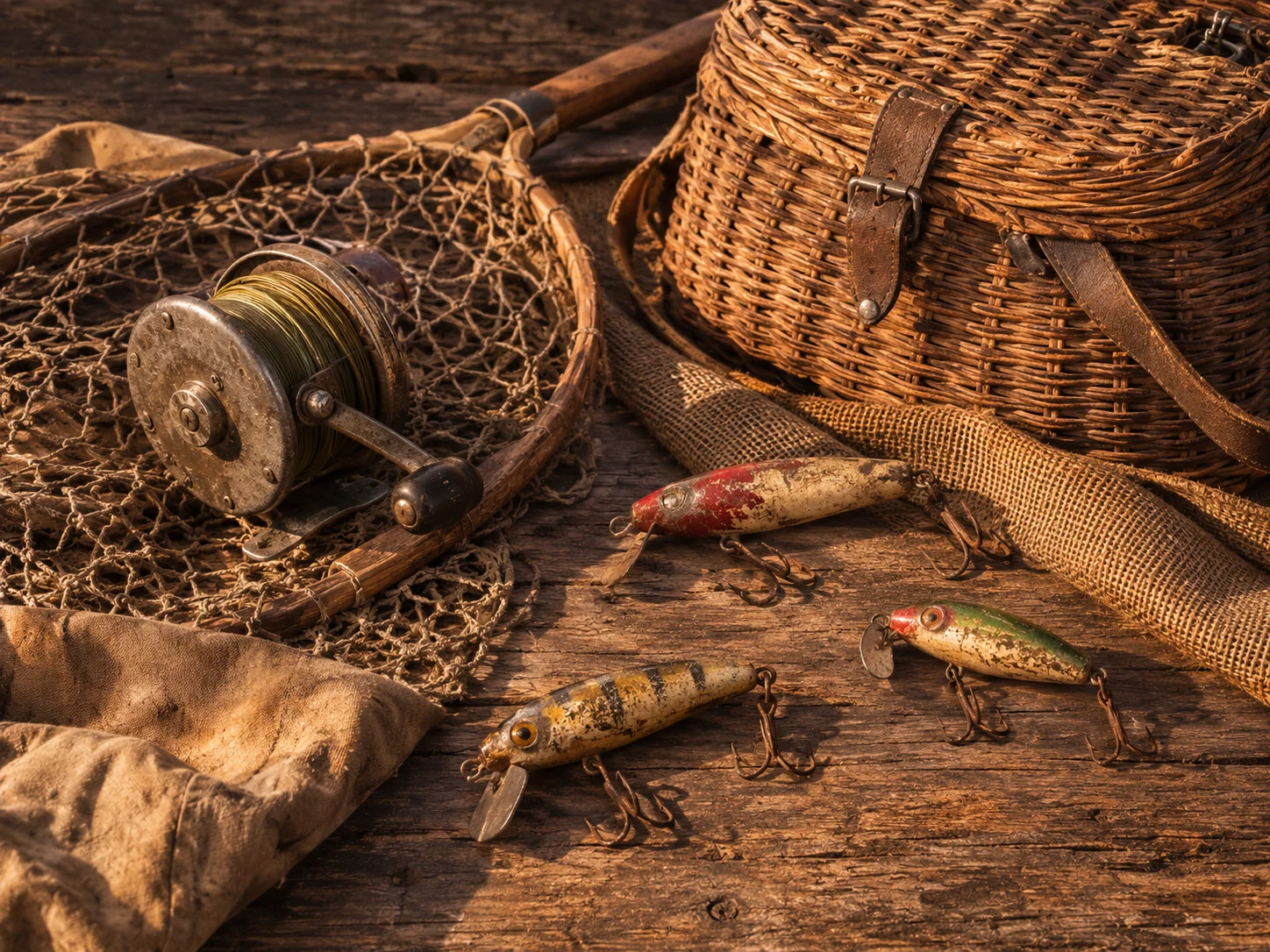
Still-life fishing photography is one of the oldest recurring formats in angling imagery, documented in Victorian-era compositions and continuing through the mid-20th century. Modern flat-lay recreations are achievable with a small set of objects and a single directional light source, no location required.
The core objects in well-documented archival compositions are a wicker creel, a cloth or rope landing net, one or two wooden or early-metal reels, and a selection of old lures. Lures are where the detail matters most. A February 2026 stock photograph that circulated widely shows a pair of weathered casting lures with scratched paint finishes and rusted treble hooks isolated on a white background. That level of patina, chipped paint, discolored metal, and visible wear, is what separates a convincing vintage still life from a prop arrangement. Flea markets, estate sales, and online tackle auctions are reliable sources for genuinely aged lures, and they are typically inexpensive.
For the surface and background, rough barn wood, stained canvas, and aged burlap all appear in historical gear photography. Avoid glass, polished stone, or modern composite surfaces. The lighting in period still-life compositions comes from one side, usually from a low angle, so shadows fall across the objects and reveal texture. An overcast window or a single desk lamp fitted with a warm-toned bulb replicates this easily.
Arrange the objects loosely rather than symmetrically. Actual work gear was set down, not styled. A reel placed at an angle on a folded net, with two or three lures scattered nearby and the creel slightly off to one side, looks more like documentation than display, and that is what gives vintage still-life images their authority. Post-process with a slight warm shift and reduced saturation rather than a uniform filter. If you are shooting on a phone, the flat-lay format also works well for social content without any retouching at all, provided the objects are genuinely aged.
4. The Rowboat or Canoe Scene
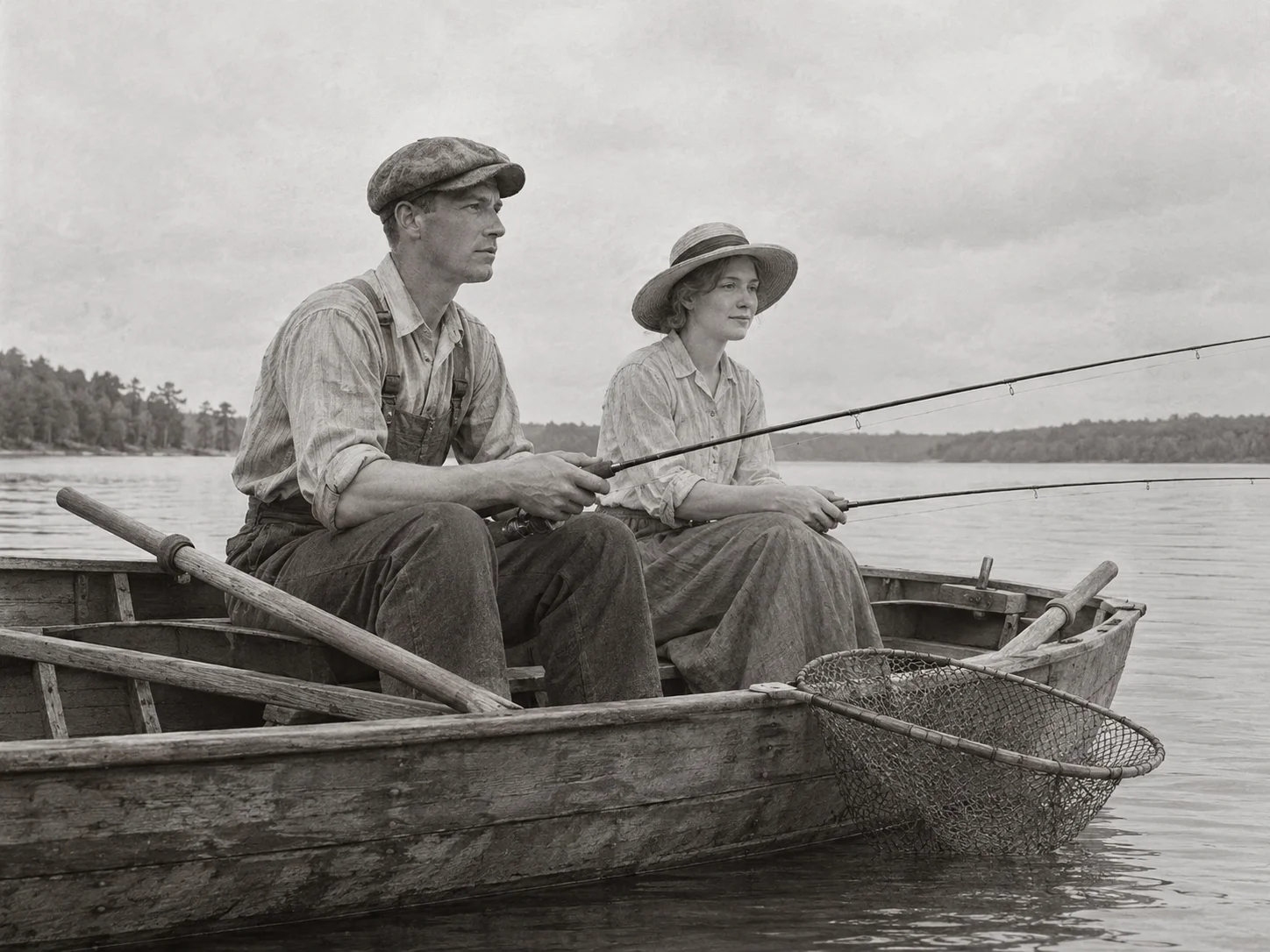
Early 1900s fishing archives and postcard collections document a consistent visual template: one or two subjects seated mid-boat in a wooden rowboat or canoe, simple rods in hand, calm water spreading to the horizon. Swedish lake photographs from the same era show couples in this configuration. American stream scenes show individuals with minimal tackle. The unifying element is restraint: one boat, one or two people, no visible clutter of modern gear.
Recreating this look depends heavily on the boat. Aluminum canoes and fiberglass kayaks read as modern regardless of clothing. An actual wooden rowboat, or a riveted aluminum johnboat from the 1960s or earlier, sits in the right visual register. If neither is accessible, a flat-bottomed wooden skiff can work if the interior is kept clear of foam flotation cushions, plastic tackle boxes, and branded life vests. Keep one plain paddle or a pair of oars visible. A simple wood-handled net resting across the gunwale adds period texture.
Clothing follows the same logic as the dock portrait, but posture matters more here. In rowboat images from the early to mid-20th century, subjects are relaxed but attentive: seated with the rod held lightly, looking out over the water, or leaning slightly forward. Nobody is braced or leaning back in performance-angling stance. The scene reads as leisure, not competition.
Shoot from a low waterline angle when possible, which places the subject against open sky and simplifies the background automatically. Overcast light works well for this setup because it eliminates harsh reflections on the water. A mild black-and-white conversion or a heavily desaturated color grade with slight grain added in post-processing matches the look of early-to-mid-century print photographs without destroying the tonal information in the image.
5. The Ice Fishing Shanty Setup
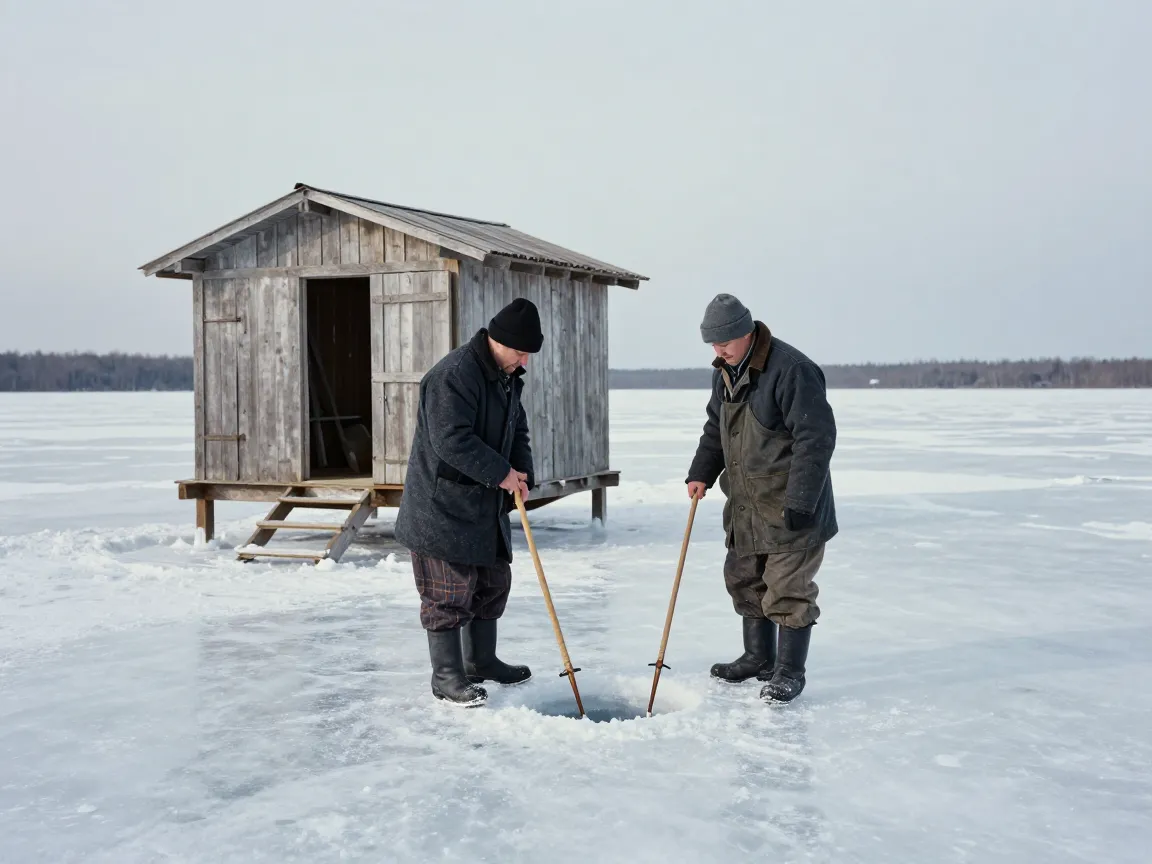
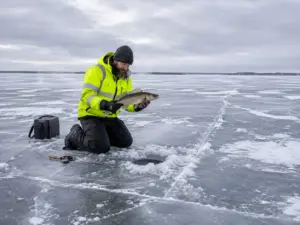
Most vintage angler recreations default to warm-weather scenes. That leaves a visually distinct category almost completely open: cold-weather and ice fishing imagery. A photo essay on historical ice fishing documented in 2026 draws on Michigan spear-fishing scenes from the early 20th century, 1935 ice-fishing setups, and early shanty photographs showing anglers in heavy wool overcoats, fur or wool caps, and layered work pants. The visual tone is high-contrast and sparse, often black-and-white or muted cold-blue color.
The wardrobe for this recreation is straightforward and inexpensive to source. Genuine mid-century cold-weather gear, wool coats, flannel-lined canvas pants, leather or rubber work boots, and simple knit caps, turns up readily at thrift stores and vintage markets. Avoid any synthetic-shell outerwear. The silhouette of a wool coat over layered clothing reads immediately as pre-modern in a way that a down jacket never will.
The setting requires a hand-cut or augered ice hole rather than a powered auger visible in frame, and a simple tip-up or a short wooden rod rather than modern graphite ice-fishing gear. Historical photographs show wooden shelters, essentially small sheds on skids, as the shanty type. Even a rough plywood structure with an open door can serve as background. Inside shots showing card-playing or waiting between fish, documented in multiple archival collections, suggest that the shanty interior is a viable alternate frame if outdoor conditions are not available.
Shoot in flat, grey winter light and process with a cool tone and elevated grain to match the photographic feel of the era. This setup works as both a solo portrait and a small-group scene, and it distinguishes your vintage angling content from the overwhelming volume of warm-season pier and dock imagery that fills most archives.
6. The Trophy Moment Dock Pose
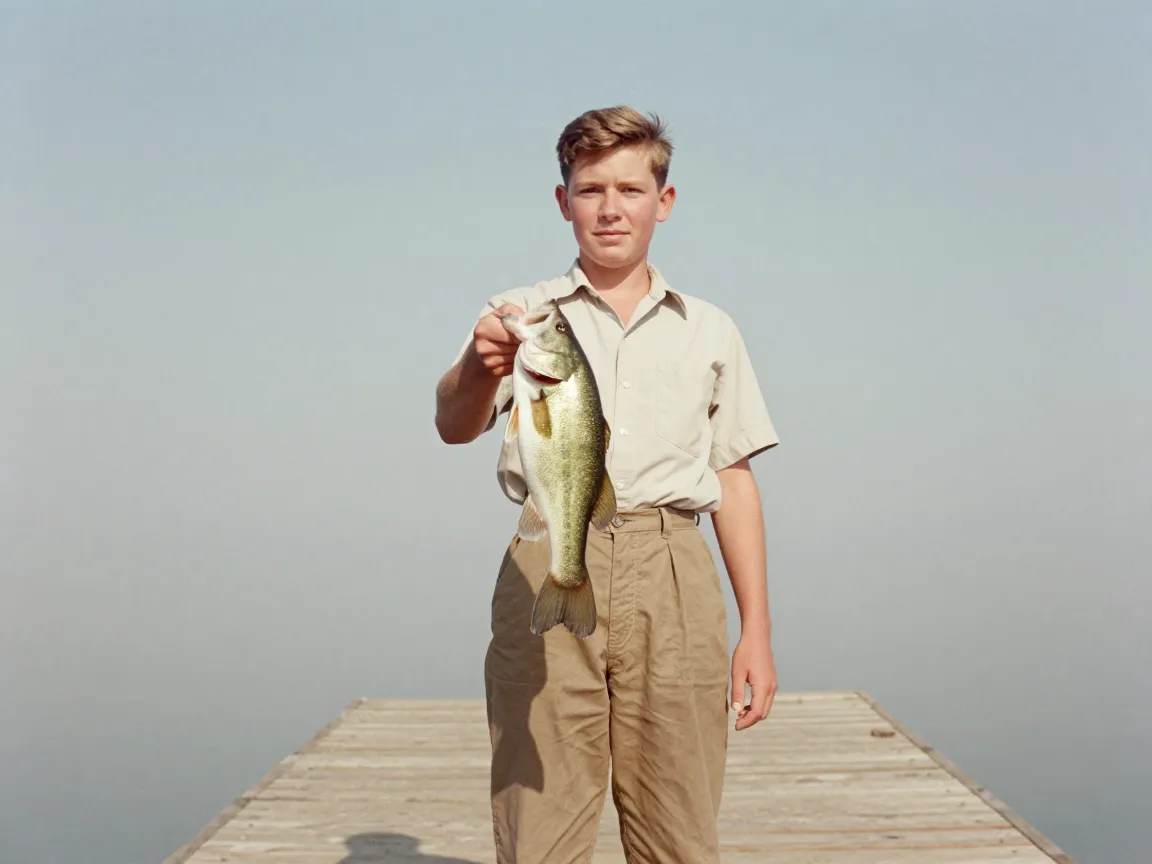
Before personal cameras became common, the trophy fish photograph was a formal occasion. A Southern culture editorial that surveyed pre-digital fishing photos documented a range of these: a circa-1910 studio-staged tarpon exaggeration postcard, a child with a bream, kids with striped bass photographed in 1966, and Ernest Hemingway posing with a sailfish in Key West in the 1940s. The composition across all of them is consistent: the subject is centered, the fish is held at arm’s length or displayed prominently, and the background is simple, usually a plain dock, a studio backdrop, or a clear sky.
Recreating this look requires very little in the way of location. A plain wooden dock or the side of a boat ramp provides a neutral background. The clothing should be period-consistent with the decade you are referencing, but the composition does most of the work. Hold the fish at arm’s length and slightly forward, which is exactly what appears in documented mid-century trophy photographs, and center the subject in the frame with a small amount of headroom.
For the Hemingway-era sailfish register, the subject should be standing with the fish hung vertically from a dock hook or held vertically by a helper out of frame, wearing a plain short-sleeved shirt and canvas trousers. For the 1960s family-vacation version, a child or adult subject holds a modest catch, a bass or a bluegill rather than a trophy species, at arm’s length while looking directly at the camera with an unposed expression.
The post-processing choice makes a larger difference on this setup than on any other. A slight warm color shift with mildly lifted shadows mimics the color print photography of the 1960s and 1970s. A straight black-and-white conversion with slightly blown highlights matches the look of earlier press or snapshot photography. What to avoid is the heavy-vignette, over-sharpened edit that reads as “vintage filter” rather than period photograph. The goal is a print that looks like it came out of someone’s shoebox, not a smartphone preset.
Quick Comparison
| Look | Key Location | Essential Props | Best Light | Post-Processing |
|---|---|---|---|---|
| 1. Family Dock Portrait | Wooden pier, lakeshore | Stringer, metal cooler, aluminum boat | Golden hour | Mild color fade |
| 2. Women Angler, Pier or Bridge | Low bridge, open pier | Wicker creel, single rod | Soft midday | Slight sepia |
| 3. Weathered Gear Still Life | Tabletop, barn wood | Creel, aged lures, rope net | Side directional | Warm shift, low saturation |
| 4. Rowboat or Canoe | Calm lake or stream | Wooden boat, oars, plain rod | Overcast | Desaturated, mild grain |
| 5. Ice Fishing Shanty | Frozen lake, shanty | Wool coat, tip-up, hand-cut hole | Flat grey winter | Cool tone, elevated grain |
| 6. Trophy Moment Dock Pose | Plain dock or studio | Period clothing, notable catch | Simple, even | Warm print or B&W |
Conclusion
Each of the 6 vintage fishing photos ideas to recreate that timeless angler look depends on the same underlying discipline: get the clothing, props, and setting to agree on a single decade, then let a minimal post-processing grade do the rest. The Library of Congress “Fish and Fishing” collection, which offers 50 free-to-reuse images spanning several centuries, is the most reliable single starting point for reference research before a shoot. Download a handful of images from the period you are targeting, pin them to a mood board, and check every wardrobe and prop decision against those actual photographs rather than against a generalized idea of “vintage.” That one step separates a convincing recreation from a costume.