Cute Fishing Pictures That Capture the Joy of the Catch
Roughly 55 million Americans go fishing each year, yet the most shared photos from those trips rarely feature the biggest fish. They feature the biggest smiles. The images that spread fastest online and anchor national recruitment campaigns are the ones where a child grips a trout with both hands, eyes wide, or where two generations stand side by side on a dock at dawn. This collection of 6 cute fishing pictures that capture the joy of the catch breaks down what makes each type of photo work, why it resonates with viewers who have never held a rod, and how photographers and anglers alike can re-create or recognize these moments in the field.
Disclosure: This post contains affiliate links. As an Amazon Associate, we earn from qualifying purchases, and at no extra cost to you.
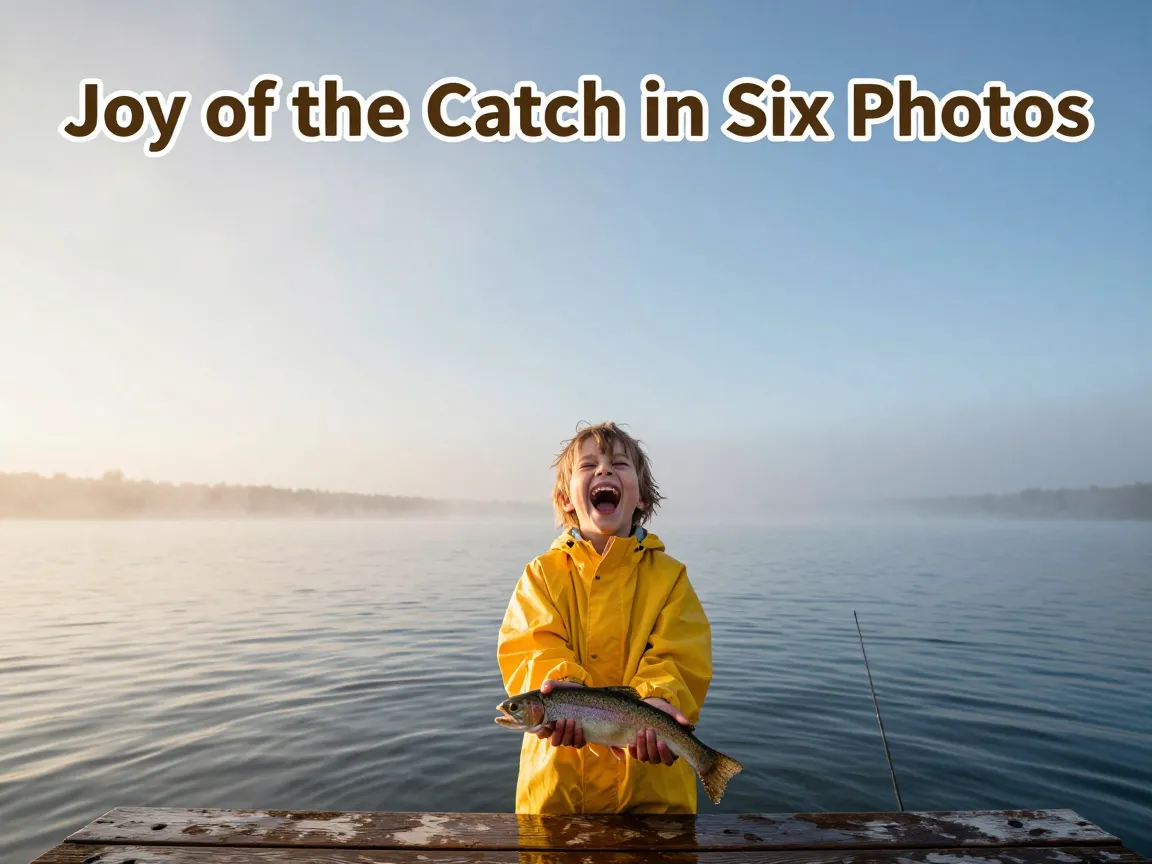
Key Takeaways
- The most effective fishing photos center on the angler’s face and emotion, not just the size of the fish.
- Children, family pairings, and catch-and-release sequences consistently outperform trophy shots in engagement and recruitment campaigns.
- Lighting conditions, handling technique, and candid timing are the three variables that separate a memorable image from a forgettable one.
- Commercial image libraries now hold over half a million fishing photos, yet buyers specifically search for “smiling,” “joy,” and “cute” tags because that emotional content is still scarce relative to generic rod-and-reel shots.
- Conservation ethics have entered the frame literally: how a fish is held or released is now part of what makes a fishing photo “cute” or socially shareable.
1. The Proud First-Catch Portrait at a Fish Hatchery
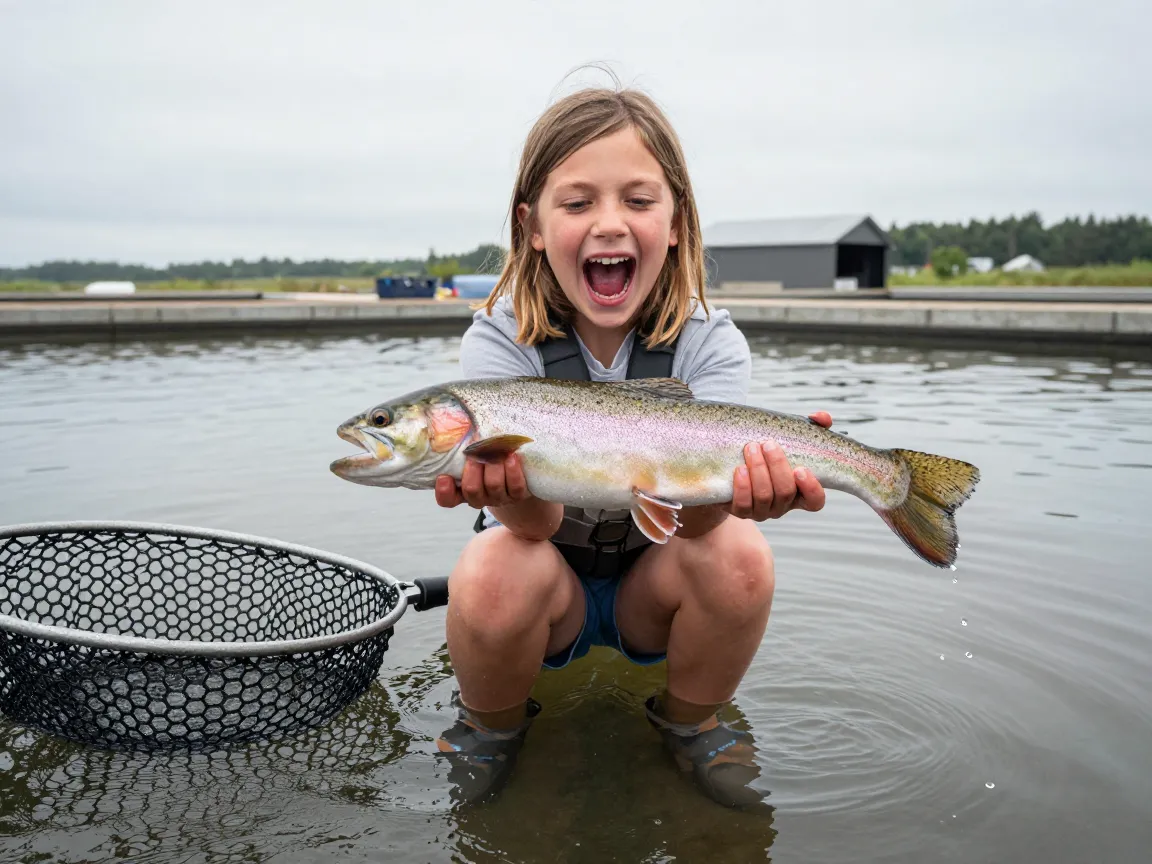
A hatchery setting removes most of the luck from fishing, which means a child who has never caught anything before will almost certainly succeed. That guaranteed success produces one of the most reliable “cute” fishing photos in existence. When the U.S. Fish and Wildlife Service documented a girls’ fishing event at the Winthrop National Fish Hatchery, the standout images showed young participants holding two large trout at once, faces caught mid-shout or mid-laugh before they had time to compose a pose. Those candid frames communicated something a staged portrait never could: the moment the angler realized the fish was real and that she had caught it herself.
What makes this photo type work photographically is contrast. A child’s small frame against a fish that is nearly as long as her forearm creates an immediate visual story without any caption. Hatchery events are often overcast, which eliminates harsh shadows and produces soft, even light across the face, the fish, and the water surface all at once. Photographers covering these events typically crouch to the child’s eye level rather than shooting downward, which preserves the child’s sense of scale and keeps the fish fully in frame.
If you’re trying to capture this shot yourself, the timing window is narrow. The genuine reaction lasts about three seconds after the net comes out of the water. Waiting for the child to “hold it up for the camera” produces a stiffer image. Fire the shutter as the fish clears the water, before anyone has time to think.
2. The Generational Dock Shot at Sunrise
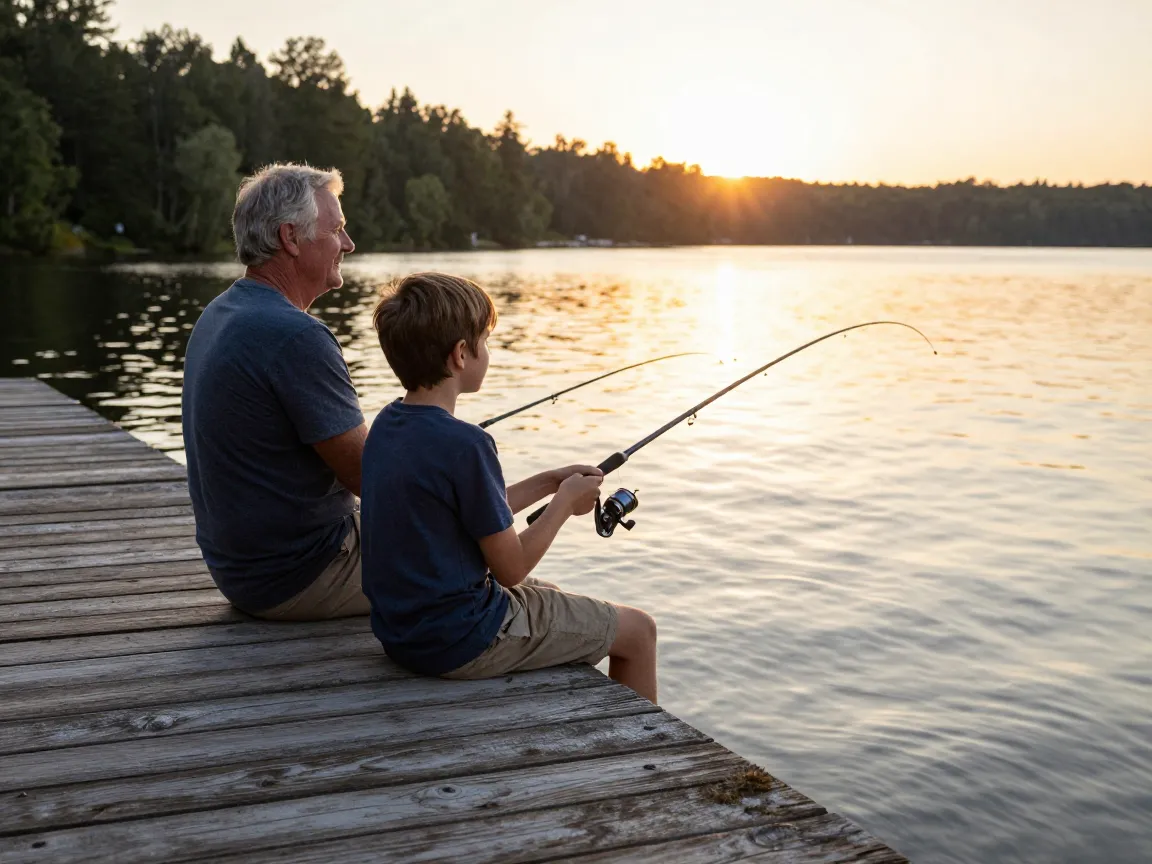
A father and son on a wooden dock, rod bent toward the water, the older man’s hand guiding the younger one’s grip on the reel. This scene appears in tourism marketing, national fishing foundation campaigns, and lifestyle brand materials because it does two things simultaneously: it shows how fishing is transmitted between generations, and it anchors that transmission in a specific, recognizable physical space.
The dock matters as much as the people on it. Weathered wood, still water, and low-angle morning light give the image a texture that a concrete pier at noon simply cannot match. Happy Fishing Lake-style imagery, a category that commercial libraries have built entire collections around, leans on this combination repeatedly because it performs well across multiple audience segments. Parents see themselves. Grandparents see a continuation of something they started. Non-anglers see a moment of patience and connection that has nothing to do with fishing specifically.
The generational element also softens the competitive connotations that sometimes surround fishing. When the story is about passing something down rather than landing the biggest fish, viewers who have no interest in angling still engage with the image. That crossover appeal is why the Recreational Boating and Fishing Foundation specifically organizes its photo library around family-centered themes alongside its “epic catch” category. The two serve different audiences, and both are necessary for broadening who sees fishing as something for them.
For photographers, the practical challenge here is backlight. Sunrise behind the dock creates a silhouette unless you use fill flash or position the subjects with the light source at a 45-degree angle. The clearest version of this photo keeps both faces fully lit while the water glows behind them.
3. The Smiling Angler Thumbs-Up With a Small Fish

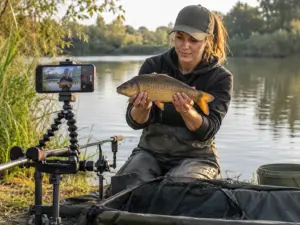
Not every great fishing photo needs a big fish. Some of the most shared images in Shutterstock’s “Smiling Fishing” category, which contains over 41,000 assets, show grey-haired anglers giving a thumbs-up while holding a fish that most experienced anglers would immediately throw back. The smile is the subject. The fish is the prop.
This photo type works because it captures satisfaction without achievement pressure. A large trophy fish implies competition, skill, and sometimes luck that the viewer may not feel they could replicate. A small fish held with obvious delight says the bar is low and the fun is real. That message is exactly what fishing recruitment campaigns need to reach people who assume the sport is too technical, too expensive, or too slow for them.
The composition here tends to be tighter than the hatchery portrait. A close crop from the chest up, with the fish held near the face rather than extended toward the camera, keeps the focal relationship between the angler’s expression and the catch intact. Wide-angle extension shots where the fish is pushed toward the lens to look larger are common in competitive fishing photography, but they read as performative rather than joyful. The thumbs-up variant deliberately rejects that aesthetic.
There’s a generational subtlety to note as well. Younger anglers in this style of photo often look directly at the camera. Older anglers frequently look at the fish, then glance at the camera as an afterthought. That secondary glance often produces the most natural and endearing frame of the sequence.
4. The Catch-and-Release Close-Up in a Mountain Stream
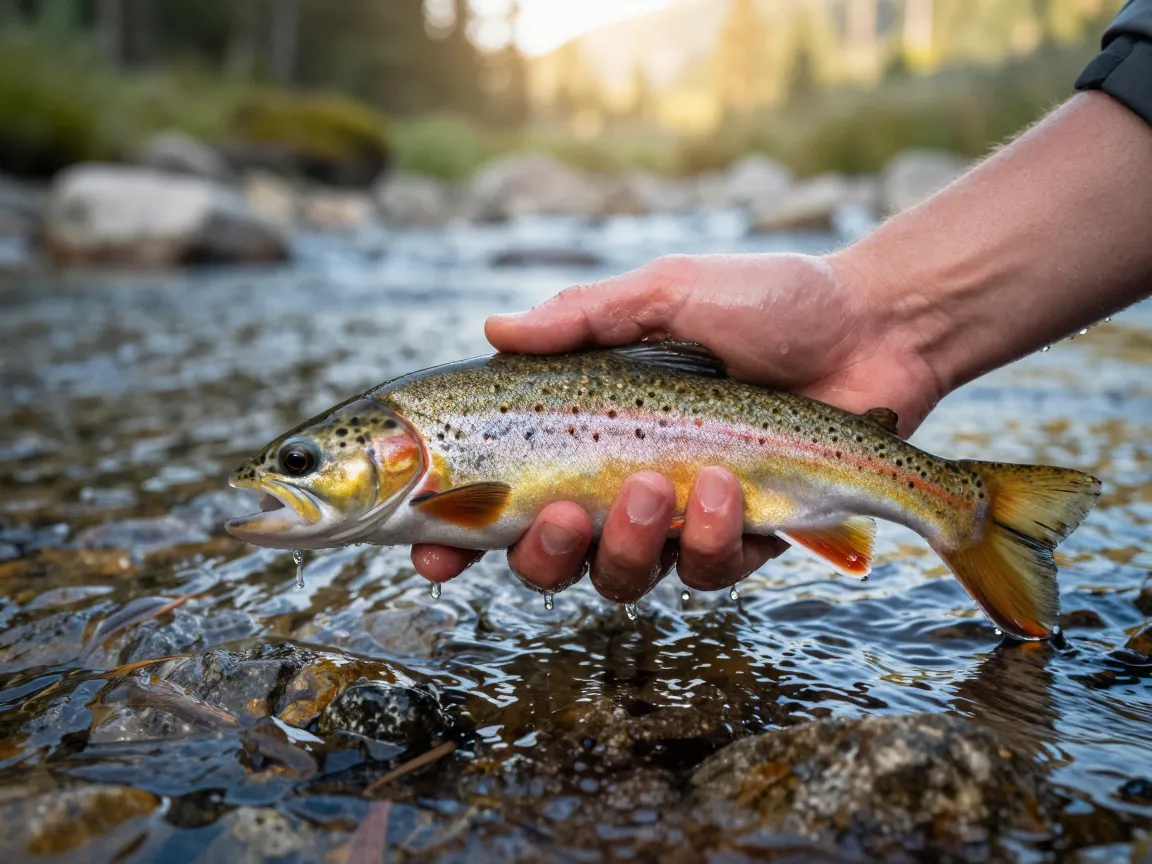
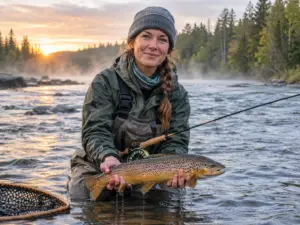
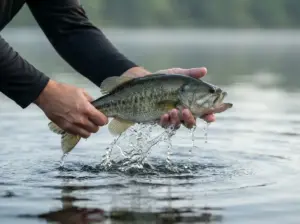
Wet hands, a brown trout held horizontally just above the water surface, droplets catching afternoon light. The angler is out of focus. The fish is sharp. This photo type has grown significantly in commercial and editorial fishing imagery as catch-and-release practices have become standard for many freshwater species.
What makes it “cute” in the broader sense of the word is its combination of care and restraint. The fish is uninjured. The hands are properly supporting its body. The release is seconds away. Captions on these images consistently use phrases like “celebrating the joy of catch and release,” which signals to viewers that the angler’s relationship with the fish extends beyond the moment of landing it. That ethical framing has become part of what makes an image emotionally appealing to a wide audience, including many people who would not describe themselves as anglers.
River catch photography, a category with roughly 259,000 images across major stock libraries, leans heavily into mountain stream settings for good reason. Clear water over rounded stone creates natural visual depth. The combination of a brown or rainbow trout’s markings against that background is inherently colorful without any post-processing. And the solitude implied by a mountain stream backdrop reinforces the meditative dimension of fishing that many casual or prospective anglers find attractive.
From a technical standpoint, this shot requires a fast shutter speed (typically 1/500s or faster) to freeze the water droplets, combined with a wide aperture to blur the background and isolate the fish and hands. Natural light from slightly above and behind the subject creates the rim lighting that makes droplets visible. It’s a harder shot to execute than it appears, which is part of why high-quality versions of it command attention.
5. The Viral Surprise-Background Trophy Shot
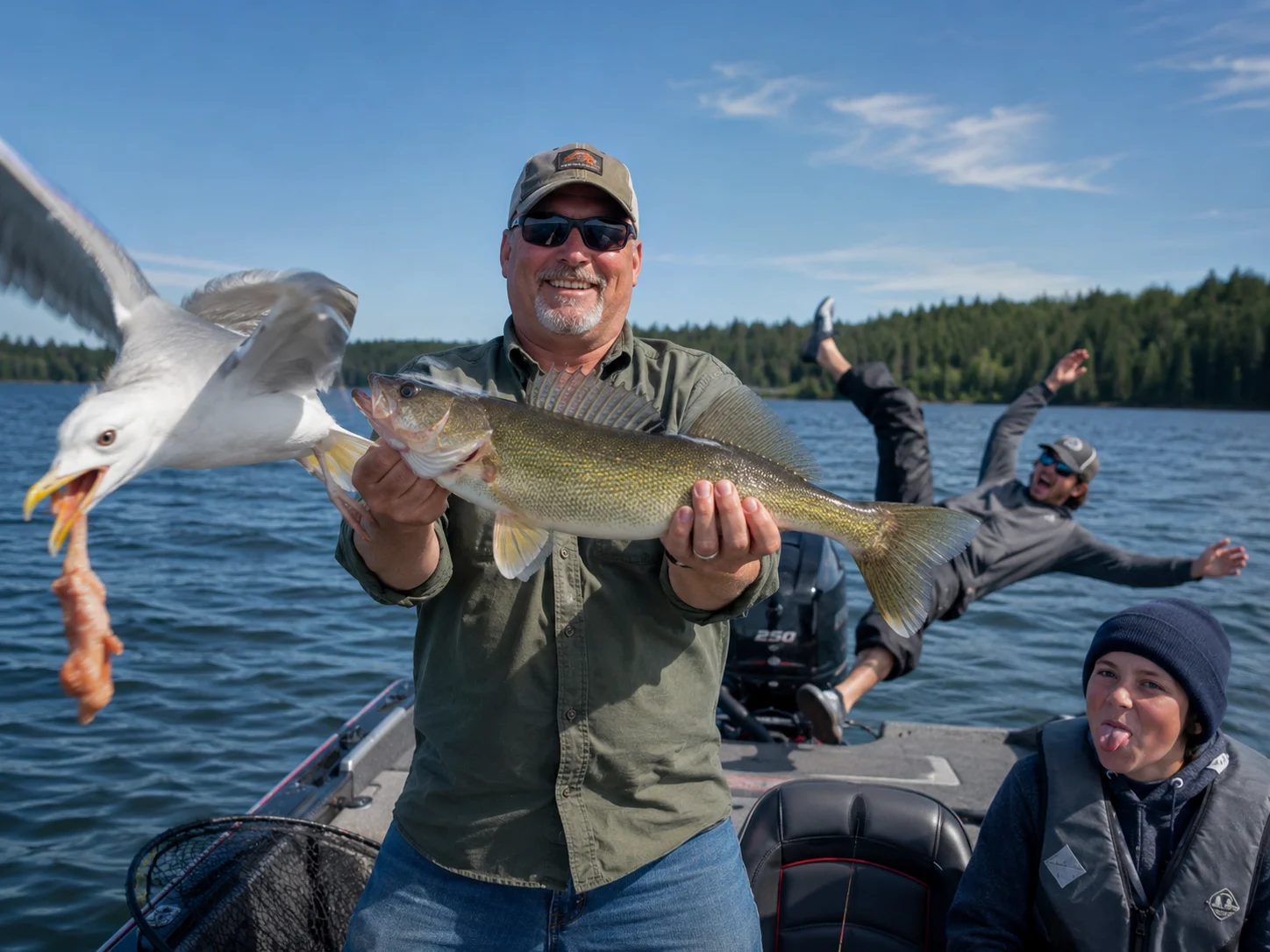
Bill Siemantel’s widely circulated collection of fishing photos with unexpected background elements captured something that professional photographers rarely plan for: accidental comedy. A perfectly composed trophy shot where someone in the background is falling off a boat. A child making a face at the camera while an adult proudly displays a fish. A bird stealing bait from the foreground just as the shutter fires.
These images spread for a different reason than the other types on this list. They show that fishing is not always a solemn or controlled activity, and they give experienced anglers permission to laugh at the sport they love while giving newcomers a reason not to take it too seriously. The Library of Congress “Fish and Fishing” collection specifically categorizes some of its historical images as “humorous,” acknowledging that comedy has been part of fishing photography since the medium existed.
The challenge is that you cannot plan for a surprise background. What you can do is keep the camera ready longer than you think necessary. Most of these images happen in the 10 to 15 seconds after the main catch moment, when everyone relaxes and assumes the photo session is over. That’s when someone trips, when a dog runs into frame, when a sibling mimics the pose from six feet behind. Post-capture review is essential because these images rarely announce themselves in real time.
There’s also a compositional principle at work here that separates the viral version from the merely funny one. The foreground subject needs to be properly exposed and genuinely proud. If the main angler looks stiff or uninterested, the background element reads as chaos rather than comedy. The contrast between the angler’s earnestness and the chaos behind them is what makes viewers share it.
6. The Child’s First Ice Fishing Portrait
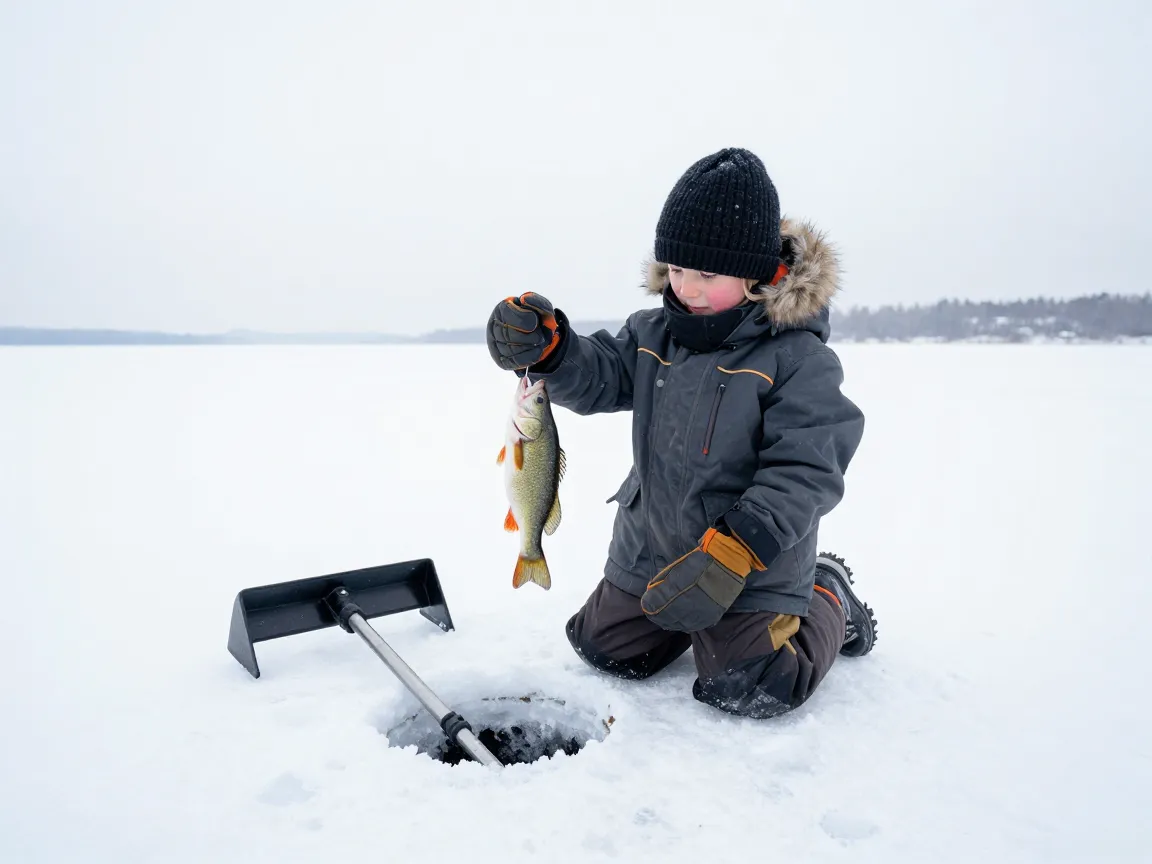
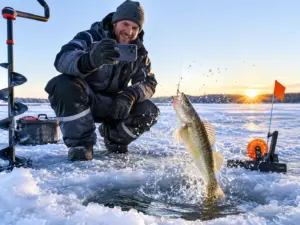
Ice fishing occupies a specific visual category that separates it from every other type of fishing photo. The white expanse of a frozen lake eliminates background clutter entirely. A child kneeling over an auger hole, bundled in winter gear, holding a perch or bluegill with mittened hands, is a naturally graphic image: strong figure against a minimal background, with the fish as the only color element in the frame.
Graphic and illustration sets across major design libraries show that the ice fishing aesthetic extends even into vector art and icons, where cartoon anglers bundled in thick coats are among the most recognizable angling archetypes. The winter context implies preparation, patience, and a willingness to be uncomfortable for the sake of the catch, which makes the joy when the fish appears more visually dramatic by contrast.
What makes the child version specifically compelling is the gear mismatch. Adult ice fishing equipment scaled down to a child’s proportions, the oversized gloves, the ice skimmer nearly as long as the child’s arm, creates the same kind of contrast as the hatchery photo described earlier. When the fish finally emerges and the child holds it up against that white background, the image requires almost no cropping or composition adjustment. The scene arranges itself.
Timing in this context is slower than open-water fishing. There’s more waiting and less sudden action. That pacing actually benefits the photographer because there’s time to anticipate the moment and frame correctly before the fish arrives. The resulting images tend to be sharper and better composed than their warmer-weather equivalents, which is one reason they perform consistently well in family lifestyle and outdoor recreation marketing.
Quick Comparison
| Photo Type | Primary Emotion | Key Visual Element | Best Lighting |
|---|---|---|---|
| 1. Hatchery First Catch | Surprise and pride | Child’s expression | Overcast soft light |
| 2. Generational Dock | Connection | Two figures, bent rod | Sunrise side-angle |
| 3. Thumbs-Up Small Fish | Uncomplicated joy | Angler’s face | Natural fill light |
| 4. Catch-and-Release Close-Up | Care and ethics | Wet hands, trout | Rim/afternoon light |
| 5. Surprise Background | Humor and spontaneity | Background element | Any; well-exposed foreground |
| 6. Child Ice Fishing | Patience rewarded | White expanse, colorful fish | Bright overcast winter |
Conclusion
The thread running through every type of image in this list of 6 cute fishing pictures that capture the joy of the catch is the same: the fish is secondary to the feeling. Whether the setting is a managed hatchery in Washington state, a mountain stream in fall, or a frozen lake in January, what viewers respond to is the expression on the angler’s face and the story implied by everything around it.
The clearest next step for anyone looking to build a collection of this kind, whether for personal use, marketing, or editorial purposes, is to shift focus from the fish to the human reaction the moment the fish appears. That two-to-three-second window after a strike, before the angler composes themselves, is where every genuinely memorable fishing photo lives.