Boat Fishing Outfit Ideas to Keep You Comfortable All Day
Reflected UV off the water surface can double your sun exposure compared to standing on dry land, yet most anglers still step onto a boat in a cotton T-shirt and a baseball cap. Getting dressed right for a full day on the water is one of the simplest performance advantages available, and it costs nothing extra if you know what to prioritize. These 6 boat fishing outfit ideas to keep you comfortable all day cover the full range of conditions you’re likely to face, from a glassy summer morning to a breezy cold-front afternoon.
Disclosure: This post contains affiliate links. As an Amazon Associate, we earn from qualifying purchases, and at no extra cost to you.
1. The UPF 50+ Sun Hoodie as Your Foundation Layer
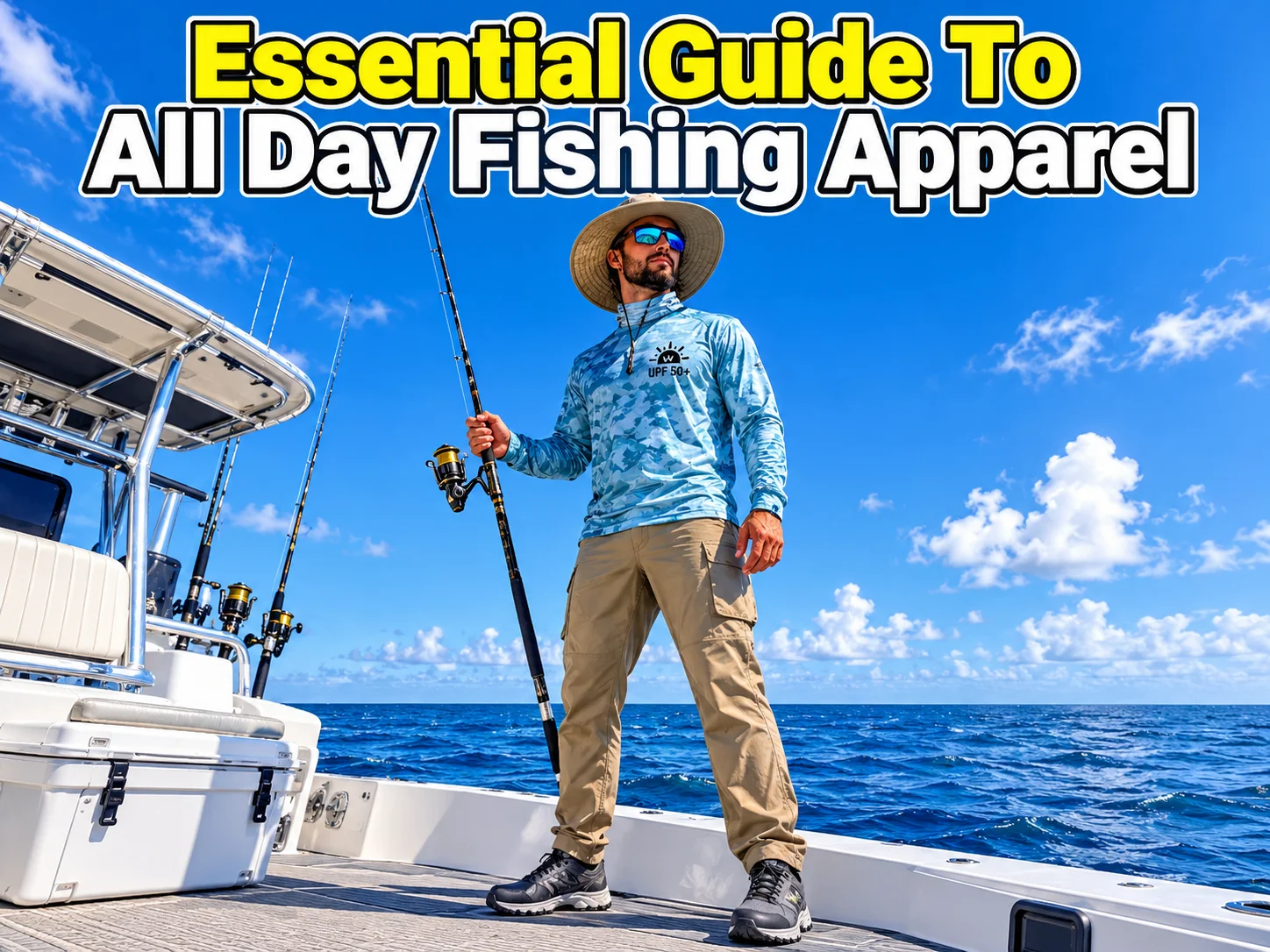
A lightweight long-sleeve sun hoodie rated UPF 50+ blocks more than 98% of UV radiation, and it does so without trapping heat the way a traditional heavy shirt does. That matters on a boat because you can’t step into the shade when the bite is on. Performance hoodies built for fishing use highly breathable polyester jersey weaves, some coming in around 3 ounces, that promote rapid evaporation when you sweat, creating a natural cooling effect rather than a clammy one.
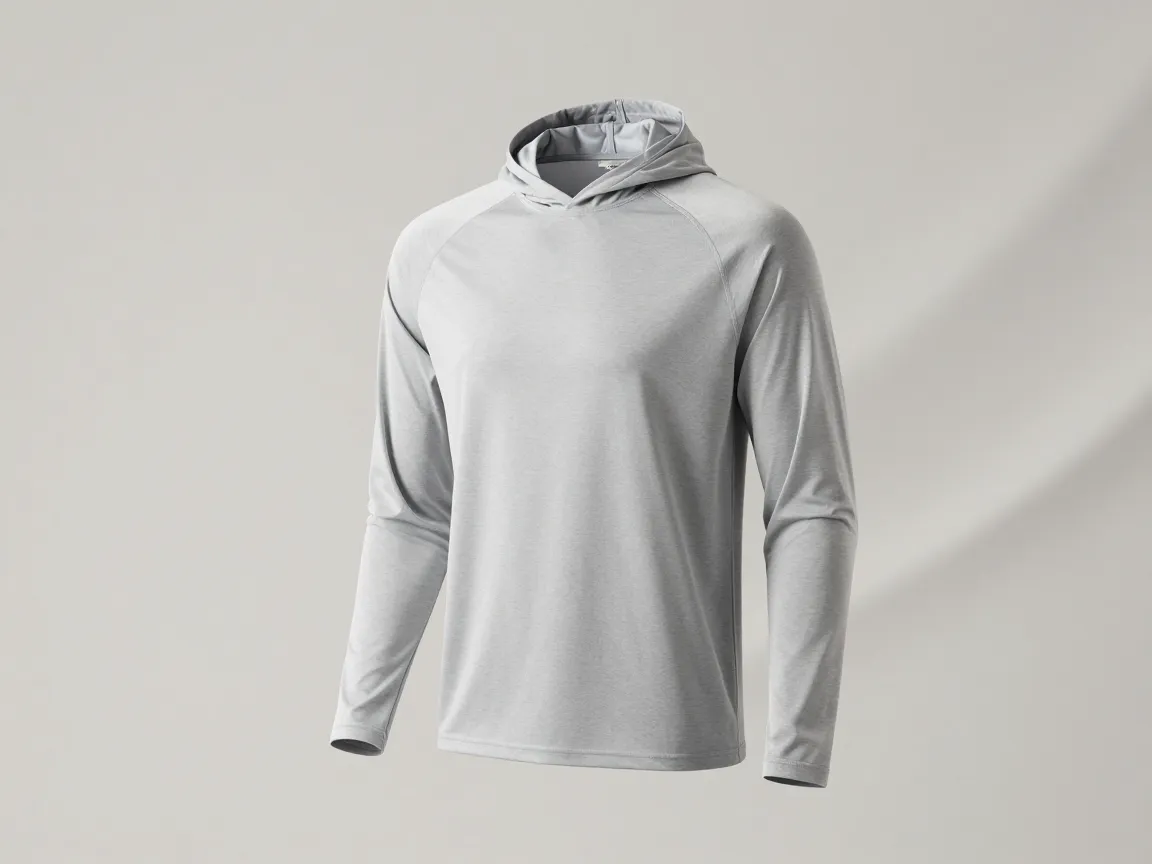
Look for raglan sleeves on any hoodie you plan to fish in. Standard set-in sleeves restrict your casting range more than you’d expect after the third hour on the water. Thumbholes keep the cuff over your hands when you’re handling tackle, and a ponytail-friendly hood design matters for anyone who doesn’t want to unpin their hair to pull the hood up. Patagonia’s Capilene Cool Sun Hoody, which weighs about 3.05 ounces, is a well-documented example of how light a full-coverage garment can be.
The other reason a sun hoodie earns its place as a foundation rather than a layering piece is that it replaces sunscreen on your arms and torso. Reapplying sunscreen every two hours while handling bait, fish and wet line is unrealistic. Fabric protection is consistent; cream on your hands is not.
2. A Coordinated Top-and-Bottom UPF System for Hot, Reflective Days
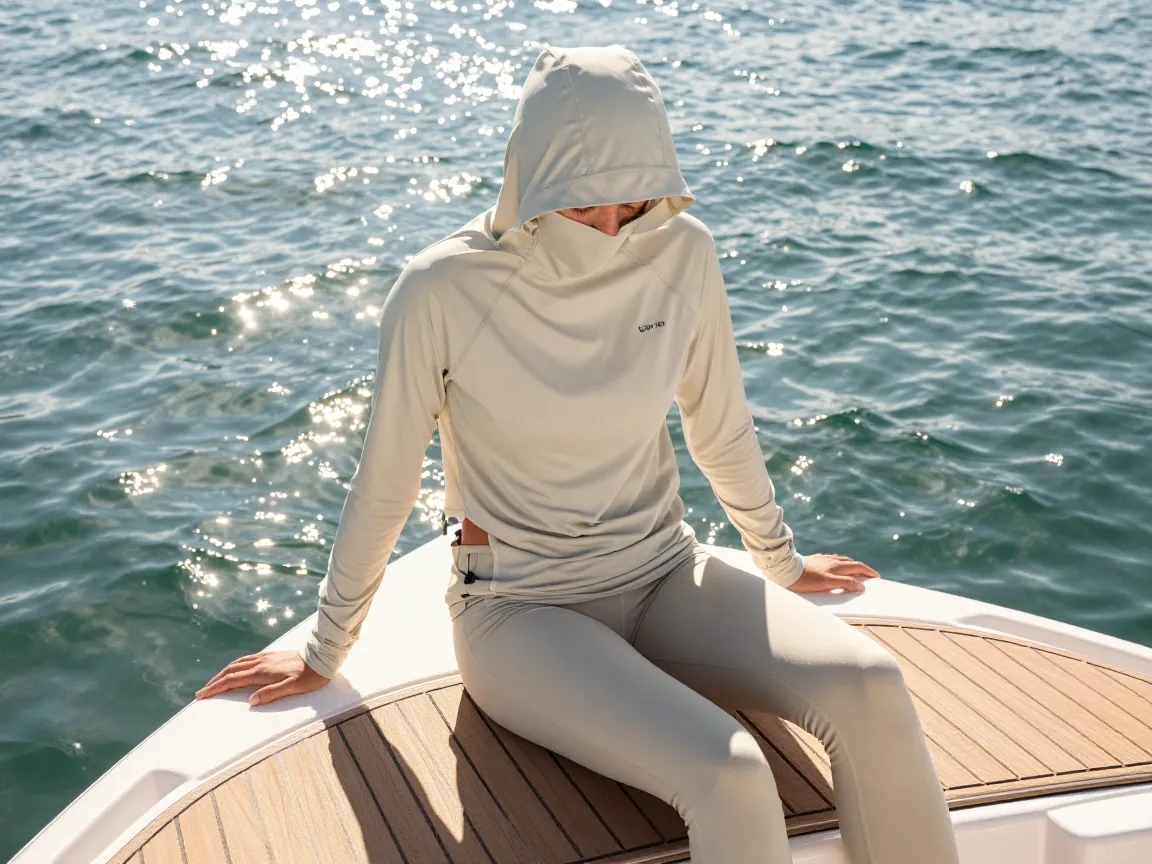
Wearing a UPF hoodie from the waist up while your legs absorb direct sun and reflected glare defeats the purpose of the top. A coordinated system, UPF 50+ long-sleeve shirt or hoodie paired with lightweight UPF fishing pants or tights, covers the full skin surface that matters on an open boat.
Matching tights with 40+ UPF protection, like those paired with Patagonia’s flats fishing line, add a secondary benefit beyond sun coverage: abrasion resistance when you’re kneeling on a deck or wading to reach a spot, and a layer against biting insects in marshy or estuarine environments. For offshore days where the deck temperature can exceed air temperature, quick-dry pants with a loose leg opening do the same job without the compression fit of tights.
The practical test is to sit down and check that the waistband of your pants and the hem of your shirt overlap without exposing a strip of skin at your lower back. That gap, once you’re leaning over the gunwale for an hour, is where most anglers burn first without noticing.
3. The Warm-Weather Deck Outfit Built Around Movement and Safety
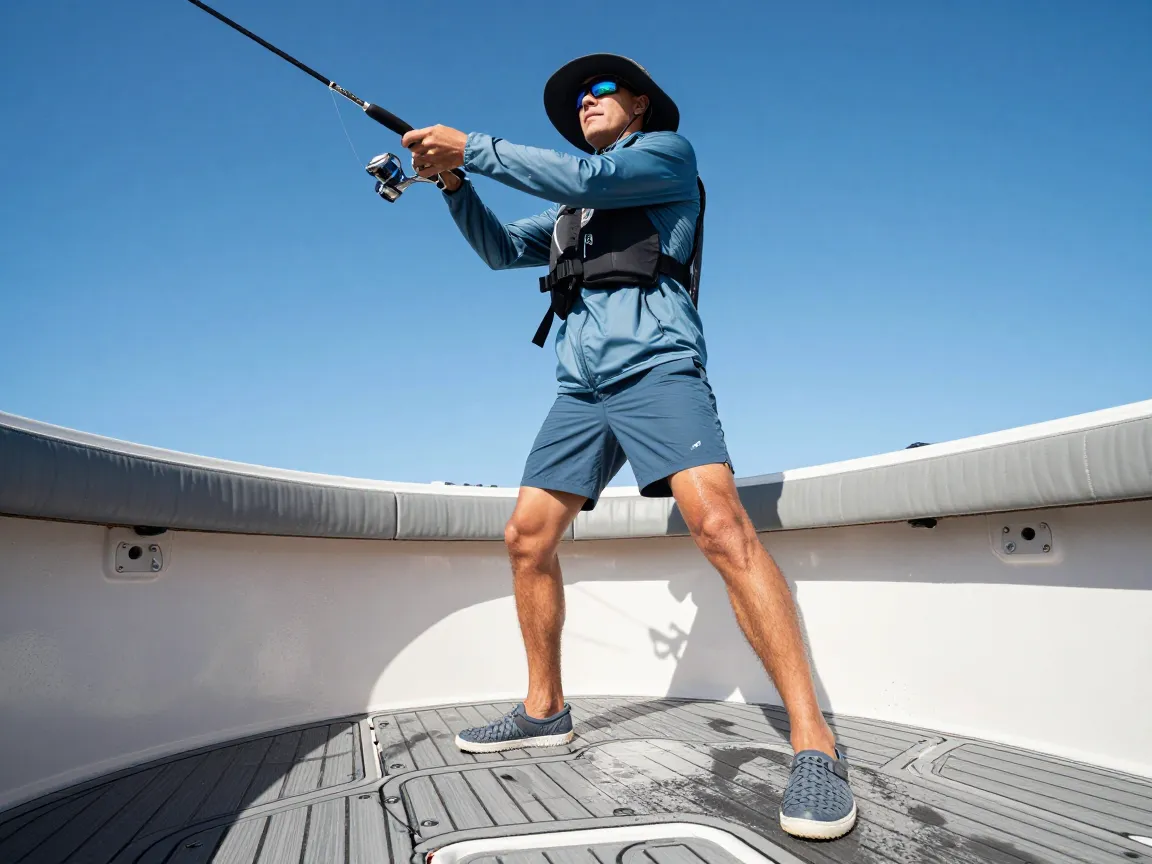
A purpose-built warm-weather boat outfit does five things at once: sun protection, moisture management, freedom of movement, deck safety, and compatibility with a fitted life jacket. Getting all five from the same set of garments requires specific choices, not just any “fishing clothes.”
For the top, the UPF sun hoodie from idea one works. Pair it with 7-inch quick-dry shorts or lightweight fishing pants that don’t bunch at the hip when you’re seated at the gunwale. The footwear choice is non-negotiable: closed-toe shoes with non-marking rubber outsoles and a siped (crosshatched) tread pattern that channels water away from the contact patch. Bare feet or flip-flops on a wet fiberglass deck are genuinely dangerous, and dock shoes without siping turn to ice when wet. Add a wide-brim hat and polarized sunglasses, and the ensemble is complete for air temperatures from about 75°F upward.
The life jacket check matters more than most guides mention. Some performance fishing shirts and hoodies have enough structure at the shoulders that a standard chest-mounted PFD rides awkwardly, limiting arm movement. Try the full outfit with your actual PFD before the trip, not on the dock the morning you leave.
4. The Cold-Morning Boat Run Layering System
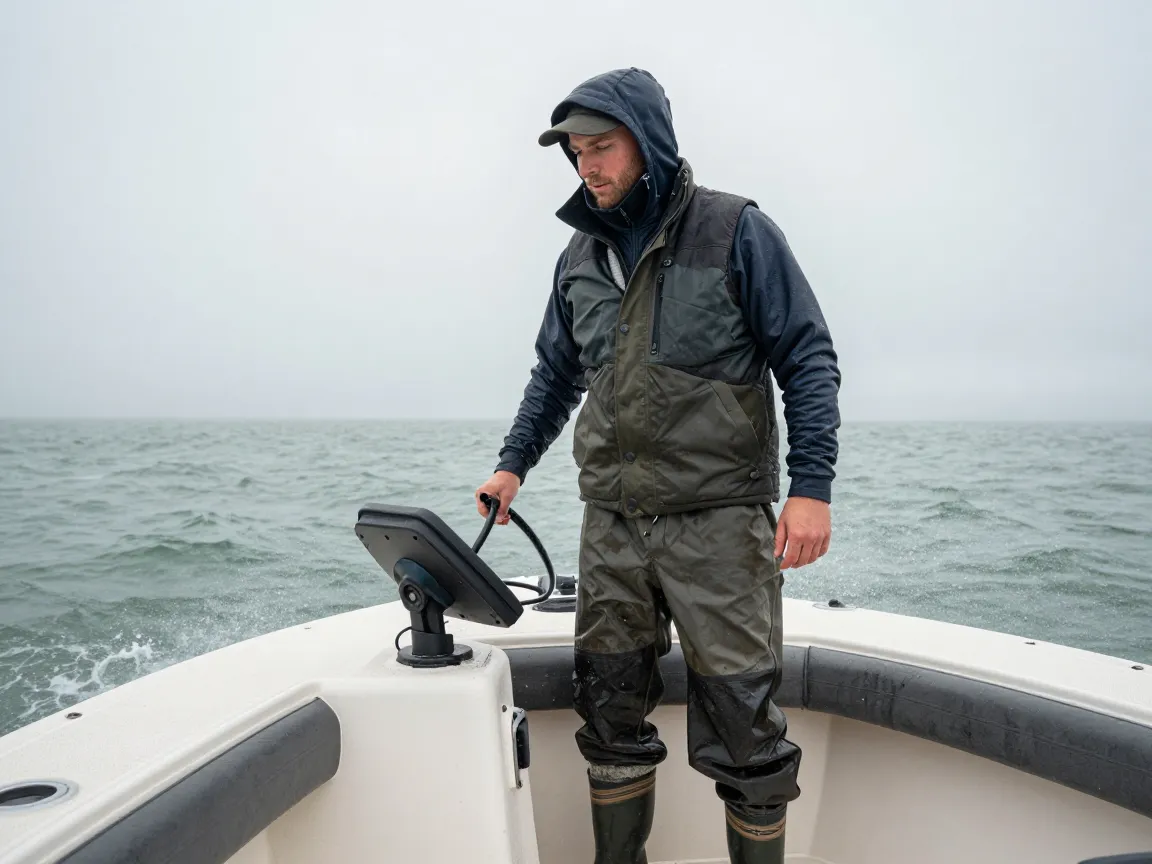
Temperatures between 45°F and 60°F on the water feel nothing like those temperatures on shore. Wind chill at boat speed, combined with spray and high humidity, pushes effective cold down faster than a dry-land thermometer suggests. The outfit for this condition is built around three layers that can each be removed and stowed as the day warms.
Start with a merino or synthetic base layer against the skin. Merino regulates temperature across a wider range than synthetic and doesn’t hold odor through a 10-hour day, but lightweight synthetic dries faster if you get soaked. Over that goes an insulated vest, which keeps your core warm while leaving your arms free for casting. The outer shell needs to be both waterproof and windproof, with sealed or taped seams, and it should pack small enough to stuff into a hatch bag when you strip it off at noon.
Quick-dry pants over wool or synthetic socks, finished with waterproof rubber-soled boots, complete the base. The logic here is that your feet are the first thing to suffer on a cold, wet deck and the last thing most anglers dress properly. Wet cotton socks inside deck shoes on a 50°F morning will end your focus on the fishing within two hours.
5. Neck Gaiter, UV Gloves, and Wide-Brim Hat as a Face and Extremity System
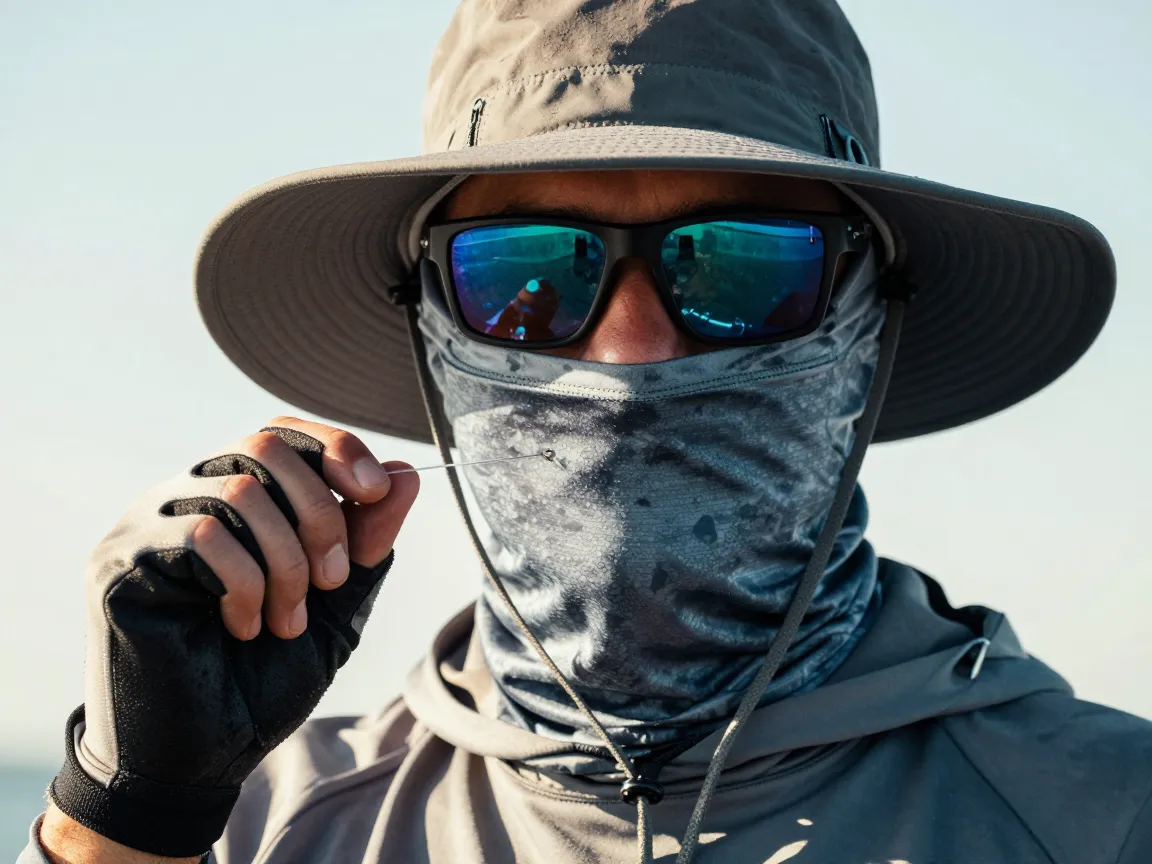
A sun hoodie covers your torso and arms. The gap it leaves is your face, neck, and hands, which are also the most sun-damaged areas on most anglers over age 40. Filling that gap with three specific accessories makes the difference between an outfit that protects you and one that just looks like it does.
A neck gaiter worn over the lower face and pulled down to cover the neck and ears handles wind, spray, and UV simultaneously. Pairing it with the hood of your sun hoodie means only your eye area is exposed. For the hands, UV fishing gloves with open fingertips on the index finger and thumb preserve the dexterity needed to tie knots and handle monofilament while blocking UV on the back of the hand, where basal cell carcinoma is disproportionately common in anglers.
The hat should have a brim of at least 3 inches all the way around, not just at the front. Many fishing caps are essentially baseball caps with a larger front brim, leaving your ears and the back of your neck exposed. A wide-brim hat with an integrated neck flap, common in offshore and flats fishing, solves this without requiring you to also pull up a gaiter, though using both together for high-exposure days is a reasonable choice.
Tournament anglers who fish the front deck for eight or more hours routinely combine all three: gloves, gaiter, and wide-brim hat over their sun hoodie. The layered coverage is what separates someone who can still concentrate at 3 p.m. from someone who’s sunburned, dehydrated, and distracted by discomfort.
6. The Packable Rain Shell and Footwear Upgrade for Variable Conditions
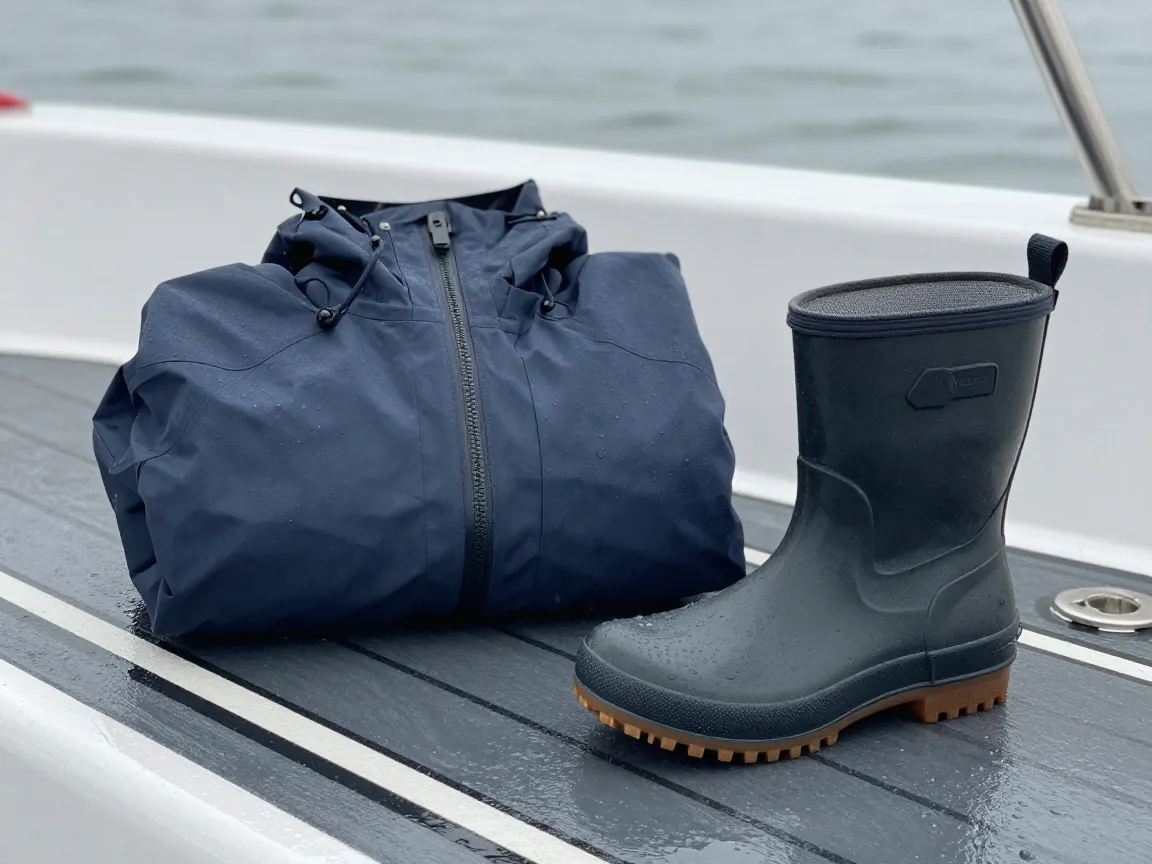
Weather on the water changes faster than any forecast reliably captures. A packable rain shell that weighs under a pound and compresses to roughly the size of a water bottle is the single most useful item most boat anglers leave behind because they checked the morning forecast and saw sun. By afternoon, that changes.
The shell needs to be waterproof and windproof with at least taped seams at the shoulders, ideally fully seam-sealed. Breathability rating matters here: a non-breathable shell traps sweat during active casting and makes you just as wet from the inside as rain would from the outside. Look for a jacket designed for active use, not just standing in the rain. Venting under the arms or a full side zipper helps significantly during high-movement fishing.
Footwear is the second part of this idea because it’s the other variable most outfit planners treat as an afterthought. For a full day on a boat, the deck shoe or boot you choose affects both your physical safety and your endurance. Standing on hard fiberglass for eight hours in thin-soled shoes produces foot and lower-back fatigue by mid-afternoon. A rubber-soled boot or deck shoe with meaningful midsole cushioning, non-marking soles, and a siped outsole handles both comfort and traction simultaneously. If you’re running to offshore structure in rough water, ankle support becomes a real consideration, and a low waterproof boot outperforms a low-cut deck shoe on a pitching deck.
Treat the shell and footwear as the adaptive layer of your outfit, the parts that respond to whatever the day does after the morning’s calm. The other five ideas build a stable base; this one makes it work all day regardless of what changes.
Conclusion
The core logic running through all six of these outfit ideas is that comfort on a boat all day comes from planning for UV, temperature change, movement, and footing together, not from any single garment. If there’s one place to start, it’s the UPF 50+ sun hoodie: it’s the foundation that everything else builds on, and getting that piece right shapes every other choice. From there, fill in the gaps at your extremities, plan for the temperature swing between 7 a.m. and 2 p.m., and don’t leave the dock without a packable shell regardless of the forecast.