Vintage Fly Fishing Ideas That Celebrate Classic Angling Style
A $320 graphite fly rod purchased in 1989 would cost the equivalent of more than $850 to replace today, and yet collectors are spending that much and more chasing rods built decades before that rod was even manufactured. The pull of classic angling gear is not purely nostalgic. It is economic, aesthetic, and deeply sensory. These 6 Vintage Fly Fishing Ideas That Celebrate Classic Angling Style translate that pull into real, actionable ways to fish, dress, and collect with one foot planted firmly in fly fishing’s rich past.
Disclosure: This post contains affiliate links. As an Amazon Associate, we earn from qualifying purchases, and at no extra cost to you.
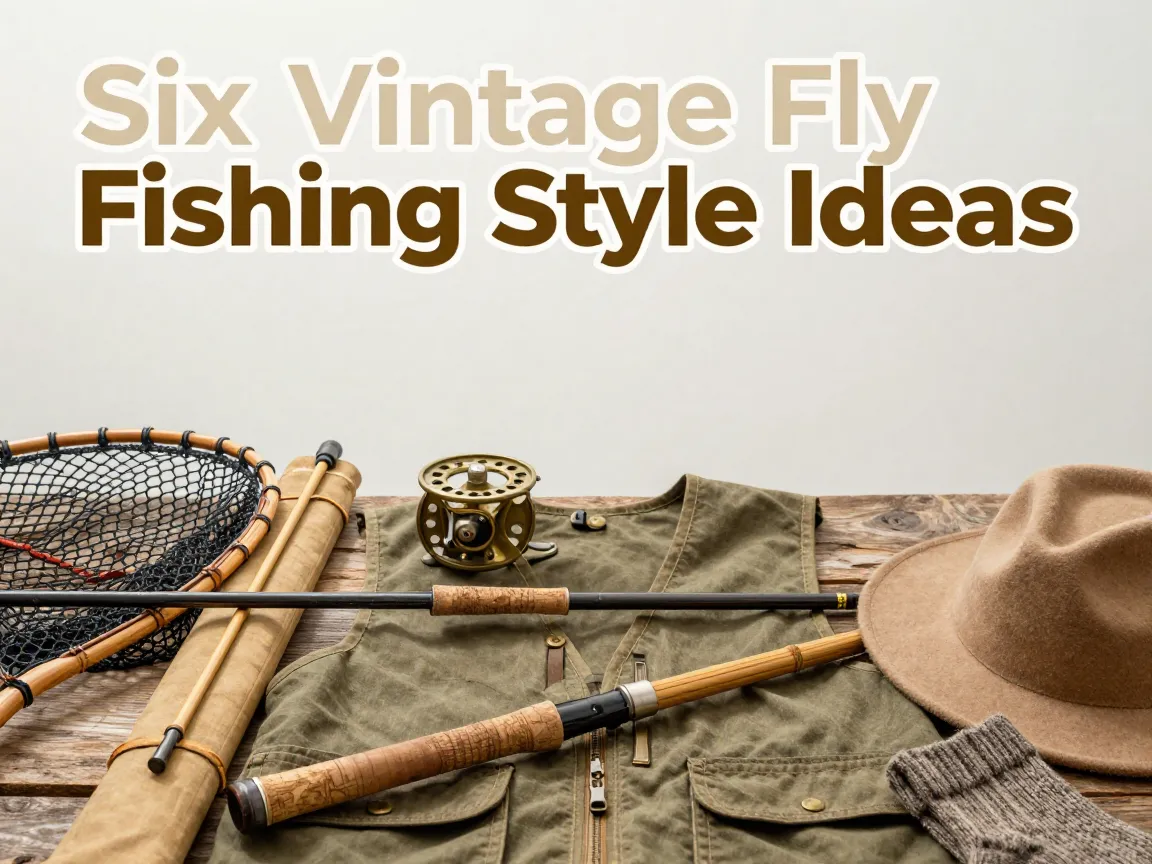
Whether the goal is turning out for a Saturday morning on a small stream or simply displaying a piece of angling history above a mantelpiece, each idea below offers a distinct and developed path into classic style. No two approaches ask for the same investment, skill set, or commitment, which means there is a genuine entry point here for beginners, mid-career anglers, and serious collectors alike.
1. Fish a Fiberglass Rod Paired With a Click-and-Pawl Reel
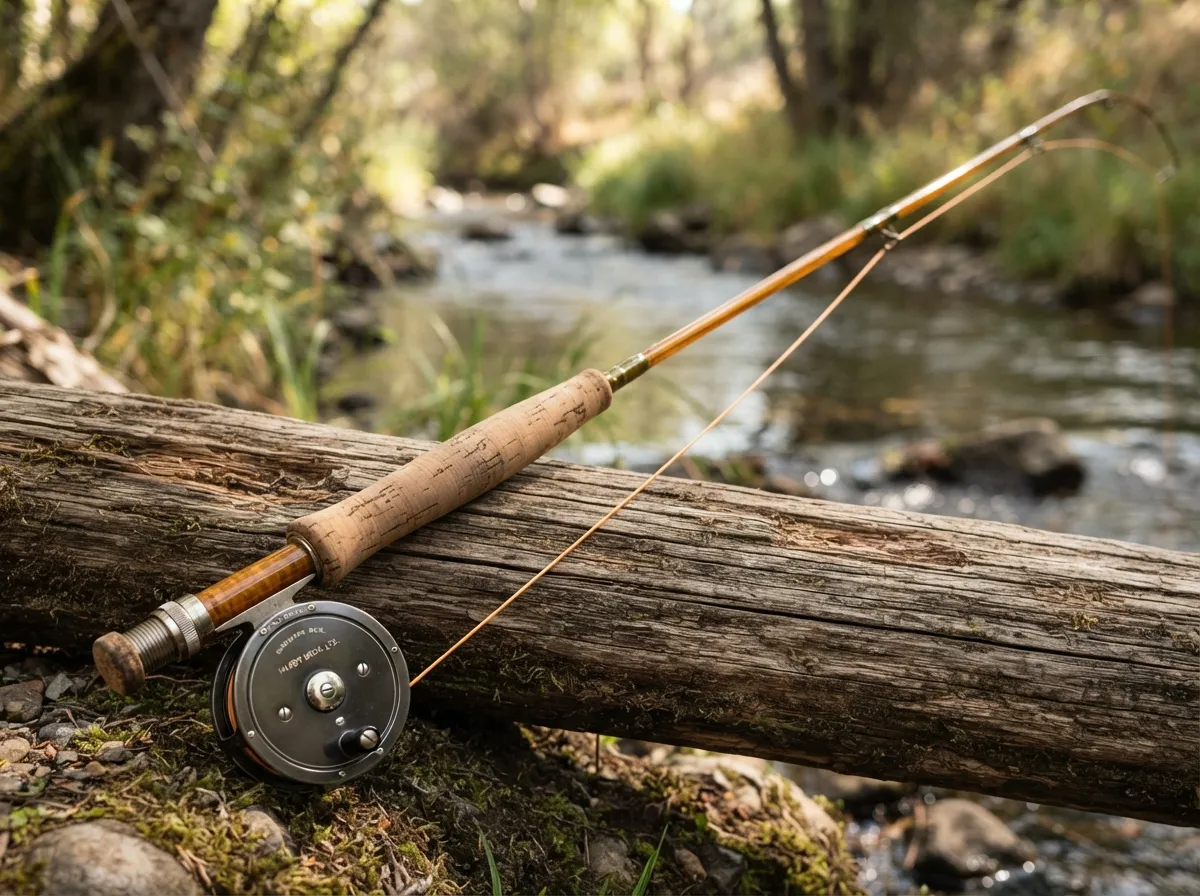
Few combinations in fly fishing feel as deliberately vintage as a fiberglass blank mated to a click-and-pawl reel. The glass rod bends deep into the butt section on a cast, loading slowly and recovering with a soft flex that is worlds apart from the stiff, fast-action graphite designs that dominate modern shop floors. Add a reel whose drag system is nothing more than a tensioned pawl pressing against a toothed gear, and every fish becomes an event accompanied by that unmistakable mechanical whirr, a sound that connects today’s cast directly to the mid-20th century.
The appeal is not merely sentimental. Expert rod makers and writers covering contemporary tackle in early 2026 have argued at length that fiberglass rods offer a genuinely different casting experience that suits many anglers, especially on small streams where short, delicate presentations matter more than raw distance. The slower stroke forces patience, and that patience often produces cleaner loops on tight, brushy water.
Redington’s Butter Stick, built from T-glass construction at 7’6″ in a #4 weight, is a production example that ships with a traditional Half Wells cork grip, a cork reel seat, and a threaded lock nut, details that look lifted straight from a 1960s catalog but benefit from modern tolerances. Pair it with a Hardy or Orvis click-and-pawl reel and the ensemble is not a costume. It is a functional, well-balanced outfit that fishes confidently and photographs beautifully on any bank.
A practical caveat: fiberglass rods are heavier than graphite for the same length, and an all-day session on big water may tire the wrist. Keep the choice of rod length and line weight modest, a 7- to 8-foot rod in a 3- or 4-weight covers most trout scenarios without the fatigue penalty of going longer or heavier.
2. Restore and Fish a Grandparent’s Bamboo Rod
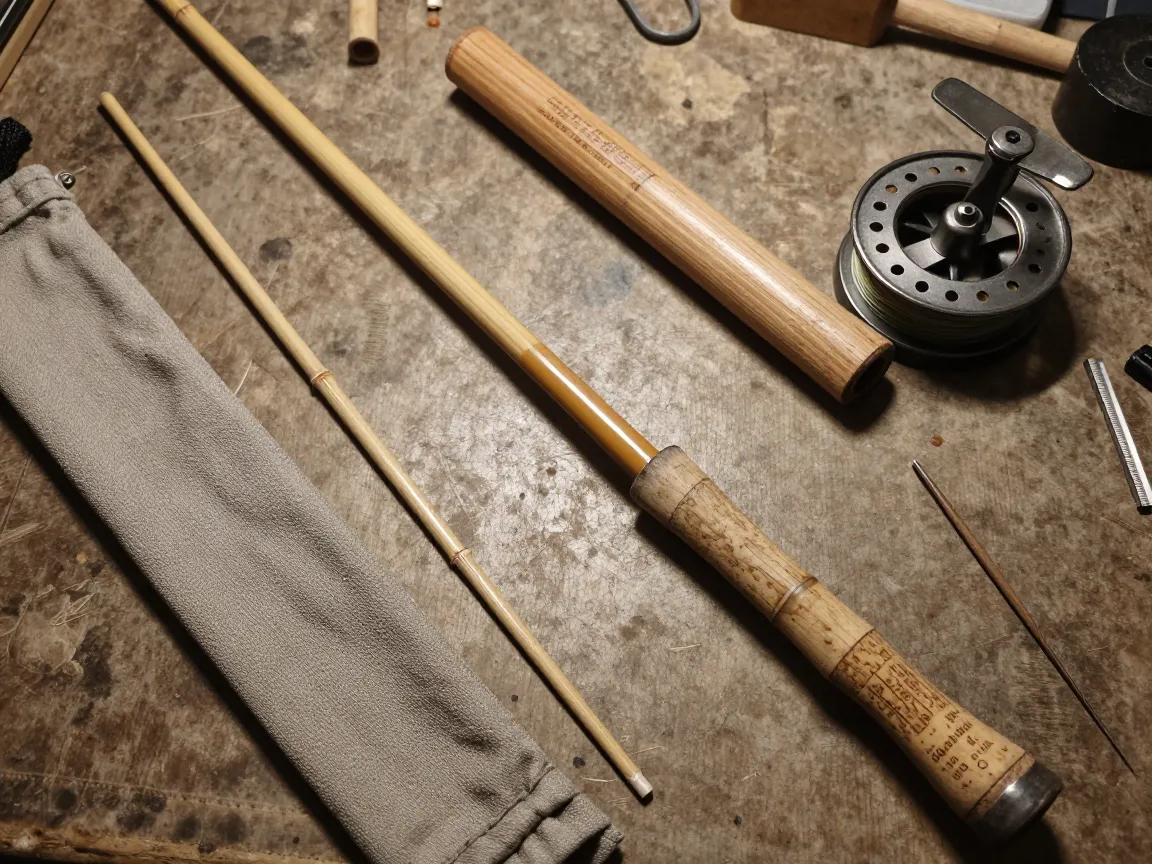
Few acts in fly fishing carry more weight than taking an old split-cane rod out of its cloth bag, stringing it up, and wading in. Early- to mid-1900s trout rods were typically built from six strips of carefully tapered bamboo, and many of them have been sitting dormant in attics and garages for decades, still structurally sound and entirely fishable.
The practical concern most anglers raise is line weight. Standard bamboo trout rods of that era were typically designed for five- or six-weight lines, heavier than the three- and four-weight lines that now dominate trout fishing. This is actually an advantage, not a barrier. A five- or six-weight outfit turns out to be more versatile across a wider range of conditions: it handles wind, larger dry flies, and heavier nymphs without protest. A modern floating line in the appropriate weight, matched to a modern tapered leader, transforms a heritage rod into a highly capable everyday fishing tool rather than a museum piece.
The important distinction lies between rod types. Longer, limber “blue-collar” bamboo rods, often built to handle live bait or wet flies swung through current, will feel sluggish on a modern dry-fly presentation. Stiffer, lighter split-cane rods with a stiffer tip section will handle nymph and dry-fly work surprisingly well. Measuring the rod’s recommended line weight (often stamped on the original wooden rod tube or inscribed near the cork) and test-flexing the blank by hand will reveal which category it falls into before a single cast is made.
If the rod needs new guides or a varnish refresh before it goes back to work, local rod-builders and specialty shops take on this kind of restoration regularly. The cost is usually modest relative to what a comparable-quality new bamboo rod would run. The reward is fishing with an object that carries a family story, an aspect of the experience that no production rod, however well-made, can replicate.
3. Source Authentic Vintage Tackle From the Collector Market
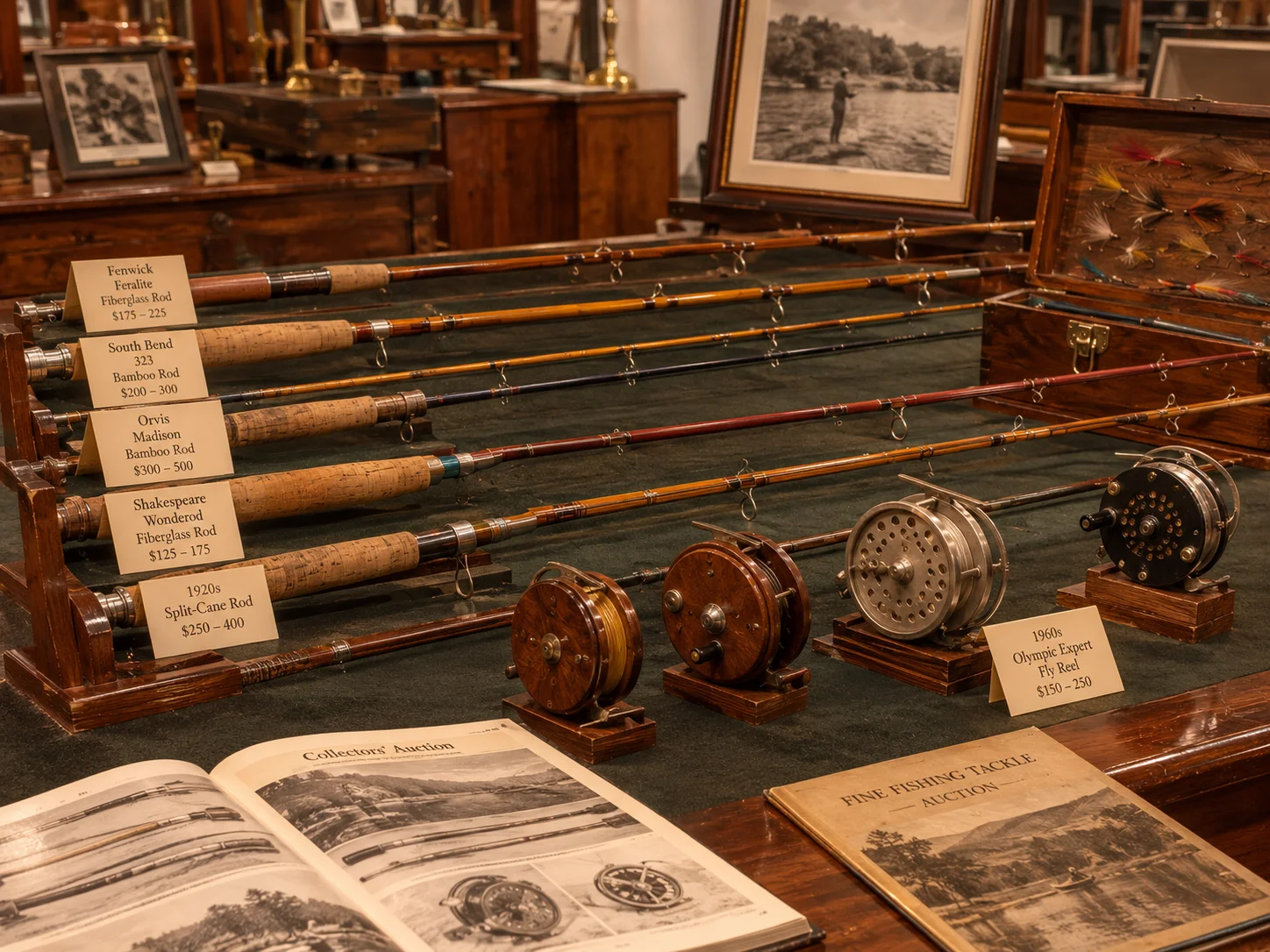
The secondary market for vintage fly tackle is broader and more accessible than most anglers realize. Listings updated through late 2026 show steady, robust demand for Fenwick Feralite fiberglass rods, South Bend 323 and Orvis Madison bamboo models, mid-century Japanese split-cane rods, Shakespeare “Wonderod” fiberglass pieces, and 1920s split-cane rods offered alongside traditional wooden reels. This is not a thin niche populated by a handful of specialists. It is a layered collector ecosystem with entry points at almost every price level.
The practical starting point is to define the goal before spending. An angler who wants to actually fish the gear should prioritize rods and reels in confirmed fishable condition, ferrules that seat cleanly, guides without deep grooves, cork that is firm rather than crumbling, and a reel that turns freely and holds a drag setting. A collector focused on display or historical interest can accept cosmetic wear and even a bent guide, as long as the piece is complete and original.
For mid-century fiberglass, the Fenwick Feralite family is a particularly rewarding area of focus. These rods were built to serious standards, they remain fishable, and they represent an era, roughly the 1960s through early 1980s, when American rod building was genuinely innovative. A matching 1960s Olympic Expert fly reel, recommended by experienced collectors for pairing with vintage glass rods in the 6- to 8-weight range, completes an outfit with period accuracy.
One discipline that separates experienced collectors from beginners is patience. Worthwhile pieces appear regularly, but the best examples move quickly. Setting search alerts on major online marketplaces and checking specialty vintage tackle auctions on a consistent schedule is more effective than sporadic browsing. Building a relationship with a reputable vintage tackle dealer, many operate through fly fishing forums and social media communities, provides access to pieces before they reach open listings.
4. Carry a Classic Wood-Frame Landing Net
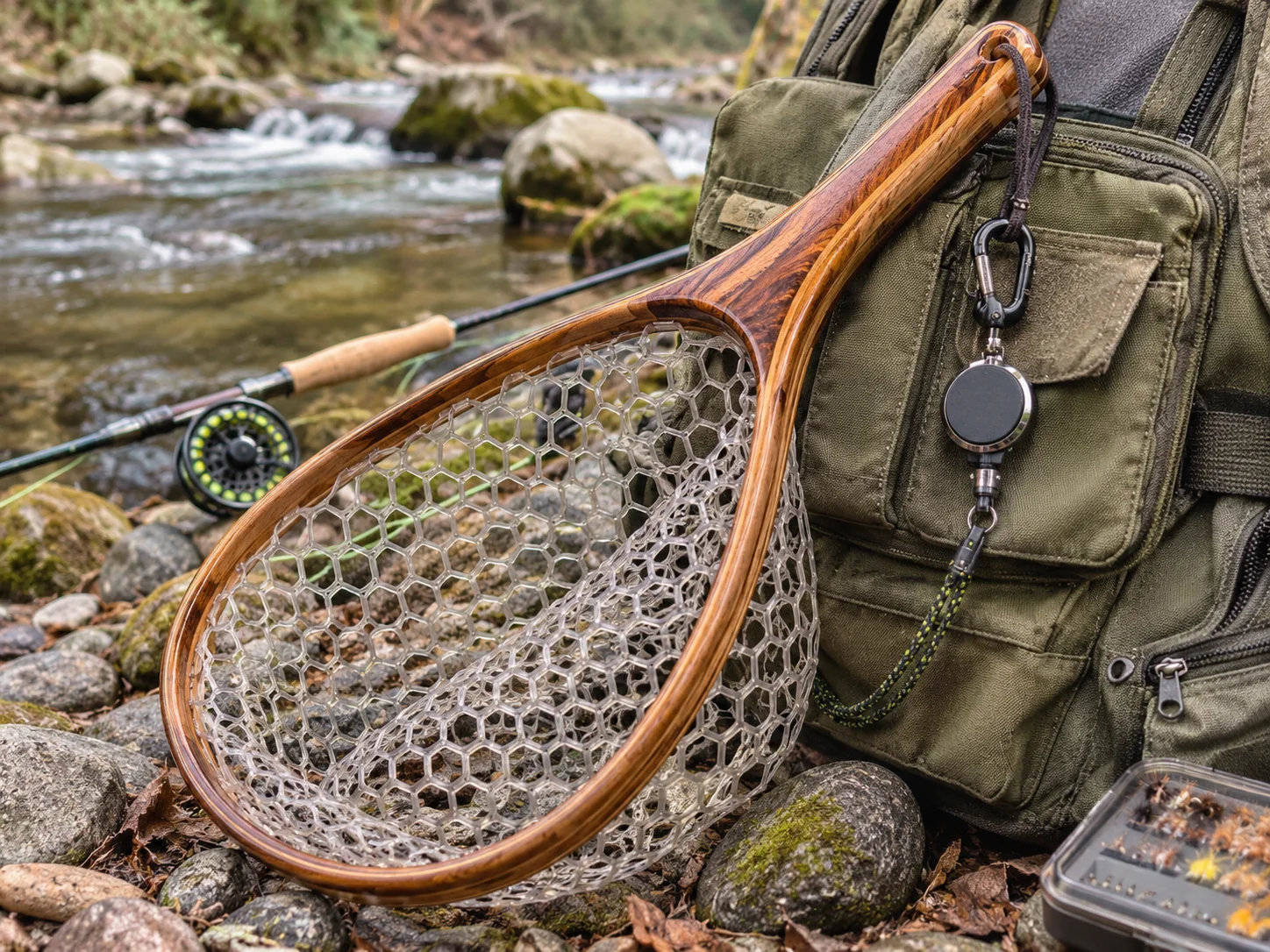
There is a moment near the end of every good fish fight when the rod tip dips toward the water and the net comes forward. That moment is richer when the net in hand has a bamboo and hardwood laminate frame, a traditional shape, and the kind of patina that only comes from seasons of actual use. Classic wood landing nets represent one of the most affordable and immediately visible ways to signal a commitment to classic angling style without changing any other piece of gear.
Market research from late 2026 confirms that wood-frame landing nets continue to hold their own against lightweight carbon-fiber and collapsible travel designs, particularly in the entry-level price band between roughly $30 and $60. The SF brand bamboo and hardwood laminate wading net is a consistently cited example in that category, well-made, traditionally proportioned, and priced to invite actual use rather than shelf display. Pair the wooden frame with a rubber ghost mesh bag rather than knotted cotton or coarse nylon, and the net becomes functional for catch-and-release as well as classically beautiful.
Beyond purchase, the care ritual associated with a wood net adds something to the ownership experience. Light sanding and a coat of linseed oil or tung oil before each season keeps the frame supple and deepens the color of the wood. Nicks and dings acquired on the river do not diminish the net, they build a record of time spent fishing. After a decade of this treatment, a $40 wood net carries more visible character than a carbon tool ten times its price.
For wade anglers who clip their net to a magnetic release on the back of a vest or pack, the visual combination of a wooden frame and classic vest is one of the clearest single frames of vintage fly fishing style. It photographs with immediate recognition, a fact not lost on the many anglers and brands who now use this exact combination in editorial and campaign imagery.
5. Build a Vintage-Inspired Fishing Wardrobe Around Earth Tones and Technical Classics
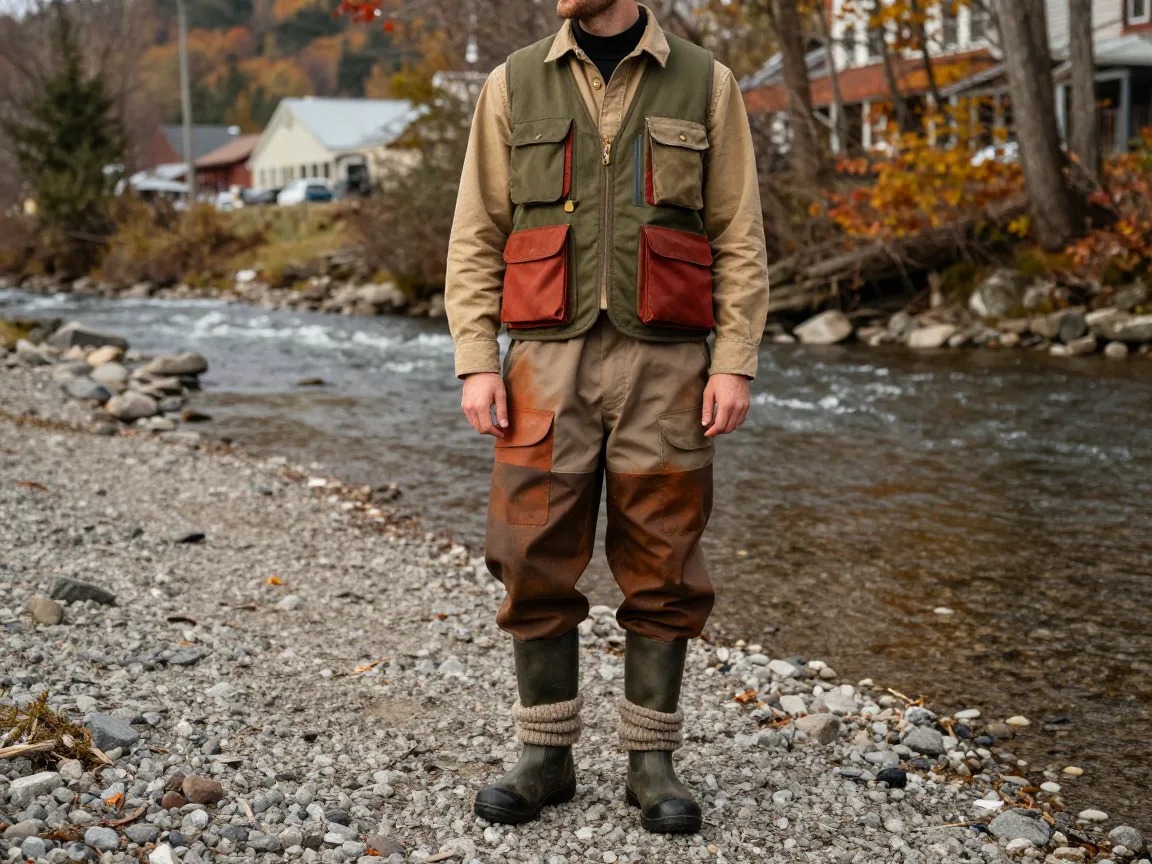
Fly fishing apparel has become one of the more culturally visible expressions of classic angling style in 2026. Ralph Lauren shot a Fall and Holiday campaign by a river. Munich label A Kind of Guise released a Zambezi wading-style jacket in spring 2026 with multi-pocket, patina-rich construction that belongs equally on a trout stream and a city street. The trend has a name in streetwear circles, anglercore, and it covers everything from fully functional fishing pieces worn as everyday outerwear to linen shirts that echo the look of a charter-boat guide.
The core of a vintage-inspired fishing wardrobe is a tightly edited palette: tan canvas, olive drab, faded red, rust, and brown. These are the colors of river valleys and autumn banks, and they translate effortlessly between outdoor and urban settings. A well-worn wading vest in olive with brass zipper pulls, a canvas shirt in tan, and heavy wool socks folded over wading boots constitute an outfit that is as visually coherent on a Catskill stream as it is in a coffee shop.
The vest is the most important single piece. Rather than buying a new vest designed to look weathered, seek out actual vintage or lightly used examples from makers with long histories, Orvis, Simms, Dan Bailey, where the design language has not changed dramatically in decades. Canvas and nylon twill construction ages with more character than synthetic performance fabrics, and the asymmetric pocket arrangement of older vest patterns gives the silhouette an organic, well-used quality that cannot be replicated new.
A useful discipline for building this wardrobe is to buy slowly and buy fishable. Each piece should serve on the water, not just hang on a hook. When gear is used rather than displayed, it develops the kind of honest wear that defines classic angling style at its best. The “best-dressed” angler on the river is typically wearing the oldest kit, and that observation, noted across multiple style features in 2026, is a useful counter to the impulse to buy everything new and matching at once.
6. Commission or Acquire a Commemorative Bamboo Rod Built to Historical Specifications
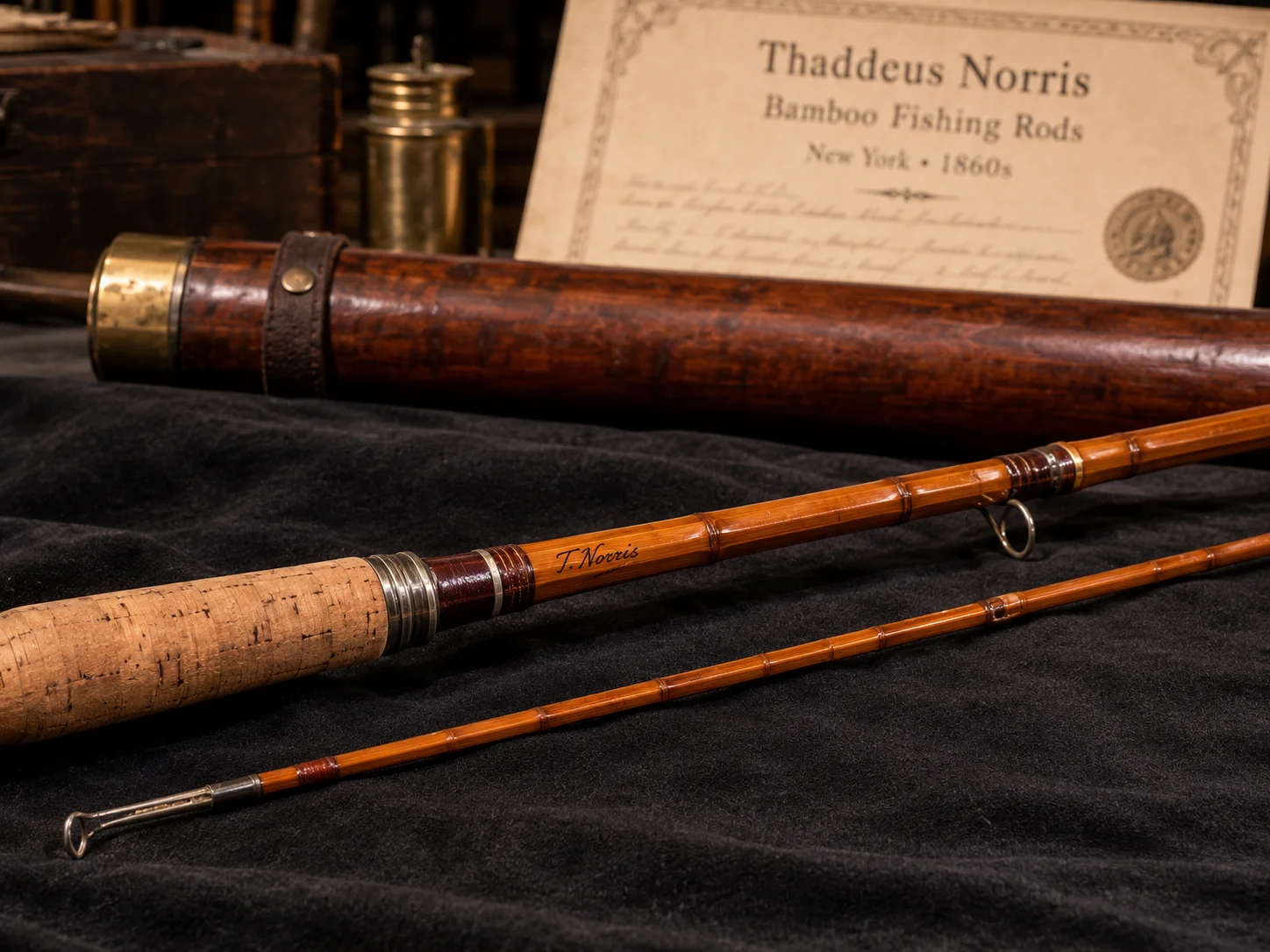
At the highest end of classic angling engagement sits a category that blends collector culture, craftsmanship, and living history: historically accurate bamboo rods built by master makers to period tapers and methods. These are not reproduction props. They are fully fishable instruments whose construction is a direct continuation of techniques developed in the 19th century, and acquiring one, whether through commission, raffle, or institutional sale, is among the most deliberate ways to inhabit classic angling style on the water.
The American Museum of Fly Fishing announced in October 2026 its second annual commemorative tackle project: a Thaddeus Norris rod built to 1860s specifications. Master rod maker Jeffrey Hatton produced only eight of these rods using tapers and methods described in Norris’s 1864 work “The American Angler’s Book.” One rod entered the museum collection. Five were bundled with 2026 Limited Life Membership packages. One was offered by raffle. The project is a model for how institutional knowledge, craft, and angler enthusiasm intersect, and it signals that this corner of the market is organized, credible, and growing.
For anglers who cannot access a museum project, the path to a custom historically accurate rod runs through the small but active community of professional bamboo rod builders. The American Bamboo Rod Makers’ Symposium and similar gatherings connect buyers with makers, and many rod builders work from documented historical tapers, the Dickerson, the Payne, the Powell, that have specific casting characteristics and historical provenance. Commissioning a rod to one of these tapers is not simply buying a bamboo rod. It is entering a documented lineage of tool-making that stretches back well over a century.
The investment is real. Custom bamboo work from established makers typically runs into the thousands of dollars, and wait times of one to two years are common among the most respected builders. But the relationship between owner and rod that develops from this process is entirely different from any retail transaction. A rod built to a named taper, by a named maker, in a known year, is a dated artifact from the moment it ships, which means it begins appreciating in historical significance even as it is being fished. That dual identity, as both tool and document, is the clearest definition of classic angling style made physical.
Conclusion
The 6 vintage fly fishing ideas that celebrate classic angling style explored above share a unifying quality: each one rewards engagement rather than mere acquisition. A fiberglass rod fished regularly develops a casting rhythm. A restored bamboo heirloom carries a family story into the water. A wood-frame net builds character through seasons of use. The wardrobe earns its patina gradually. The collector’s eye sharpens with each piece studied. The commemorative rod becomes a dated artifact that grows in meaning over time.
The single most useful next step for any angler drawn to this space is to pick one entry point and commit to depth rather than breadth. Buy one fiberglass rod and fish it for a full season before adding a second piece. Source one piece of authentic vintage tackle and learn its history before moving on to the next. Classic angling style is not assembled quickly, and that unhurried accumulation is precisely what makes it last.