Fish Drawing Ideas That Will Inspire Your Next Sketch
Across major art communities and tutorial platforms in 2026, fish illustrations have become one of the most searched drawing subjects, with curated idea lists running into the dozens and design galleries collecting more than 54 distinct fish art concepts in a single resource. That level of demand signals something worth paying attention to: fish are deceptively rich subjects. A single species can teach body proportion, fluid motion, light on a curved surface, and narrative character all at once. These 6 fish drawing ideas that will inspire your next sketch are drawn from the most useful trends, exercises, and techniques appearing in current how-to guides, so whether a sketchbook is brand new or well-worn, there is a focused starting point here.
Disclosure: This post contains affiliate links. As an Amazon Associate, we earn from qualifying purchases, and at no extra cost to you.
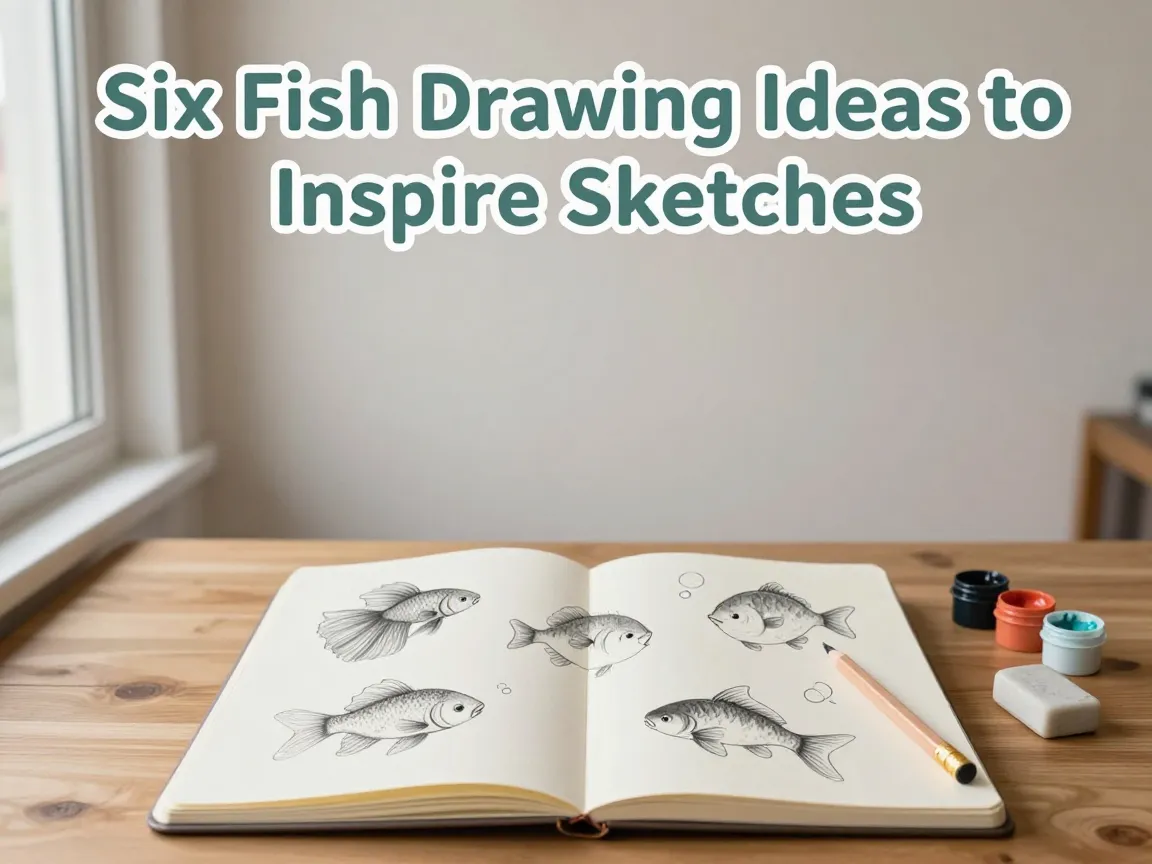
1. The Single-Species Study
One of the most structured ways to build real drawing skill is to commit entirely to one fish for a full session. Current drawing guides describe this approach as “pick one fish, one skill, and one medium,” and the logic holds up well in practice. By narrowing focus to a single species, such as a betta fish, a koi, a clownfish, or a pufferfish, an artist forces themselves to observe rather than approximate.
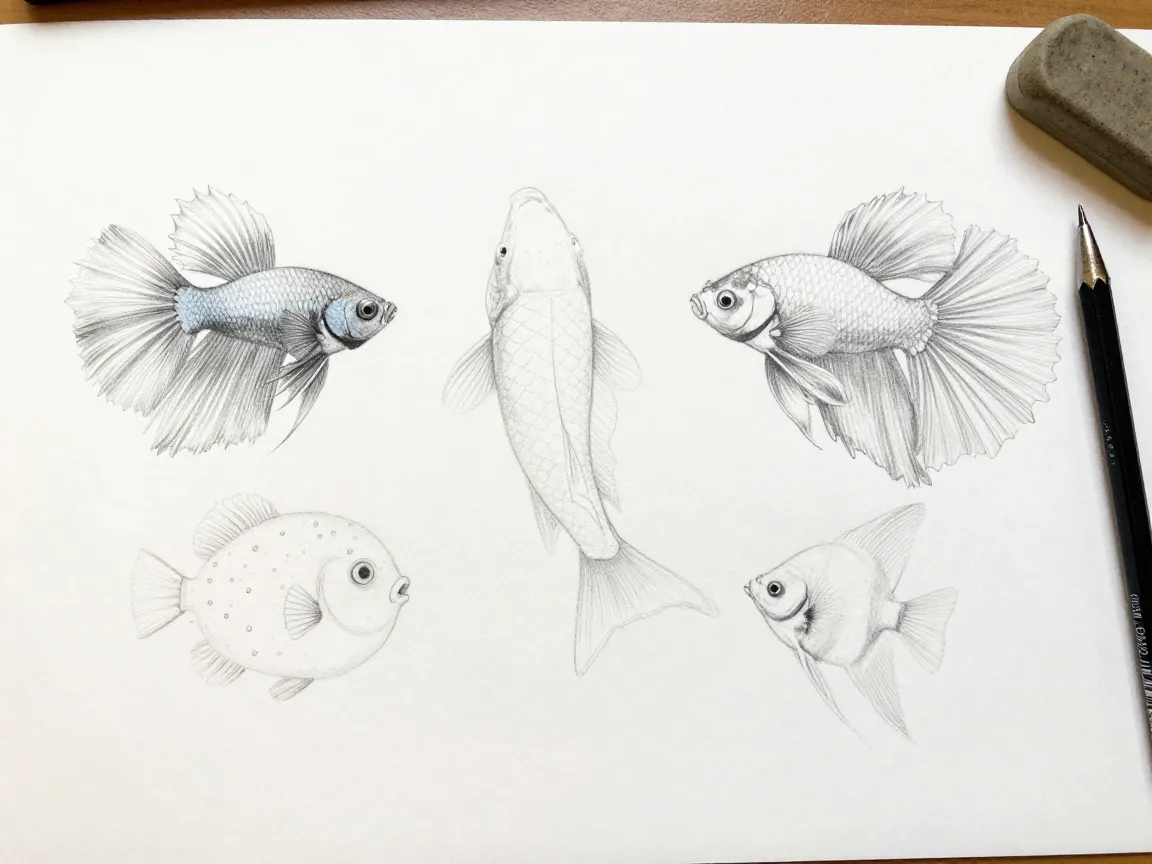
A betta, for example, rewards close study of flowing fins. The long, ribbon-like pectoral and caudal fins sweep outward in dramatic curves that challenge an artist to draw organic movement rather than static shapes. A koi, on the other hand, teaches body mass and water interaction simultaneously because the fish is typically shown mid-turn, with its muscular body arching through space. A pufferfish offers something different again: a nearly spherical form covered in repeating spines that push anyone practicing it toward pattern and texture work.
The practical value of this idea goes beyond the finished drawing. Each species study functions as a reference page. After completing one careful study of an angelfish’s triangular dorsal fin, the proportions become familiar enough to recall from memory. Artists who work through several of these sessions gradually accumulate an internal library of shapes, which pays dividends in every future sketch. Starting with a light pencil outline of the main body shape, then adding fins, gills, and finally surface details like scales or spots, is the standard construction method recommended across foundational guides updated through late 2026.
A useful constraint to try: draw the same species three times on the same page at different scales. The smallest version tests how well key identifying features have been understood, while the largest version leaves room to work out fine texture and shading. The comparison between the three versions often reveals which details are truly essential to capturing a species and which are habits picked up from generic “fish shapes.”
2. The Beginner Cartoon Fish
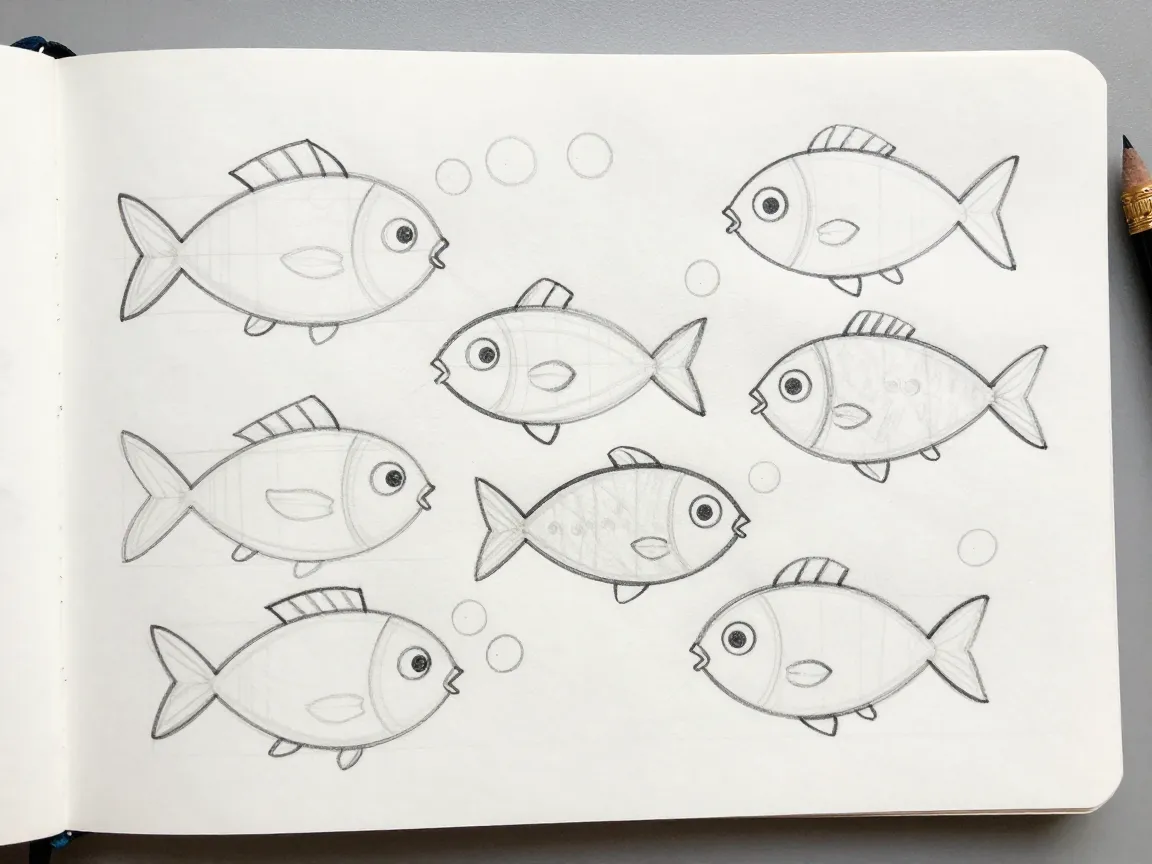
There is a reason that beginner tutorials return to the cartoon fish again and again: it works as a confidence-building exercise for artists at any level, not just children. The basic construction is disarmingly simple. An oval or slightly flattened ellipse forms the body, a V-shaped notch cut from one end creates the tail, rounded triangles placed along the top and bottom of the body become fins, and two circles, one large and one small, land on the face to form a convincing eye. Add a curved line for a smile and three small overlapping circles for bubbles, and the fish reads immediately.
What makes this idea genuinely useful for more experienced artists is the deliberate repetition it encourages. One popular 2026 tutorial teaches six distinct cartoon fish variations in a single lesson before offering a practice sheet with five additional cute styles, giving artists eleven different approaches to draw from and the possibility of filling an entire sketchbook spread with a whole school of fish. Variety within simplicity is the core principle: change the tail shape from a V to a crescent, widen the body into a circle for a pufferfish feel, or elongate it into a torpedo for a tuna-like silhouette.
Repeating these simple shapes builds what drawing instructors call muscle memory for proportion. When the same basic oval-plus-tail construction has been drawn twenty times with minor variations, the hand begins to move with more confidence and less second-guessing. That confidence transfers directly to more complex subjects. The recommended tools are minimal: an HB pencil, an eraser, and standard drawing paper. The eraser is as important as the pencil here, since lightly sketched construction lines that get cleaned up at the end are what separate a polished cartoon fish from a scratchy, uncertain one.
A natural next step after mastering a few cartoon styles is to group them. Arranging five or six of the variations on one page, slightly overlapping and moving in the same direction, produces a composition that looks intentional and dynamic rather than like a practice sheet. That transformation from exercise to finished piece is part of what makes cartoon fish such a satisfying drawing idea.
3. The Narrative Character Fish
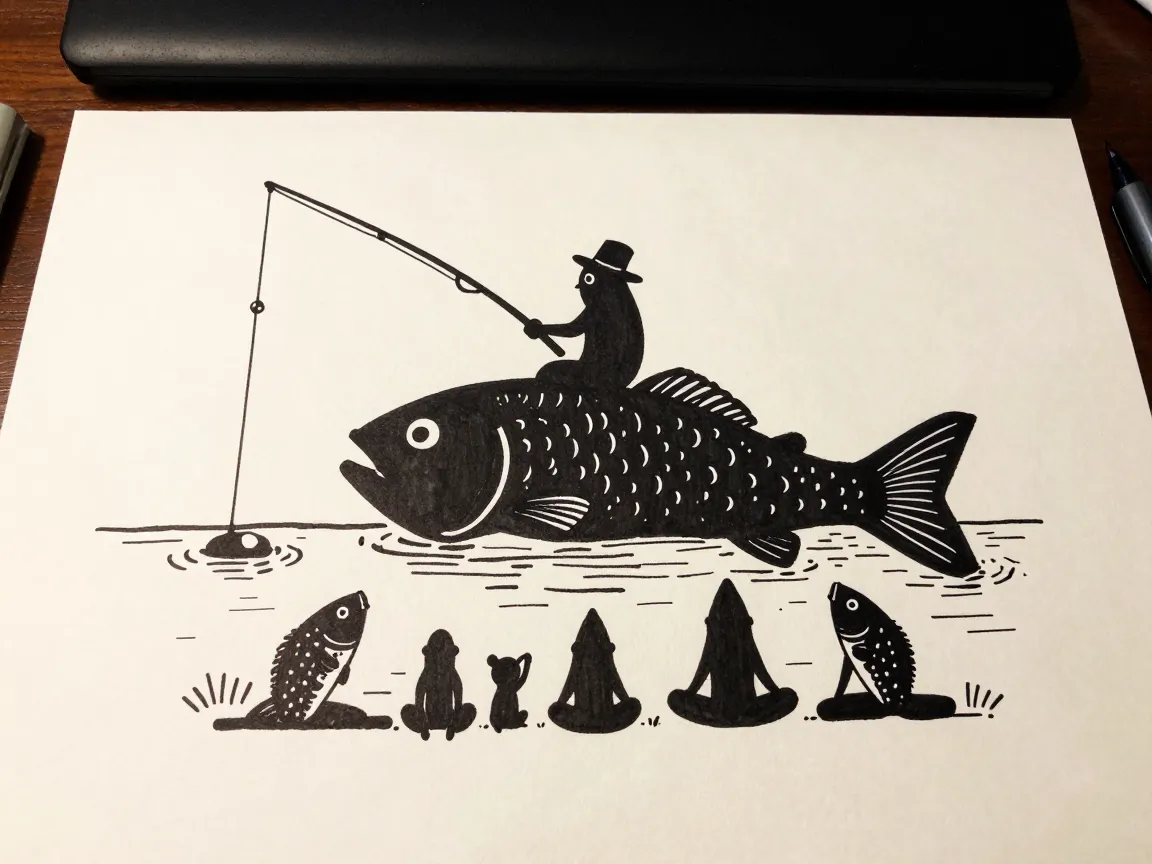
One 2026 article lists at least 26 distinct character-driven fish prompts, and the range is striking: a fish wearing sunglasses, a fish carrying a surfboard, a fish family portrait, a fish practicing yoga, a fish watching the moonlight from beneath the surface. Each prompt is a complete drawing concept on its own, and together they illustrate a broader principle. When a fish becomes a character with a situation, the drawing problem shifts from anatomy to storytelling.
This shift is more demanding than it sounds. Giving a fish human accessories or emotions requires the artist to think about scale, context, and expression simultaneously. A fish wearing a tiny hat needs that hat to sit at a believable angle on a fish-shaped head, which means understanding the head’s curve well enough to project a flat plane across it. A fish in a yoga pose needs the body to suggest tension or balance, which means thinking about how fish anatomy can be gently bent toward human body language without looking broken.
The best starting point for this idea is to choose a simple, recognizable scenario and sketch the fish in silhouette first. Silhouette thinking strips out detail and forces a focus on overall posture and shape, which is where narrative reads most clearly. A fish holding a fishing rod above the water line reads immediately in silhouette. A fish hiding behind coral with wide, startled eyes also reads immediately. Once the silhouette communicates the story, adding detail becomes a refinement rather than a guessing process.
For artists who work in pen or ink, character fish are especially rewarding because expressive line weight, thick outlines for the fish and thin lines for accessories and background details, creates a natural visual hierarchy. The result tends to look intentional and illustrative rather than rough, which makes character fish drawings among the most shareable and portfolio-ready of the six ideas here.
4. The Environment Composition
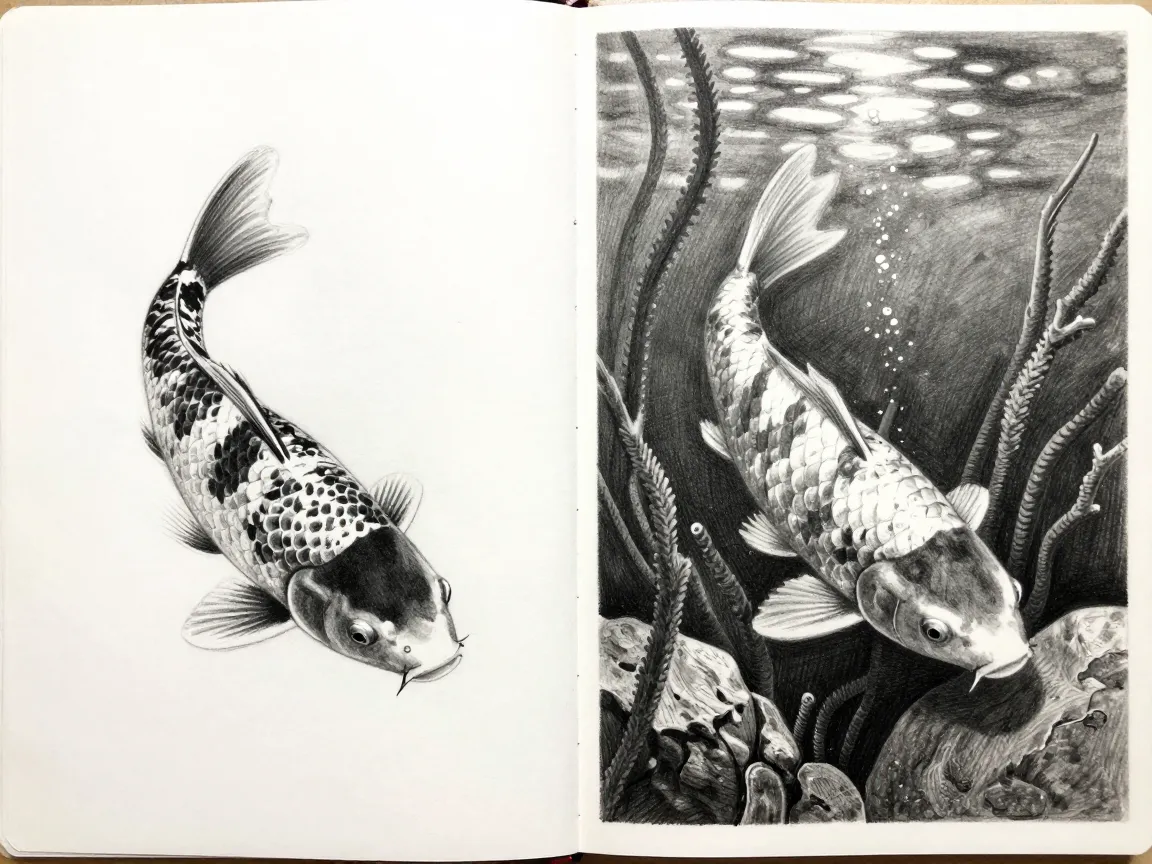
Drawing a fish in isolation is useful practice, but placing a fish inside a full underwater environment fundamentally changes the compositional challenge. An environment composition requires decisions about depth, lighting, and the relationship between the fish and its surroundings, all of which are skills that transfer across every subject an artist might eventually tackle.
The concept is straightforward: choose a setting, such as a coral reef, a kelp forest, a river with pebbled bottom, or an open ocean with shafts of light filtering from above, and design the fish as one element within that scene rather than as the entire picture. The fish becomes a focal point that the composition leads the eye toward, rather than a subject floating against a blank page.
Coral reefs are particularly popular for this idea because they offer natural compositional tools. The vertical branching shapes of coral create leading lines that direct attention toward wherever the fish is placed. Rocks and sea fans can be used to frame the subject. Bubbles rising from the bottom to the top of the frame add movement and suggest the three-dimensional volume of water. Artists working in pencil can suggest depth through value alone: darker values in the background, lighter values as forms come forward, with the fish drawn in the highest contrast to pull it forward in space.
A more focused version of this idea is to draw the same fish in two different environments on the same page, a comparison that teaches how environment changes the mood of an identical subject. A koi drawn against a plain white background feels decorative. The same koi drawn against shadowed pond weeds, with dappled light from above, feels alive and located. That difference is entirely about environment, which is exactly what this drawing idea trains.
5. The Motion Study
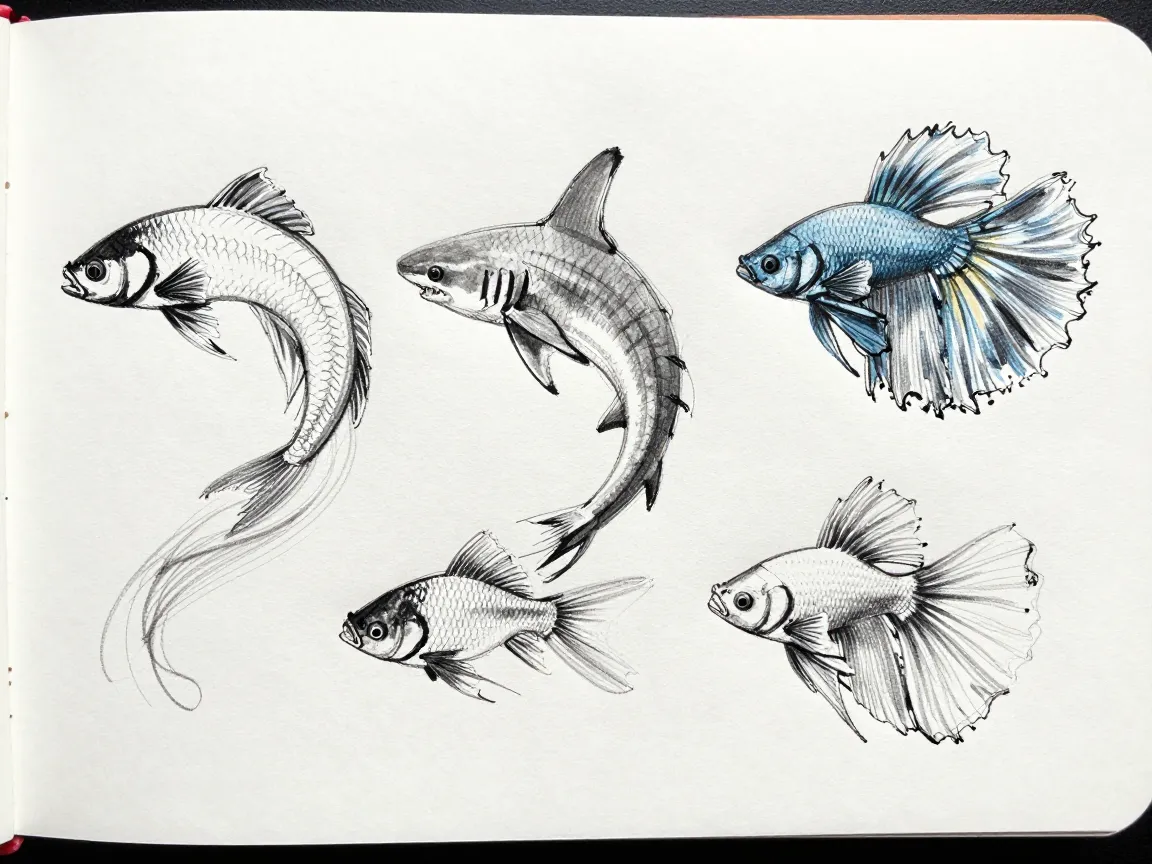
Fish are rarely still, and capturing movement in a static drawing is one of the most instructive challenges in observational art. A motion study takes a single fish species and draws it through a sequence of positions, typically three, showing the beginning, middle, and end of a turn or a swimming stroke. Practice guides aimed at advancing artists in 2026 specifically recommend drawing one fish turning through three positions as a standalone exercise, and it is a genuinely effective one.
The core difficulty is understanding how a fish’s body compresses and extends during movement. As a fish turns, the spine curves, the tail swings in the opposite direction to the head, and the fins adjust their angle relative to the body. Getting this right requires looking at reference closely, whether photographs, aquarium footage, or detailed anatomical diagrams, rather than drawing from an imagined generic fish shape.
One especially useful variation of the motion study is to focus entirely on fin movement. Comparing the fins of a betta, a shark, a goldfish, and an angelfish across a single page reveals how differently these structures are built and how that construction creates entirely different movement qualities. The betta’s fins are soft and trailing, billowing as the fish moves. The shark’s fins are rigid and directional, acting more like wings. The goldfish’s fins are small and paddle-like, producing short, flicking strokes. Rendering these differences accurately is a close observation exercise disguised as a creative one.
For artists interested in a more experimental approach, drawing only the motion trail of a fish, the arc a tail traces through water, the curve a body bends through, without drawing the fish itself, produces results that look abstract but are rooted in close biological observation. This stripped-down approach pairs well with ink or charcoal, where gestural marks can suggest speed and energy in a way that careful pencil line cannot.
6. The Mixed-Media and Digital Experiment
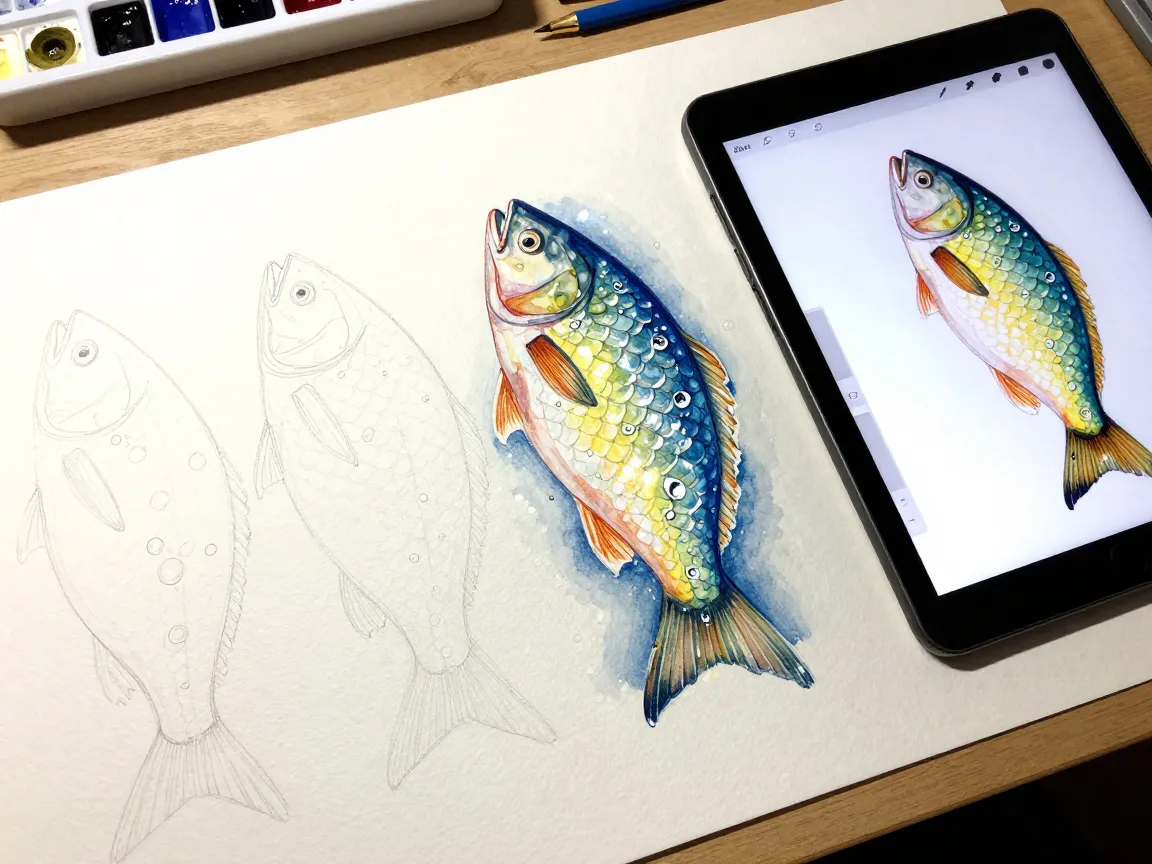
The most technically expansive of these six ideas is treating a fish drawing as a starting point for a multi-step, multi-tool process. Current tutorials describe workflows that begin with a traditional pencil sketch, refine it in ink, then import the result into a vector or digital painting application where color, layering, and effects are applied. One tutorial specifically sets out a 25-step digital fish drawing process and frames it as a beginner-friendly entry point into digital tools, using sketch brushes for the initial form and separate layers for fins, body color, and shading.
The appeal of this hybrid approach is that it separates the drawing problem into discrete stages, each of which can be tackled with the right tool. Pencil is excellent for working out proportions. Ink is excellent for committing to clear, confident lines. Digital tools are excellent for color experimentation, because a hue can be changed with a single adjustment rather than starting over. This division of labor makes complex, polished results more accessible than attempting everything in one medium at once.
For artists without digital tools, mixed media on paper produces similar benefits. Pencil underdrawn, inked, then colored with watercolor or colored pencil, with final details added back in white ink or gel pen, creates layers of visual richness that a single medium rarely achieves. White gel pen on a wet watercolor background, for example, can produce bubble effects and light reflections on scales that feel genuinely luminous.
Late 2026 also saw the emergence of AI-assisted fish drawing templates that provide pre-designed layouts, allowing artists to focus creative energy on color, texture, and background rather than initial construction. These templates function as a starting framework, particularly useful when exploring an unfamiliar species or trying an environment composition for the first time. The key to using them effectively is to treat the template as a scaffold to draw over and adapt, rather than a finished product to color in. The artistic decisions about light, mood, and surface quality remain entirely with the artist.
Conclusion
These 6 fish drawing ideas that will inspire your next sketch cover a wide range from foundational observation to experimental mixed media, which means any sketchbook session can begin with whichever approach fits the available time and skill focus. A single-species study builds anatomical knowledge. A cartoon fish session builds confidence through repetition. A narrative character develops storytelling instincts. An environment composition teaches spatial design. A motion study deepens understanding of movement. A mixed-media experiment expands the range of tools and techniques.
The most direct next step is to pick one idea from this list, set a timer for thirty minutes, and commit to that single approach for the whole session. Constraint produces focus, and focus produces improvement faster than open-ended experimentation. Any of these six ideas holds enough depth to fill an entire sketchbook, let alone a single afternoon.