Arrows Aesthetic Drawing Ideas for Beginners Who Love Minimal Archery Art
A single arrow drawn with three straight lines and one triangle can look more finished than a page full of shading. That is the quiet appeal of minimal archery art: it rewards restraint instead of detail. If a blank page and a pencil already feel intimidating, these 6 Arrows Aesthetic Drawing Ideas for Beginners Who Love Minimal Archery Art break the subject into simple, repeatable shapes anyone can practice in a single sitting.
Disclosure: This post contains affiliate links. As an Amazon Associate, we earn from qualifying purchases, and at no extra cost to you.
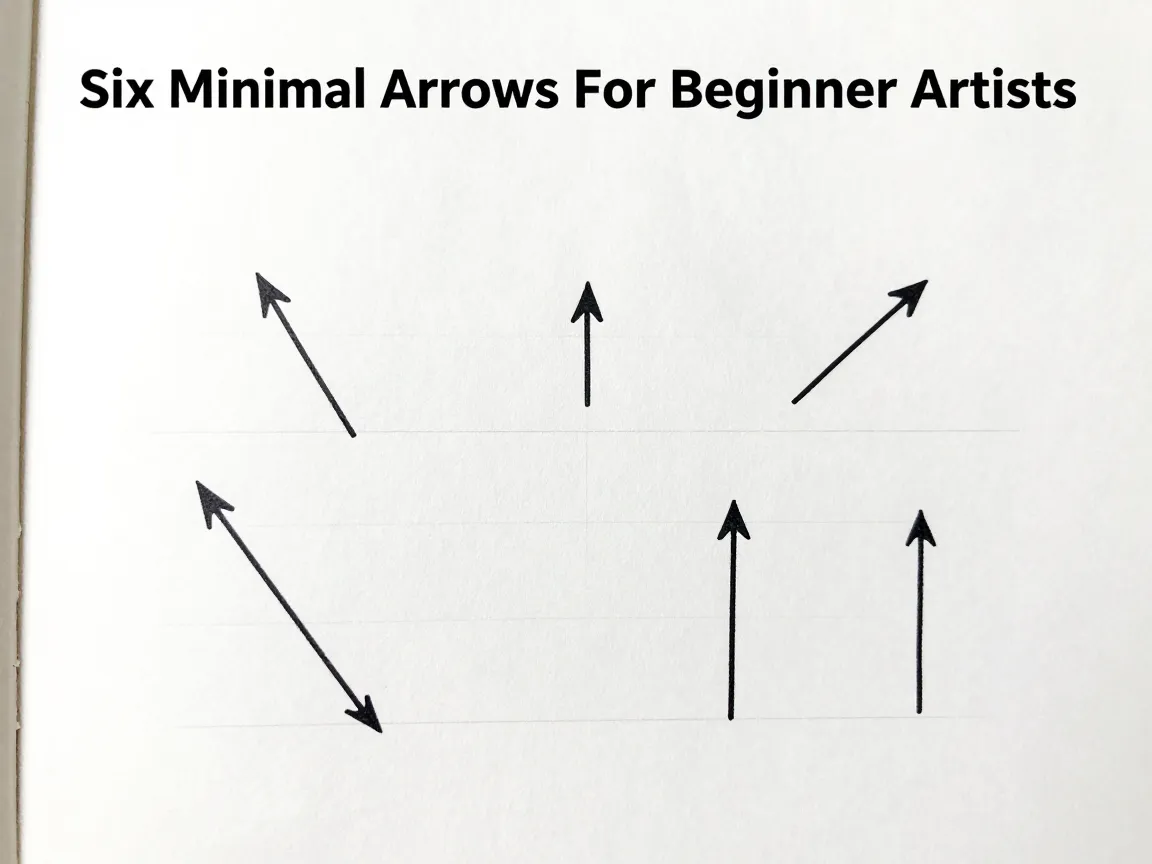
Minimalist arrow sketches have become a popular entry point into drawing because they do not demand realism. A shaft, a point, and a few fletching marks are enough to suggest motion, direction, or focus. The ideas below move from the simplest single-line arrow to full six-arrow compositions, so beginners can build confidence one sketch at a time.
1. The Single Straight-Line Arrow
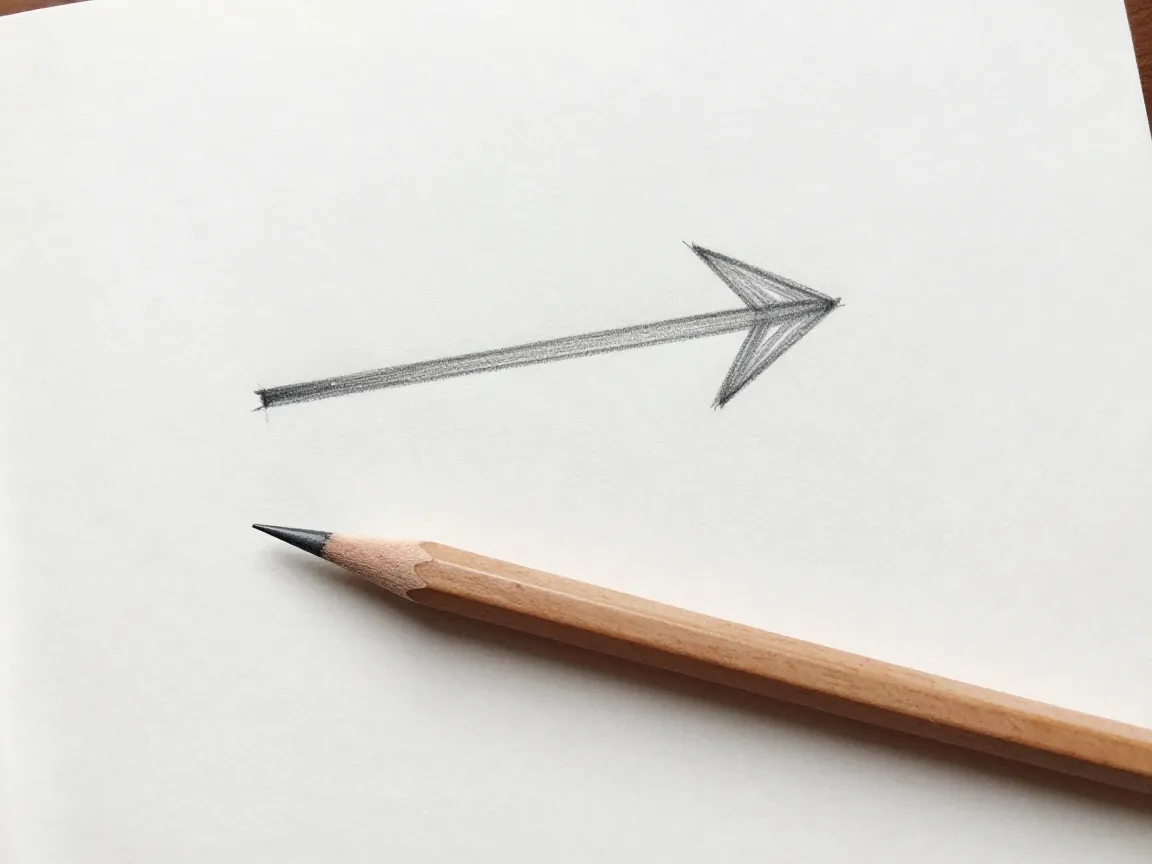
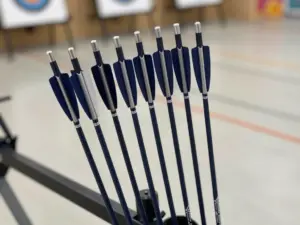
Start with the most basic version: one straight shaft, a narrow triangle for the head, and two short diagonal lines near the tail for fletching. This is the foundation every other idea on this list builds from, and it mirrors the structural model used in most beginner tutorials, which break arrows into three functional parts: point, shaft, and fletching.
Draw the shaft first using a ruler or a steady hand, keeping the line thin and confident rather than sketchy. Add the triangular head at one end, making sure its base matches the shaft width so the transition looks clean. Finish with two small diagonal marks near the opposite end to suggest feathers, without adding texture or shading.
This single-arrow exercise is worth repeating five or six times on one page before moving to anything more complex. Vary the angle slightly each time, keeping the head and fletching proportions consistent. Beginners often rush to add curves or decoration too early; mastering this flat, direct line first makes every later variation easier to control.
2. A Curved Arrow in Motion
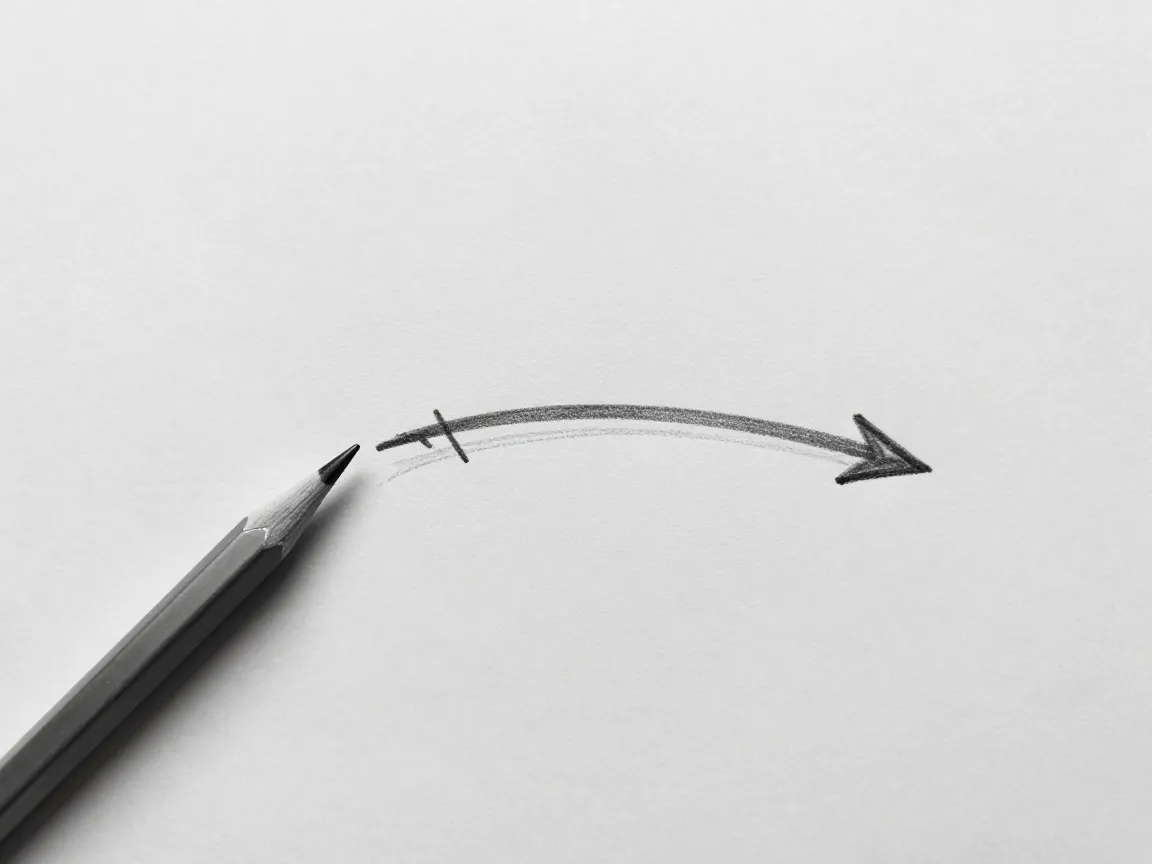
Once the straight arrow feels comfortable, try bending the shaft into a gentle curve to suggest movement, as if the arrow is flying rather than resting. This is one of the easiest ways to add personality to minimal archery art without adding extra lines or detail.
Sketch a faint curved guideline first, something close to a shallow arc rather than a dramatic swoop. Lay the shaft along that curve using short connected strokes instead of one continuous line, which keeps the curve looking intentional rather than wobbly. The arrowhead should point in the direction the curve is leading, and the fletching should angle slightly against the curve to imply tension, similar to how a bowstring pulls back before release.
A useful constraint here is to limit the curve to one smooth bend. Beginners sometimes add S-shapes or multiple curves, which can make the arrow look broken rather than dynamic. One clean arc, paired with a sharp triangular point, keeps the drawing minimal while still feeling alive on the page.
3. The Tiny Arrow on a Big Empty Page
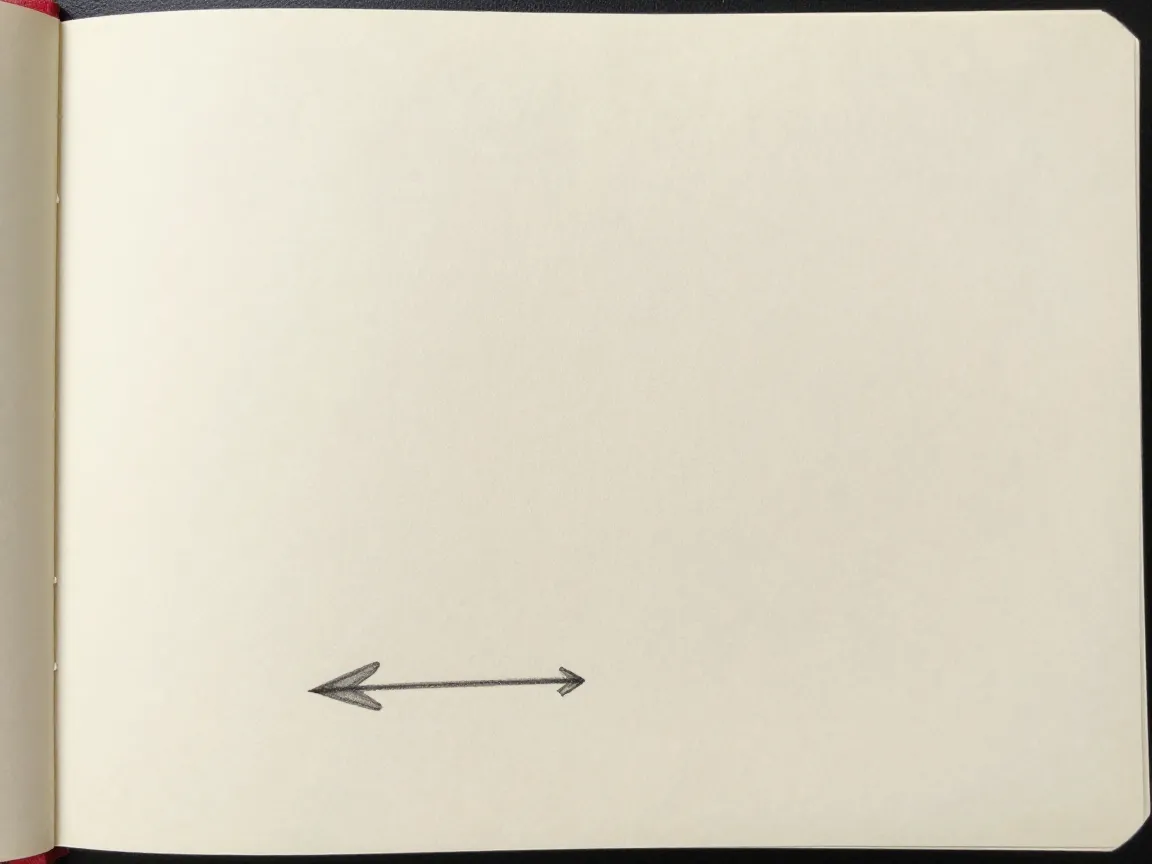
Minimalist design often depends on negative space just as much as the lines themselves. This idea flips the usual approach: instead of filling the page, draw one small arrow in a corner or center, surrounded by a large amount of blank space.
Keep the arrow itself simple, roughly one inch long, with the same point-shaft-fletching structure used in the first idea. The real work happens in deciding where to place it. A tiny arrow in the lower third of a page feels grounded and deliberate, while one centered dead in the middle can feel almost like a logo or icon.
This approach works well for beginners who want to practice composition without adding more drawing skill to the mix. It also translates directly into things like journal pages, tattoo sketches, or social media graphics, where a single small mark against open space reads as confident rather than unfinished. The challenge is resisting the urge to add more; the empty space is doing just as much visual work as the arrow.
4. A Grid of Arrow Variations
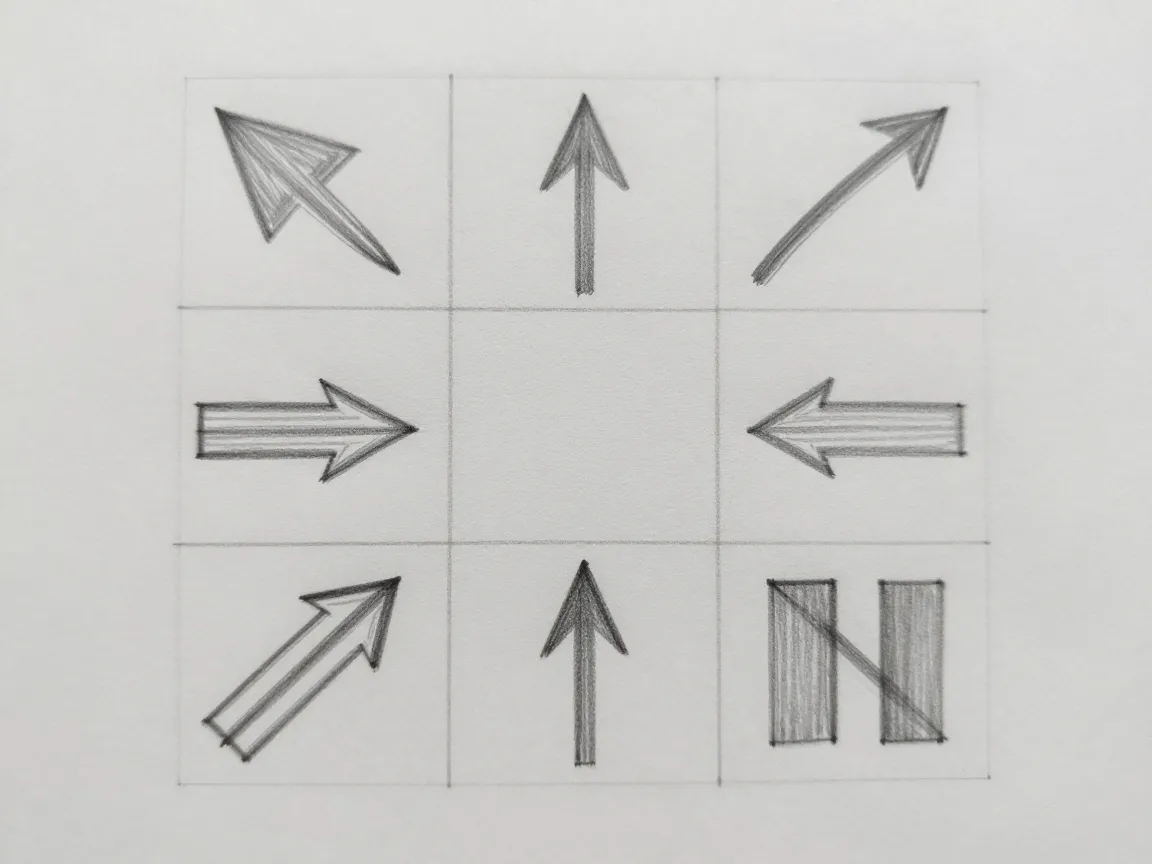
For beginners ready to work on more than one arrow at a time, laying out several versions in a grid is an effective way to practice variety while keeping a unified style. This mirrors the idea of a sheet of arrow variations, where each arrow uses a different head shape, curve, or line weight, but all share the same basic ink style so the page still feels cohesive.
Divide a page into a simple grid, four to six boxes is plenty for a beginner session. In each box, draw one arrow, but change a single element each time: a wider triangular head in one box, a thinner shaft in the next, a slight curve in another, a double-line shaft in a fourth. Keep the overall line weight consistent across every box so the page reads as one connected set rather than six unrelated sketches.
This exercise doubles as a personal reference sheet. Many illustrators keep a page exactly like this nearby when designing icons, logos, or repeated motifs, since it shows at a glance which arrow style fits a given mood, whether that is sharp and geometric or soft and rounded. For a beginner, it is also simply useful practice: six small drawings in ten minutes teaches more about proportion than one large drawing redone six times.
5. Arrows Built From Basic Shapes
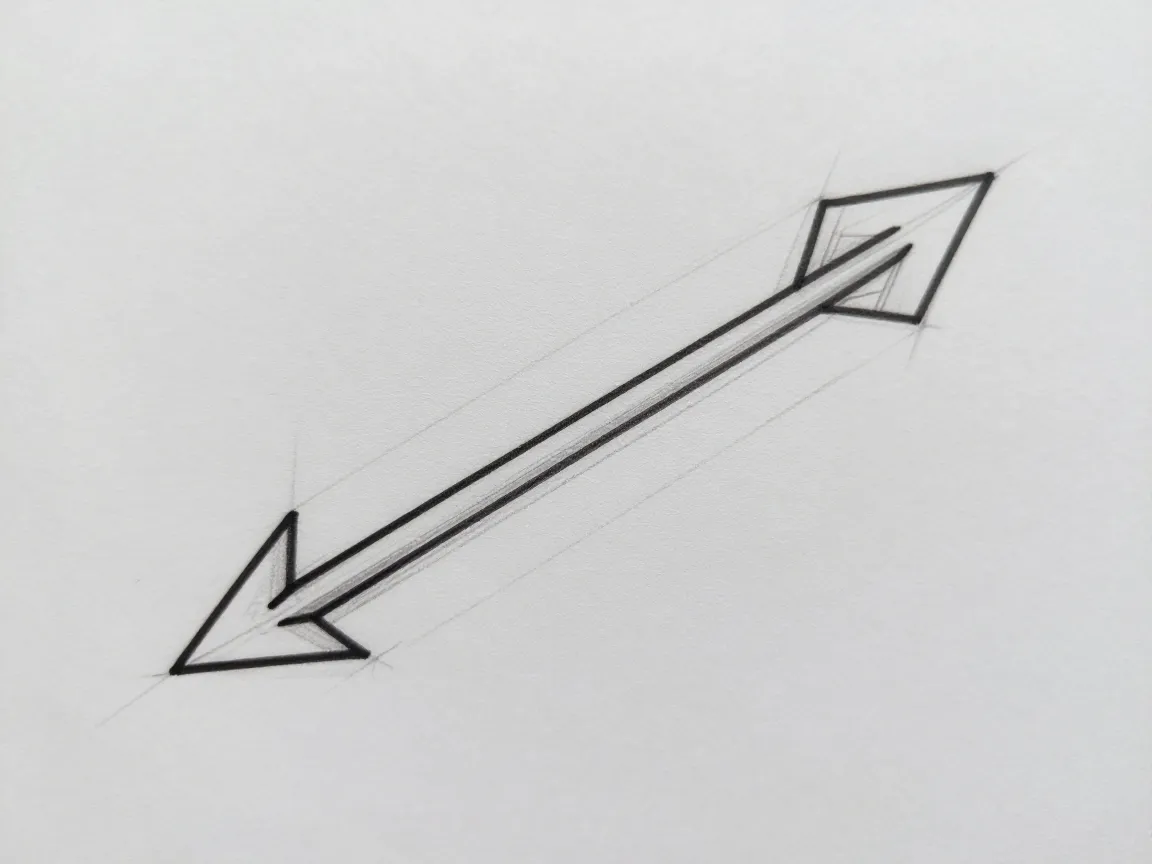
Some beginners freeze up because they try to draw an arrow as one complicated object instead of breaking it into shapes they already know how to draw. This idea leans fully into that approach, treating the arrow as a rectangle, a triangle, and two small parallelograms, rather than a single freehand form.
Begin with a long, slim rectangle for the shaft rather than a single line; this gives the arrow a bit more visual weight and is easier to keep straight. Attach a triangle to one end for the head, making sure its base lines up exactly with the rectangle’s width. At the other end, add two small parallelogram shapes angled outward for the fletching, instead of simple diagonal lines. This step-by-step recipe, straight string line, slim rectangular shaft, triangular tip, and feather rectangles, is the same structural logic used in many bow-and-arrow tutorials, simplified down to the arrow alone.
The benefit of this shape-based method is accuracy. Because every part starts as a basic geometric shape, proportions are easier to check and adjust before any linework is finalized in pen. For beginners who feel shaky with freehand curves, this is often the most forgiving way to produce a minimal arrow that still looks precise and intentional, almost like a printed icon rather than a hand sketch.
6. A Set of Six Arrows as One Composition
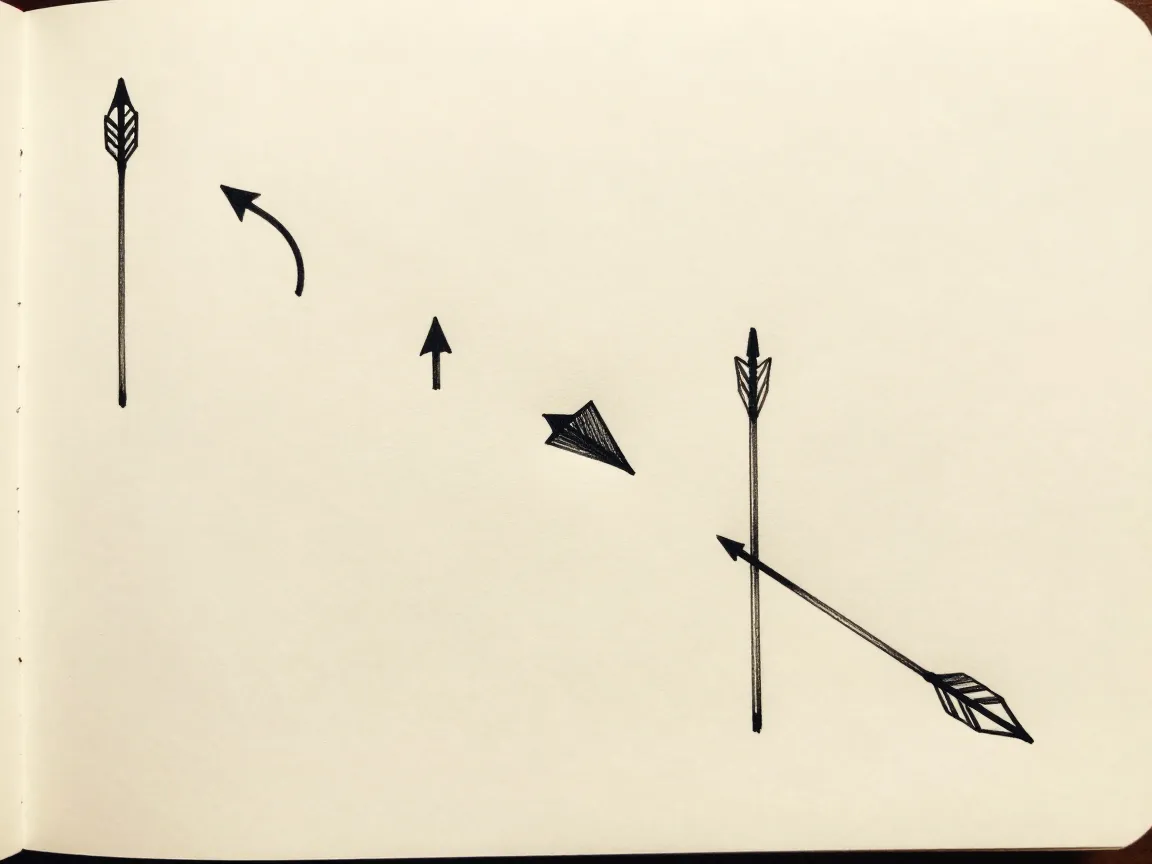
The final idea ties the whole concept together: arranging exactly six arrows on one page as a finished piece, not just a practice sheet. This is where the earlier ideas combine, one straight arrow, one curved arrow, one tiny arrow in open space, a couple from the shape-based method, and one more with a unique head or fletching detail.
Plan the layout loosely before committing to ink. A diagonal arrangement across the page, with arrows pointing in slightly different directions, tends to look more dynamic than a straight row. Leave noticeably more blank space than filled space; the earlier idea about negative space applies here at a larger scale. Keep line weight and ink tone consistent across all six arrows so the composition reads as one unified artwork rather than six separate doodles stitched together.
This six-arrow composition works well as a finished piece for a sketchbook, a printable design, or even a simple wall art concept. It also reflects a noticeable trend in current minimalist icon and illustration work, where sets of six to eight simple archery or arrow silhouettes are commonly used as cohesive visual sets. For a beginner, completing this final piece is a satisfying way to see how far a handful of straight lines and triangles can go when arranged with intention.
Conclusion
Minimal archery art proves that a few confident lines often say more than a detailed drawing ever could. Working through these 6 Arrows Aesthetic Drawing Ideas for Beginners Who Love Minimal Archery Art, from a single straight shaft to a full six-arrow composition, builds real drawing confidence without requiring advanced technique. The next step is simple: pick one idea, grab a pencil, and sketch it five times before moving on. Repetition, not complexity, is what makes minimal art look effortless.