Archer Bow Tattoo Ideas for Archery Lovers Who Want a Bold Statement
A single well-placed bow tattoo can say more about discipline, focus, and precision than an entire paragraph of explanation. Archery as a sport demands stillness under pressure, and that quiet intensity has made bow-and-arrow imagery one of the fastest-growing categories in tattoo studios, with online archer tattoo libraries now cataloguing well over a thousand concepts after a wave of new designs added in late 2026. This guide walks through 6 archer bow tattoo ideas for archery lovers who want a bold statement, covering everything from understated forearm linework to full sleeve pieces packed with mechanical detail.
Disclosure: This post contains affiliate links. As an Amazon Associate, we earn from qualifying purchases, and at no extra cost to you.
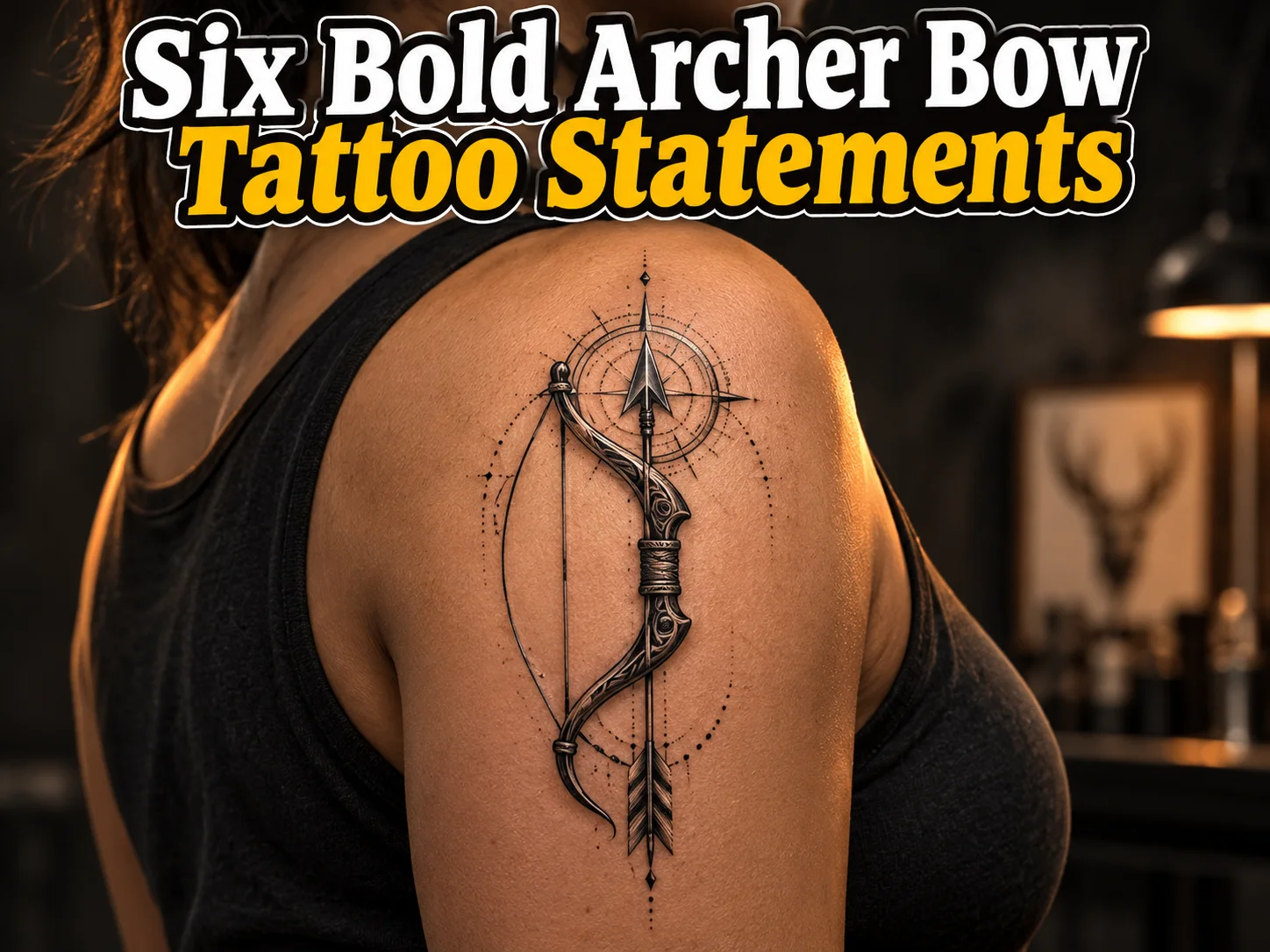
Each idea below reflects a different reason people get inked with bow imagery. Some want to mark a personal identity tied to the sport. Others are drawn to the symbolism of aim, patience, and control. A few simply want something that looks striking on bare skin. Whatever the motivation, the six concepts here cover the full range of styles currently trending among archery enthusiasts and tattoo artists alike.
1. Minimalist bow linework on the forearm
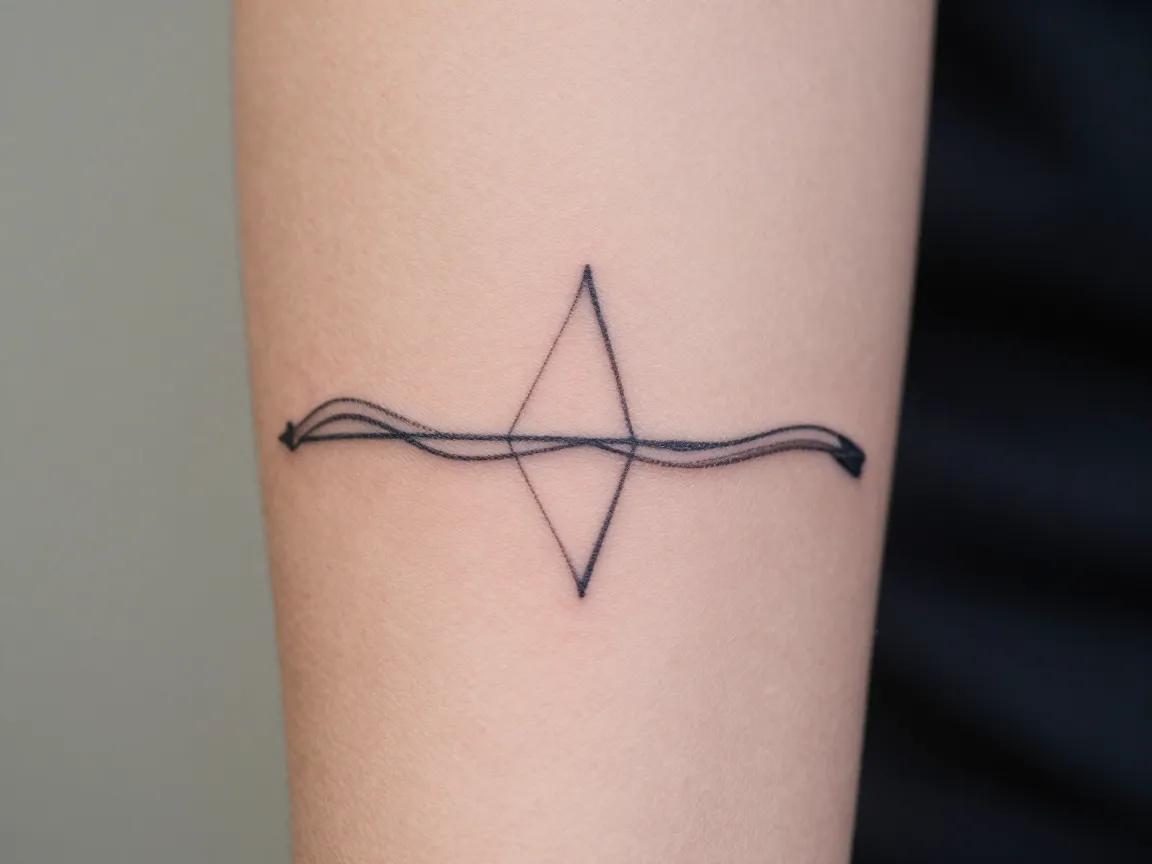
The simplest entries in any archer tattoo collection are often the most requested, and a thin-line bow sketched across the forearm has become a near-default choice for first-time archery tattoo clients. Sized at roughly two to four inches, this design uses a single continuous line to render the bow’s curve, sometimes with a faint arrow resting against the string. It reads clearly at a glance without overwhelming the arm.
Consider someone who shoots recreationally on weekends but wants a permanent nod to the hobby without committing to a large piece. A forearm placement works well here because the area is visible during daily movement, yet the design stays subtle enough for professional settings. The inner forearm option offers more privacy, while the outer forearm catches more light and attention.
A practical note worth raising with any tattoo artist: minimalist linework tattoos tend to blur faster than bold traditional pieces, so touch-ups every few years keep the lines crisp. This style also pairs naturally with the growing market for temporary and removable bow-and-arrow tattoos, which are now sold in sets of three to six designs for people testing the idea before going permanent.
2. Bold traditional chest arrow for maximum visual impact
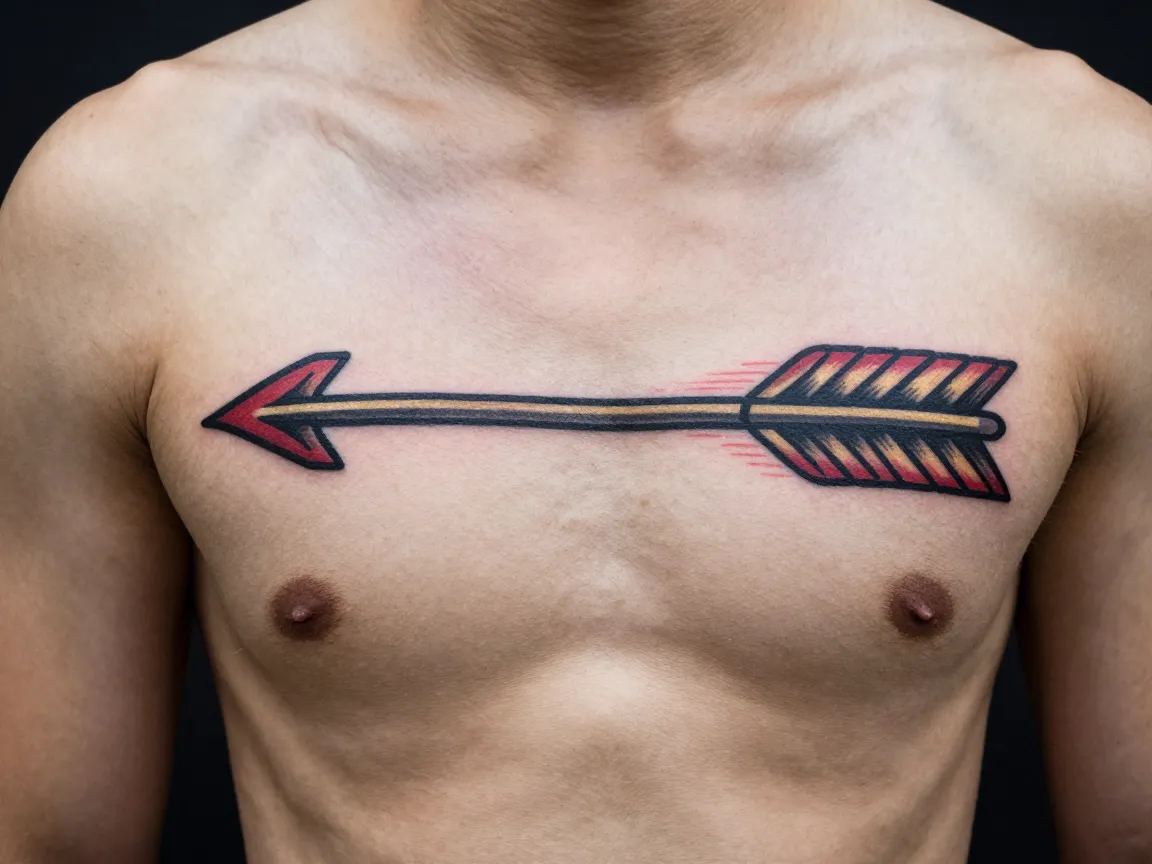
For archery lovers who want their ink to command attention rather than whisper, a bold traditional chest arrow delivers exactly that. Running four to six inches across the chest or sternum, this style borrows from classic American traditional tattooing: thick black outlines, limited color palette, and heavy shading that holds up visually from across a room.
Picture a competitive archer who has spent years training for tournaments and wants a tattoo that matches the physical toughness the sport actually requires, even though archery looks calm from the outside. A chest arrow, often rendered mid-flight with motion lines trailing behind the fletching, becomes a visual metaphor for release and follow-through, two concepts central to shooting form.
Placement on the chest also carries body-language symbolism that tattoo culture has long recognized. Chest and back pieces are frequently associated with strength and protection, since they sit over vital areas of the body, while forearm placements lean toward control and precision. Anyone considering this size should expect multiple sessions, since bold traditional work at this scale involves significant shading time, and healing on the chest can be slower than on limbs due to skin movement and clothing friction.
3. Precision bow-and-arrow composition built around placement
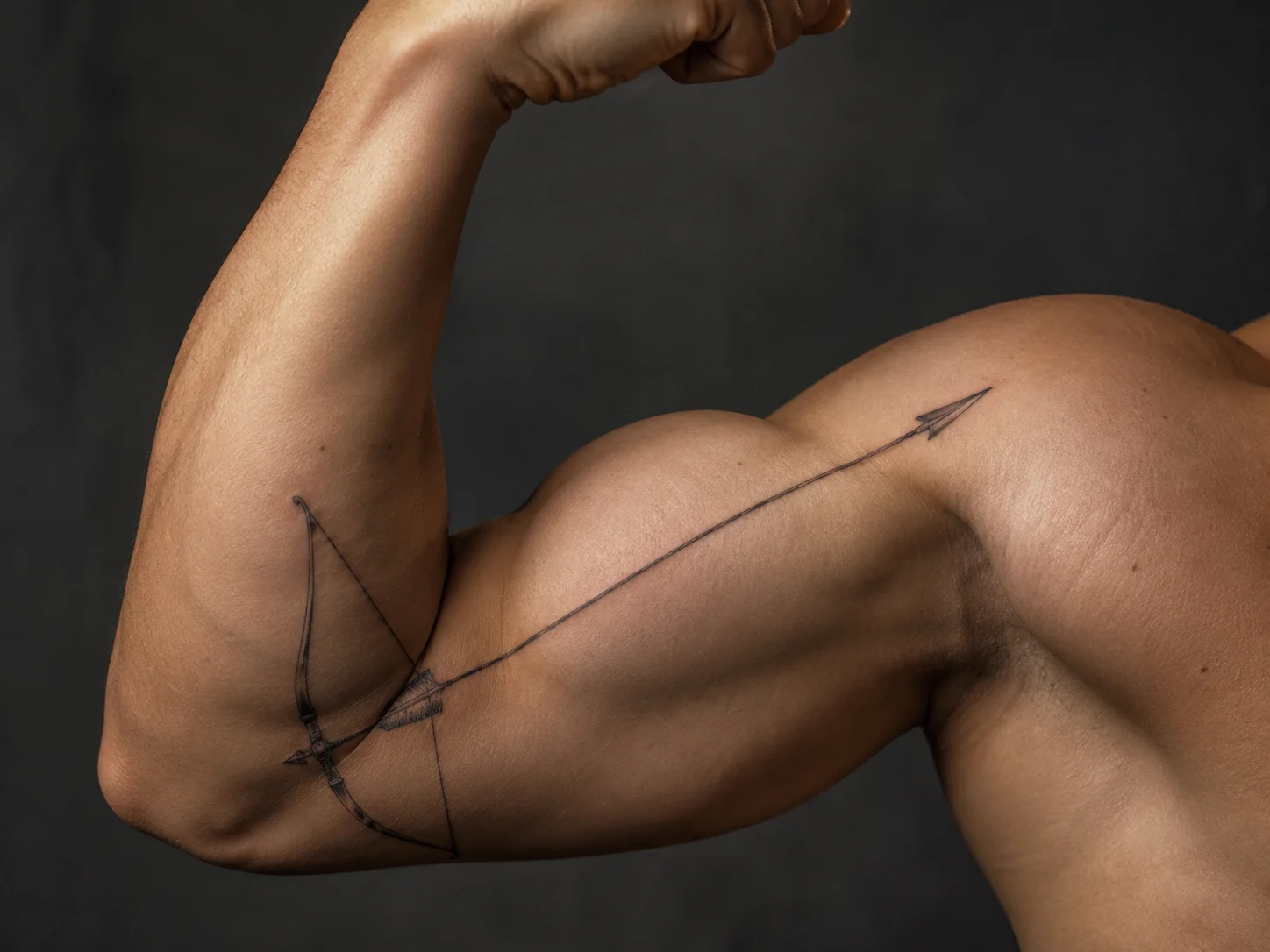
Not every bow tattoo needs to be large or loud. A growing number of archery enthusiasts are choosing precision-focused compositions, where the bow and arrow are deliberately positioned to interact with the body part they’re inked on. An arrow drawn along the length of a bicep, aimed toward the shoulder, uses the muscle’s natural shape to suggest motion and tension in the string.
One popular variation places a small bow at the back of the ankle with the arrow pointing up the calf, creating a sense that the entire leg is a loaded weapon in waiting. Another places the bow across the ribs, with the arrow curving to follow the ribcage’s natural line. These compositions require an artist who understands body anatomy as much as tattoo technique, since a poorly scaled bow can look flat or disconnected from the skin it sits on.
This idea rewards patience during the planning stage. Bringing reference photos of actual archery stances, or even a photo of a real recurve or compound bow, helps the artist translate correct proportions onto curved or narrow body areas. People who shoot competitively sometimes ask for the draw length or bow weight marked subtly somewhere in the design, turning a decorative tattoo into something closer to a personal record.
4. Hyper-detailed compound bow sleeve for technical archers
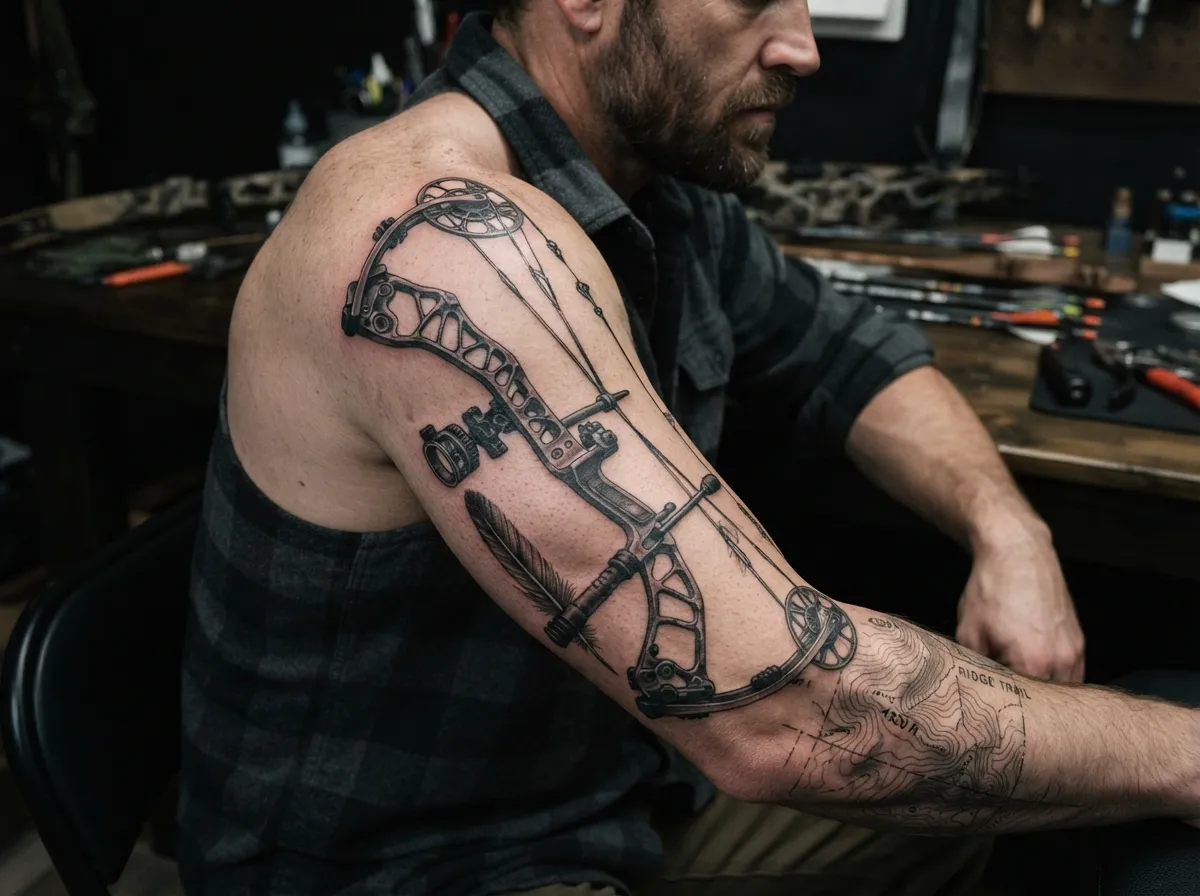
Compound bow shooters tend to care about mechanics: cams, cables, limbs, and sight pins are not just equipment, they’re part of a system the archer has studied closely. A hyper-detailed compound bow sleeve tattoo reflects that technical mindset, rendering the bow with the same accuracy a blueprint would use. These pieces typically wrap from shoulder to elbow or further down the forearm, incorporating cam wheels, cable guards, and stabilizer rods in fine black-and-grey shading.
Imagine a hunter who has spent a decade fine-tuning draw weight and arrow spine for maximum accuracy. A realistic compound bow sleeve lets that attention to detail live permanently on the skin, often alongside small additions like a scope reticle, a topographic map section, or a single feather representing fletching material. Some versions add text in small caps referencing the mechanics of aim, a nod to what tattoo artists sometimes call the math of great aim, where draw angle and release timing are treated almost like sacred geometry.
Because of the fine detail required, this style takes considerably longer in the chair than simpler bow designs, often spread across two or three sessions. Skin tone and sleeve placement also affect how well shading holds up over years, so most artists recommend higher-contrast black-and-grey work over soft gradients for long-term clarity.
5. Wilderness bow hunting scene across the back or shoulder
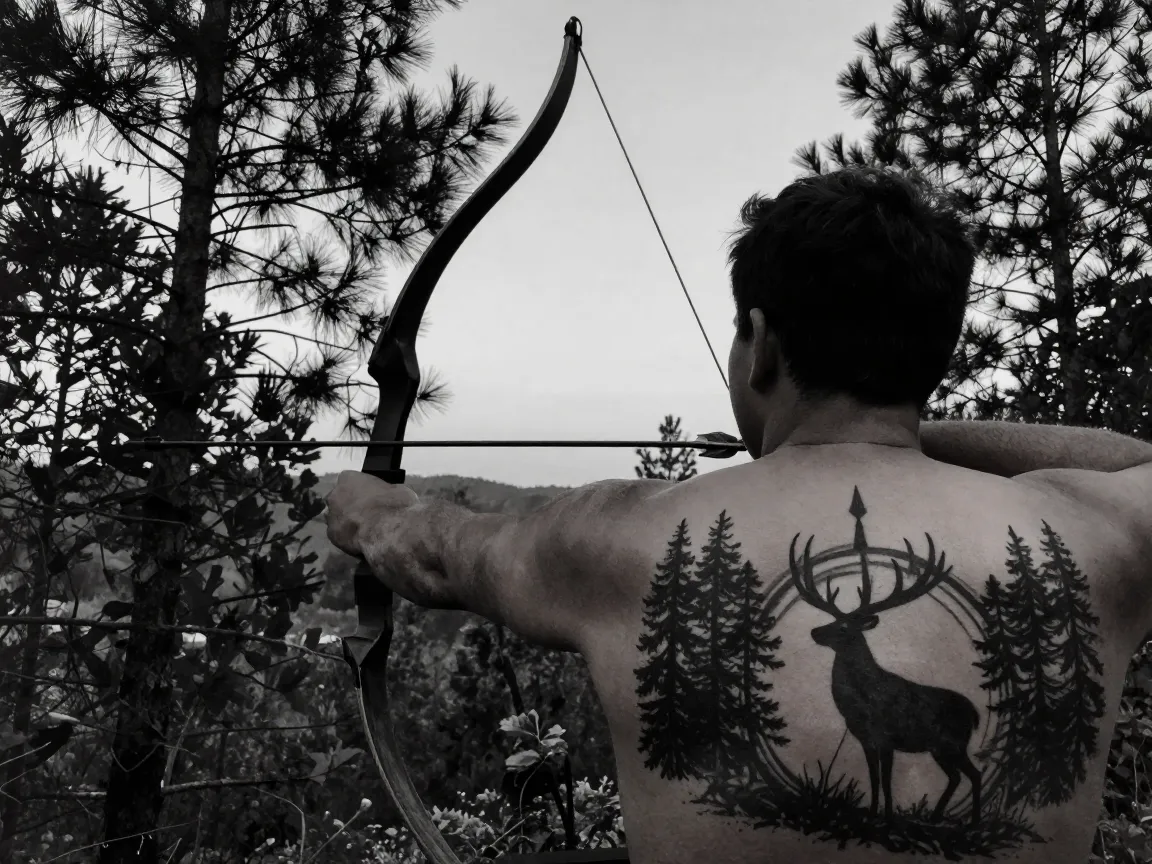
Archery and hunting have a long shared history, and many archers want their tattoo to reflect the outdoor, wilderness side of the sport rather than the competitive range side. A wilderness bow hunting piece typically combines a recurve bow with elements like pine trees, antlers, or a compass rose where the arrow replaces the needle. These scenes work best on larger canvases such as the back, shoulder blade, or upper arm, where there’s room for layered background detail.
A bowhunter who spends more time in tree stands than on a tournament line might choose a recurve bow silhouetted against a forest tree line at dusk, with a deer or elk faintly visible in the negative space. Others prefer a more symbolic route, pairing the bow with tribal-style patterning along the limbs to suggest ancestral hunting traditions rather than a literal landscape. A compass-arrow variant, where the arrow’s shaft doubles as a compass needle, speaks to navigation and direction as much as the hunt itself.
Because these designs often involve multiple elements layered together, planning the composition with an artist ahead of time matters more here than with simpler bow tattoos. Back and shoulder blade placements also heal differently than forearms, since the skin stretches more during normal movement, so aftercare instructions tend to be stricter for pieces this size.
6. Symbolic archer figure drawing from myth and identity
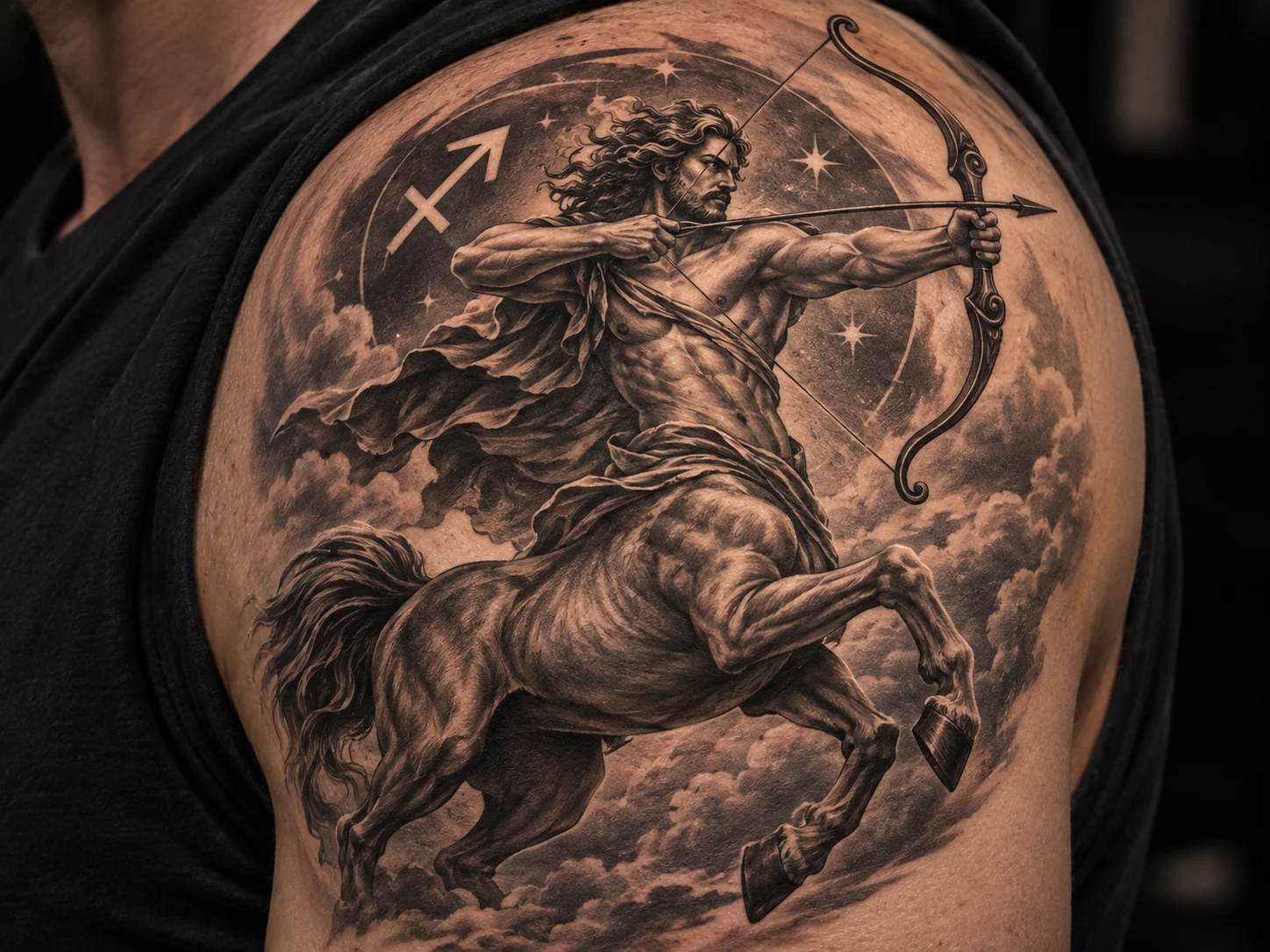
The sixth idea moves away from the bow itself and toward the figure holding it. Symbolic archer tattoos draw on mythology, astrology, and cultural history to say something about the wearer’s identity rather than their equipment. The Sagittarius archer, a centaur drawing a bow mid-motion, remains one of the most requested designs in this category, chosen as much for its astrological meaning tied to ambition and movement as for its visual drama.
Beyond Sagittarius, archer tattoo libraries now include a wide range of figures: art-deco style contortionist archers bending the body into dramatic draw poses, fantasy centaurs blending human and animal forms, and warrior maiden archers inspired by Amazon mythology or Native American heritage. Gender-inclusive representation has expanded this category considerably, with angel archers, armored women, and androgynous mythic hunters all appearing frequently in recent design collections. These pieces tend to carry personal meaning beyond the sport itself, often chosen by people who see the archer figure as a symbol of focus, independence, or resilience rather than a literal reference to shooting a bow.
Someone drawn to this idea might start with a Sagittarius archer on the shoulder as a zodiac marker, then later add a second piece, perhaps a warrior maiden on the thigh, to build a small personal mythology across the body. Because these designs rely heavily on figure proportion and facial detail, choosing an artist experienced in illustrative or neo-traditional figure work matters more than it does for a simple bow outline. A rushed rendering of a human or centaur figure can age poorly, so this is one category worth waiting for the right artist rather than booking the first available slot.
Conclusion
Across all six ideas, the strongest archer bow tattoos share one trait: they match the design’s scale and detail to the story the wearer actually wants to tell. A weekend archer rarely needs a full sleeve, and a lifelong bowhunter may find a tiny forearm line underwhelming. Before booking a session, sketch out what the tattoo needs to communicate, whether that’s precision, wilderness connection, or personal mythology, and let that decision guide both placement and style.