Ducks Unlimited Banquet Decor Ideas That Wow Guests
Ducks Unlimited chapters collectively host thousands of banquet fundraisers each year, yet surveys of attendees consistently show that the ones guests remember and return to are defined by their physical environment, not just the prizes on the auction table. The 6 Ducks Unlimited banquet decor ideas that wow guests covered here are drawn from current DU event-design guidance and from what has actually worked in banquet halls across North America in 2026. Each idea is specific enough to act on with a reasonable volunteer budget, and each one connects visual impact directly to DU’s conservation mission rather than treating decor as a cosmetic afterthought.
Disclosure: This post contains affiliate links. As an Amazon Associate, we earn from qualifying purchases, and at no extra cost to you.
Key Takeaways
- Full-room DU branding, executed consistently from entry signage to table cards, is now a baseline expectation at top-performing chapters, not an optional upgrade.
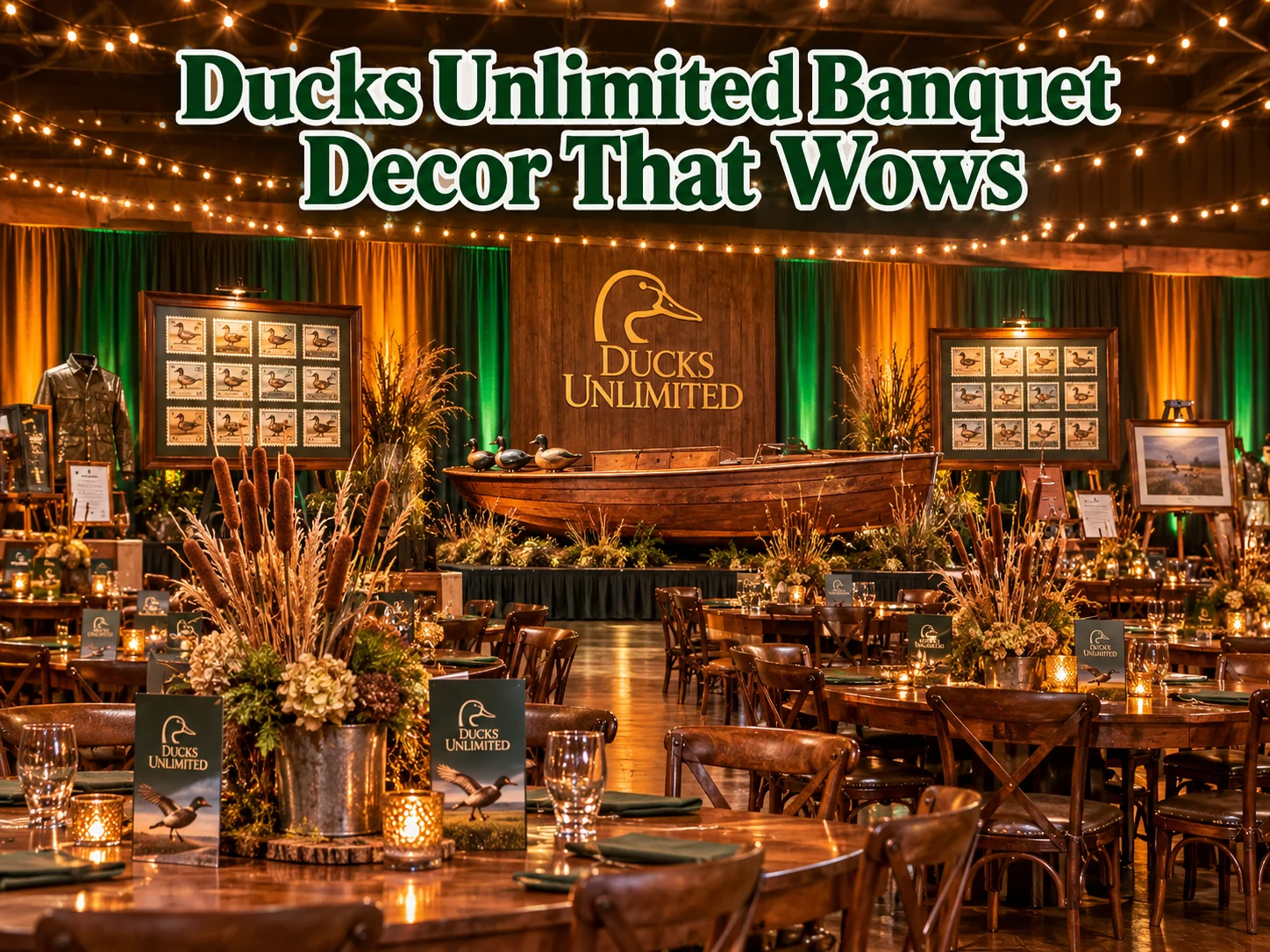
- Heritage displays featuring vintage decoys, antique DU posters, or even a boat in the ballroom serve as conversation starters and reinforce DU’s 87-year history.
- Mission-driven auction staging, where item zones are decorated by theme, increases perceived value and helps guests navigate the room.
- Photo backdrops with DU imagery and sponsor logos generate social media content that extends the event’s reach well beyond the room.
- Food presentation, particularly plated wild game courses, functions as décor when treated deliberately rather than as a catering afterthought.
- Lighting transforms plain banquet halls faster and cheaper than any other single investment.
1. Full-Room DU Branding That Tells a Coherent Story
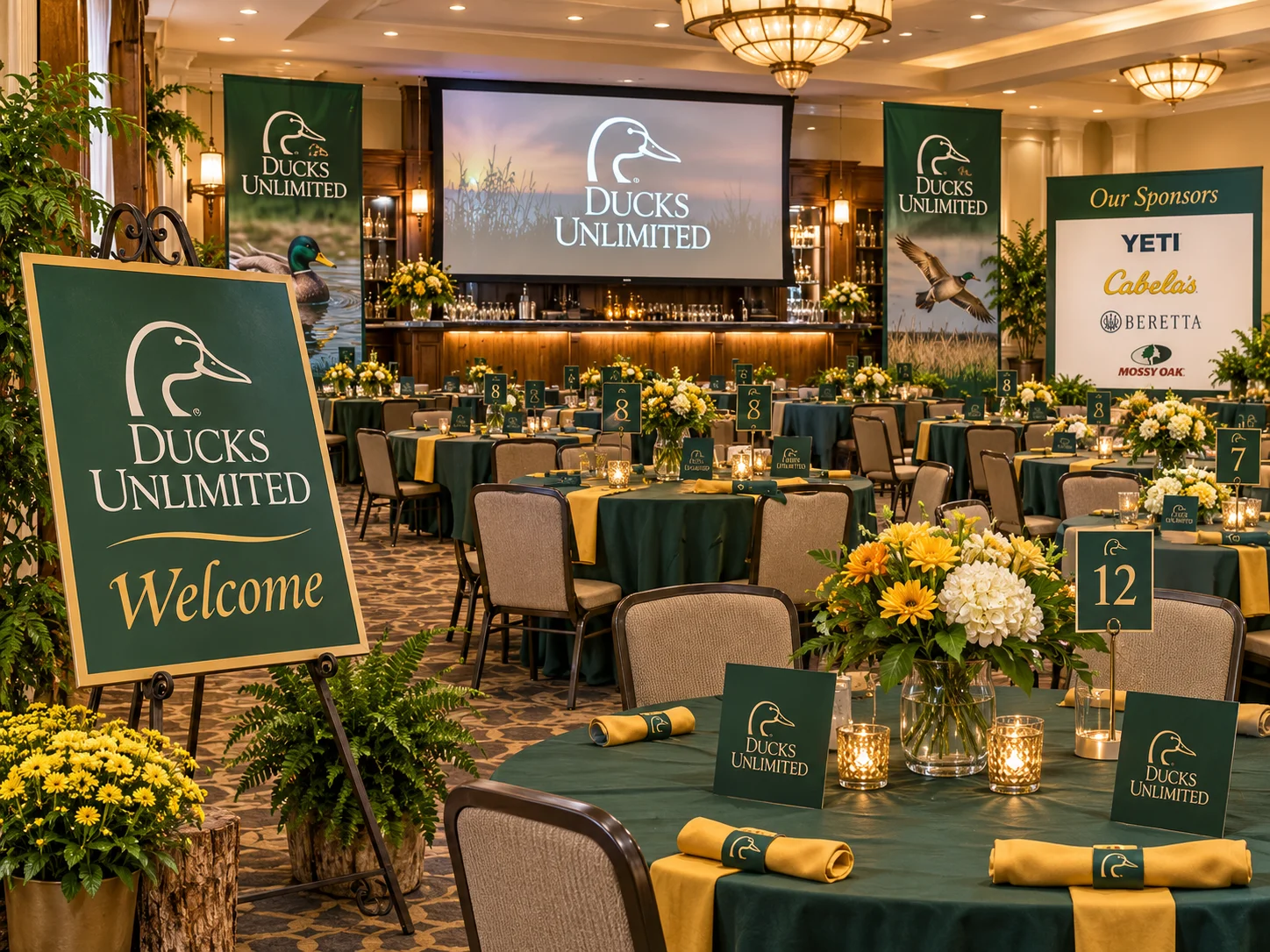
The most common mistake at DU banquets is treating branding as a logo slapped on a banner near the bar. Guests who walk into a room where every surface speaks the same visual language, from the entry sign to the printed napkin rings to the projection screen, feel they have entered something purposeful. That feeling translates directly into higher paddle raises and stronger raffle ticket sales.
DU’s official event-design tools, updated in October 2026, include downloadable templates for signage, table cards, and digital displays that share the same typefaces, the DU green-and-gold palette, and the mallard silhouette that members already recognize from their membership materials. Using those templates, even a small chapter can produce professional-grade printed pieces at a local print shop for under a few hundred dollars. The key discipline is consistency: a table card that uses a different font or a banner printed in a slightly different shade of green breaks the spell immediately.
One practical approach is to assign a single volunteer as the “brand steward” for the event. That person reviews every printed and digital asset before the event date, checks that sponsor logos are placed in approved positions, and ensures the room layout guides a guest’s eye from one branded element to the next. The goal is a room where DU’s mission, protecting waterfowl habitat across North America, is visible at every pause point without feeling like advertising.
2. Heritage Displays That Anchor the Room
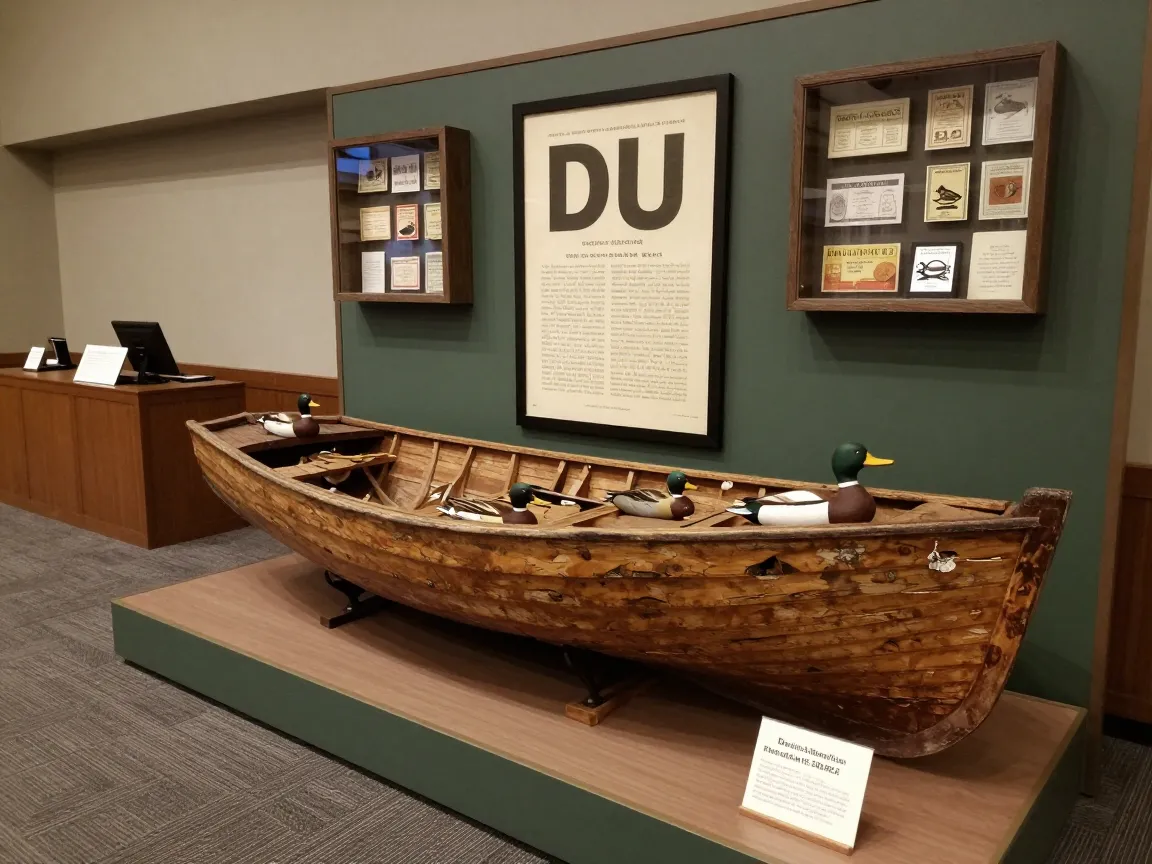
A mounted collection of vintage duck decoys, a set of framed DU chapter history photos from the 1940s, or a full-sized wooden duck boat positioned as a ballroom focal point does something that a vinyl banner cannot: it starts conversations between strangers. Conservation organizations run on community, and heritage displays accelerate the social chemistry of a room full of hunters and wildlife supporters.
The boat-in-the-ballroom idea has appeared repeatedly in DU event guidance through 2026 because it works. A restored wooden layout boat, borrowed from a local collector or donated by a chapter member, placed on a small platform near the registration area signals immediately that this event is about more than dinner and door prizes. Add a few antique decoys on the bow, a vintage DU poster in a simple frame behind it, and a small placard explaining the chapter’s founding year, and you have a display that costs almost nothing but generates photographs all night.
For chapters without access to a boat, a wall-mounted display works equally well. Three or four shadow boxes holding vintage DU membership cards, old duck stamps, and hand-painted decoys from local carvers create a museum-style installation that guests study while waiting for auction results. The practical rule is that the display should be three-dimensional, not flat. Flat posters get walked past; three-dimensional objects get touched, photographed, and discussed.
3. Mission-Driven Auction Staging by Theme Zone
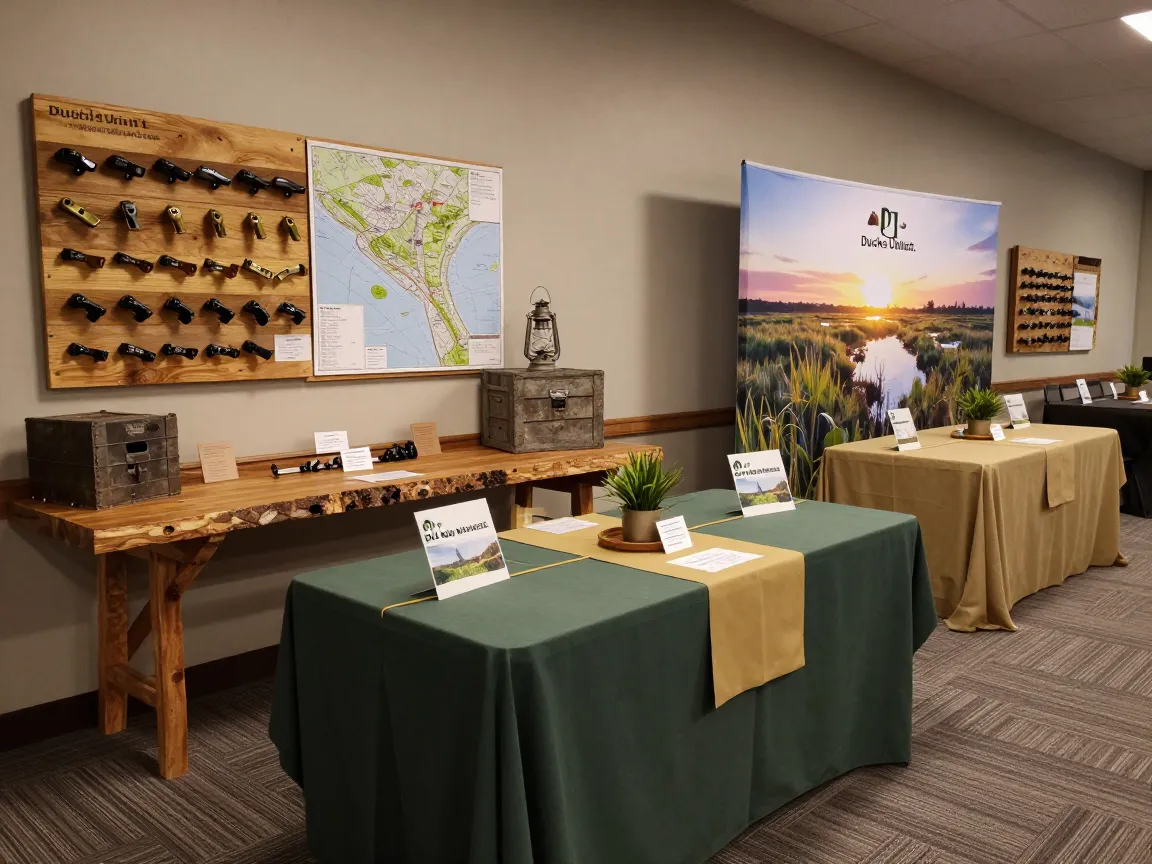
Grouping auction items by category and decorating each zone to match is now standard advice in DU’s banquet playbook, and the reason is straightforward: themed zones help guests self-select toward items they already want, which reduces the friction between browsing and bidding. A hunting trip package displayed beside a mount, a set of calls, and a small printed map of the destination wetland feels more valuable than the same trip displayed on a bare folding table.
Each zone needs only a small decor investment to work. A travel zone for guided hunts might use a hand-drawn map, a few weathered crates, and a lantern. A gear zone for firearms and equipment might use a rough-cut wood table surface and a printed backdrop showing the sponsor’s logo against a marsh at sunrise. The decoration does not need to be elaborate; it needs to be intentional. Intentionality is what separates a zone that generates buzz from one that blends into the wall.
The table skirts, centerpieces, and signage within each zone should still use the core DU color palette so the room reads as one coherent event rather than six separate booths. A short printed card in each zone that explains the conservation connection, “This guided hunt takes place on 4,000 acres of restored prairie pothole habitat,” turns a commercial transaction into a mission moment. Those cards cost nothing to print and consistently prompt guests to read them aloud to companions, which is a form of live endorsement no advertising budget can replicate.
4. Photo Backdrops and Social Media Corners
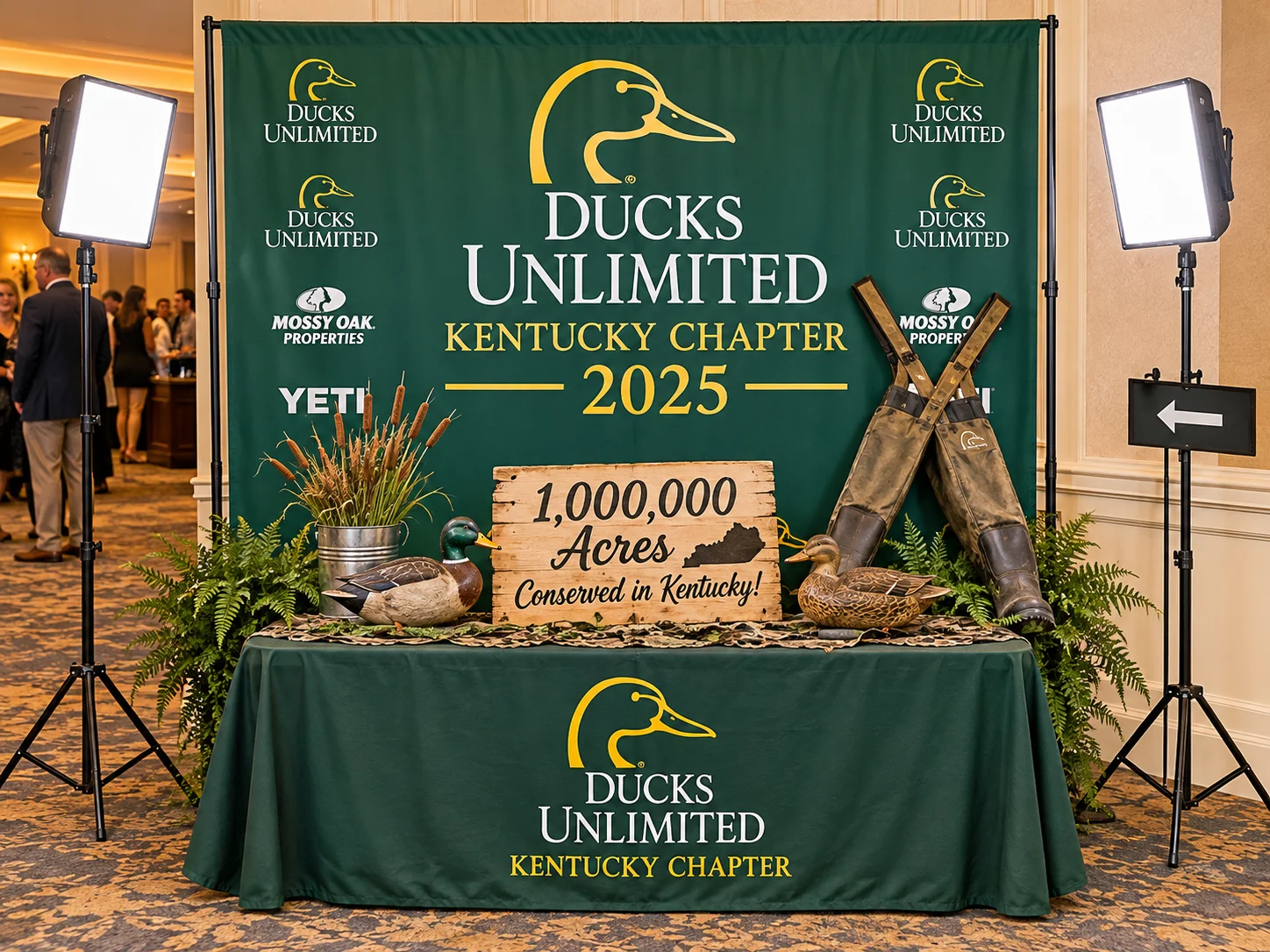
A well-constructed photo backdrop generates hours of post-event reach at zero additional cost, because guests create and distribute the content themselves. In 2026, DU event guidance explicitly names branded photo corners as a quick decor win, and the evidence from chapter events backs that up: images tagged with the chapter name and DU hashtags routinely reach audiences three to five times larger than the event’s physical attendance.
The backdrop itself does not need to be expensive. A printed fabric backdrop, roughly eight feet by eight feet, featuring the DU logo, the chapter name, the event year, and two or three sponsor logos in approved positions can be ordered from any event printing vendor for a reasonable cost. Mount it on a simple pipe-and-drape frame, add two even light sources on either side to eliminate shadow, and place a small arrow sign at the edge of the room pointing guests toward it. That is the entire setup.
What elevates a photo corner from functional to memorable is the foreground prop table. Two or three vintage decoys, a pair of waders crossed like ski poles, or a hand-lettered sign with the chapter’s conservation acreage milestone give guests something to hold or stand beside. Those props produce more natural, shareable photos than a bare backdrop alone. Assign a volunteer to the corner during cocktail hour and the dinner break; their job is simply to offer to take photos for groups, which removes the awkward selfie angle problem and results in better images for the guests and for the chapter’s social channels.
5. Wild Game Food Presentation as Visual Centerpiece
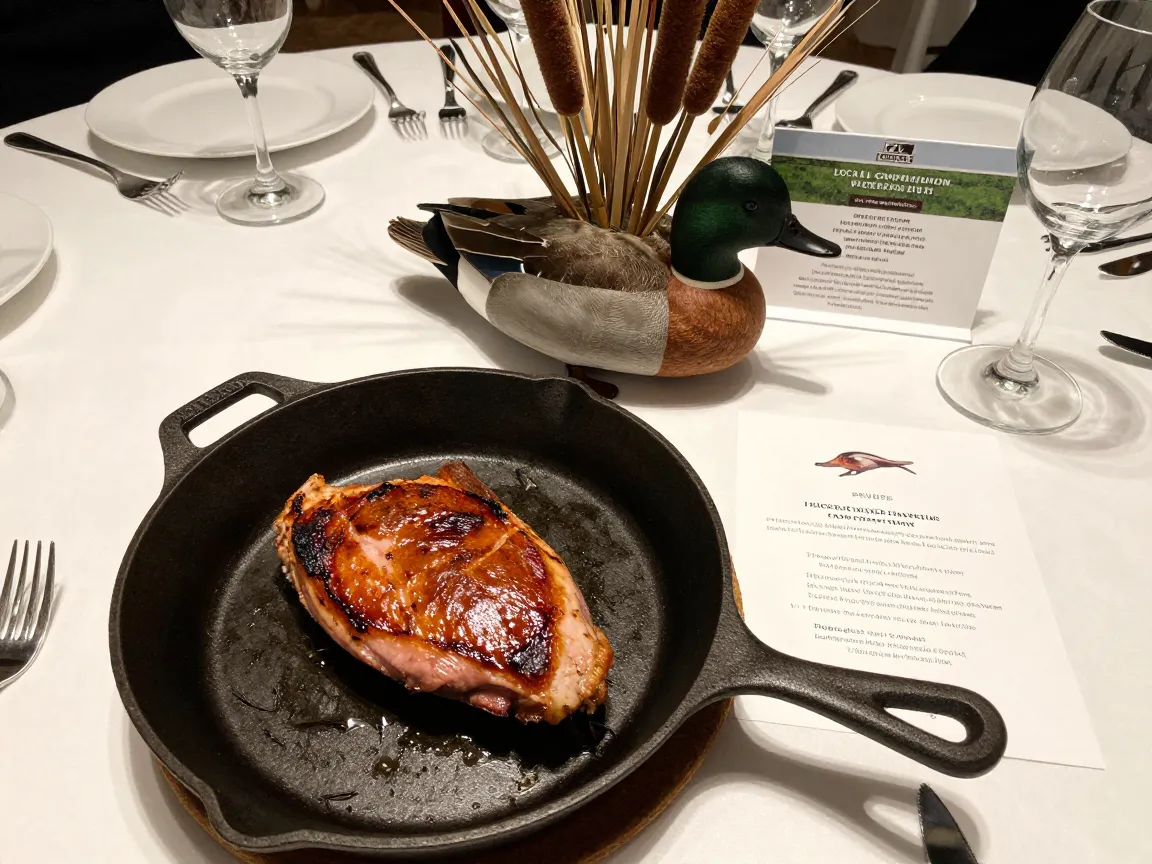
Food presentation is part of decor, and at a DU banquet it is an underused opportunity. A plated wild game course, served with regional identity and visual intention, signals to guests that this is not a standard chicken-and-roast-beef fundraiser circuit event. That signal matters because it primes guests for a premium experience before the auction ever opens.
The presentation specifics vary by region and by what local chapter members can contribute or sponsor, but the principle holds everywhere: a duck breast or venison medallion plated on a cast-iron skillet, served with a printed card identifying the waterfowl species and the region it was harvested from, is a conversation piece. It connects the meal directly to the conservation work DU funds. Guests who understand that the duck on the plate came from healthy, restored wetland habitat are guests who understand why the paddle raise at the end of the night matters.
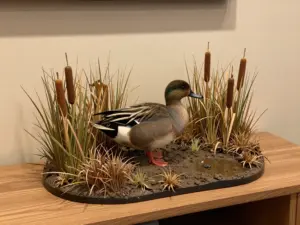
Centerpieces on the food service tables should reinforce this. A small arrangement of cattails, dried marsh grass, and a single wooden decoy on each dining table costs less than a floral arrangement and reads as far more authentic to the audience in the room. DU’s guidance on table-level decor consistently recommends printed conservation project cards alongside centerpieces so that guests have something to read between courses. A specific, local statistic, “This chapter has helped protect 12,400 acres of wetland habitat in this county since 1991,” is more effective than a general conservation message because guests can relate it to land they may have hunted or fished.
6. Lighting and “Under the Stars” Atmosphere Transformations
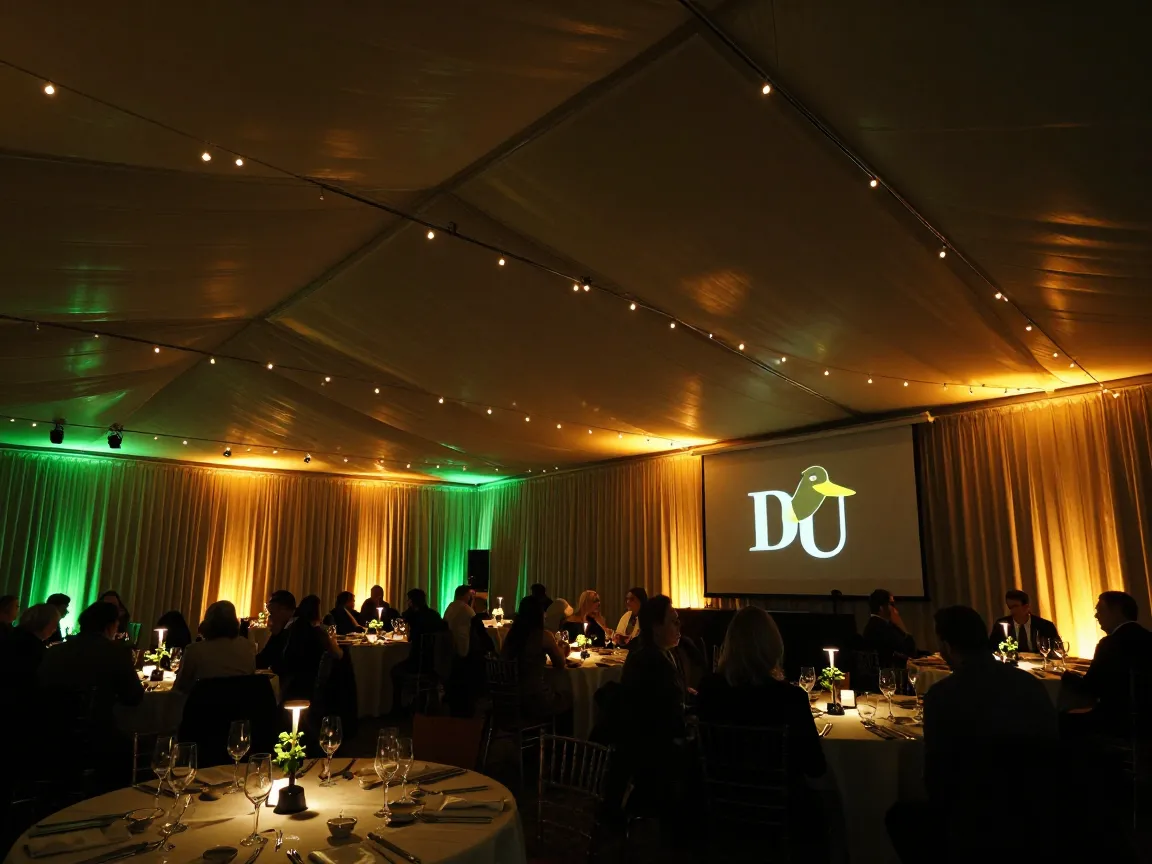
A standard banquet hall lit by overhead fluorescents is a hostile environment for a fundraising event. It flattens faces, bleaches color out of décor, and creates an atmosphere closer to a school cafeteria than a celebration of conservation. Lighting is the single fastest and most cost-effective way to transform a plain room, and DU’s current event guidance treats it as a non-negotiable element rather than an optional upgrade.
The practical starting point is to turn off or dim the overhead lights entirely and replace them with a combination of string lights, pin spots over auction tables, and colored wash lights in DU green or deep amber aimed at walls and draping. String lights strung at canopy height across the room, eight to ten feet above the tables, create the “under the stars” effect recommended in DU’s 2026 decor guidance without requiring a production company or a large budget. A set of commercial-grade string lights can often be rented from a local event supplier for less than a hundred dollars per event, or purchased by the chapter as a reusable asset.
Pin spotlights over the live auction items are worth particular attention. A spotlight draws the eye to a mounted trophy bird or a premium firearm in a way that ambient room lighting cannot. Guests who can see the item clearly from their seat are more engaged during the auctioneer’s call. For chapters that want to go further, a simple gobo light projecting the DU mallard logo onto a plain wall or the dance floor adds a dramatic branded element that photographs exceptionally well and costs about the price of a single gobo insert.
The color temperature of all light sources should be warm, 2700K to 3000K, to complement the DU palette and to make wood, leather, and bronze decoy finishes look their best. Cool white light undermines every other décor investment in the room.
Quick Comparison
| Decor Idea | Primary Impact | Relative Cost | Reusable Assets |
|---|---|---|---|
| 1. Full-Room DU Branding | Coherent guest experience | Low to moderate | Yes, templates |
| 2. Heritage Displays | Conversation and history | Low (borrowed items) | Yes |
| 3. Auction Zone Staging | Bidding engagement | Low to moderate | Partial |
| 4. Photo Backdrop Corner | Social media reach | Low to moderate | Yes |
| 5. Wild Game Food Presentation | Premium event signal | Moderate | No |
| 6. Lighting Transformation | Atmosphere and mood | Low to moderate | Yes |
Conclusion
Of the 6 Ducks Unlimited banquet decor ideas that wow guests covered here, lighting and full-room branding consistency deliver the highest return on effort because they affect every guest’s experience simultaneously, from arrival to the final paddle raise. Start there: rent or purchase a string light canopy, download DU’s official event templates, and build every other decor decision around that visual foundation. Chapters that treat the room itself as part of the mission, not just the backdrop to it, consistently see stronger attendance, better auction results, and guests who come back the following year.