Duck Hunting Kayak Tips For A Stealthy Day On The Water
Waterfowl hunters who consistently kill limits on heavily pressured public marshes rarely do it from the most popular boat ramp. They do it from a kayak, slipping through a cut in the cattails that a jon boat can’t reach, and setting up on ducks that haven’t been educated yet. The 6 duck hunting kayak tips for a stealthy day on the water covered below are built around that core idea: a kayak’s greatest asset isn’t speed, it’s access and silence.
Disclosure: This post contains affiliate links. As an Amazon Associate, we earn from qualifying purchases, and at no extra cost to you.
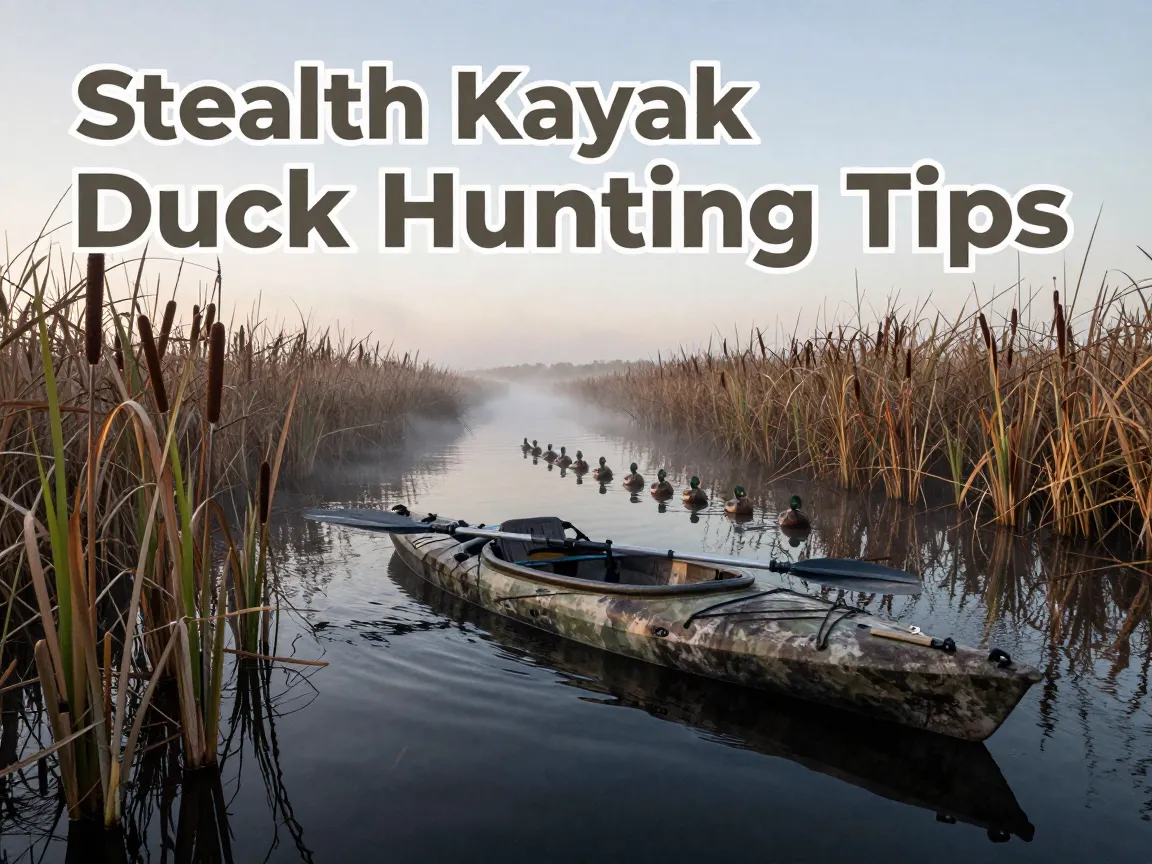
Pulling that advantage off consistently means more than just showing up in a small boat. It takes deliberate concealment, smart rigging, a minimal decoy strategy, and a sober approach to cold-water safety. Each tip below addresses one piece of that puzzle in practical terms.
Key Takeaways
- A kayak’s stealth advantage comes from accessing small, overlooked waters that larger craft can’t reach, not from padding the same spots everyone else uses.
- Hull concealment with natural vegetation breaks up the boat’s hard lines and is as important as the hunter’s camo clothing.
- Small, realistic decoy spreads of around a dozen blocks outperform large spreads on pressured birds in tight water.
- Safe shooting angles, a PFD, dry-bagged spare clothes, and a tethered paddle are non-negotiable in late-season conditions.
- Test-loading your full kit at home before the first trip prevents dangerous surprises on the water.
- Using the kayak as transport to a shoreline hide often produces better shooting than hunting directly from the boat.
1. Choose Water That Rewards a Small Boat
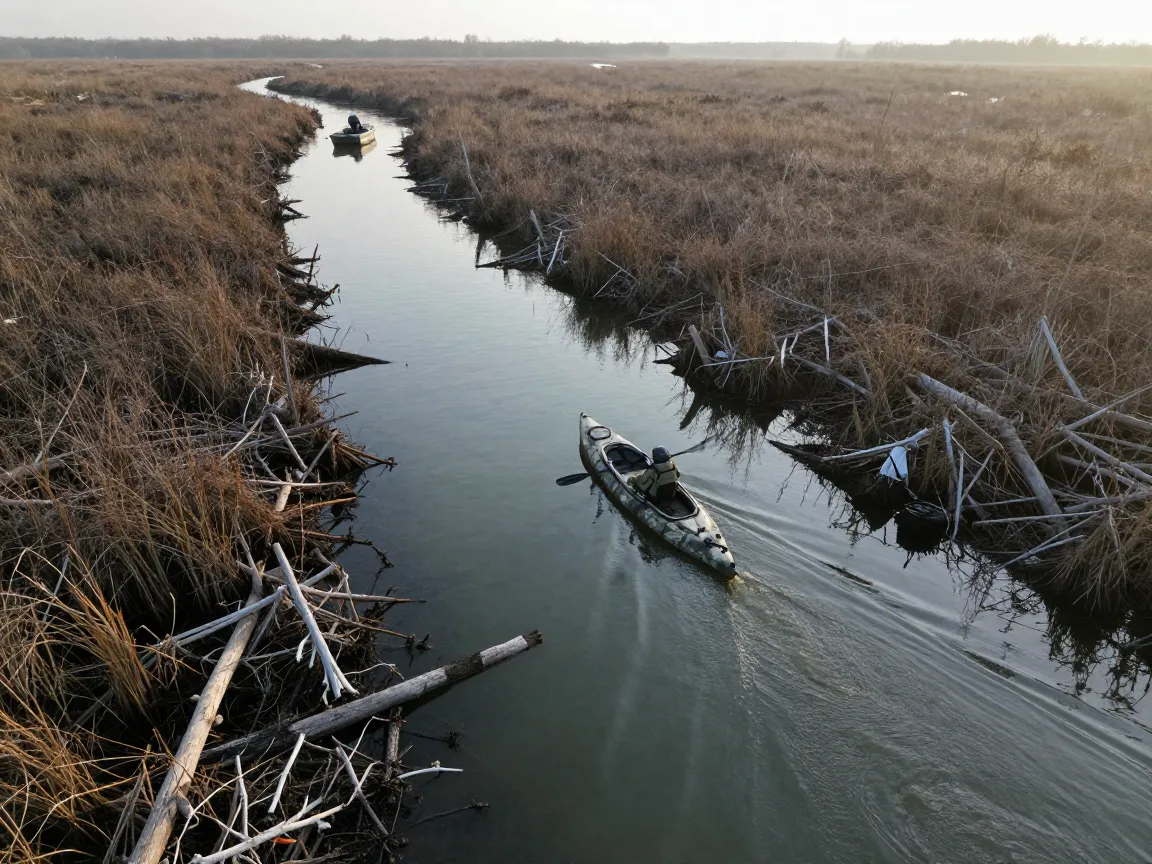
The single biggest mistake kayak hunters make is launching at the same public ramp as everyone else and paddling to the same visible pocket of open water. That behavior trains ducks. Kayaks pay dividends specifically on small, shallow, overgrown waters that cannot accommodate a standard duck boat, creek mouths choked with woody debris, flooded timber fingers at the back of a reservoir, isolated pot-holes reachable only by dragging a boat through knee-deep muck.
Before the season opens, scout these spots on aerial mapping tools and look for water separated from main hunting pressure by distance, shallow depth, or vegetation density. Ducks using these areas haven’t been blasted at repeatedly, and they respond very differently to calling and decoys. A twelve-foot sit-on-top kayak drawing three inches of water can reach them. A twenty-foot aluminum boat with a forty-horsepower outboard cannot.
Once you identify a spot, scout it quietly on foot or by kayak without gear at least once. Note where ducks are loafing, feeding, or trading at first light. That observation shapes everything else, where you launch, where you set decoys, and where you park the boat before shooting time.
2. Break Up the Hull Before You Leave the Truck
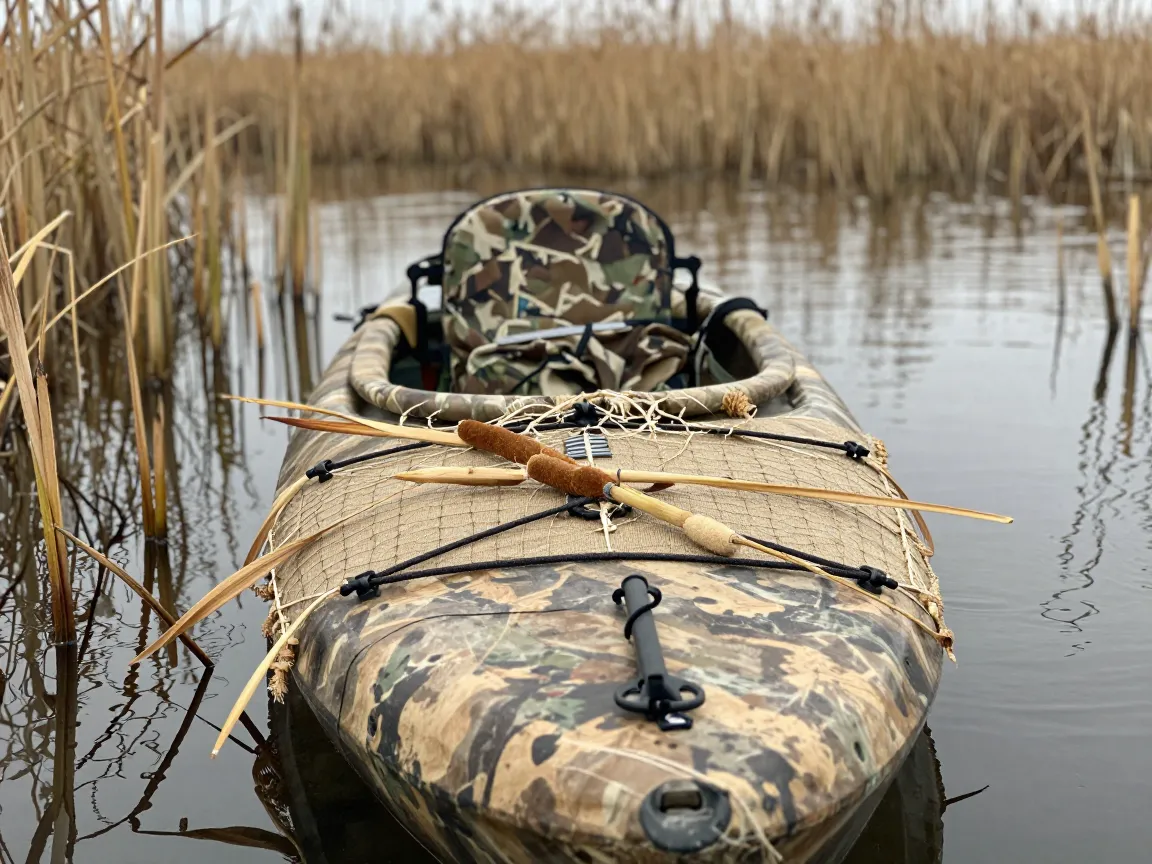
A camouflaged hull is a starting point, not a finish line. Ducks approaching from above see the kayak’s straight lines and hard contours before they see your face. A flat-colored polyethylene hull blends better than a high-gloss aluminum finish, but even the best factory camo leaves a recognizable shape in open water.
The fix is simple and costs almost nothing. Before launching, weave cut vegetation from the immediate area, cattail stalks, marsh grass, dried reeds, through camo netting or burlap draped over the hull and secured to rod holders or bungee rigging. Use plants from the spot you’re hunting, not green summer grass on a November marsh. The goal is to match the specific textures and colors of your exact location, which changes from one marsh to the next and from early season to late.
Where the kayak doubles as the blind itself, cut small access points in the netting for the paddle shaft and the muzzle or barrel of the shotgun. Ghillie blankets can be pulled over the cockpit when birds are working, leaving only the shooter’s eyes and gun barrel exposed. The hull stays low in the water naturally, that low profile is what makes a kayak effective as a blind, far more so than trying to replicate the same concealment from a larger boat.
Avoid anything reflective. Remove sunglasses before birds are close, and cover or tape over any shiny hardware on the boat, including paddle drip rings.
3. Plan Your Approach Like a Deer Hunter Would
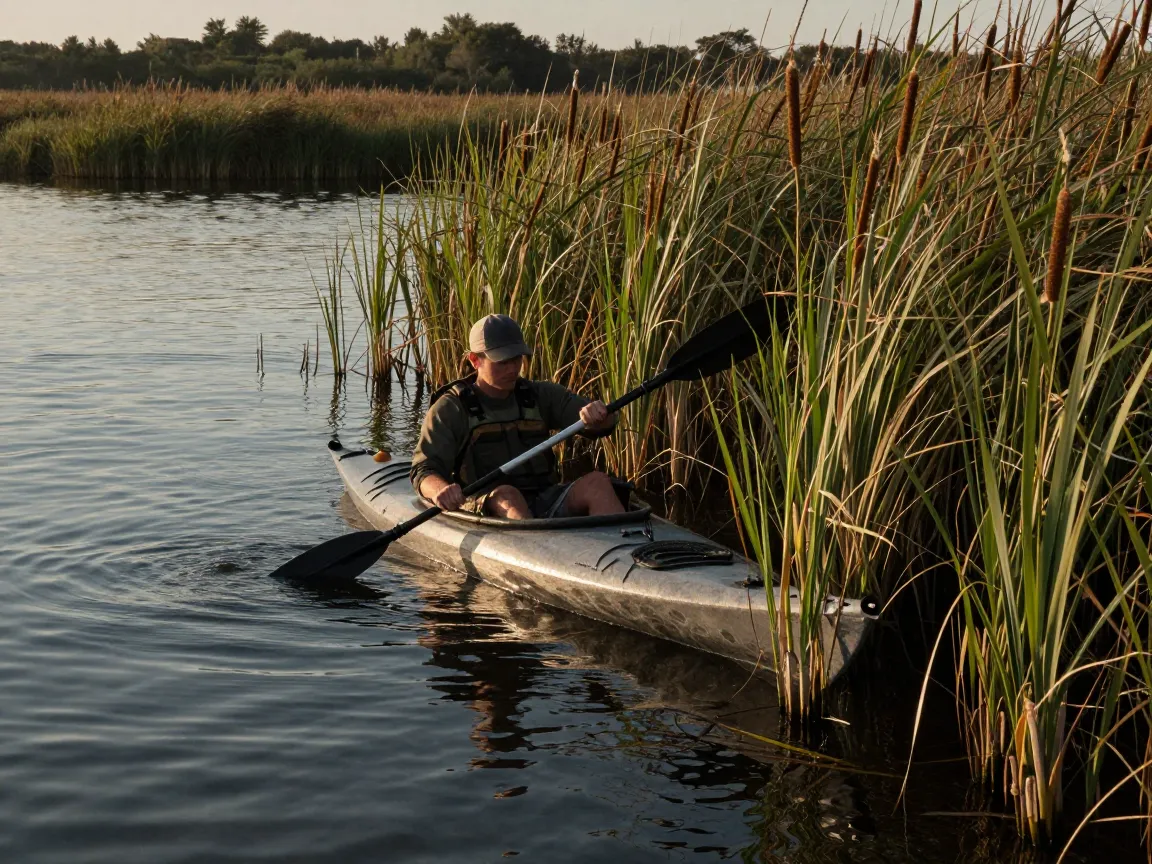
Deer hunters obsess over wind direction, entry routes, and noise discipline. Duck hunters in kayaks need the same mindset. The approach to a hunting spot is often where birds are spooked before a shot is ever fired.
Launch from a site that keeps the kayak out of sight of the water you plan to hunt for as long as possible. A straight paddle across open water directly at a known loafing area pushes birds off every time. Instead, hug the near shore, stay inside vegetation lines, and approach from downwind when possible. When you’re within two hundred yards of the target area, slow down and switch from active paddling to quiet, short strokes or drifting. If the water allows it, pole the last stretch with the paddle shaft against the bottom.
Patience is the most underused tool in this process. After positioning and setting decoys, sit still for at least twenty minutes before expecting birds to return. Ducks that flushed during setup will often circle back and commit if the marsh quiets down and nothing else disturbs them. Hunters who charge straight in and start calling immediately get one chance at the birds that were already there. Hunters who settle in quietly and wait create a second and third opportunity.
A discreet launch point matters as much as the hunting spot itself. Carrying the kayak from a vehicle parked off the main road and sliding it into water away from other hunters reduces pressure on the spot and keeps birds from pattern-matching human activity to that location across multiple hunts.
4. Keep the Decoy Spread Small and Realistic
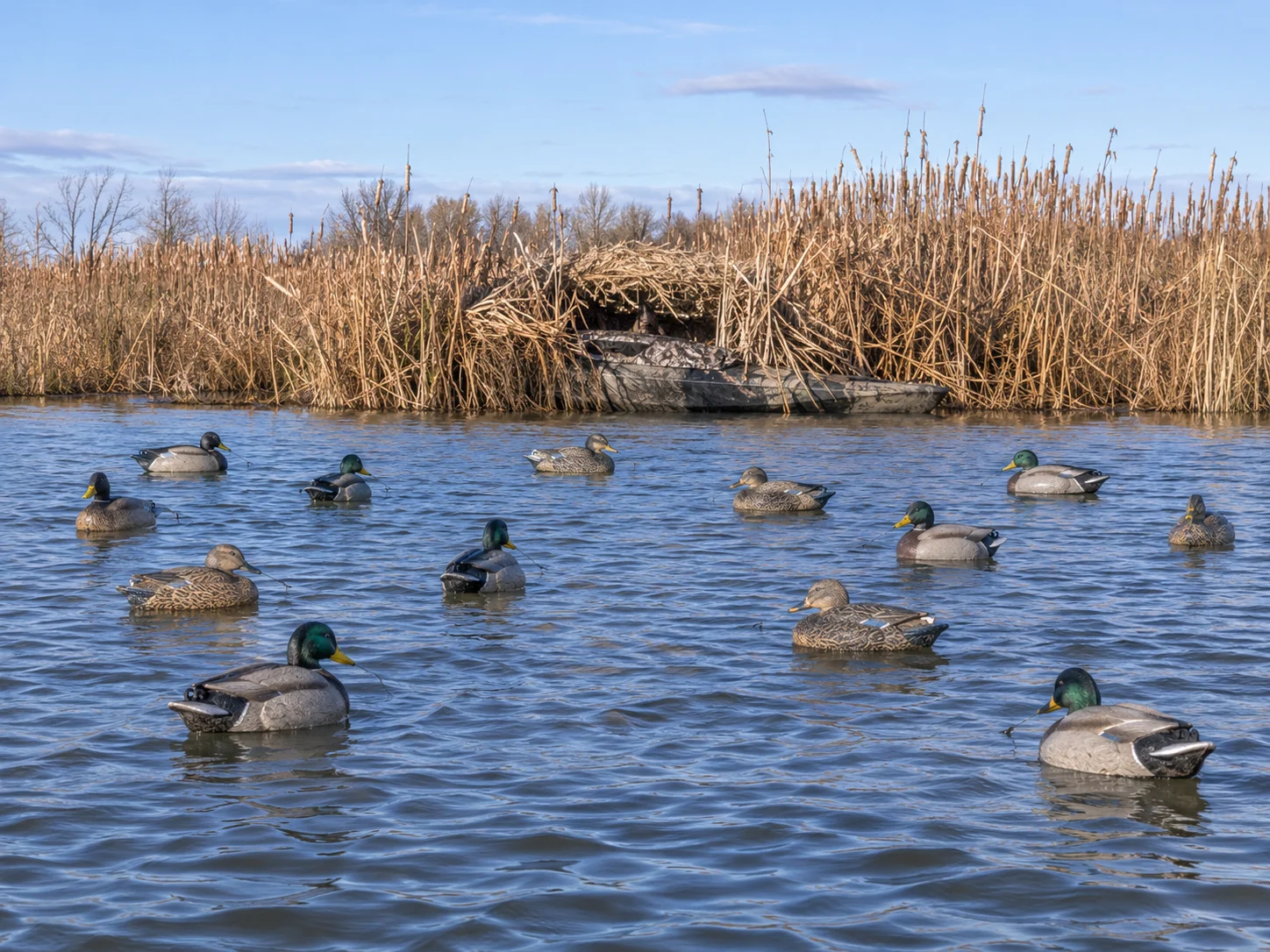
Large decoy spreads belong on big open water where birds are trading long distances. In the tight, sheltered spots a kayak accesses best, a spread of around a dozen blocks is both more realistic and far easier to manage in a loaded boat. Trying to run forty decoys from a kayak creates rigging tangles, weight problems, and noise during setup.
Twelve decoys set with natural spacing, loose clusters with open landing lanes, anchored so they swing freely in current or wind, look like a small, undisturbed group of feeding birds. That’s exactly what pressured ducks want to see. Set them upwind of your position so approaching birds fly toward you into the wind, following the decoys’ keel direction, and present a shot at close range.
Wind direction is the single most important factor in spread placement. Put the open landing zone directly in front of your blind or hide position and within comfortable gun range, thirty yards or less for most hunters. Calling should match what the decoys suggest: a feeding chuckle or low quacks from birds already content, not aggressive hail calls to birds that aren’t interested. Over-calling is one of the most reliable ways to educate pressured ducks, and the tight water a kayak accesses tends to hold birds that have heard every call sequence before.
After the hunt, retrieve every shell casing from the water. The marshes that produce consistent kayak hunting are small, fragile, and worth protecting.
5. Rig the Boat for Stability and Reach
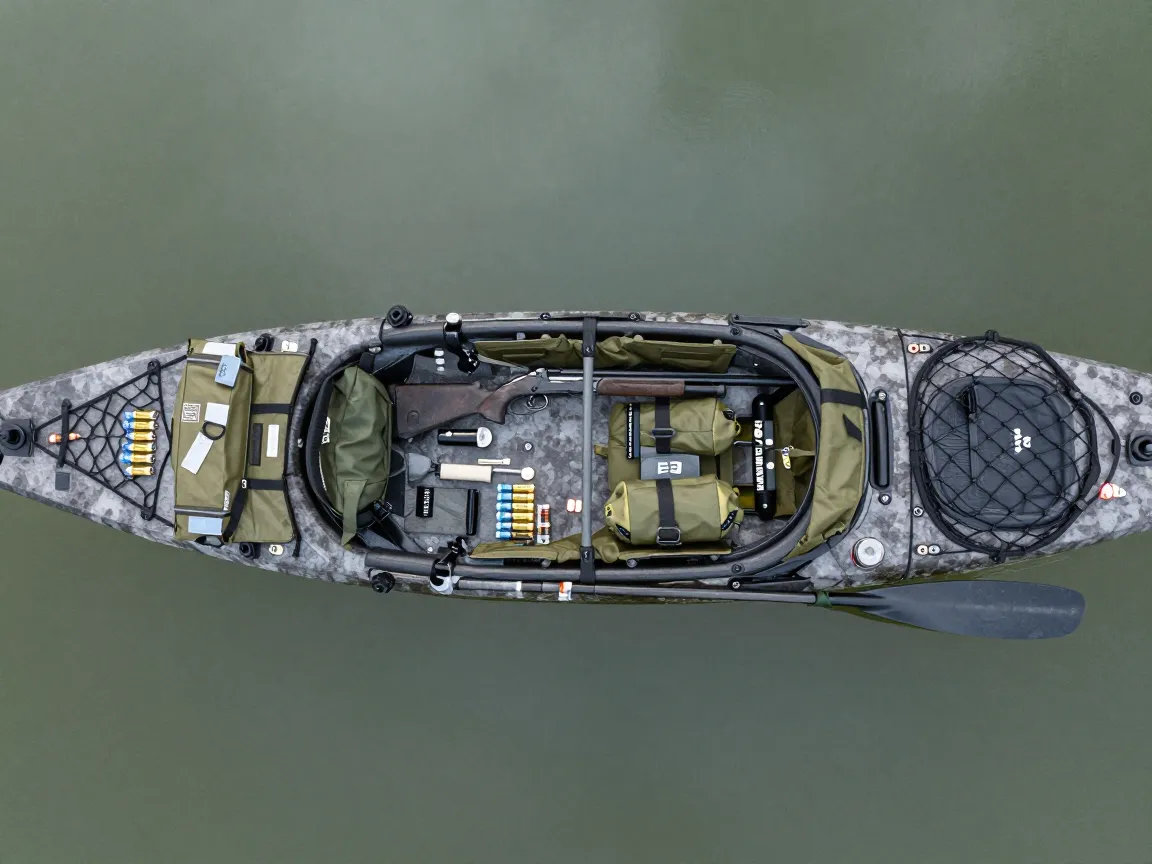
A kayak that’s perfectly camouflaged but dangerously overloaded is a liability. Before the season, do a full gear load at home, shotgun in a floating case, shells, decoys, waders, dry bag, food, calls, and any other kit, and sit in the boat in the driveway. Check where the waterline sits, test whether you can swing the gun safely, and confirm you can reach the decoy bag without shifting your weight enough to rock the hull.
Gear should stay below the gunwales. High-stacked decoy bags or a shotgun balanced across the cockpit rim raises the center of gravity and makes the boat substantially less stable when you lean to retrieve a bird or pull a decoy anchor. Use bungee deck rigging, dry hatch storage, or a bow cargo net to keep everything flat and secure.
The paddle must be tethered to the kayak. This is non-negotiable. A paddle that floats away after a stumble during setup leaves you stranded or swimming. A short tether clipped to a d-ring on the hull keeps it accessible without restricting paddling motion.
Initial trips should be short and conservative. A hunter who hasn’t paddled a loaded kayak in pre-dawn darkness, in cold water, while wearing waders and carrying a shotgun should not make their first attempt on a remote two-mile paddle to a back-country slough. Build familiarity with the boat’s handling in full hunting configuration before committing to distant spots.
6. Take Cold-Water Safety Seriously Before Every Trip
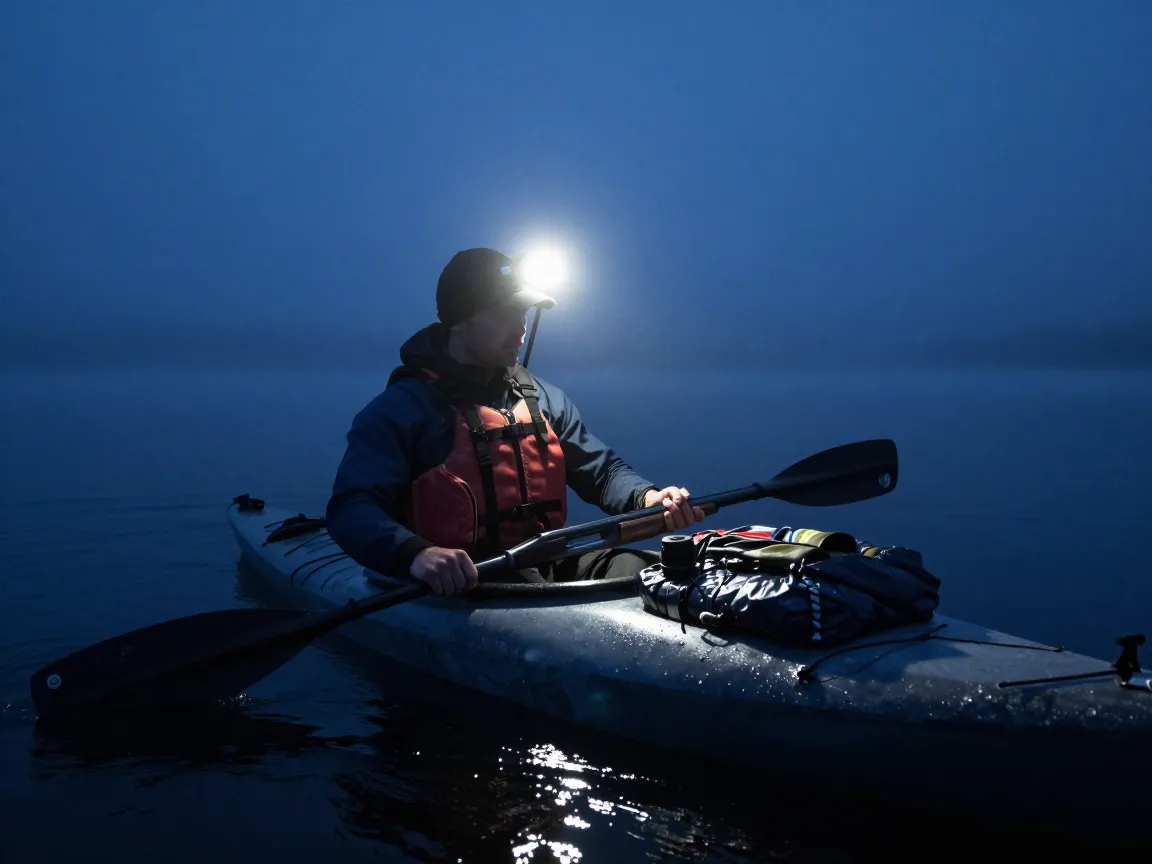
Cold water kills faster than cold air. A hunter who tips a kayak in forty-degree water without a PFD has minutes, not hours, before cold shock and incapacitation set in. Wearing a life jacket is not optional on late-season duck hunts from a small craft, regardless of how short the paddle is or how shallow the water appears.
Spare clothes in a waterproof dry bag should go in the kayak on every trip from October through the close of season. If you end up in the water, dry clothes and a vehicle with heat are what prevent a bad situation from becoming a fatal one. Pack them even if you think you won’t need them, especially if you think you won’t need them.
Avoid shots perpendicular to the hull, that is, directly off either side of the kayak. The recoil from a twelve-gauge fired at a ninety-degree angle to the centerline of a narrow kayak can tip the boat. Take shots off the front quarter or as close to straight ahead as the situation allows, and practice this discipline before the season so it becomes automatic.
Before launching in darkness, which describes most duck hunts, verify that the kayak carries a 360-degree overhead light visible to other boaters. This is a legal requirement in many states and a practical necessity anywhere motorized boat traffic exists. Stealth toward ducks is the goal; invisibility to other hunters running outboards in the dark is a hazard, not an advantage.
Check the marine weather forecast the evening before and again in the morning. Wind speeds that feel manageable on a large lake become dangerous on a loaded kayak crossing open water. If the forecast shows a significant change in conditions during the day, plan your exit before it arrives, not after.
Quick Comparison: Three Roles a Hunting Kayak Fills
| Role | Best Situation | Key Requirement |
|---|---|---|
| Transport to a shoreline hide | Birds holding in cattails or timber | Quiet approach, kayak hidden after arrival |
| Brushed-in floating blind | Open potholes, shallow flats | Full hull concealment, stable platform |
| Drift and jump-shoot | Creek channels, loafing areas | Low profile, slow controlled drift |
Conclusion
The tips above aren’t independent tricks, they build on each other. A perfectly concealed kayak launched from the wrong spot still fails. A hunter in a great location who charges in too fast and sets forty decoys wastes the access advantage a kayak provides.
The most useful next step is to apply tip one first: identify one piece of water within your hunting area that larger boats genuinely cannot reach, and scout it before the season opens. Everything else, concealment, approach, decoys, rigging, safety, can be refined from there. The access is what changes your results; the other five tips protect and multiply it.