Duck Hunting Gear Storage Solutions That Keep Your Blind Organized
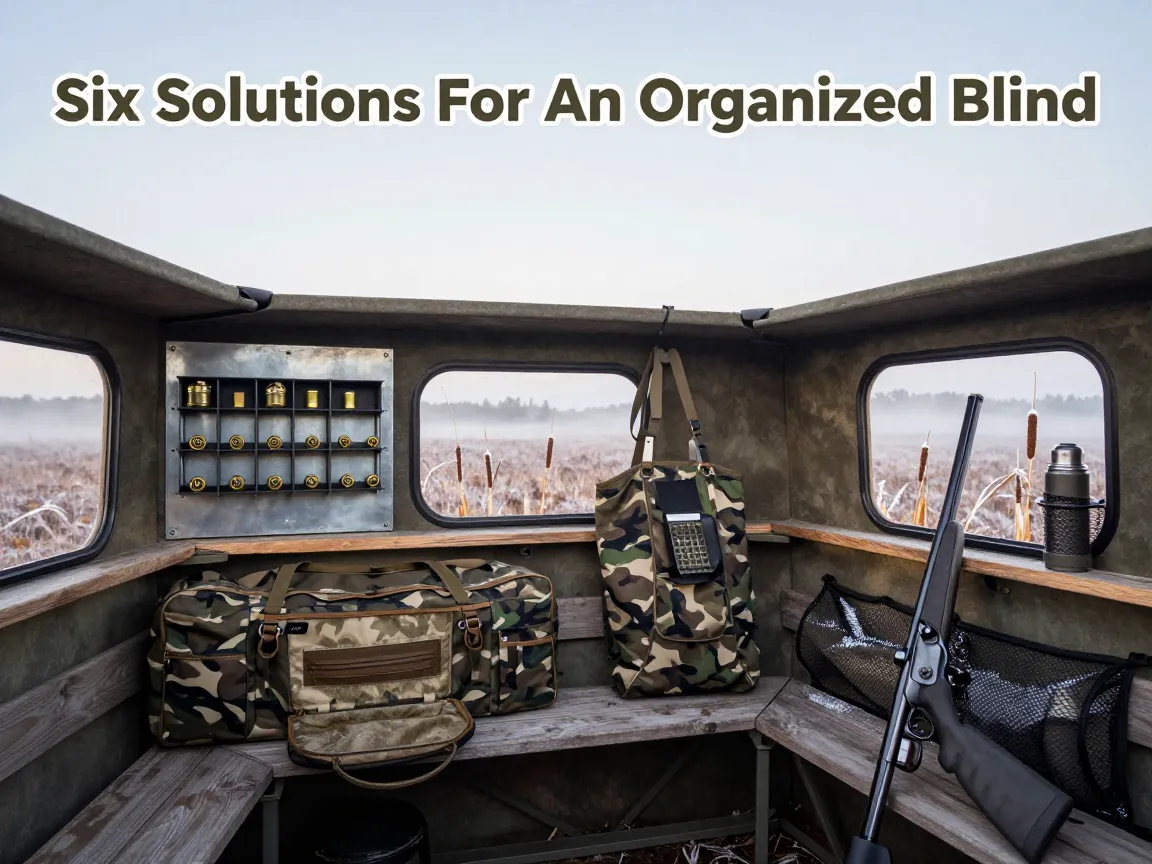
Waterfowl hunters lose more time digging through gear than most of them realize. A University of Nebraska-Lincoln survey of time-use in outdoor recreation found that preparation and equipment management can consume up to 30 percent of a hunting outing. Multiply that across a season and disorganized storage is not an inconvenience, it is a problem worth solving deliberately. These 6 duck hunting gear storage solutions that keep your blind organized treat each category of gear as its own distinct problem rather than dumping everything into one bag and hoping for the best.
Disclosure: This post contains affiliate links. As an Amazon Associate, we earn from qualifying purchases, and at no extra cost to you.
Key Takeaways
- Shells, blind bags, waders, and gun cases each need a dedicated storage approach, not a single catch-all solution.
- Purpose-built blind bags with multi-compartment layouts outperform oversized general bags for in-blind access.
- Wall-mounted shell holders eliminate floor clutter and keep shells dry without adding bulk to your pack.
- Elevated, hang-and-strap storage systems reduce water and mud contact in marsh or wet-field environments.
- Separating decoy storage from in-blind essentials prevents overcrowding and protects frequently accessed gear.
- Starting the season with an organized system takes less time than fixing a chaotic one mid-hunt.
1. Purpose-Built Multi-Compartment Blind Bags
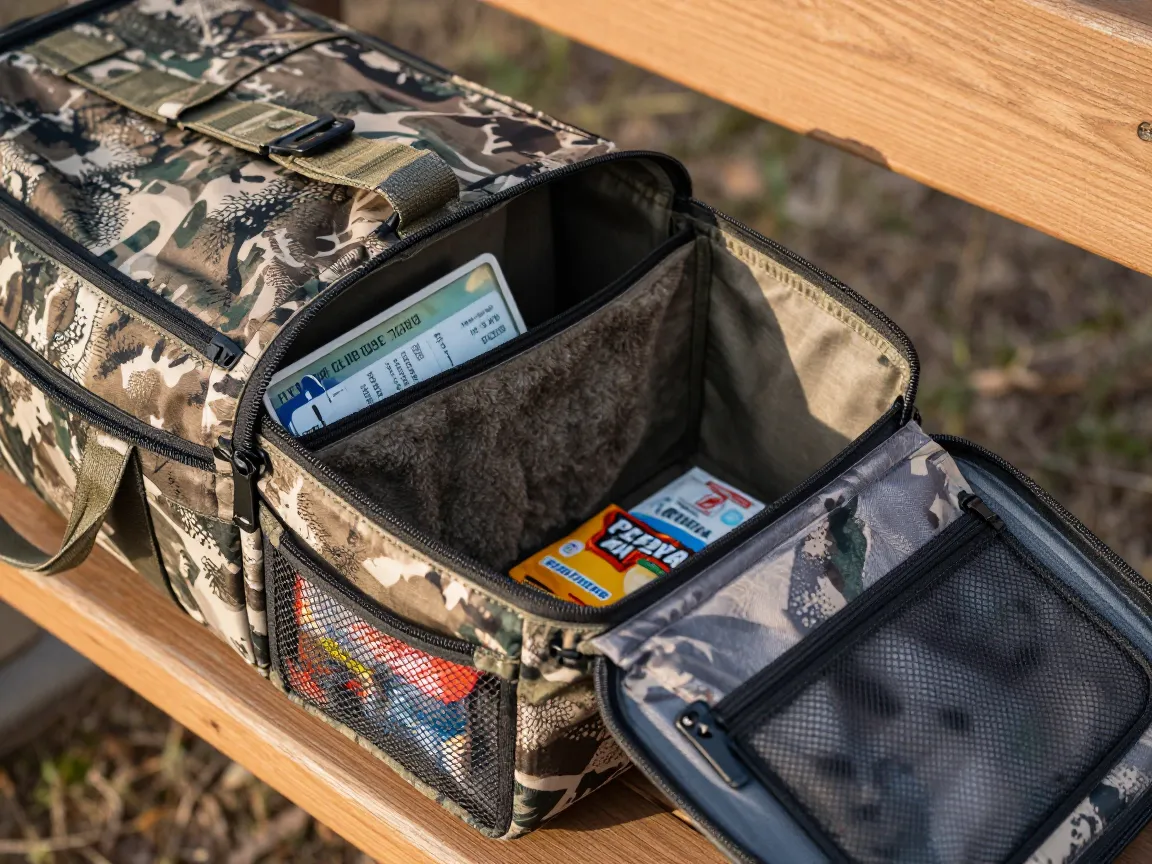
The blind bag is the organizational hub of any waterfowl setup, and the difference between a good one and a mediocre one comes down to layout, not raw capacity. Bags designed specifically for duck hunting, such as Natural Gear’s camo Duck Blind Bag, divide the interior into zones: a main chamber for calls, snacks, and layering pieces; a fleece-lined pocket for electronics and licenses; and exterior mesh pouches for items you grab every five minutes. That zoning means your hand goes to the right pocket the first time rather than the third.
Retail guidance in 2026 consistently stresses choosing blind bags based on how they organize gear rather than simply how much they hold. A 1,600-cubic-inch bag with thoughtful dividers will outperform a 2,200-cubic-inch bag that is essentially one open cavity. If you are loading a bag the night before, the compartment structure forces you to put everything in a logical place, which also means you notice when something is missing before you are standing in a blind at 5:30 a.m.
Water resistance matters nearly as much as layout. Many current blind bag lines use coated nylon or TPU-laminated fabrics that handle rain and splash without full submersion protection. If you hunt marsh or flooded timber where the bag may actually go underwater, look for flotation and sealed zippers. That is a narrower requirement, but it matters in those environments. For field hunters and pit blind hunters, high water resistance without full waterproofing is usually sufficient and keeps weight down.
One useful practice is to unpack and repack the blind bag after every hunt. It takes about four minutes and ensures you catch empty shell loops, depleted hand warmers, or a wet fleece before the next trip. Hunters who skip this step tend to find the problem in the field when they cannot afford to.
2. Wall-Mounted Shell Holders for the Blind
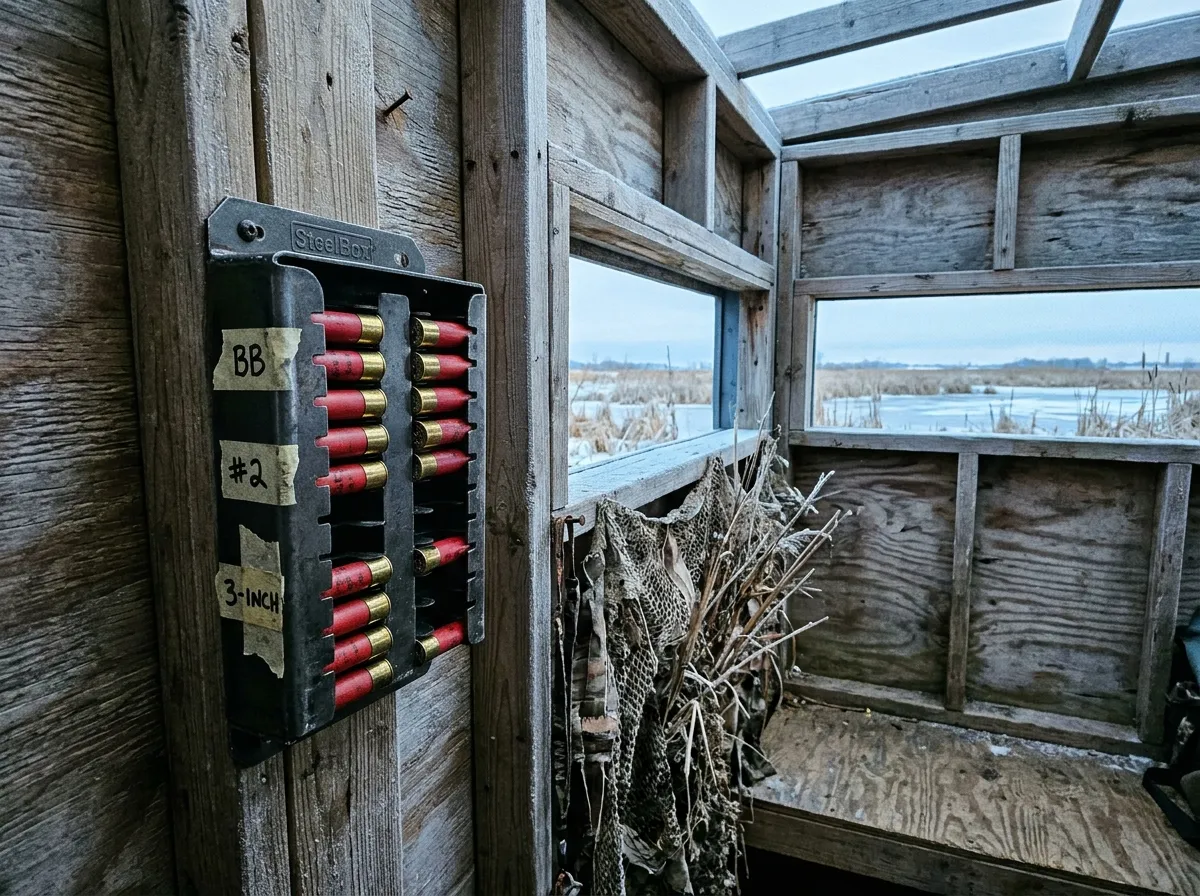
Loose shell boxes on the floor of a duck blind create a specific set of problems: they get stepped on, they get wet, and they slow reloading in a way that matters when a late group of birds works the decoys at the end legal shooting light. A wall-mounted shell holder solves all three issues at once.
The SteelBox from Duck Blind Solutions is a representative example of this product category. It mounts directly to the blind wall or frame, holds individual shells in dedicated slots, and keeps them at chest height where your hand can reach them without bending down or looking away from the sky. The steel construction handles freezing temperatures without cracking, a real issue with plastic alternatives in January hunts across the northern flyways.
This type of storage is particularly useful in permanent or semi-permanent blinds where you can install hardware. Pop-up portable blinds require a different approach, usually a clip-on shell pouch that attaches to the blind’s internal frame or to a belt. The key principle is the same: shells need a fixed, elevated, dry home inside the blind rather than a spot on the floor that shifts every time someone repositions.
One caveat worth naming: a wall-mounted holder holds what it holds. If you hunt with multiple loads, steel 3-inch for ducks and bismuth for geese, you need labeled sections or separate holders to avoid a mix-up under pressure. Some hunters use a strip of masking tape with a marker designation, which is low-tech but reliable. The holder itself only works as an organizational tool if the system behind it is consistent.
3. Dedicated Wader and Boot Storage Bags
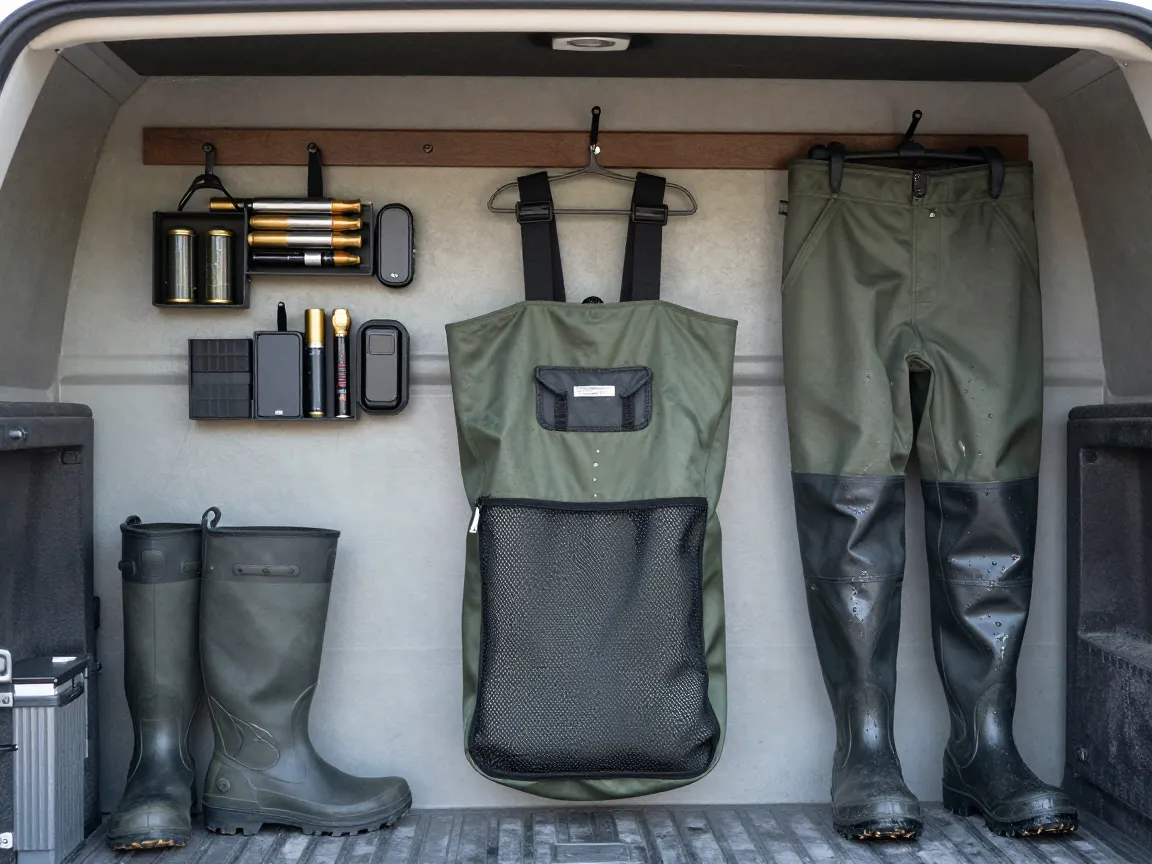
Waders are the most logistically awkward item in a duck hunter’s kit. They are large, they are wet after every hunt, and if stored improperly they develop mildew that breaks down the waterproofing membrane. Treating wader storage as a separate problem, rather than cramming them into the back of an SUV alongside shells and decoys, extends their life and keeps the rest of your gear dry.
A purpose-built wader bag with a drainage port or mesh panel lets moisture escape during transport and storage. Several manufacturers produce boot-and-wader bags in the 10 to 15 liter range that keep the rubber or neoprene isolated from electronics, food, and ammunition. The drainage feature is not optional in cold weather; trapped moisture in a closed bag overnight in freezing temperatures creates ice that can crack boot soles and damage wader seams.
For hunters who split time between truck and boat, a second lightweight stuff-sack for wet waders makes transitions faster. You put the wet waders in the designated bag immediately after the hunt, that bag goes in the truck bed or boat storage well, and your main blind bag stays dry and ready for the next setup. The separation is a small discipline that prevents a large problem.
Ducks Unlimited’s seasonal storage guidance recommends hanging waders inverted in a cool, dry space between hunts rather than storing them folded, which creates crease points that become leak points. The storage bag handles transport; a hanger or dedicated hook handles between-hunt storage. Both steps matter.
4. Hang-and-Strap Storage Systems for Marsh Environments
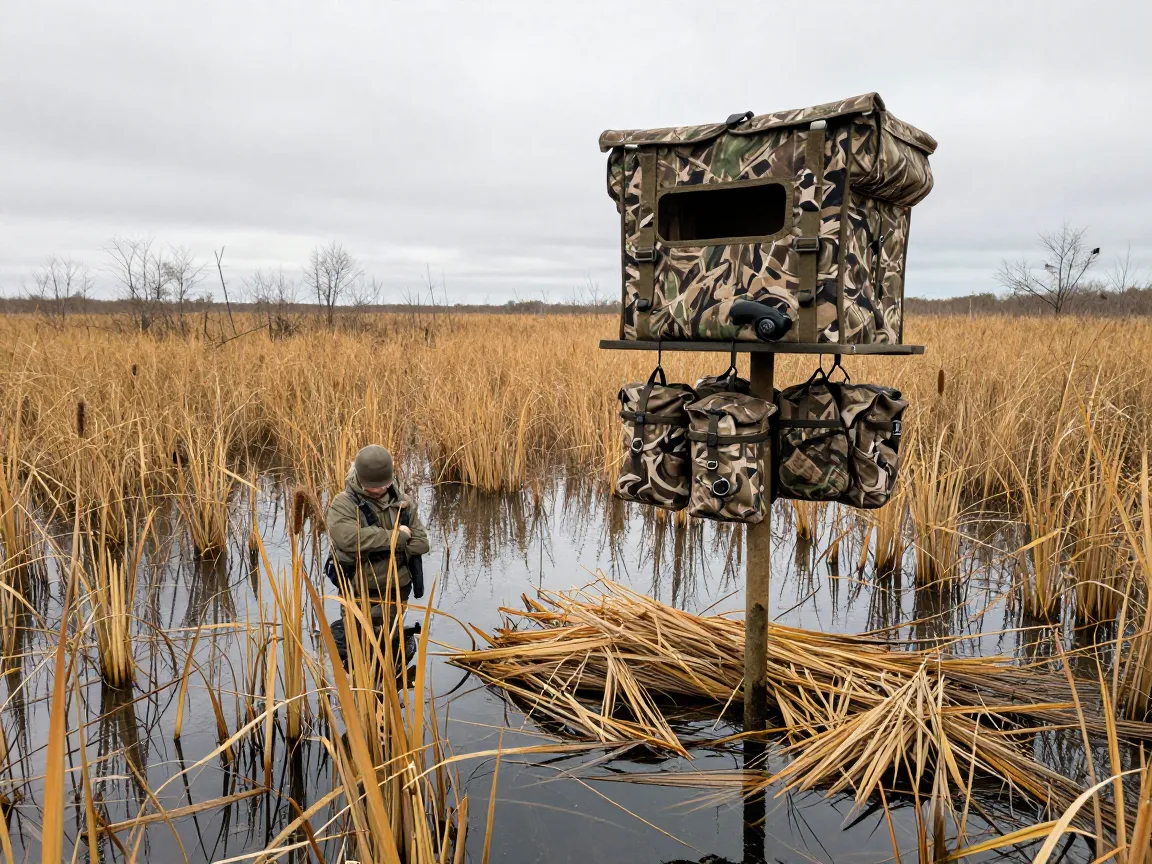
Standard bags and boxes sit on flat surfaces, which works well in a pit blind or a boat. In a marsh blind, where the floor is cattail mat, standing water, or a mix of both, anything on the floor is at risk. The practical answer is a storage system designed to hang from, strap to, or clip onto the blind’s vertical frame rather than rest on the floor.
AVES’ 2026 pack and blind-bag lineup reflects this directly. Their designs include hook-and-loop straps, internal hanging loops, and exterior attachment points that let the bag function as a wall panel rather than a floor bag. When the bag is strapped to the blind’s support post at shoulder height, the main compartment stays dry, gear is accessible from a seated or standing position, and nothing gets kicked into the water when hunters shift position in a tight blind.
The Original Swamp Stick is another product built around this principle. It is a support stake with attachment points designed to hold bags, calls, and accessories elevated above the marsh floor. For hunters who build temporary reed or cattail blinds without a fixed frame, the Swamp Stick provides the vertical anchor that the hang-and-strap approach requires.
This category of storage works because it removes the assumption that the floor is usable space. In many marsh environments it simply is not. Designing the storage system around the actual conditions rather than the ideal conditions is what separates organized hunters from ones who spend the morning rescuing gear from shallow water.
5. Separate Decoy Bags That Stay Outside the Blind
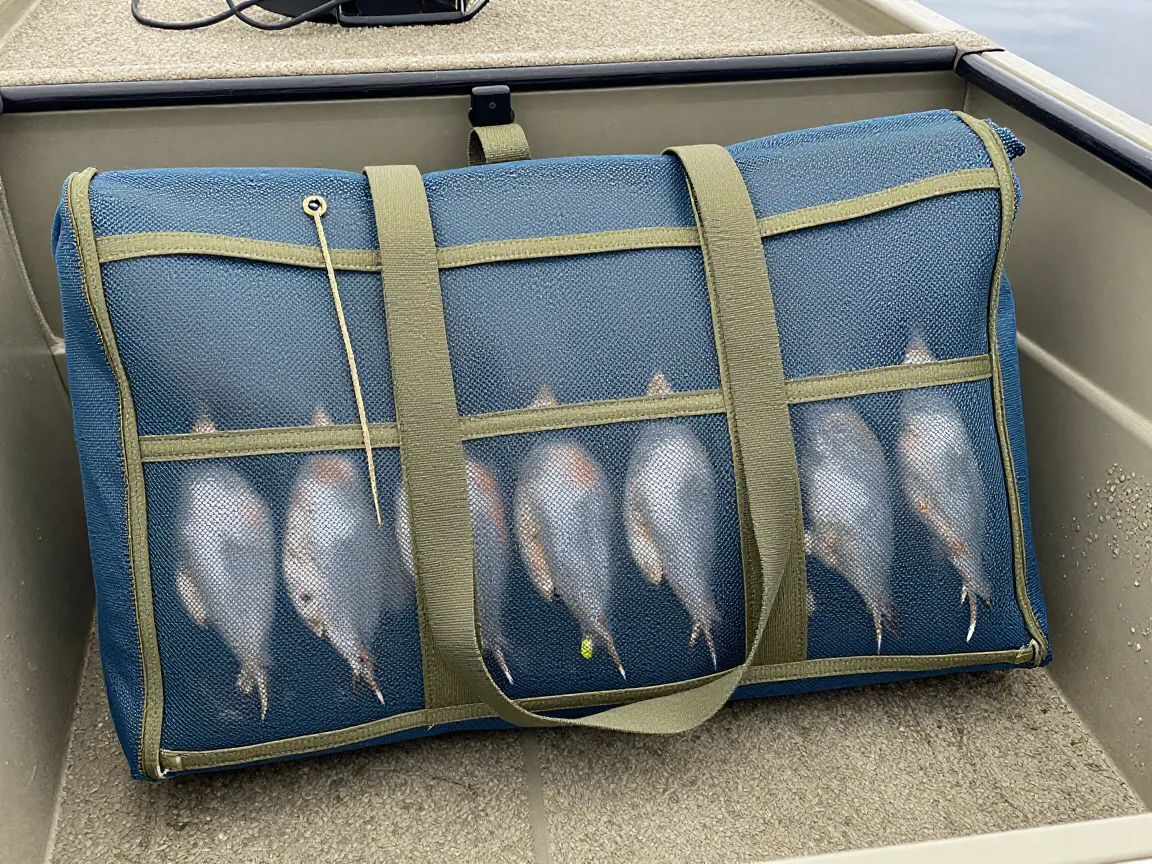
Decoys do not belong in the blind. This seems obvious, but a significant number of hunters use oversized bags that try to hold both decoys and hunting essentials, and the result is that the essential gear gets buried under foam or hard plastic every time. Cupped Waterfowl’s category-level guidance draws a clear line between decoy bags and blind bags, and that distinction is worth taking seriously.
A decoy bag serves one function: carry, protect, and organize decoys to and from the water or field. It should stay outside the blind or at the back of the boat during the hunt. The best decoy bags have mesh or breathable panels that let water drain from wet decoys during transport, internal cord management for rigging, and handles or shoulder straps suited to carrying weight over uneven ground. What they do not need is room for shells, calls, or first aid kits.
Separating decoy storage from hunting storage also makes the setup and breakdown faster. When everything is in one giant bag, every piece has to come out before you find the item you need. When decoys are in their bag and hunting gear is in the blind bag, each bag serves its single purpose without interference.
For hunters running six to twelve decoys, a mid-size mesh decoy bag in the 24-36 count range is adequate and much lighter than an oversized model half-filled with air. For large spreads, a wheeled decoy cart that doubles as a storage bin between hunts keeps the volume manageable without requiring multiple bag trips to the blind.
6. Gun Cases and Firearm Staging Systems
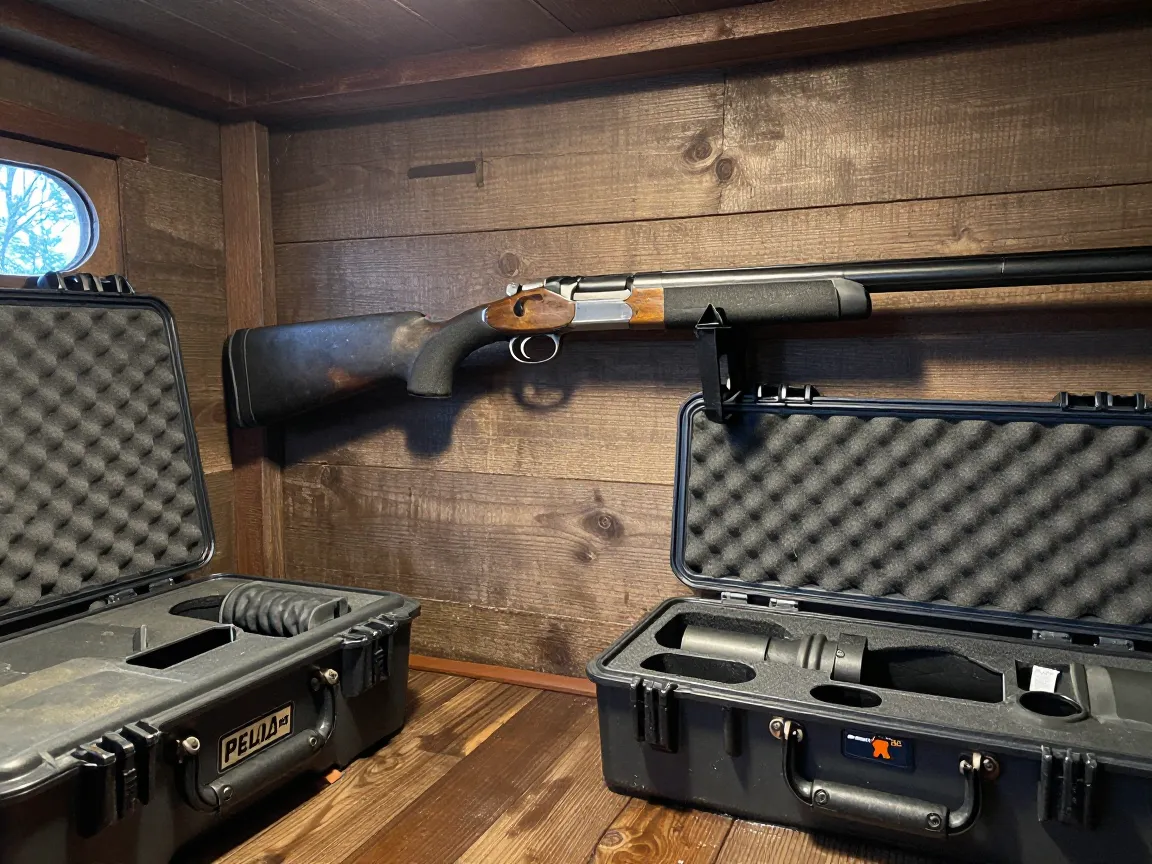
A shotgun leaned against a wet blind wall is not a storage solution. It is a liability: the finish corrodes, the safety mechanism can collect debris, and in a crowded blind it creates a safety hazard. A gun case or a dedicated firearm staging system inside the blind addresses all three problems.
For transport, a hard-sided waterproof gun case, brands like Pelican and Plano produce purpose-built waterfowl models, protects the firearm from humidity, impact, and temperature swings in the truck bed or boat. These cases use foam cutouts or adjustable dividers that keep the gun from moving and can double as an organization system for accessories like choke tubes and cleaning patches.
Inside the blind, a gun rest or horizontal cradle mounted to the blind wall keeps the shotgun accessible but stable. Several companies make folding gun cradles with rubber-lined supports that grip the stock and barrel without scratching the finish. These mount in minutes with screws or straps and can be repositioned in a portable blind. The gun stays pointed in a safe direction, stays off the wet floor, and can be lifted and shouldered in one motion when birds come in.
For hunters who run semi-automatics that are sensitive to mud and debris, a barrel bag or muzzle cover worn until the shot presents itself keeps the action clean through long sits in heavy weather. This is a small addition to the staging system but it prevents the most common cause of semi-automatic malfunctions in the field: debris in the action from setting the gun down on wet ground.
The full picture here is that firearm staging connects directly to safety and to mechanical reliability. Neither is optional.
Quick Comparison
| Storage Solution | Best Environment | Primary Problem Solved |
|---|---|---|
| Multi-compartment blind bag | All blind types | In-blind gear access and organization |
| Wall-mounted shell holder | Permanent or semi-permanent blinds | Loose shells on the floor |
| Wader and boot storage bag | All environments | Moisture isolation and gear protection |
| Hang-and-strap system | Marsh and wet-floor blinds | Floor water and gear elevation |
| Separate decoy bag | All blind types | Decoy clutter inside the blind |
| Gun case and staging system | All environments | Firearm safety, protection, and access |
Conclusion
These 6 duck hunting gear storage solutions that keep your blind organized work best when treated as a system rather than individual purchases. Each solution handles a specific category of gear, and the categories do not overlap well when forced to share space.
The most practical next step is to audit what you already own. Walk through your current setup and identify which category of gear has no dedicated home. That gap, whether it is shells on the floor, waders in the main bag, or a gun leaned on a wet post, is where to focus first. Fix one category at a time, test it for a full weekend hunt, and add the next piece from there. Building the system incrementally is faster than rebuilding it from scratch mid-season.