Duck Hunt Drawing Tutorials for Artists Who Love the Classic Game
Nintendo’s Duck Hunt shipped with roughly 28 million NES units, making the orange Zapper and that laughing dog two of the most recognized images in gaming history. Yet dedicated drawing guides built around the game remain surprisingly rare, a search in late 2026 for a curated set of Duck Hunt drawing tutorials returns scattered fan videos and general duck-drawing guides rather than any single authoritative series. That gap is exactly why this article exists.
Disclosure: This post contains affiliate links. As an Amazon Associate, we earn from qualifying purchases, and at no extra cost to you.
These 6 Duck Hunt drawing tutorials for artists who love the classic game cover the full range of skill levels and stylistic goals, from authentic 8-bit pixel construction to anatomically grounded watercolor studies. Whether you want a faithful NES sprite, a loose cartoon character sketch, or a stylized fan-art piece worthy of framing, one of these six paths fits your workflow.
Key Takeaways
- Pixel-art tutorials ground your work in authentic NES sprite logic, keeping proportions and color counts accurate.
- Character-focused guides (especially the laughing dog) are the fastest route to recognizable Duck Hunt fan art.
- Anatomy-first workshops add believability to any stylized duck, even at low resolution.
- Step-by-step construction methods, bean body, circular head, teardrop wing, translate directly into retro game silhouettes.
- Scratch-based sprite design doubles as a practical animation and drawing workflow, not just a coding exercise.
1. Pixel Art Scene Tutorial by Ghost J
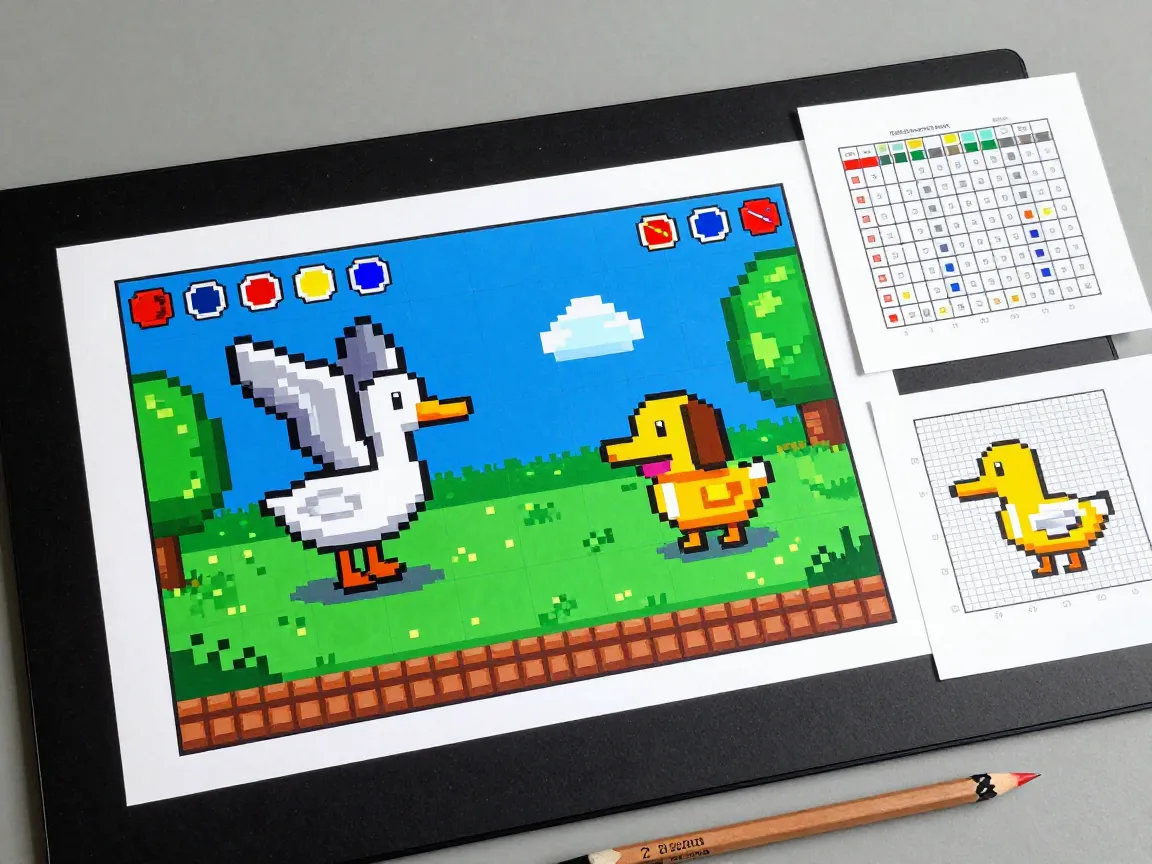
The most game-accurate starting point for any Duck Hunt artist is Ghost J’s YouTube video “Pixels Made Simple, Duck Hunt,” uploaded August 16, 2016, running just over 37 minutes. It teaches the full NES scene, flying duck, dog, shooting gallery targets, and HUD elements, entirely in an 8-bit pixel-art style. Ghost J also offers a printable cheat sheet that maps out the original sprite layout, so you’re not guessing at proportions.
What makes this tutorial useful beyond its runtime is the discipline it enforces. Pixel art has hard constraints: a limited color palette, a fixed grid, and shapes built from individual squares rather than freehand strokes. Working through Ghost J’s method teaches you to think in those constraints, which sharpens your eye for the visual logic behind all NES-era character design. Artists who’ve never worked in pixel art often discover that the grid removes ambiguity, every decision is either right or one pixel off, which is oddly clarifying.
For application, start with the duck sprite before attempting the full scene. The duck uses only a handful of colors from the NES palette and fits inside a small grid, so it’s achievable in a single sitting. Once you can place each pixel deliberately, adding the dog, sky, and grass becomes an extension of the same logic rather than a separate challenge. The cheat sheet Ghost J provides is worth printing and keeping next to your drawing surface.
2. Cartoon Dog Character Study
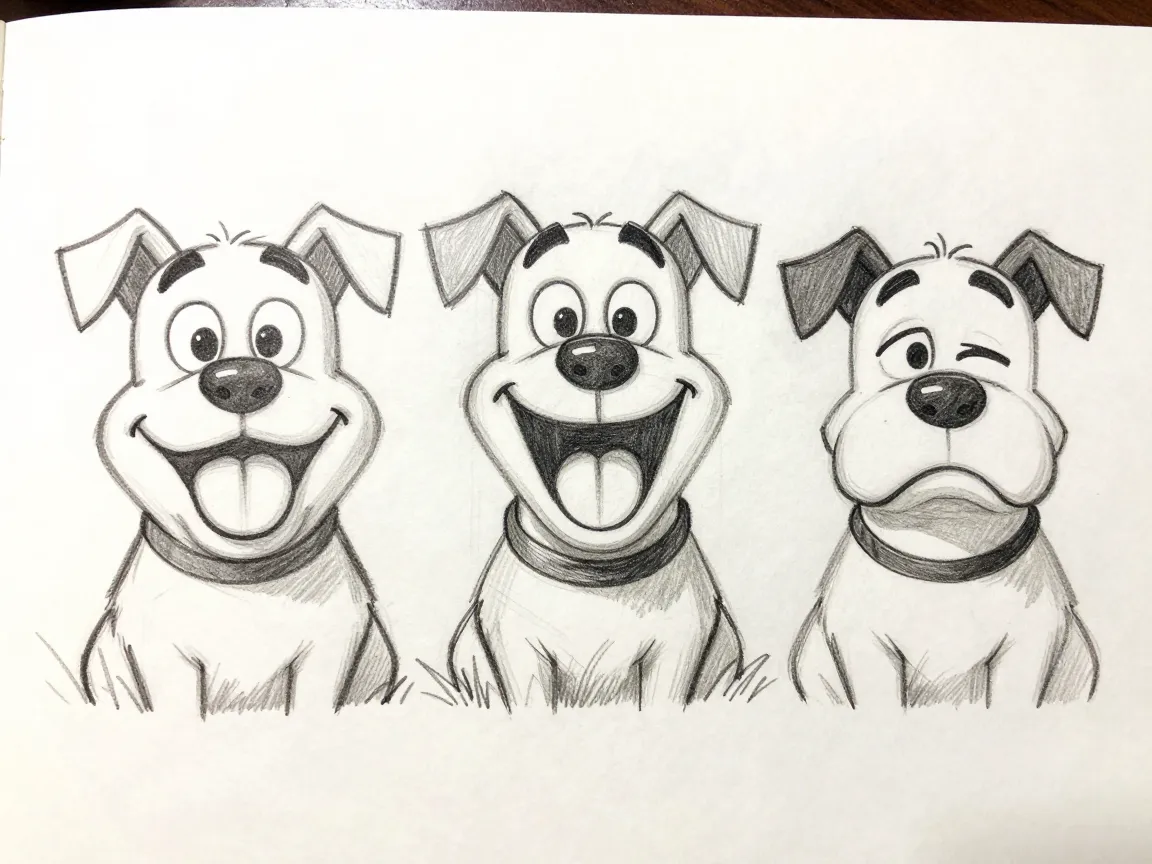
The Duck Hunt dog is arguably more famous than the ducks themselves. A 2025 YouTube tutorial, “How To Draw a Dog From Duck Hunt,” walks through the laughing dog in a simplified cartoon style and frames the lesson explicitly around the classic NES game. The guide keeps the character on-model enough to be instantly recognizable while breaking the construction into shapes accessible to beginners.
The dog’s design is built on exaggeration: an oversized lower jaw during the laugh, wide-set eyes, and a stocky body that communicates smugness through posture alone. The tutorial leans into these qualities rather than softening them, which is the right call for fan art. If you smooth out the exaggerations trying to make the dog look “realistic,” you lose the character. The original sprite’s personality comes directly from those distortions.
A useful practice run before attempting the full character is to sketch just the head in three expressions: the neutral face peeking above the grass, the laugh, and the dejected look when the player shoots high. These three states together tell the game’s whole emotional story. Artists working toward a finished piece often find that drawing the head variations first locks in the proportions before they commit to a full-body pose.
3. Sprite Design Through Scratch Animation
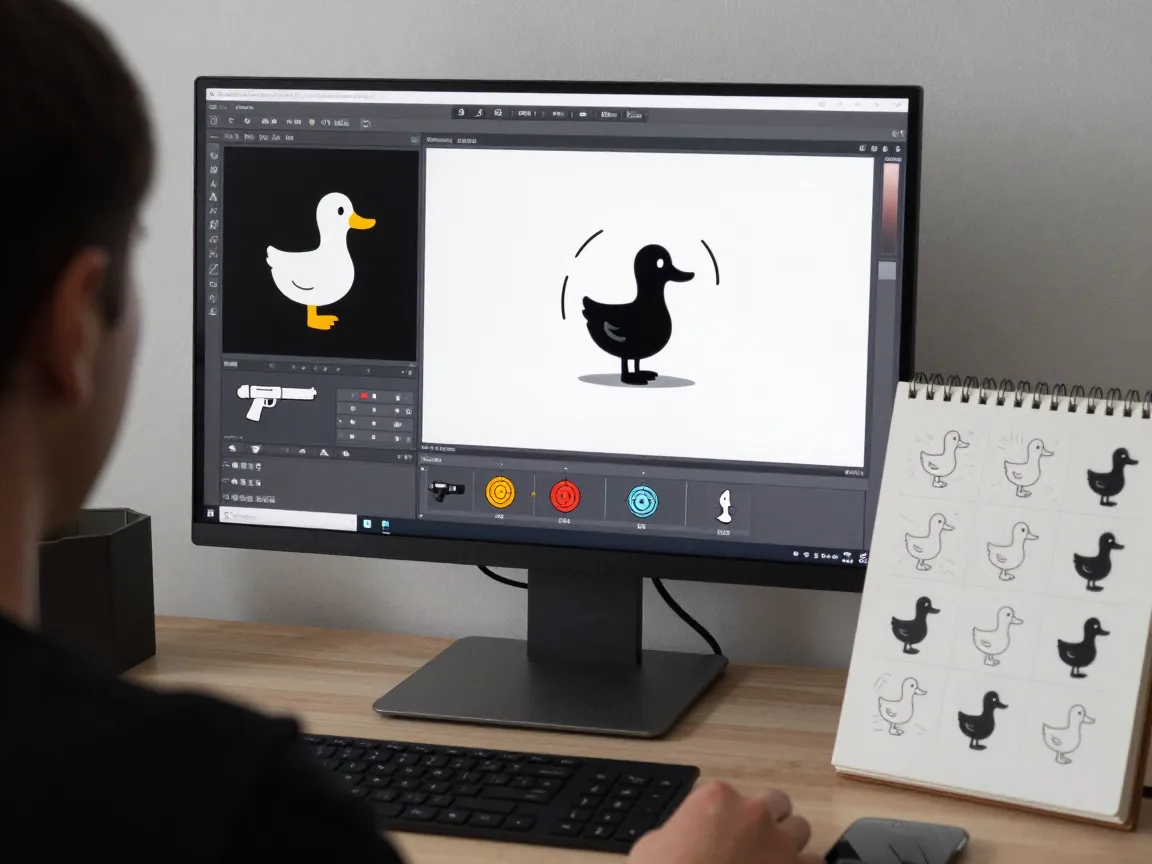
An October 2026 tutorial, “How to Make Duck Hunt in Scratch,” is labeled as a game development guide, but it functions equally well as a drawing and animation workflow. It covers designing duck sprites, a gun sprite, targets, and shooting and falling animations, all from scratch inside a 2D environment. For artists, the value is in the sprite-design stages, not the coding.
Scratch uses a built-in vector/bitmap editor that behaves like a simplified version of tools such as Aseprite or even MS Paint. Working through the duck sprite design in Scratch forces you to define a clean silhouette, choose a minimal color set, and think about how the shape reads when it moves. These are the same decisions you’d make drawing Duck Hunt fan art on paper, but the animation preview gives immediate feedback on whether the design holds up in motion.
The falling animation is particularly instructive. When a duck is hit in the game, it tumbles with a specific rotation that communicates weight without realistic physics. Recreating that tumble in Scratch, even as a rough two-frame animation, teaches you which parts of the design carry the read (the wing shape, the beak angle) and which are secondary. That knowledge transfers directly to static drawings, where you have to imply movement without frames to cycle through.
4. Anatomy-First Duck Workshop by John Muir Laws
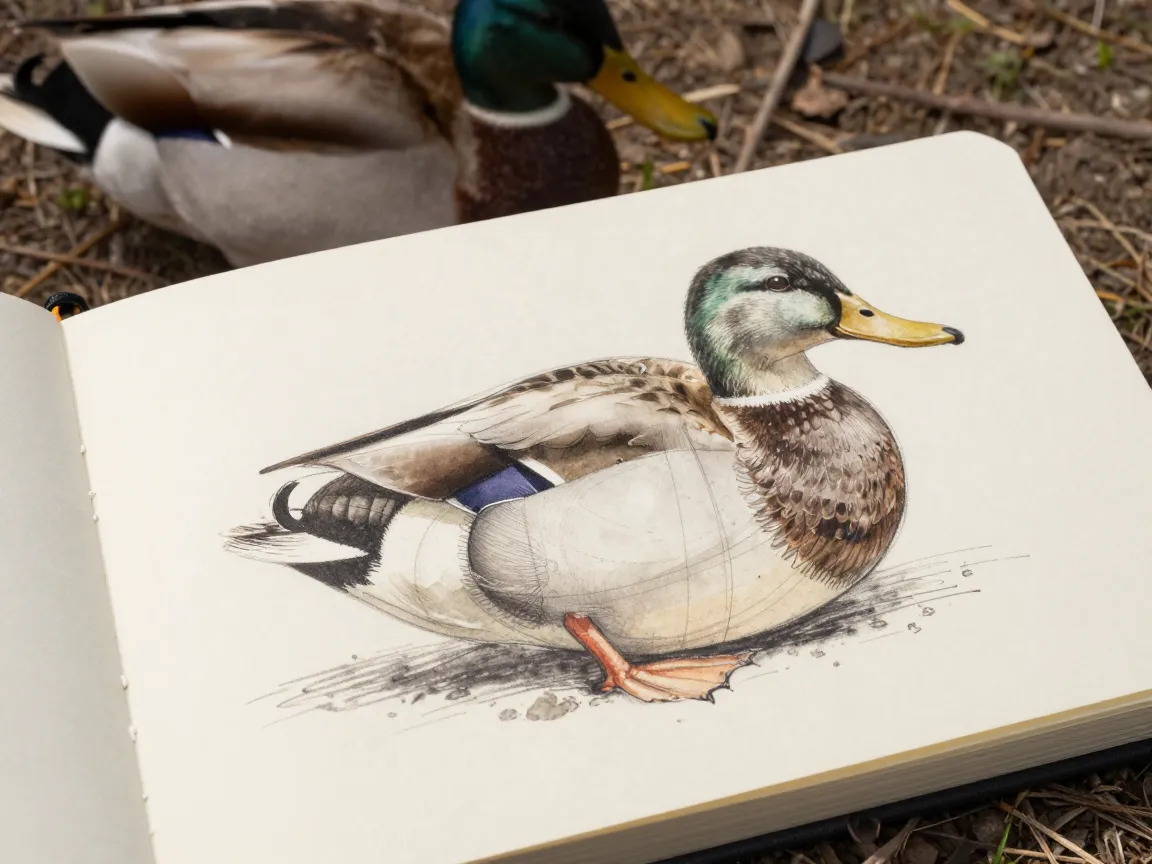
John Muir Laws’ “How to Draw Ducks” workshop, originally published August 15, 2022 and updated through late 2026, takes a field-naturalist approach: build ducks from simple volumes, observe real birds for gesture and structure, and understand feather groupings before stylizing. This is the least game-specific resource on the list, and that’s exactly its strength.
Duck Hunt’s sprites were designed by artists who understood bird anatomy well enough to simplify it effectively. The duck silhouette reads as a duck because the proportions, the low-slung body, the broad bill, the wing placement, are anatomically grounded even at 16×16 pixels. When fan artists skip anatomy study entirely, their Duck Hunt-inspired ducks often look like generic bird shapes rather than mallards. Laws’ workshop closes that gap.
The practical takeaway is to work through at least the first section of Laws’ guide, which covers the body as overlapping egg and sphere forms, before returning to game-inspired stylization. Once you can place a believable duck in space using those forms, reducing it to a flat-color sprite or a bold cartoon outline is a subtraction process rather than a guessing game. Artists consistently find that knowing what to leave out is harder than drawing everything in, and anatomy study is what makes that editing possible.
5. Step-by-Step Construction from Modern Illustration Guides
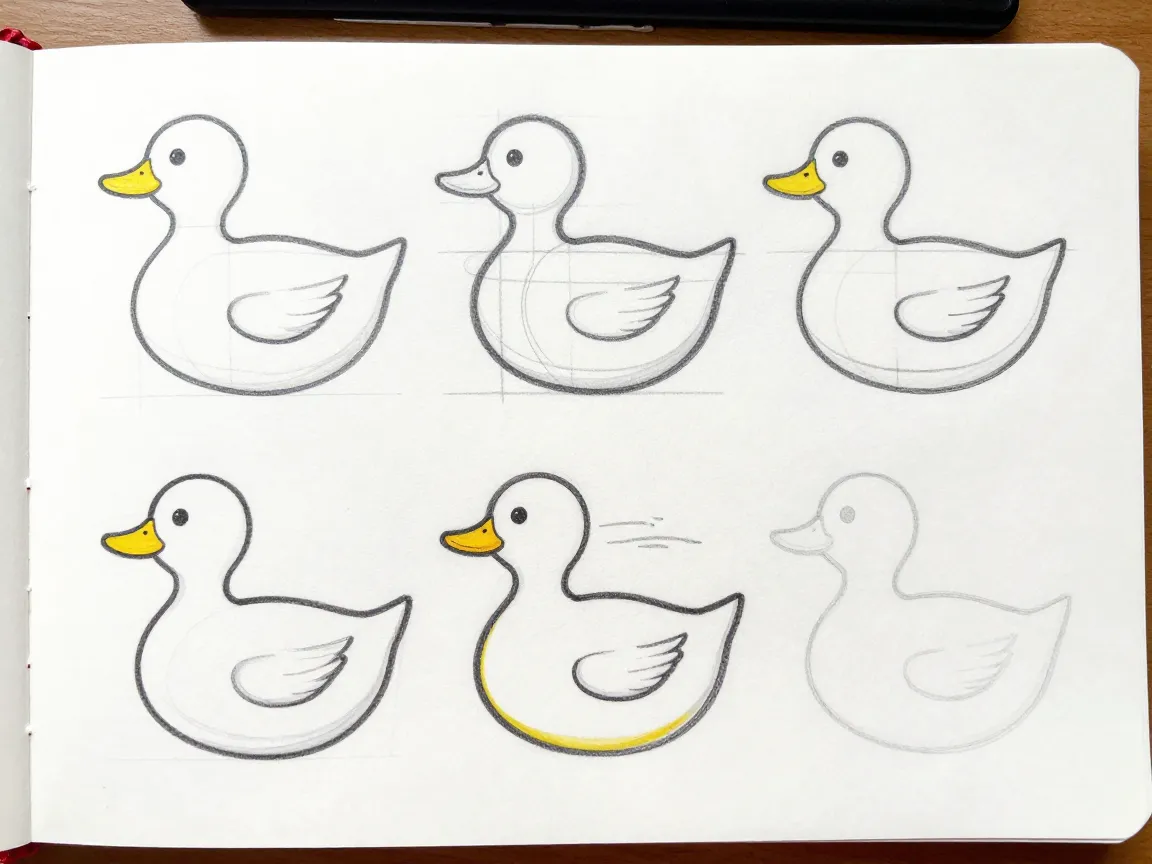
Two recently updated guides, the November 6, 2026 “Duck drawing: a step-by-step guide from sketch to color” from Skyrye Design, and the nine-step lesson from Art Projects for Kids (updated October 2026), take a shape-stacking approach that maps cleanly onto the kind of bold, flat-color design Duck Hunt fan art requires.
Skyrye Design breaks duck construction into a bean-shaped body, a circular head, a curved neck, a flat bill, a teardrop wing, and simple shading. Art Projects for Kids covers guidelines, wing curve, head, neck, tail, water line, beak, eye, and details before moving to final tracing and coloring. The overlap between these two frameworks is not coincidence, this construction sequence closely mirrors how professional character designers build simplified animals from primary forms before refining.
For Duck Hunt purposes, the teardrop wing from Skyrye’s breakdown is especially useful. The wing in Duck Hunt’s sprite is one of the most readable shapes in the design, and placing it correctly relative to the bean body is what makes the duck look airborne rather than static. Work through either guide with a 2B pencil and thick construction lines, then trace the final silhouette in a single clean pass. That two-stage process, loose construction, clean trace, is faster than trying to get the shape right on the first attempt, and it produces the kind of decisive outlines retro game art needs.
Quick Comparison
| Tutorial | Style | Best For | Skill Level |
|---|---|---|---|
| Ghost J Pixel Art Scene | 8-bit pixel | Full NES scene accuracy | Beginner to intermediate |
| Duck Hunt Dog Cartoon | Simplified cartoon | Character-focused fan art | Beginner |
| Scratch Sprite Design | Sprite/animation | Understanding motion and shape | Beginner to intermediate |
| John Muir Laws Anatomy | Naturalist/structural | Believable proportions | Intermediate |
| Skyrye / Art Projects Construction | Shape-stack illustration | Clean flat-color design | Beginner |
| Cartoon Duck Variation Studies | Expressive cartoon | Character exaggeration range | Beginner to intermediate |
6. Expressive Character Variation Studies
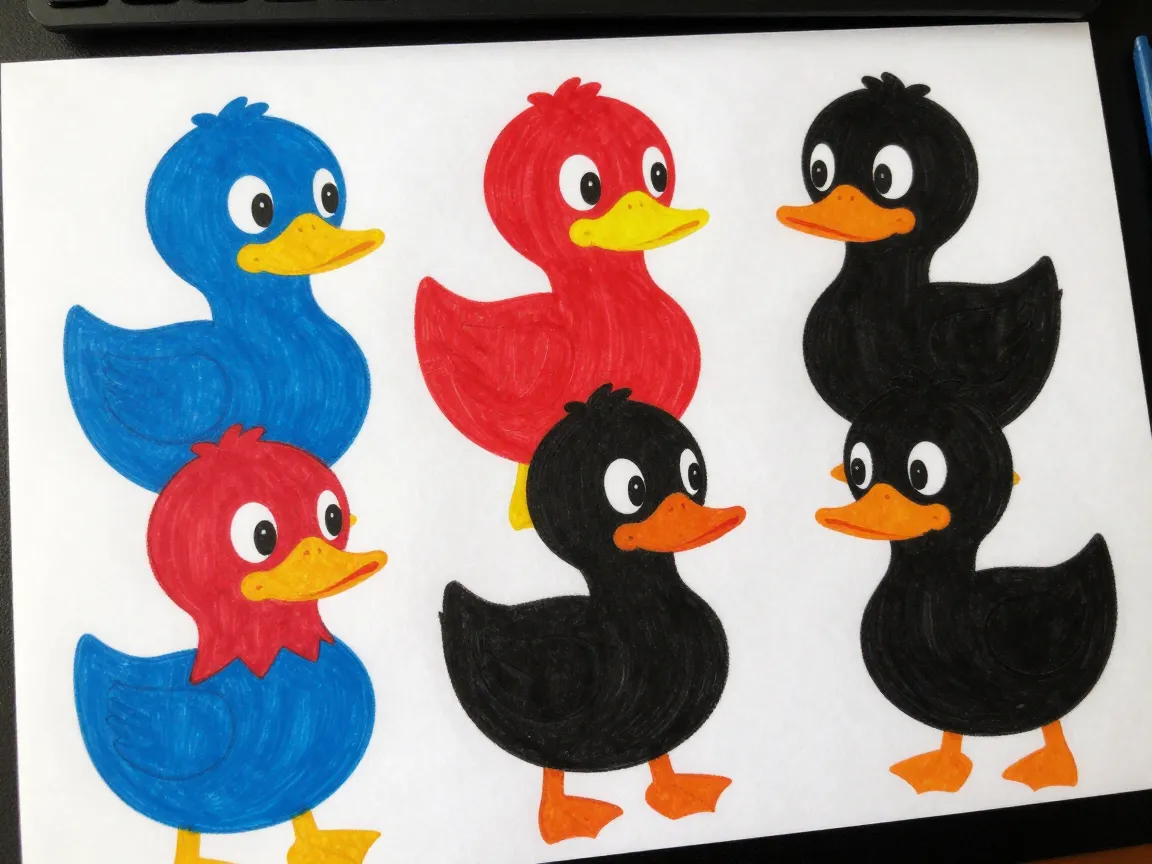
The June 20, 2026 video “Drawing and Coloring 6 Little Ducks” covers multiple cartoon duck characters with bright colors and expressive faces. It’s not a Duck Hunt tutorial, but it’s one of the most useful exercises for artists trying to settle on a Duck Hunt character design before committing to a finished piece.
Duck Hunt features three duck color variants, blue, red, and black, each appearing in different rounds of the game. Drawing multiple cartoon duck characters in one session, as this video prompts, trains your eye to vary expression, posture, and silhouette across characters that share the same underlying construction. That variation practice is exactly what you need when deciding which variant to illustrate and how much personality to push into the design.
A secondary benefit comes from working with bright flat colors under time pressure. The video’s format encourages completion over polish, which breaks the habit of overworking a drawing. Duck Hunt’s visual identity is built on clean, saturated color blocks, no gradients, no texture. Practicing quick color fills with a limited palette in this loose, multi-character format builds the speed and confidence that more polished Duck Hunt fan art later requires. After completing a session with six quick cartoon ducks, returning to a single, carefully constructed Duck Hunt character feels considerably less intimidating.
Conclusion
The most direct next step is to start with Ghost J’s pixel-art tutorial, complete the duck sprite using the printable cheat sheet, then run through the Skyrye Design construction guide to build the same duck in a looser, hand-drawn style. Doing both back to back makes the structural logic visible in a way that either tutorial alone doesn’t. From there, the anatomy workshop by John Muir Laws and the cartoon dog study give you the character and structural depth to take the work further. These 6 duck hunt drawing tutorials for artists who love the classic game cover enough range that you can return to them at different skill levels and get something new each time.