Fishing Picture Ideas for Anglers Who Want Scroll-Stopping Shots
Roughly 95 percent of fishing photos shared online show the same thing: a person squinting into the sun, holding a fish at arm’s length, background a blur of nothing. Those photos get a polite double-tap from family members and vanish from memory in seconds. The 6 fishing picture ideas for anglers who want scroll-stopping shots covered here are built on a different principle: a great fishing photo earns its attention by showing something specific, lit well, and composed with intention.
Disclosure: This post contains affiliate links. As an Amazon Associate, we earn from qualifying purchases, and at no extra cost to you.
Whether you shoot on a phone, a mirrorless camera, or a basic point-and-shoot, these ideas translate directly into photos that brands notice, followers save, and other anglers study. Each idea works as a standalone concept and also fits naturally into a larger content strategy if you want to grow an audience or attract sponsorship in 2026.
Key Takeaways
- Golden-hour light solves most exposure problems and flatters both fish color and human subjects without extra gear.
- A story sequence across five or six frames does more for engagement than any single hero shot.
- Ethical handling is now a visual signal sponsors and fishing communities read immediately in a photo.
- Environmental portraits that make the angler small create a sense of place no trophy shot can replicate.
- Macro close-ups of eyes, hands, and scales produce the highest-performing thumbnails on short-form video and fishing forums alike.
- Motion shots require a slightly slower shutter speed than most anglers expect; 1/250s is a practical starting point for water splash without full blur.
1. Golden-Hour Hero Shot with Clean Light and Raised Fins
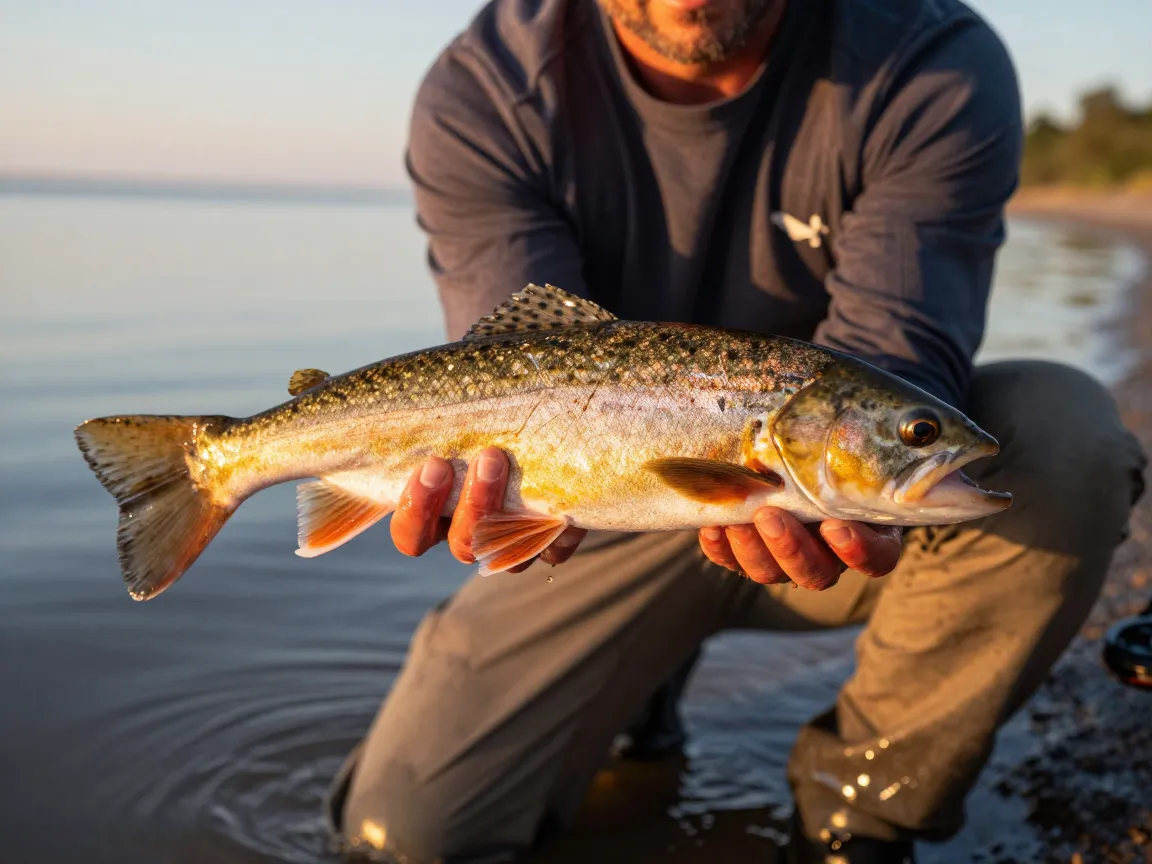
The first thirty minutes after sunrise and the last thirty before sunset do work that no editing app can fully replicate. During those windows, sunlight travels at a low angle and wraps around a fish’s body rather than blasting down from overhead, which means the colors on a bass’s flank, a trout’s spots, or a redfish’s tail read clearly instead of washing out.
The mechanics of the classic grip-and-grin shot are worth revisiting because most people get one or two details wrong. Hold the fish horizontally with both hands rather than dangling it vertically. Keep it close to your chest rather than pushed out toward the camera, which causes the hands to look enormous and the fish to look distorted. Ask your photographer to crouch slightly so the shot is level with the fish rather than looking down at it. A raised dorsal fin signals a healthy, lively fish and adds visual interest to the silhouette.
For phone shooters, the portrait mode on any phone released after 2022 will blur the background enough to separate the subject cleanly, but only if the subject is within about four feet of the lens. If you are further back, the subject-background separation collapses. Keep that distance tight, face the light source (the low sun), and you have a technically clean shot without any additional equipment.
Sponsors and brand representatives reviewing fishing content in 2026 consistently flag exposure and color accuracy as the first filter. A properly lit hero shot tells a brand that the angler takes the craft seriously, before the brand even reads the caption.
2. Story-Driven Sequence Across the Full Catch
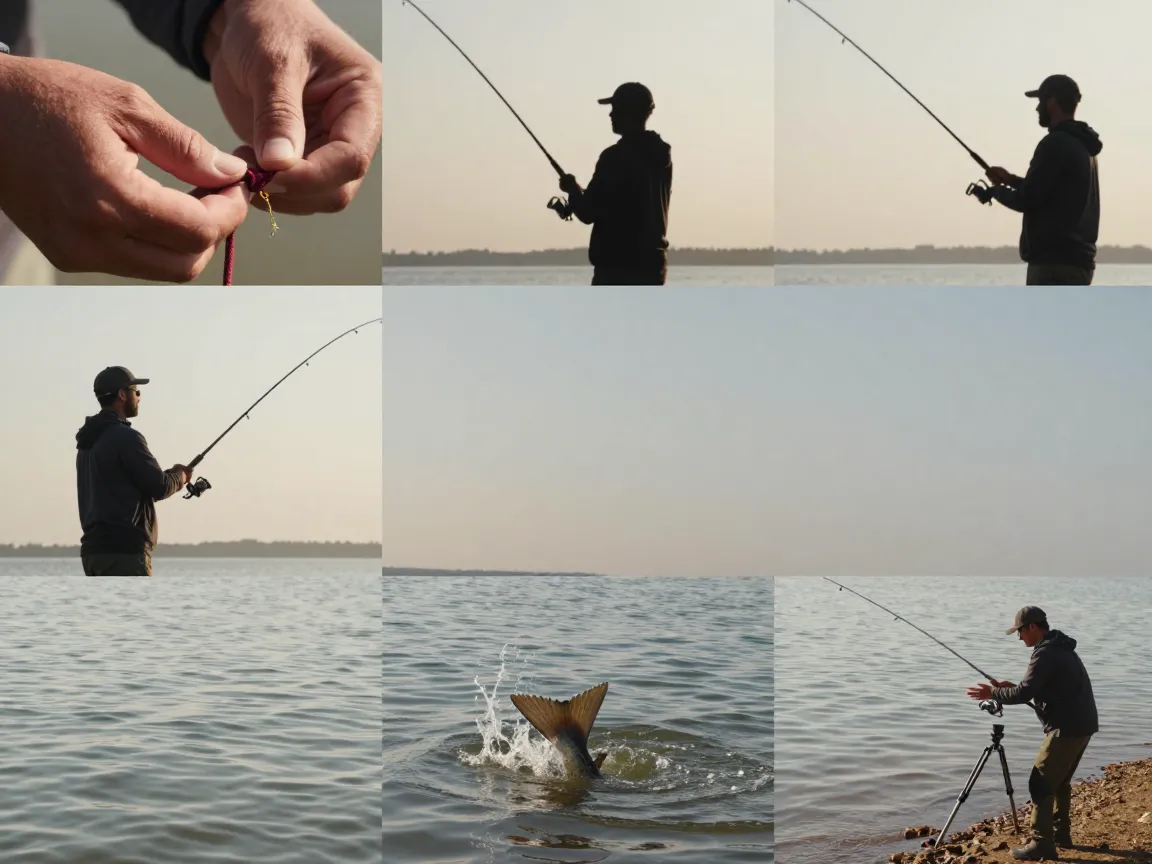
A single trophy shot answers one question: “Did you catch a fish?” A sequence answers a much more interesting one: “What was it actually like?” Anglers who post sequences regularly report stronger saves and shares than those who post single frames, and the reason is straightforward, a sequence rewards people who stop scrolling because there is more to see.
The five-frame structure that works most reliably covers rigging, casting, the fight, the net or hand landing, and the release. Each frame has a distinct visual purpose. The rigging shot is intimate and detail-focused, usually a close-up of hands tying a knot or threading a lure. The casting frame works best in silhouette or with a wide background to show the environment. The fight frame is where motion blur and tension matter. The landing frame is the traditional hero shot, done with the technique from idea one above. The release frame is the emotional close, fish tail disappearing back into the water, angler hands open.
You do not need to shoot all five frames in a single session or on the same fish. Many experienced fishing content creators build their sequences over a morning by keeping a designated photographer or setting a camera on a tripod at the bank. If you fish alone, a tripod with a remote shutter or a phone propped on a tackle box handles the setup, casting, and release frames reasonably well. The fight frame is harder to get solo, but even a close-up of the bent rod and taut line communicates the same information.
Posting the sequence as a carousel on Instagram or as a short video slideshow on TikTok or YouTube Shorts lets the platform’s algorithm register multiple interactions per post, which improves reach without requiring a larger following.
3. Ethical “Keep-Fish-Wet” Shots That Signal Conservation
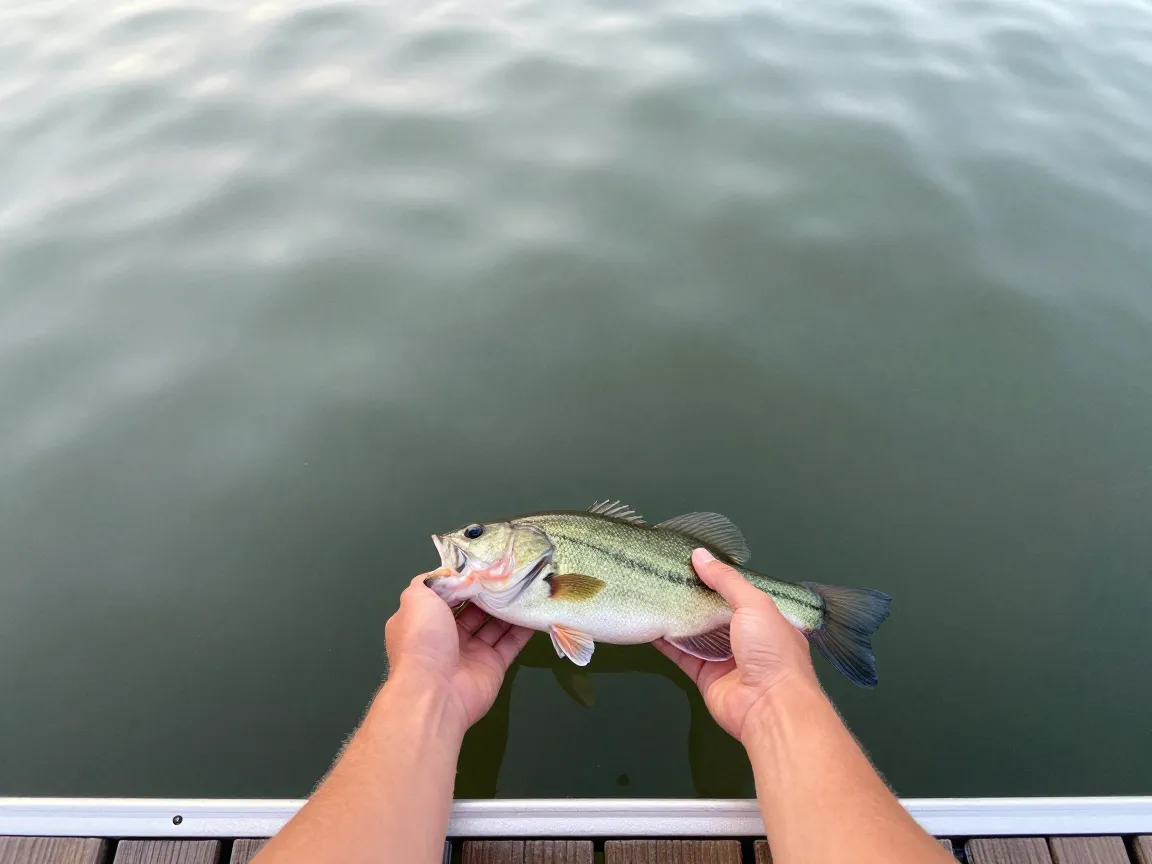
There is a measurable shift in how fishing communities and brands respond to handling in photos. A fish held out of water for thirty seconds for a photo session looks different from one lifted briefly with wet hands and photographed immediately, and experienced anglers notice. The keep-fish-wet movement, which gained wide traction in freshwater bass and trout communities around 2018 and has since spread to saltwater and fly fishing audiences, now has a visual vocabulary that scroll-stopping fishing photos can use deliberately.
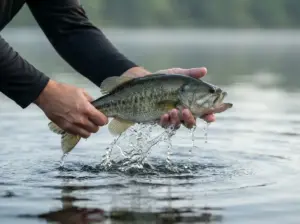
The core technique is simple: keep the fish in the water or at the surface, photograph from directly above or at water level, and let the fish’s environment be part of the composition. A largemouth bass held just below the surface with both hands visible and water touching the fish throughout the frame reads immediately as a conservation-conscious image. That matters to brands selling premium gear to ethical anglers, and it matters to fishing community moderators who flag and remove photos that show dry, bent, or vertically dangled fish.
Water-level shots require the photographer to get low, often lying on a dock or leaning over a gunwale. Phone cameras are well-suited here because their thin profile lets you get the lens close to the water surface without risk of the whole device going in. Enable the grid overlay on your phone camera and use the lower third of the frame for the fish, with the water surface and background filling the upper two-thirds. The result is a photo that shows both the fish and its environment, which is a stronger composition than a fish isolated against sky.
If you want one practical constraint to remember: a fish should be in the water or lifted for no more than the time you can hold your own breath comfortably. That standard, used in many catch-and-release guides, also produces better photos because the fish is more likely to be calm and correctly colored when it has not been stressed by prolonged air exposure.
4. Location-Rich Environmental Portrait with Angler Small in Frame
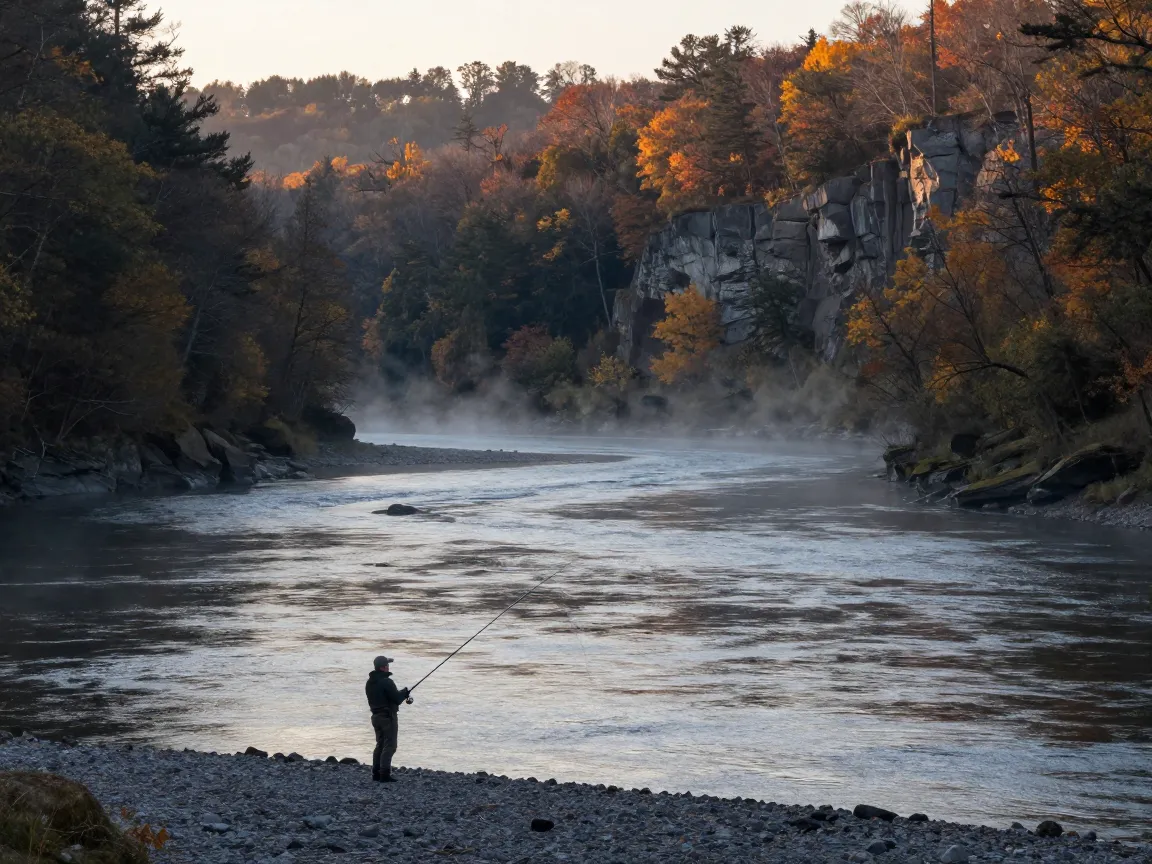
Most fishing photos are about the fish. This one is about the place. Making the angler small in the frame and the landscape large is one of the most direct ways to create a scroll-stopping fishing image because it communicates something the viewer genuinely cannot get from a trophy shot: where you were and what it felt like.
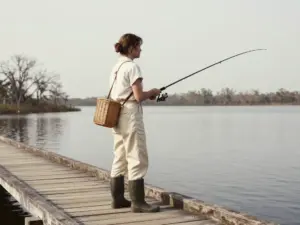
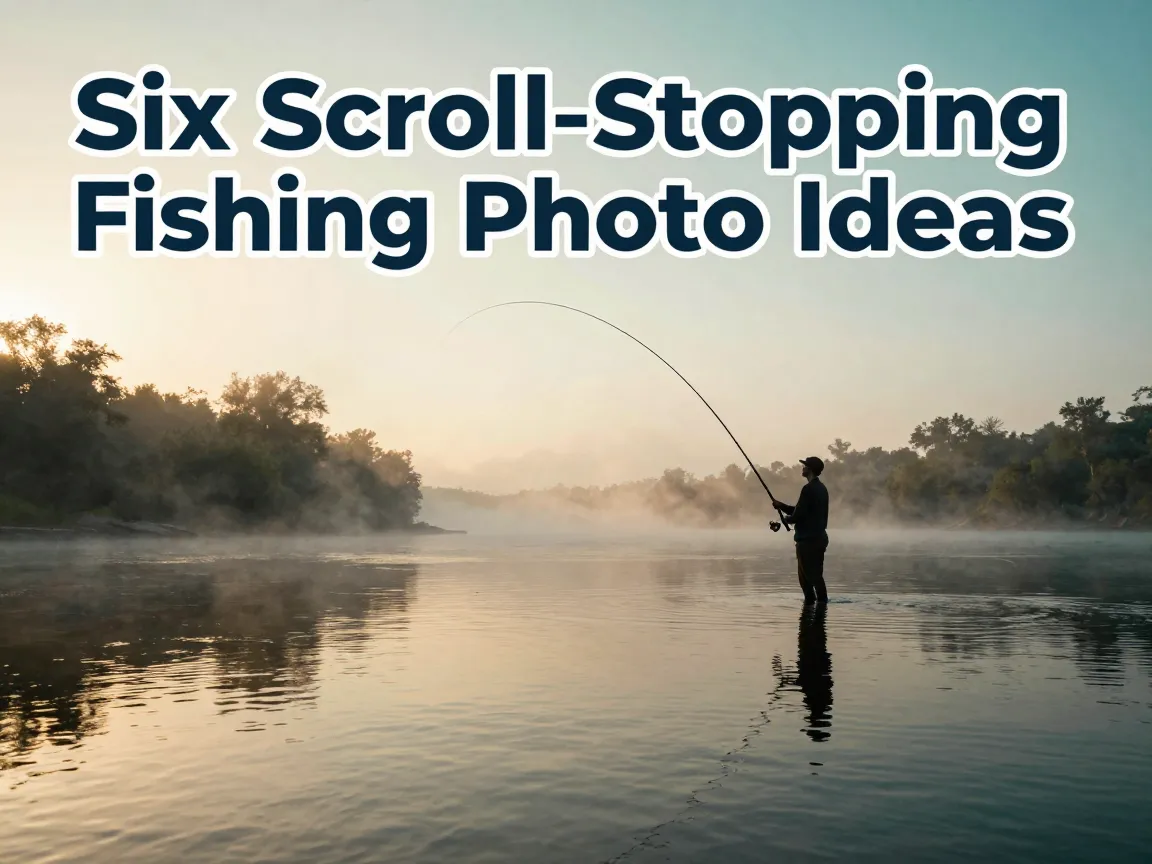
The compositional rule that applies here is simple. Place the angler in the lower third of the frame, ideally casting or in some active posture, and let the river, lake, canyon, coastline, or treeline occupy the remaining space. The angler becomes a scale reference and a human anchor for the landscape rather than the visual subject. This approach works especially well at dawn, with mist on the water, or in locations with strong natural color contrast, autumn foliage over a brown trout stream, for example, or a bright flats boat against turquoise water.
Phone cameras with a wide-angle mode (the 0.5x or ultra-wide lens on most flagship phones) handle this composition well. The challenge is that the angler needs to be in a naturally active position, not posed stiffly. Ask them to cast repeatedly while you shoot from a distance, then select the frame where the rod is loaded or the line is tight. That movement keeps the small figure from looking like a prop.
For anglers building content for social media, this type of shot works well as a cover image for a fishing journal, a background for a text overlay, or a lead image in a gear review. It is also the shot most likely to get repinned on Pinterest or used by a tourism board or lodge, which extends reach without any additional effort.
5. Dynamic Motion Shots with Water, Line, and Speed
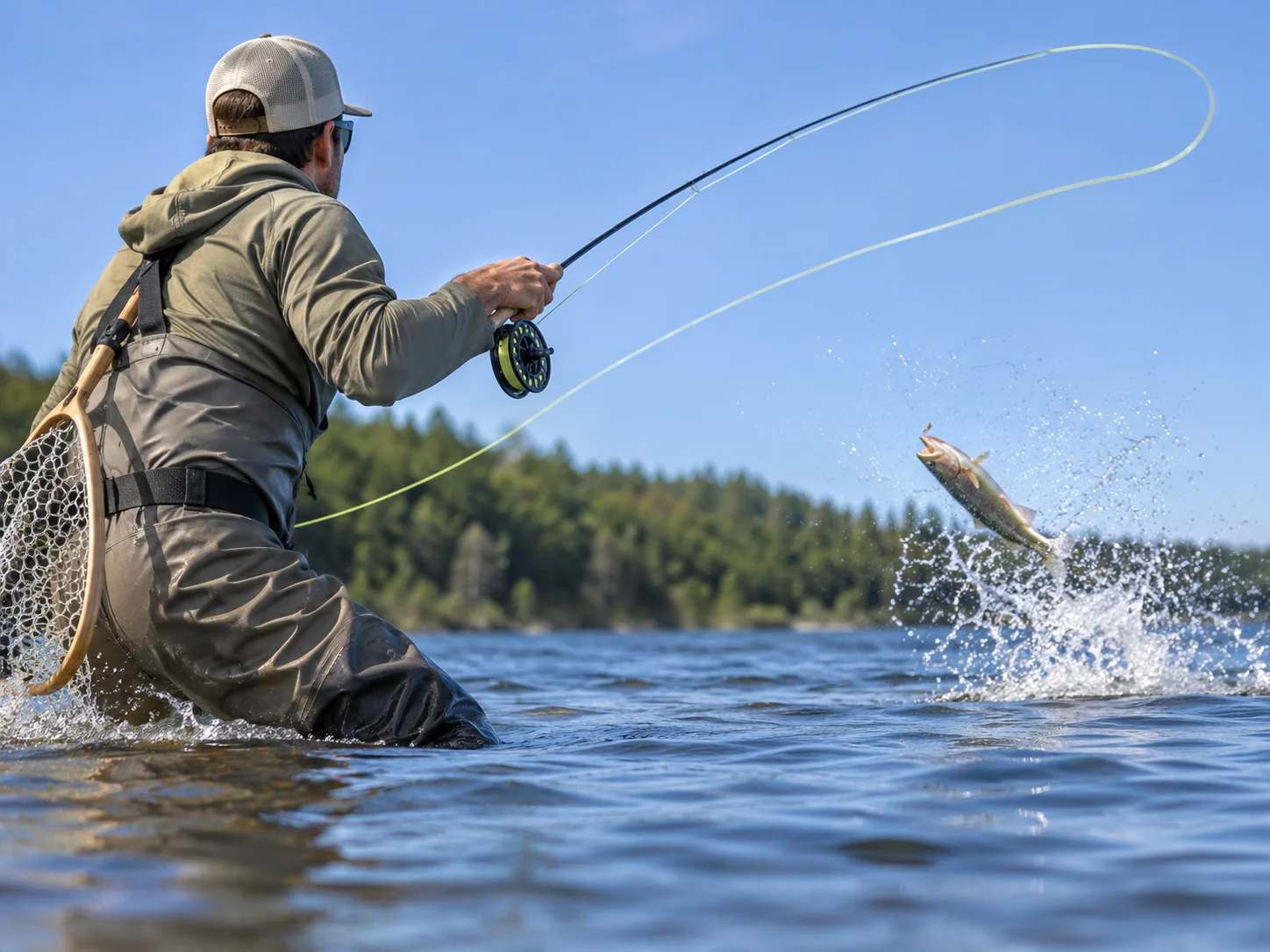
A fighting fish is one of the most kinetic events in fishing, and most photos of it are static and dull because the photographer used too fast a shutter speed. Freezing every water droplet removes the sense of movement. The goal with motion shots is controlled blur, sharp subject, soft background and water, with just enough movement in the spray to communicate speed and energy.
A shutter speed between 1/125s and 1/320s on a fish breaking the surface will freeze the fish itself while letting water droplets trail slightly. On a phone, this requires using the manual or pro mode; the automatic mode will push the shutter speed much higher in bright light, eliminating the motion effect. At 1/60s, you will get more blur, which works well for a fish tail slapping the water or a lure landing. At 1/500s and faster, everything freezes cleanly, which is useful for mid-air fish or aerial jumps from tarpon and bass.
Fly line in motion is a category of its own. The loop of a well-formed cast against a plain sky or dark treeline is a visually compelling subject even without a fish in the frame. Shooting from a low angle behind and to the side of the caster, with the line passing above the camera’s field of view, creates a dynamic diagonal line that the eye follows through the frame. This is one of the few fishing shots that works without a catch at all.
The background matters as much as the subject in motion photography. A cluttered bank or a boat full of tackle breaks the visual effect. Find the shot angle that puts a simple background behind the action, open water, sky, or blurred foliage, and the motion effect reads cleanly.
6. Intimate Close-Ups of Eyes, Hands, and Texture
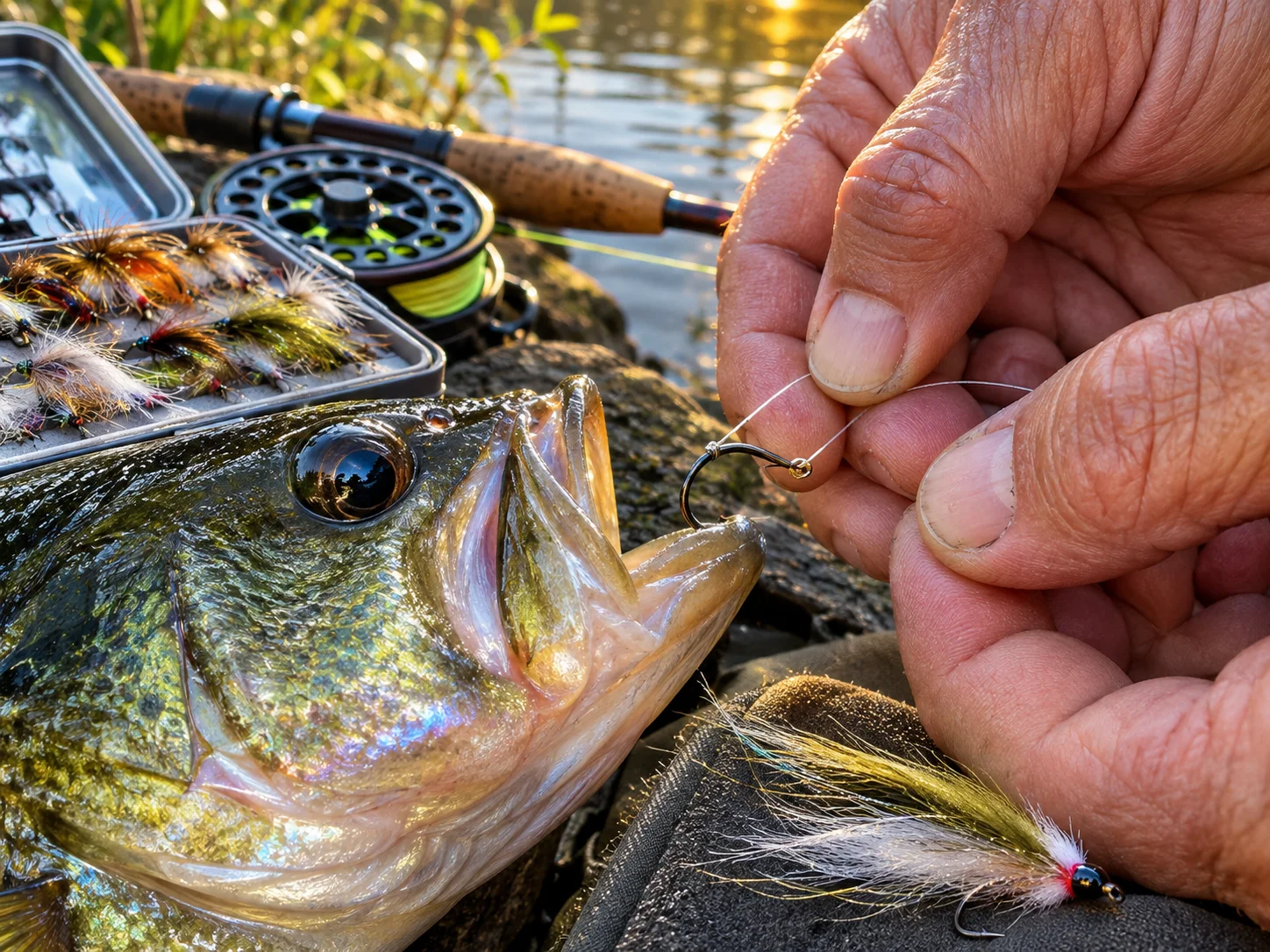
A macro shot of a largemouth bass eye, with the pupil reflecting the sky and the iridescent scales visible in the surrounding skin, is the kind of image that stops scrolling because most people have never seen a fish that closely. Intimate close-ups work because they show texture, detail, and life that a standard grip-and-grin completely hides.
There are three reliable subjects for this approach. The fish itself, particularly the eye, the lateral line, the gill plate, or the tail, offers structural detail that most people associate with underwater photography rather than bank fishing. The angler’s hands tell a story on their own: a weathered hand tying a Palomar knot, a hand releasing a trout back into fast water, fingers unhooking a circle hook with a practiced grip. These shots work without showing the angler’s face at all, which many content creators prefer for practical reasons. The third subject is gear in context: a fly box open in the sun, a hand-tied streamer held against the light, a reel drag being set at water level.
For social media thumbnails specifically, close-ups outperform wide shots in A/B tests run by fishing content creators because they create contrast at small sizes. At the thumbnail dimensions used by YouTube (120×90 pixels) or Instagram (161×161 pixels), a wide shot of a person in a boat becomes an unreadable blur, while a close-up of a bright fish eye or a knotted leader remains visually distinct.
The technical requirement for phone shooting is the standard portrait mode or the native 2x zoom lens rather than the ultra-wide. Keep the phone still, tap the specific detail you want in focus on the screen before shooting, and use a burst of three or four frames to account for subtle movement. For cameras, a macro lens or a standard kit lens at its minimum focus distance both work at the subject sizes typically encountered in fishing.
One constraint worth respecting: close-up shots of fish require the fish to be healthy and cooperative. A stressed fish will not hold still for a macro shot and should not be asked to. If a fish is active and fighting the hook after landing, skip the close-up and go to the water-level release shot from idea three instead.
Quick Comparison
| Shot Type | Best Light | Key Technical Need | Primary Platform Use |
|---|---|---|---|
| 1. Golden-hour hero | Sunrise/sunset | Level angle, horizontal hold | Instagram, brand content |
| 2. Story sequence | Flexible | 5-frame arc, tripod for solo | Carousel, Reels, Shorts |
| 3. Keep-fish-wet | Overcast or golden | Water-level angle, wet hands | Conservation communities, brands |
| 4. Environmental portrait | Dawn, dusk, mist | Ultra-wide lens, active posture | Pinterest, lodge marketing |
| 5. Motion shot | Bright ambient | 1/125-1/320s shutter | Action accounts, editorial |
| 6. Intimate close-up | Diffuse or golden | 2x zoom or portrait mode | Thumbnails, forums |
Conclusion
The 6 fishing picture ideas for anglers who want scroll-stopping shots are not six separate projects requiring different gear or long learning curves. The practical next step is to pick one idea from this list that your current fishing photos consistently skip, and commit to executing it deliberately on your next two or three outings. Most anglers default to the hero shot alone, so adding a story sequence or a water-level ethical release shot immediately separates your content from the majority of what appears in any fishing hashtag.
One camera setting is worth adjusting before your next session: if you shoot on a phone in auto mode, switch to pro or manual mode and set the shutter speed to 1/200s. That single change affects how motion reads in your photos and applies directly to ideas two, five, and six without changing anything else about how you shoot.