Clever Fishing Gear Storage Ideas to Declutter Your Garage
Anglers in the United States spend an average of $700 per year on fishing equipment, yet most of that gear ends up tangled in a corner, leaning against a water heater, or buried under kayak paddles. The rods get stepped on. The reels collect dust. The tackle boxes multiply. If your garage has reached that point, these 6 clever fishing gear storage ideas to declutter your garage offer a direct path from chaos to a system you’ll actually use, covering everything from vertical rotating racks to ceiling mounts and rolling carts built for the garage floor.
Disclosure: This post contains affiliate links. As an Amazon Associate, we earn from qualifying purchases, and at no extra cost to you.
1. Vertical Rotating Rod Rack for Maximum Rod Density
A standard garage wall can hold maybe four rods in a row before it starts eating into workspace. A vertical rotating rod rack changes that math completely. The LAIFUCAM V16 rack, introduced at Lowe’s in November 2026, parks up to 16 rod-and-reel combos in a footprint smaller than a single floor tile, using a 360-degree rotating base and staggered shelves to keep rods from crowding each other.
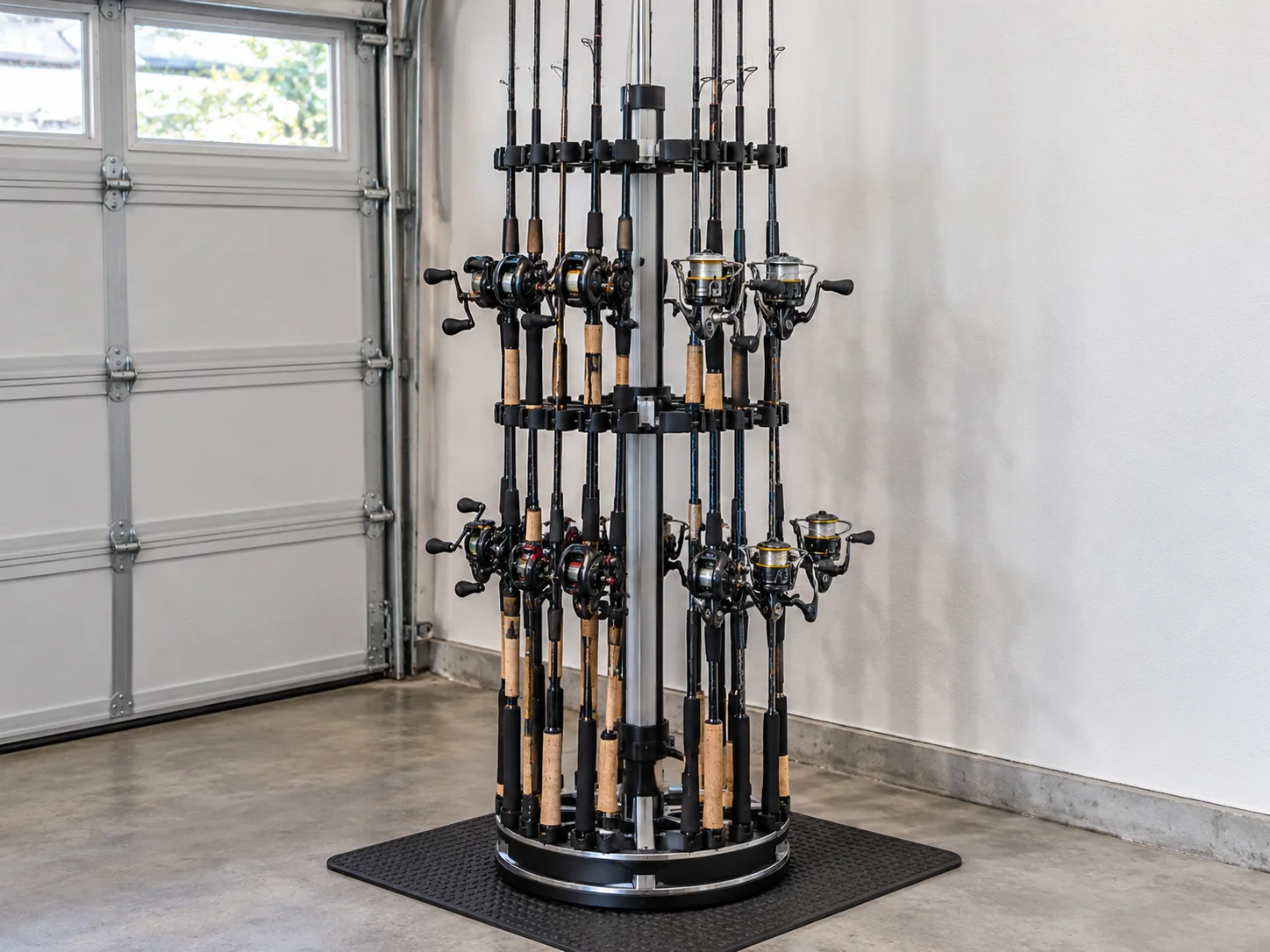
The staggered shelf design is the key detail here. Each rod sits at a slightly different height, so the reel handles don’t bang against each other when you rotate the rack to pull out a specific combo. That matters for anyone running baitcasting reels with exposed handles, which scratch easily. The whole unit spins, so instead of leaning across a row to reach the rod in the back, you rotate the rack and grab it from the front.
For garages with limited wall space, this style of rack is more efficient than any wall-mounted strip. It works best when positioned near the garage door or a corner, where foot traffic won’t knock it over. The base is designed to stay stable on concrete, but placing it on a rubber anti-fatigue mat adds extra grip. If you’re running a mix of spinning and baitcasting combos, the tiered layout lets you separate them by type without any labeling required.
2. Rolling Rod-and-Tackle Cart with Pegboard
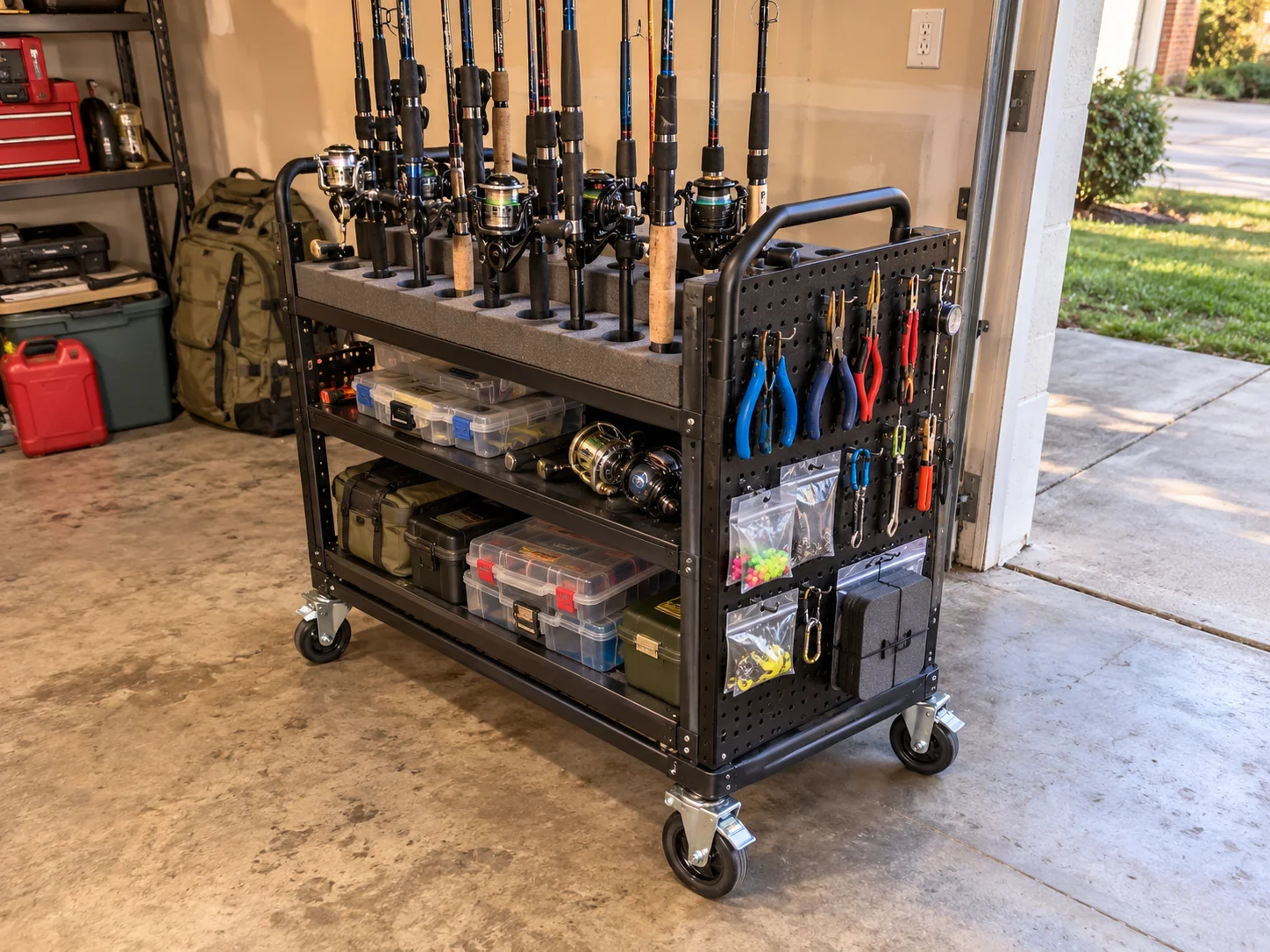
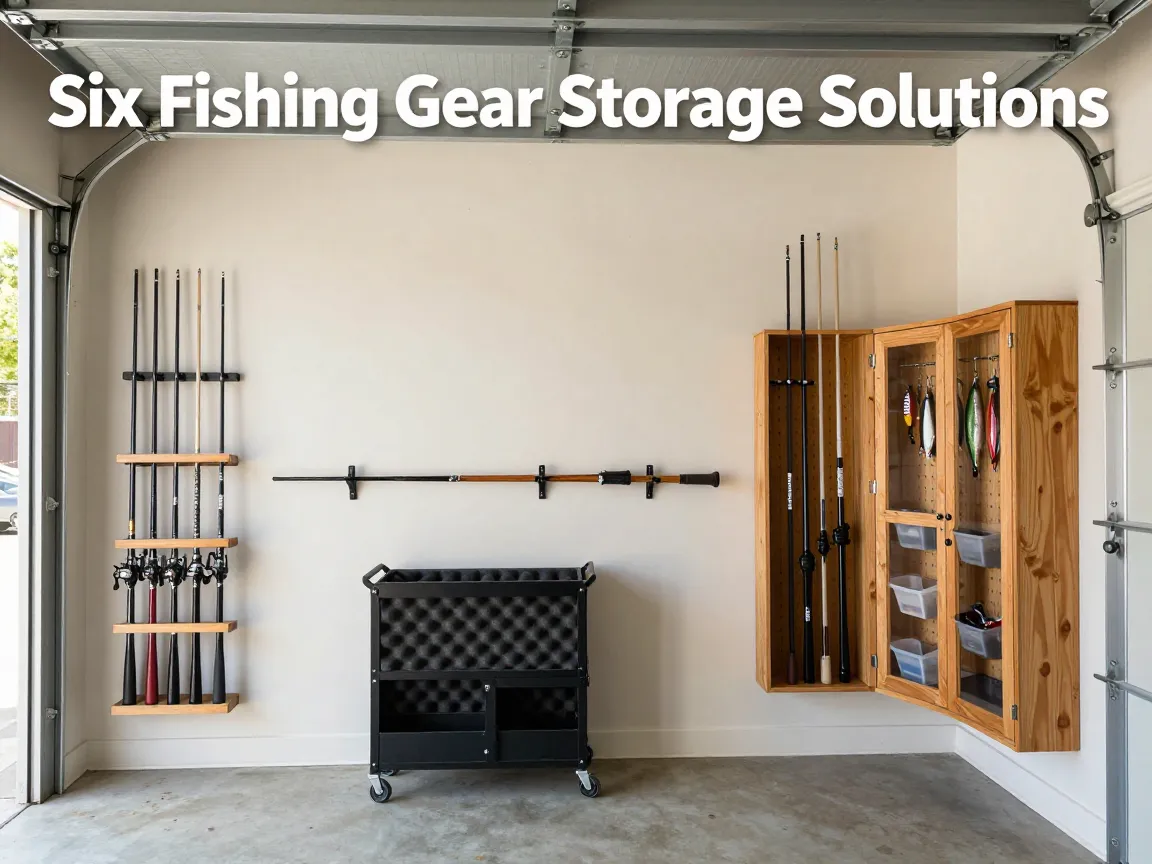
The appeal of a rolling cart is portability, but the best versions do more than just move rods from point A to point B. A Linder Group Inc cart listed at Lowe’s in November 2026 stores up to 12 rods in EVA foam-lined slots, adds three raised-rail shelves for tackle boxes and reels, includes a pegboard panel for hooks and tools, and rolls on locking casters with an anti-tip base. That’s a full fishing station that parks against a wall when not in use.
EVA foam lining in the rod slots is not a luxury addition. Rod blanks, especially graphite ones, scratch against hard plastic over time, and even hairline scratches can weaken the blank near the guides. Foam-lined slots prevent that damage without requiring rod sleeves for every blank. The raised rails on the shelves keep tackle boxes from sliding off during the roll from the garage to the driveway.
The pegboard panel on the side of the cart is where this storage style earns its place. Pliers, line clippers, hook removers, and small bags of terminal tackle can all hang within arm’s reach rather than disappearing into a drawer. For anglers who pre-rig leaders and store them on small foam pads, those pads clip directly to pegboard hooks. The locking casters are non-negotiable if you park on a sloped driveway or a garage floor with any grade to it.
3. Garage Door Mount to Reclaim Dead Space
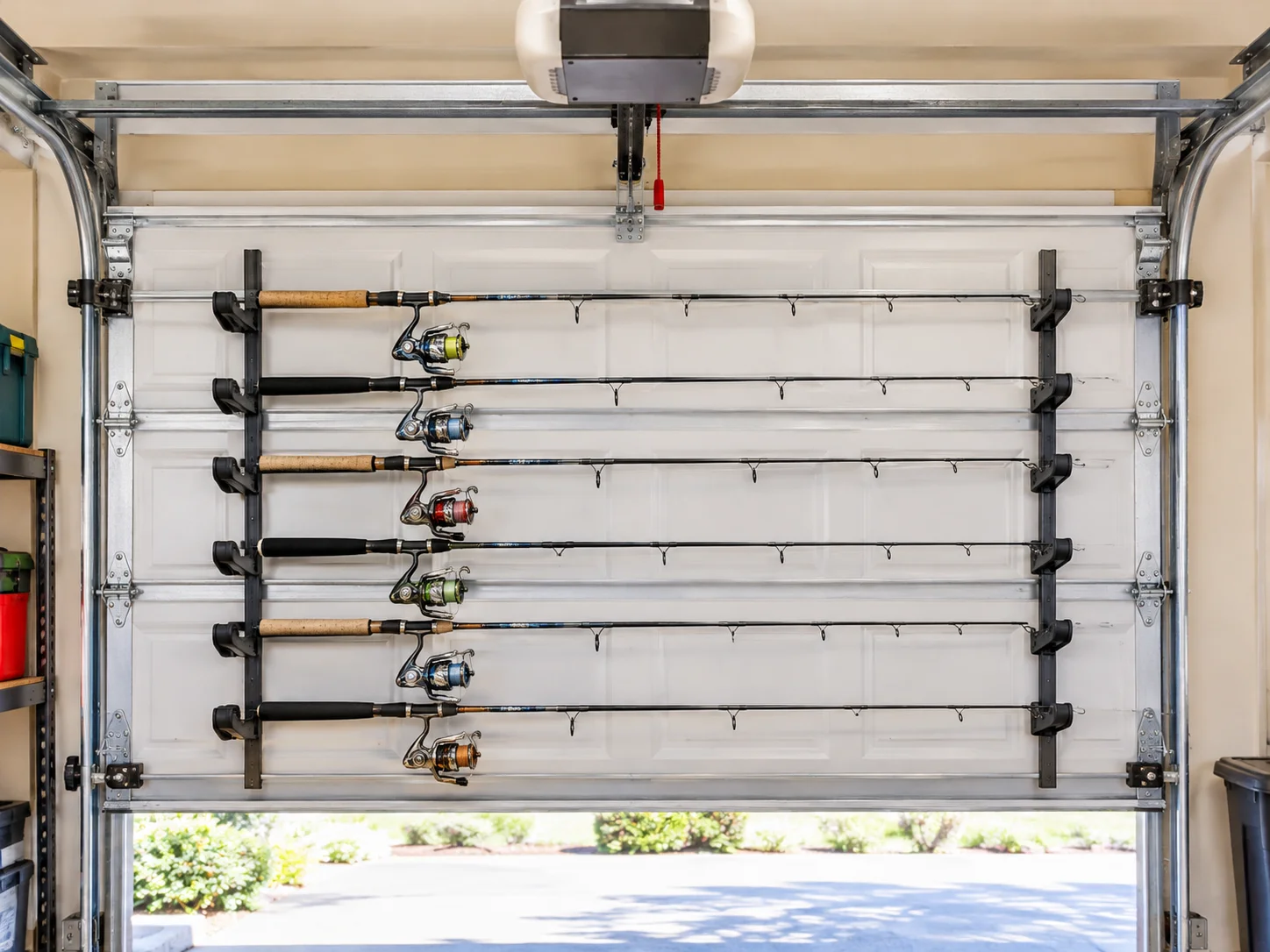
The inside face of a garage door is one of the most consistently wasted surfaces in any home. It’s large, it’s accessible every time you open the garage, and it’s almost never used. A Cobra Storage garage door rack updated in mid-November 2026 uses an adjustable-width clamping system to hold up to six fishing rods horizontally against the door, requiring no drilling into walls and no permanent modification to the door itself.
The clamping system grips the door panel frame and holds the rod rack arms out from the surface far enough that the rods don’t rest against the door material. This matters because door panels flex slightly during operation, and rods resting directly against them would get jostled on every open and close cycle. The adjustable width means the rack fits standard single-car and two-car garage doors without buying a size-specific product.
Six rods is a practical limit for this application. The inside surface of a garage door isn’t engineered for heavy loads, and rods are lightweight, so staying at six or fewer keeps the system safe. This storage idea works particularly well for a secondary set of rods, like a few ultralight spinning setups kept ready for quick trips, while heavier gear lives on a wall rack or rotating stand. If your garage door opener is ceiling-mounted, check that the rack clears the opener mechanism before attaching it.
4. Horizontal Wall and Ceiling Rod Holders
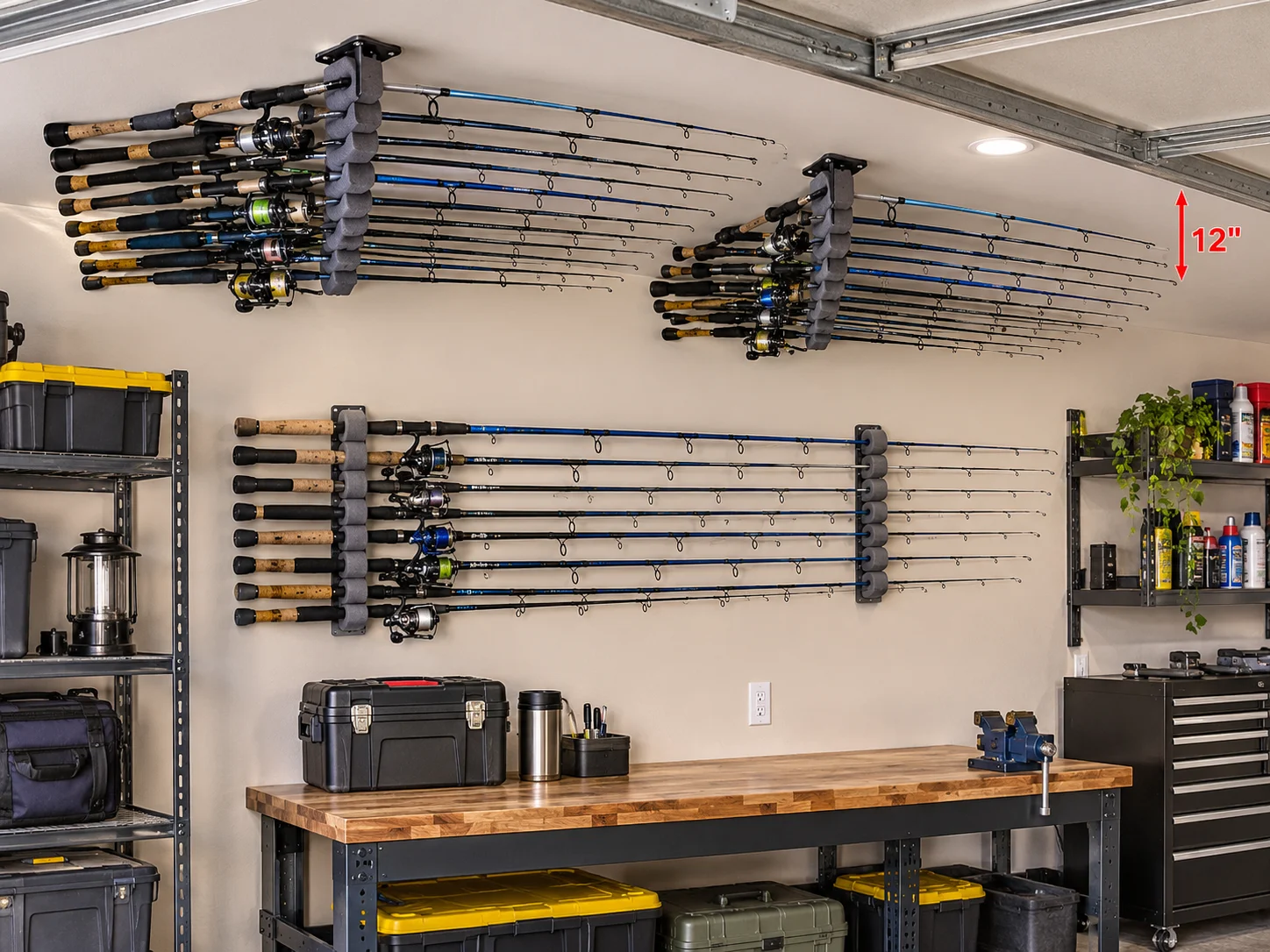
Wall and ceiling rod holders are the most common fishing storage solution, and they remain the most common for a reason. A two-pack of bruwaa wall and ceiling rod holders, for example, uses soft PU pads to protect rod finishes and can hold up to 10 rods per pair. Ceiling-mounted versions are especially useful in garages where wall space is claimed by shelving, cabinets, or a workbench, since the ceiling overhead is almost always open.
The functional difference between wall and ceiling mounting comes down to access frequency. Wall-mounted holders at chest height make for fast grab-and-go retrieval, which suits rods you use multiple times per week. Ceiling mounts are better for seasonal rods or backup setups that you don’t reach for constantly, since you need to lift the rod up and over the holder rather than simply pulling it off a horizontal cradle. Both versions benefit from padding, since rods stored horizontally rest their weight on two contact points, and hard plastic or bare metal at those points will eventually mark the blank.
For garage ceiling storage, the standard advice is to mount the front holder at the butt of the rod and the rear holder near the tip, leaving at least 12 to 14 inches of clearance between the tip end and any overhead obstruction. With two sets of ceiling holders staggered at different heights, a single ceiling bay can store 12 or more rods without them touching each other. That kind of capacity frees up all your wall space for tackle organization.
5. Corner Fishing Cabinet with Glass Doors
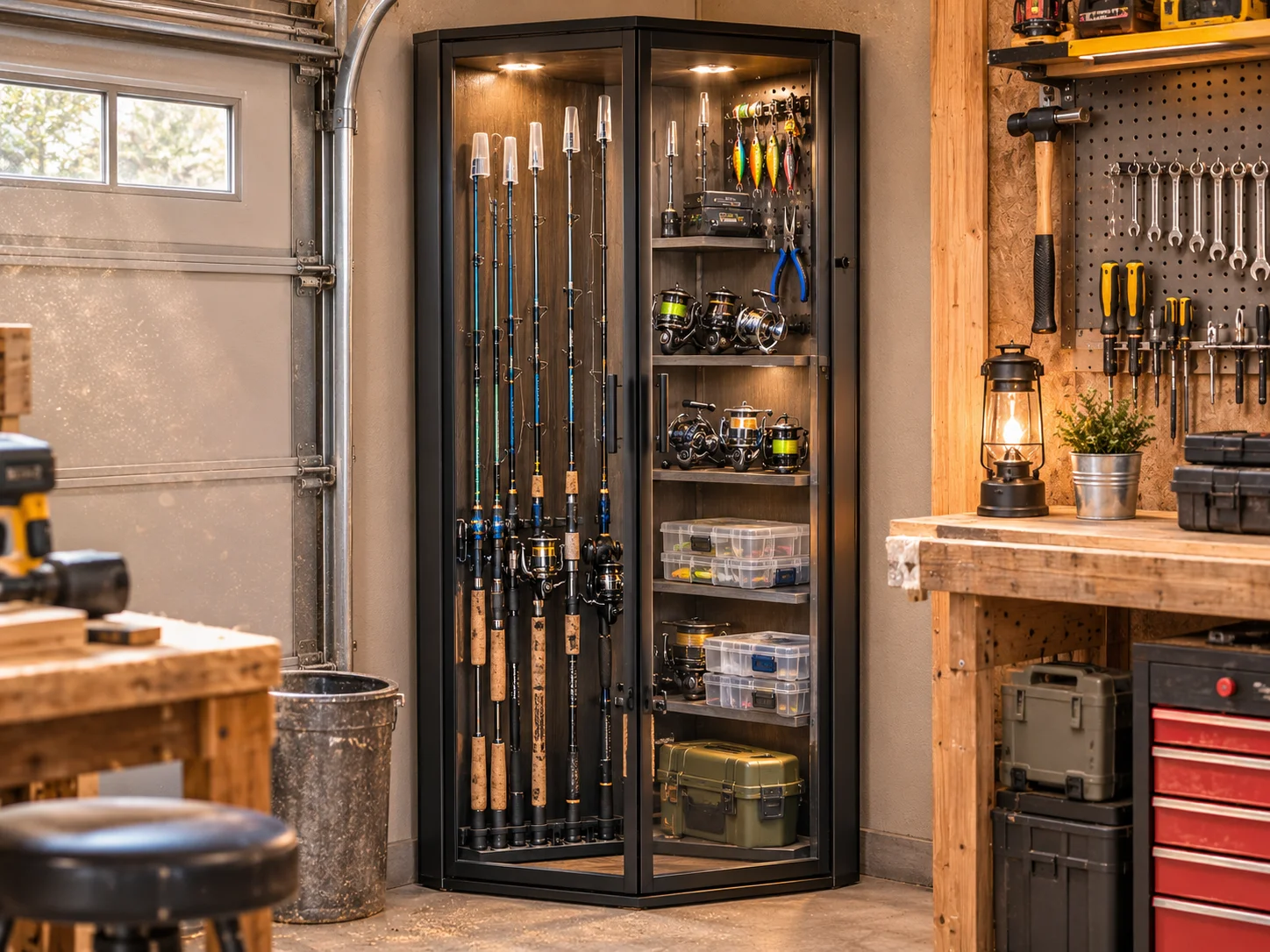
A vertical fishing cabinet with glass doors solves a problem that open racks don’t address: dust and visual clutter. Models appearing on Amazon in mid-November 2026 designed for garages and basements hold rods upright in a corner-fitting unit with no wall drilling required. The glass doors keep gear visible for quick selection while shielding rods, reels, and tackle trays from the fine grit that accumulates in most working garages.
The corner design is a smart use of a space that generic shelving doesn’t fit well. Standard rectangular shelving units placed in corners leave dead space behind them. A purpose-built corner cabinet fills that triangular footprint and adds actual storage for tackle, reels, and accessories on the shelves behind the glass doors. Because the rods stand upright inside the cabinet, the tips are protected from the kind of accidental contact that breaks them when rods lean against walls.
For garages that double as workshops, the enclosed cabinet makes a meaningful difference in gear longevity. Fine sawdust and metal filings settle into reel mechanisms and line guides faster than most anglers expect. A cabinet with doors takes roughly 10 seconds to open and close per use, which is a small cost for protecting equipment that represents hundreds of dollars of investment. This option also works well for households where children have access to the garage, since keeping sharp hooks and tools behind a door reduces the risk of accidental contact.
6. Pegboard Wall System Combined with Floor-Level Bins
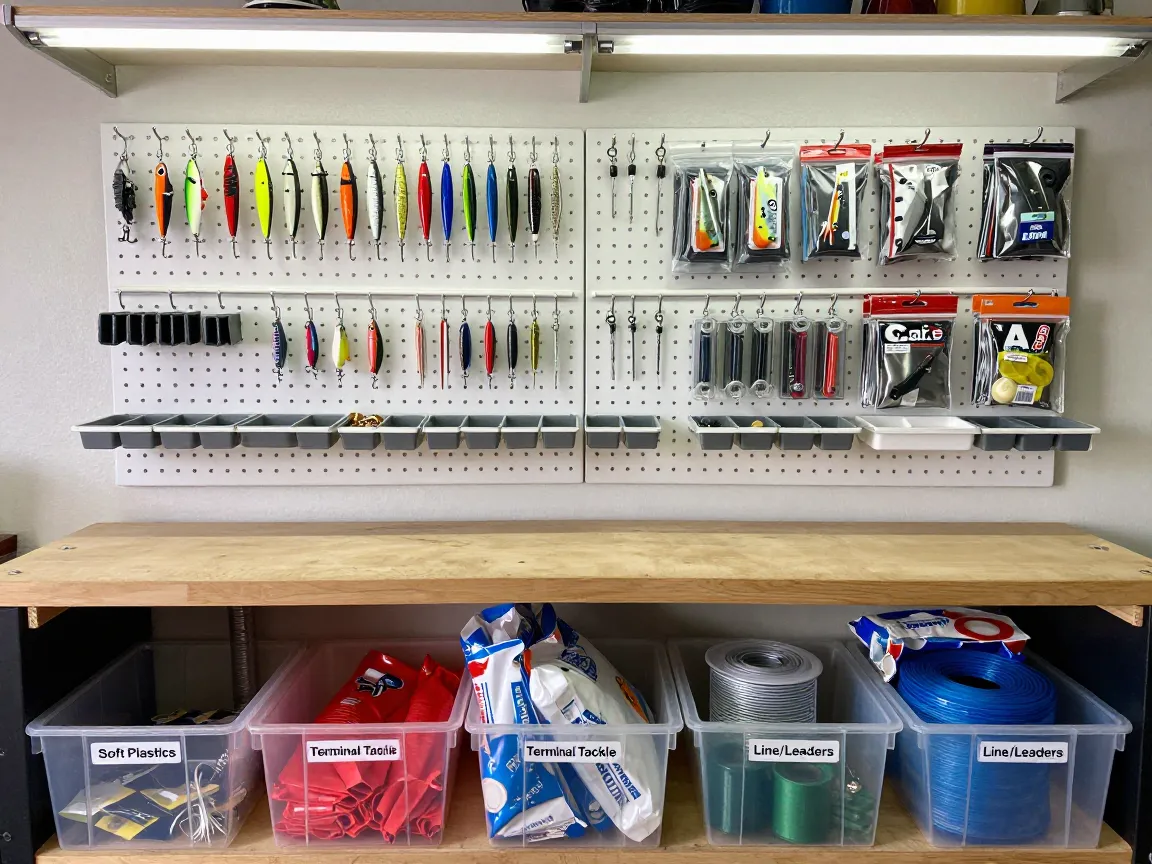
A single pegboard wall panel can organize more fishing gear than any purpose-built product at a fraction of the price. The setup that BassResource and experienced anglers on fishing forums consistently recommend combines a pegboard panel mounted at workbench height with labeled plastic bins on the floor or on a low shelf directly below it. The pegboard handles lures, tools, and small accessories. The bins handle soft plastics, spare line, and seasonal tackle.
The key to making a pegboard system work for fishing gear specifically is using the right hooks. Standard double-loop pegboard hooks hold bladed lures and spinnerbaits by the hook hanger. Longer S-hooks hold coiled leaders or small bags of terminal tackle. Flat shelf brackets added to the pegboard hold narrow tackle trays horizontally, keeping small compartmentalized boxes organized without stacking them in a drawer where finding a specific tray requires pulling all of them out first.
The bins below the pegboard handle the category of gear that doesn’t hang well: bulk soft plastics in bags, extra spools of line, weight sets, and bulky safety gear like life vest accessories. Labeling the bins matters more than most people expect. Without labels, the visual similarity of different-colored bags inside a bin makes the selection process slow. Broad label categories work better than narrow ones: “Soft Plastics,” “Terminal Tackle,” and “Line/Leaders” cover most of what goes in the bins without requiring a new bin every time you add a gear category.
A pegboard system also scales naturally. When your gear collection grows, you buy more hooks and add another panel. No existing structure needs to change, and you don’t need to buy an entirely new storage product. This makes it one of the most cost-efficient approaches in this list, particularly for anglers who fish multiple species and accumulate a wide variety of lure and tackle styles over time.
Conclusion
The most practical next step is to audit what you actually own before buying any storage product. Count your rods, categorize your tackle, and measure the open wall, ceiling, and floor space in your garage. That 10-minute exercise will tell you whether you need a 16-rod rotating rack or whether a two-pack of ceiling holders and a pegboard panel covers everything. Most garages need a combination of two or three of these ideas rather than one large solution. Start with whichever addresses your single biggest frustration, whether that’s broken rod tips, missing lures, or just the daily frustration of a garage floor you can’t walk across cleanly.