Things To Know About The Eurasian Wigeon Duck
A bird that breeds in the Arctic tundra of Russia, winters on the estuaries of western Europe, and occasionally turns up on a New Jersey pond without warning is worth understanding properly. The Eurasian Wigeon (Anas penelope) is one of the most widespread dabbling ducks on earth, yet it remains poorly known outside birdwatching circles. These 6 things to know about the Eurasian Wigeon duck cover its appearance, behavior, range, diet, conservation status, and the specific reasons it draws attention from both ornithologists and casual observers.
Disclosure: This post contains affiliate links. As an Amazon Associate, we earn from qualifying purchases, and at no extra cost to you.
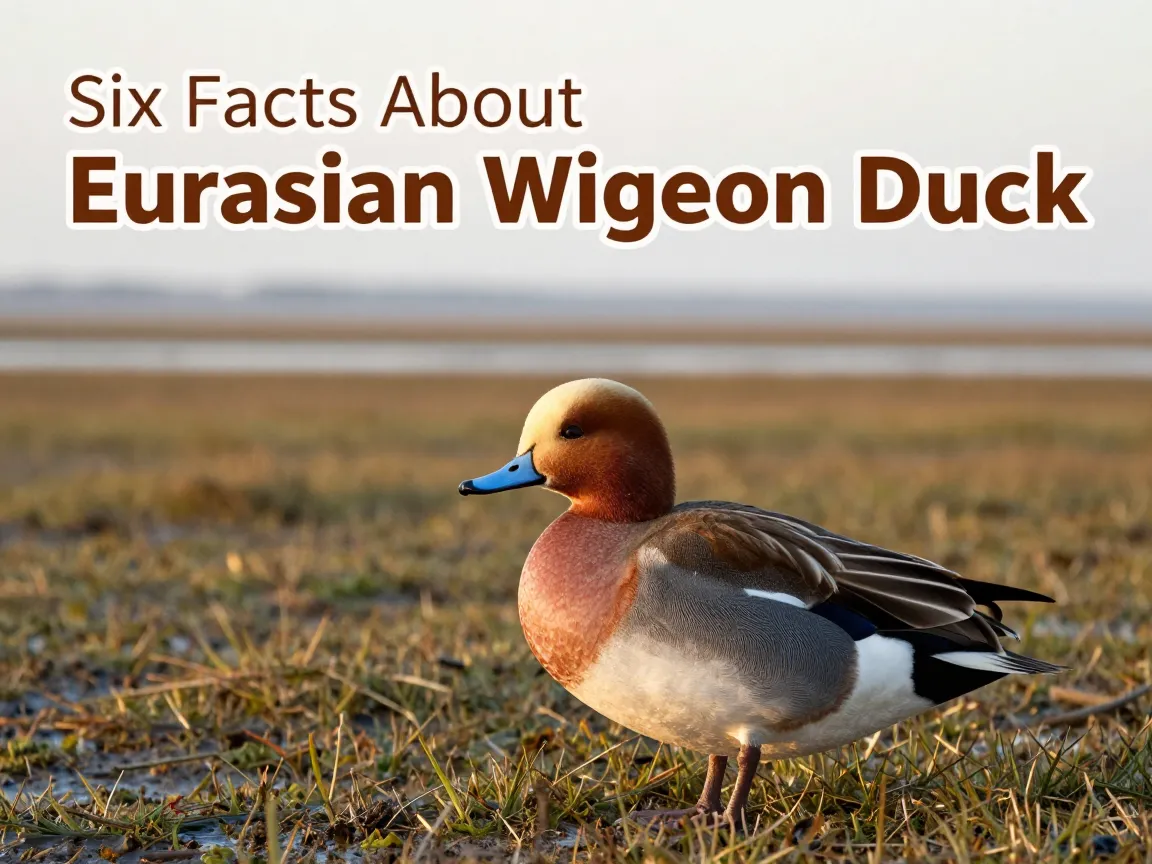
Key Takeaways
- The male Eurasian Wigeon has a chestnut head with a cream forehead stripe that makes it unmistakable at a distance.
- Global population sits between 2.8 and 3.3 million individuals, and the species is listed as Least Concern on the IUCN Red List.
- Despite that global security, the species carries Amber status in the UK and is classed as Vulnerable by NatureServe in the United States.
- The Eurasian Wigeon is primarily a grazer, not a dipper, which separates it from most other dabbling ducks behaviorally.
- Vagrant individuals appear regularly in North America each winter, making it a target species for birders on the Atlantic and Pacific coasts.
1. The Male’s Plumage Is One of the Most Recognizable in Waterfowl
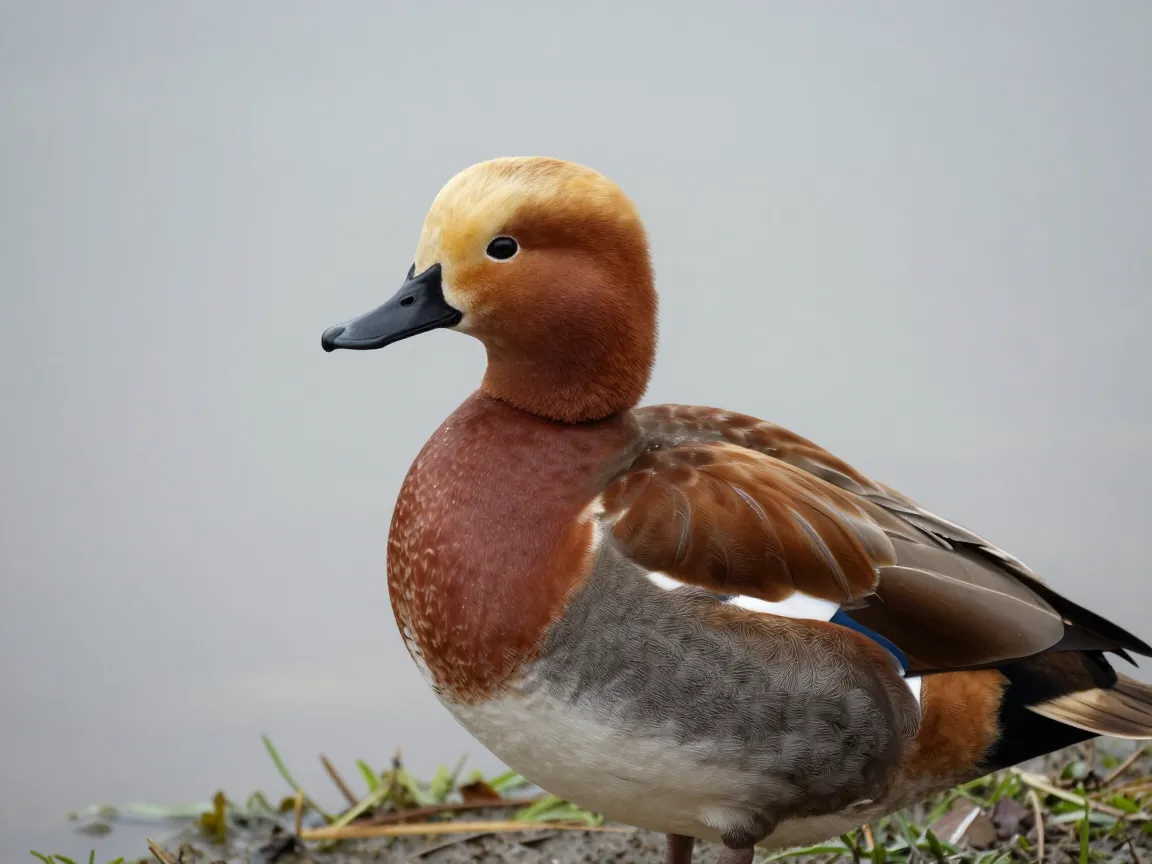
The male Eurasian Wigeon carries a chestnut-red head with a pale cream to yellow forehead blaze that runs from bill to crown. That stripe is the single best field mark at distance. Up close, the breast is a warm pinkish-brown, the flanks and back are finely barred grey, and the belly is white. In flight, a large white patch on the upperwing coverts stands out sharply against the dark outer wing, making identification straightforward even from a moving vehicle near a wetland.
The female is far less dramatic. She is a warm rufous-brown to greyish-brown overall, finely patterned on the flanks, with a rounded head and a small blue-grey bill. The bill shape and that compact, steep-forehead profile help separate her from similar female ducks like the American Wigeon or the Gadwall. The axillaries, the feathers under the wing, are white in female Eurasian Wigeons, which is one of the more reliable separation points when she is in the hand or photographed in flight.
Juvenile birds resemble females until their first autumn moult. Males go through an eclipse plumage in mid-summer that is browner and more muted than their winter finery, so a Eurasian Wigeon seen in July can briefly confuse even experienced observers. By October most males are back in full breeding dress.
2. Its Range Spans an Extraordinary Latitudinal Gradient

The Eurasian Wigeon breeds from Iceland east across Scandinavia, Russia, and Siberia, reaching as far as the Kamchatka Peninsula. The core of the breeding population sits in the boreal forests and tundra zones of northern Russia, where the birds nest on the ground near lakes, bogs, and slow-moving rivers from about May onward.
Come September, those birds begin a southwestward migration that takes the bulk of the European population to the British Isles, the Netherlands, France, and Spain. Smaller but significant numbers travel southeast to the Persian Gulf, South Asia, and East Africa. The East Asian population winters in Japan, China’s coastal wetlands, and Southeast Asia.
The British Isles hold one of the largest wintering concentrations on earth. Counts at estuaries like the Wash in eastern England, Lough Foyle in Northern Ireland, and the Solway Firth routinely exceed tens of thousands of birds from October through March. What makes this relevant beyond birdwatching is that these estuaries are also the sites of ongoing wetland management programs, so the duck’s presence functions as a rough indicator of intertidal habitat health.
3. It Grazes Rather Than Dabbles, a Distinction That Shapes Where It Feeds
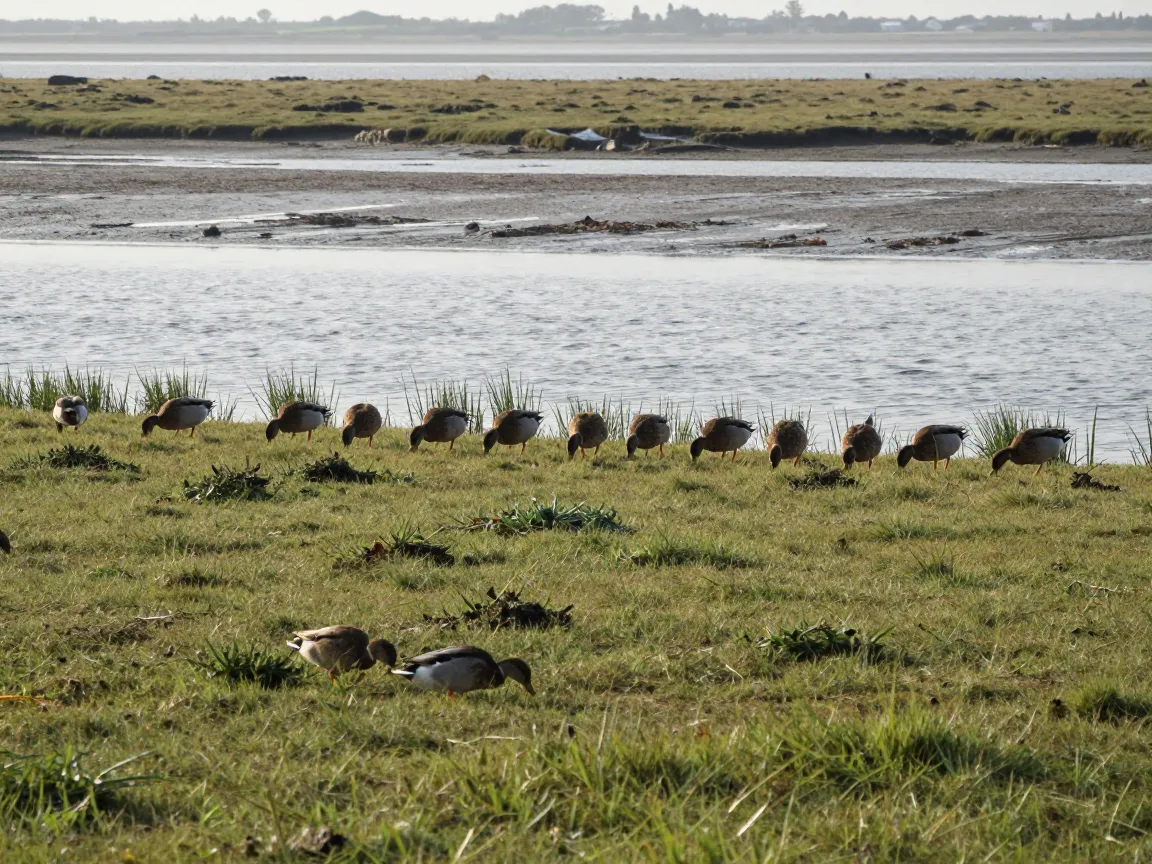
Most dabbling ducks feed by tipping forward in shallow water to reach submerged vegetation or invertebrates. The Eurasian Wigeon feeds mostly on land or at the water’s edge, cropping short grass, saltmarsh plants, and aquatic vegetation with the same cropping motion a goose would use. This behavioral difference means it competes far less with Mallards and Teals for food within the same wetland.
On estuary grasslands and water meadows adjacent to tidal flats, wigeons graze in tight flocks, moving steadily across the turf. They show a particular preference for Zostera marina (eelgrass) in coastal areas, and historically large Zostera beds in estuaries attracted enormous wigeon concentrations. When a wasting disease decimated Zostera across the North Atlantic in the 1930s, wigeon numbers in some areas dropped noticeably, illustrating how tightly the species can be tied to a single food plant.
They also feed on algae, sedges, and the leaves of aquatic plants like Potamogeton (pondweeds). During the breeding season, insects and their larvae make up a greater proportion of the diet, especially for ducklings in their first weeks. Outside the breeding season, plant material dominates almost exclusively.
4. The Global Population Is Stable, but Regional Trends Tell a More Complicated Story
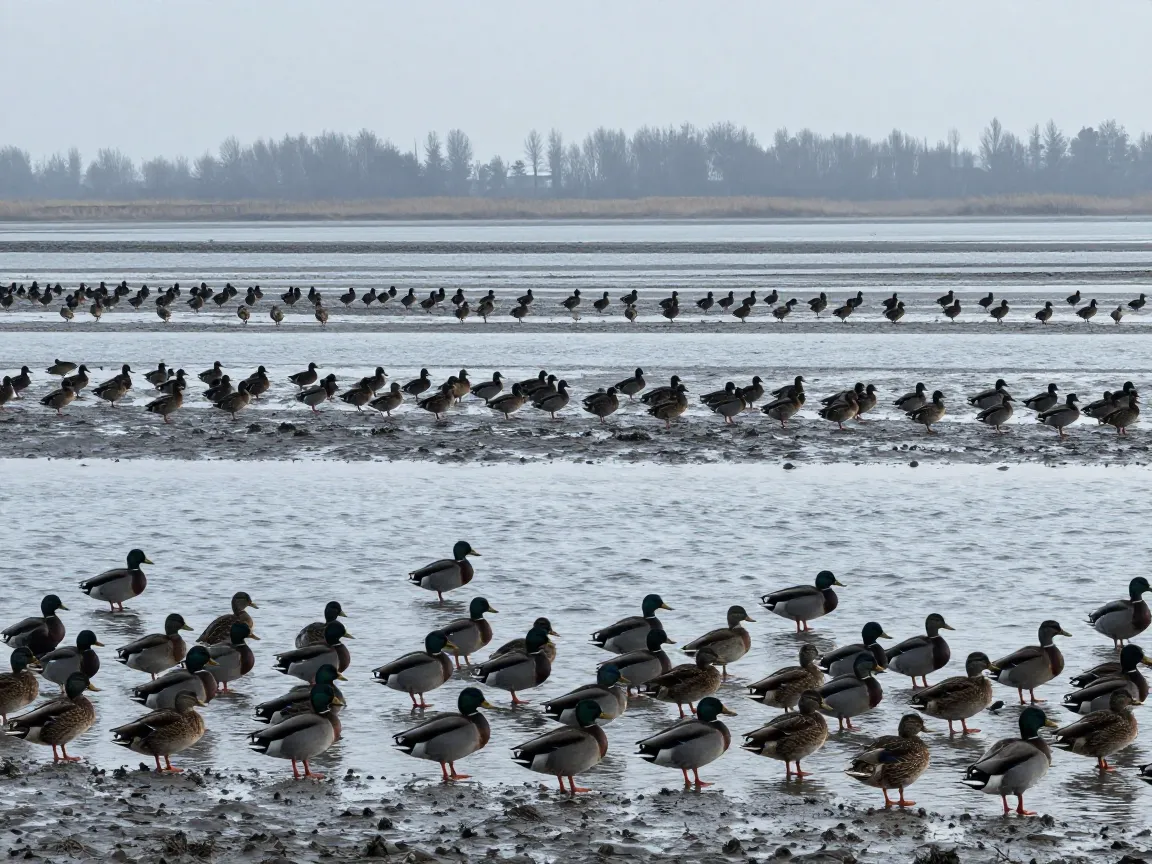
The global population of Eurasian Wigeons is estimated at between 2.8 and 3.3 million individuals. Partners in Flight estimates roughly 2 million breeding individuals worldwide and assigns the species a Continental Concern Score of 9 out of 20, placing it among the lower-priority species for conservation intervention globally. The IUCN Red List carries a Least Concern designation, and that assessment has been reaffirmed in the most recent 2025-2026 international framework updates.
The regional picture is less uniform. All About Birds, drawing on monitoring data, notes sharp declines in parts of Russia and the Middle East since the 1980s. In East Asia, bird status records from Hong Kong describe a decreasing population trend for birds using that flyway, suggesting that whatever pressures are affecting birds wintering in coastal China or the South China Sea are real and ongoing. These are not minor statistical fluctuations, they represent thousands of birds that were using a flyway regularly and no longer appear in those numbers.
In the United Kingdom, where the species has tremendous conservation salience as a wintering bird, the Eurasian Wigeon sits on the Amber list of the UK Birds of Conservation Concern. That amber rating does not indicate that the bird is in crisis in Britain, but it does flag it as a species requiring monitoring due to its importance as a non-breeding visitor and the fact that UK wetlands host a globally significant proportion of the winter population. In the United States, NatureServe rates it as Vulnerable, reflecting the fact that it is a rare and irregular visitor there rather than a resident or regular migrant.
The takeaway here is not that the species is threatened, but that “Least Concern” at the global level can obscure pressures that are significant at the flyway or regional level. A species losing 20% of its East Asian wintering population over three decades is not necessarily heading toward extinction, but it is registering an environmental signal worth tracking.
5. Vagrant Eurasian Wigeons Appear in North America Every Winter, and Finding One Is a Legitimate Birding Target
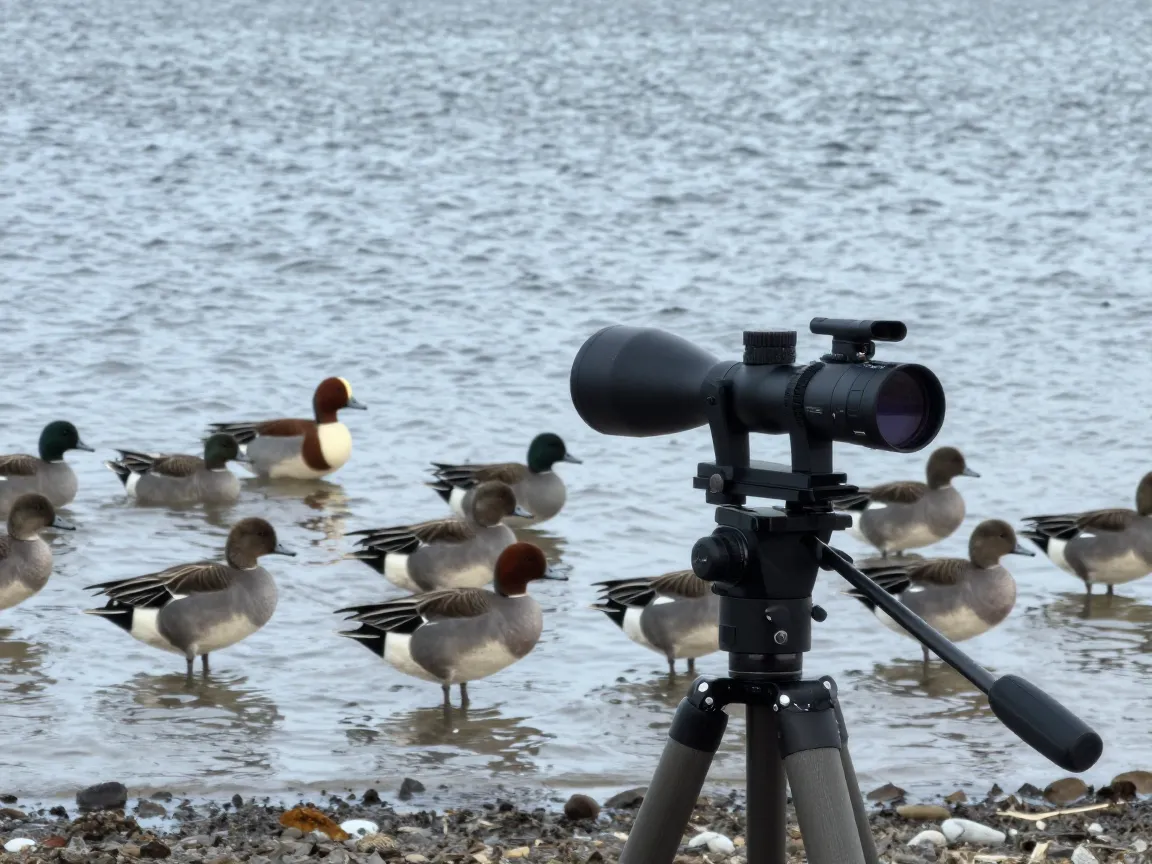
The species does not breed in North America and is not part of any recognized migration route crossing the Atlantic or Pacific in significant numbers. Yet vagrant Eurasian Wigeons turn up annually along both coasts and occasionally inland. Atlantic coast records cluster in the northeastern states, particularly in coastal New England, the Mid-Atlantic, and eastern Canada. Pacific coast records occur regularly in Alaska, British Columbia, and California.
The New York Natural Heritage Program gives the species a global rank of G5 (secure and widespread) while acknowledging it can be rare or local within New York State, an accurate summary of its status as an annual but uncommon vagrant. A single male Eurasian Wigeon mixed into a flock of American Wigeons (Mareca americana) on a Long Island bay in December is entirely typical. The two species are closely related, they flock together readily, and in the field the difference comes down to that chestnut head and cream stripe versus the American male’s green eye patch and grey-and-buff head.
Birders treat winter Eurasian Wigeon sightings as worthwhile targets precisely because of this consistent but unpredictable pattern. Reports land on eBird almost every November through March somewhere on the northeastern seaboard. The practical approach is to scan large American Wigeon flocks carefully; males are easy to identify, but a lone female Eurasian Wigeon among female Americans requires checking axillary color and bill dimensions, both of which favor the Eurasian bird being slightly larger with that white underwing.
Hybrid individuals between Eurasian and American Wigeons also occur in North America. They show mixed characters, often an intermediate head pattern, and have been documented well enough that most experienced observers can recognize them. A hybrid male usually shows a duller version of the Eurasian head color with traces of the green American eye patch.
6. Its Conservation Listing Sits at the Intersection of Three Different Frameworks, and They Don’t Fully Agree
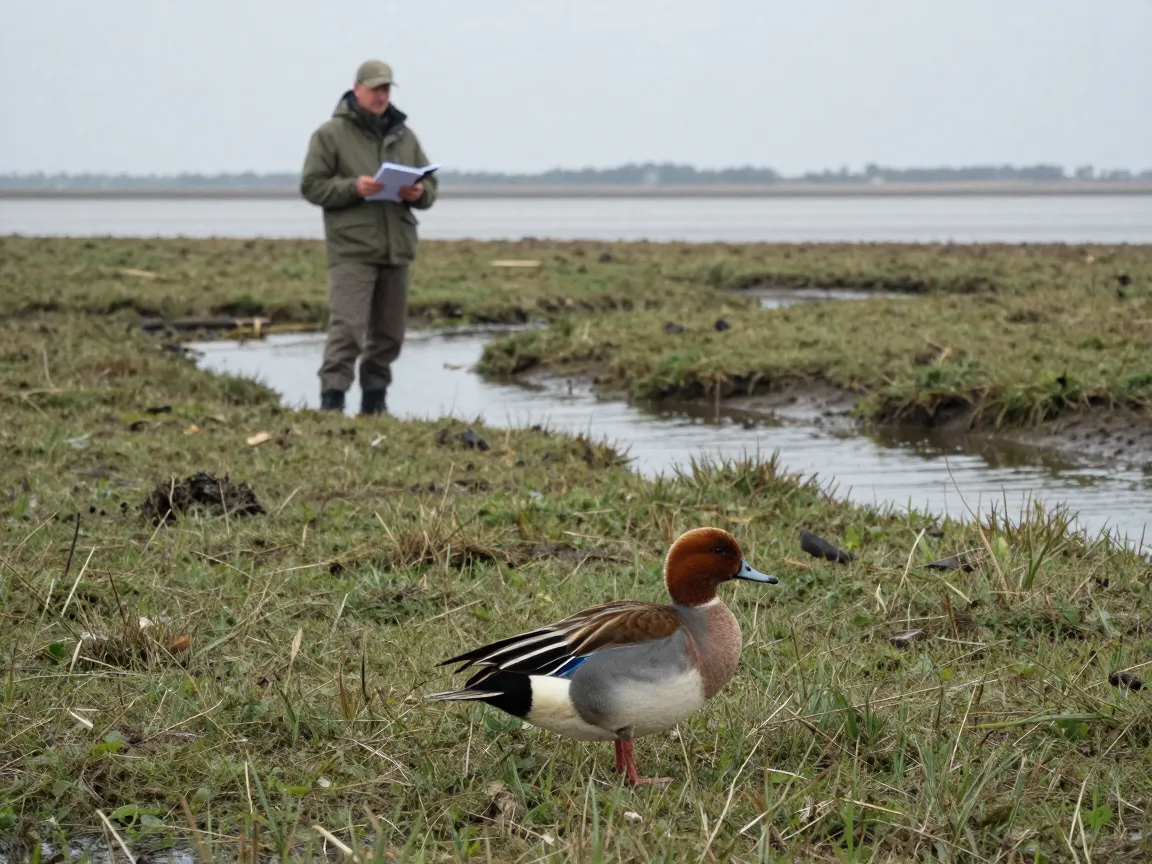
Few common birds illustrate the complexity of international conservation assessment as clearly as the Eurasian Wigeon. It is simultaneously Least Concern under IUCN, Amber in the UK, Vulnerable under NatureServe in the United States, and listed on Appendix II of the Convention on Migratory Species (CMS), a designation that dates to 1979 and has been reaffirmed in current CMS species accounts.
Each framework is measuring something different. The IUCN assessment is global and population-based: with 2.8 to 3.3 million individuals and no rapid overall decline, the thresholds for a higher-threat category are not met. The UK Amber listing is about national and international significance: Britain hosts a substantial share of the global winter population, and any significant deterioration of UK estuaries would matter at a global scale. NatureServe’s Vulnerable rating in the United States is about occurrence status within that country: a bird that appears rarely and irregularly is treated with appropriate caution regardless of its worldwide abundance. The CMS Appendix II listing signals that the species crosses international boundaries in ways that require cooperation among range states to manage effectively.
Understanding which framework applies to which question matters for anyone working in habitat management, conservation planning, or policy. A manager overseeing a coastal wetland in the Netherlands handles this species under a different set of obligations than a land manager in coastal Virginia who sees one wigeon every few winters. Both are dealing with the same bird, but the conservation context differs completely.
The clearest practical conclusion is that the Eurasian Wigeon’s globally secure status should not be used to dismiss regional declines or reduce monitoring effort. The 1980s declines in Russia and the Middle East, combined with the decreasing trend noted along the East Asian flyway, are the signals that the global Least Concern designation alone cannot capture.
Quick Comparison
| Aspect | Detail |
|---|---|
| Global population | 2.8-3.3 million individuals |
| IUCN status | Least Concern |
| UK conservation status | Amber (non-breeding) |
| NatureServe (USA) | Vulnerable |
| CMS listing | Appendix II |
| Primary food | Grasses, eelgrass, aquatic vegetation |
| Breeding range | Iceland to Kamchatka Peninsula |
| Main wintering areas | Western Europe, South Asia, East Africa, East Asia |
Conclusion
The Eurasian Wigeon rewards attention at every level, field identification, behavior, migration ecology, and the layered way international conservation frameworks assign responsibility for a migratory species that breeds in Siberia and winters in Somerset. The single most useful next step for anyone wanting to engage with this duck directly is to load eBird and search for winter reports from the nearest large coastal estuary or bay. Reading the observer notes on confirmed sightings, particularly how the birds were separated from American Wigeons, builds field skills faster than any field guide entry.