Things to Look for in a Fly Fishing Net Before You Buy
A trout held in a knotted nylon net loses its protective slime coat in seconds. That single fact has quietly driven more change in net design over the past decade than anything else, and it’s why the checklist for buying a fly fishing net now looks very different from what anglers used twenty years ago. Knowing the 6 things to look for in a fly fishing net before you buy will save you money, protect the fish, and keep you from carrying a tool that fights you all day.
Disclosure: This post contains affiliate links. As an Amazon Associate, we earn from qualifying purchases, and at no extra cost to you.
1. Mesh Material and Its Effect on Fish Health
Rubber and knotless mesh are no longer premium upgrades. They’re the baseline standard. Knotted nylon snags scales and strips slime coat, which is a fish’s primary defense against infection. A trout released from knotted nylon is measurably more stressed and more vulnerable than one released from rubber or soft knotless mesh.
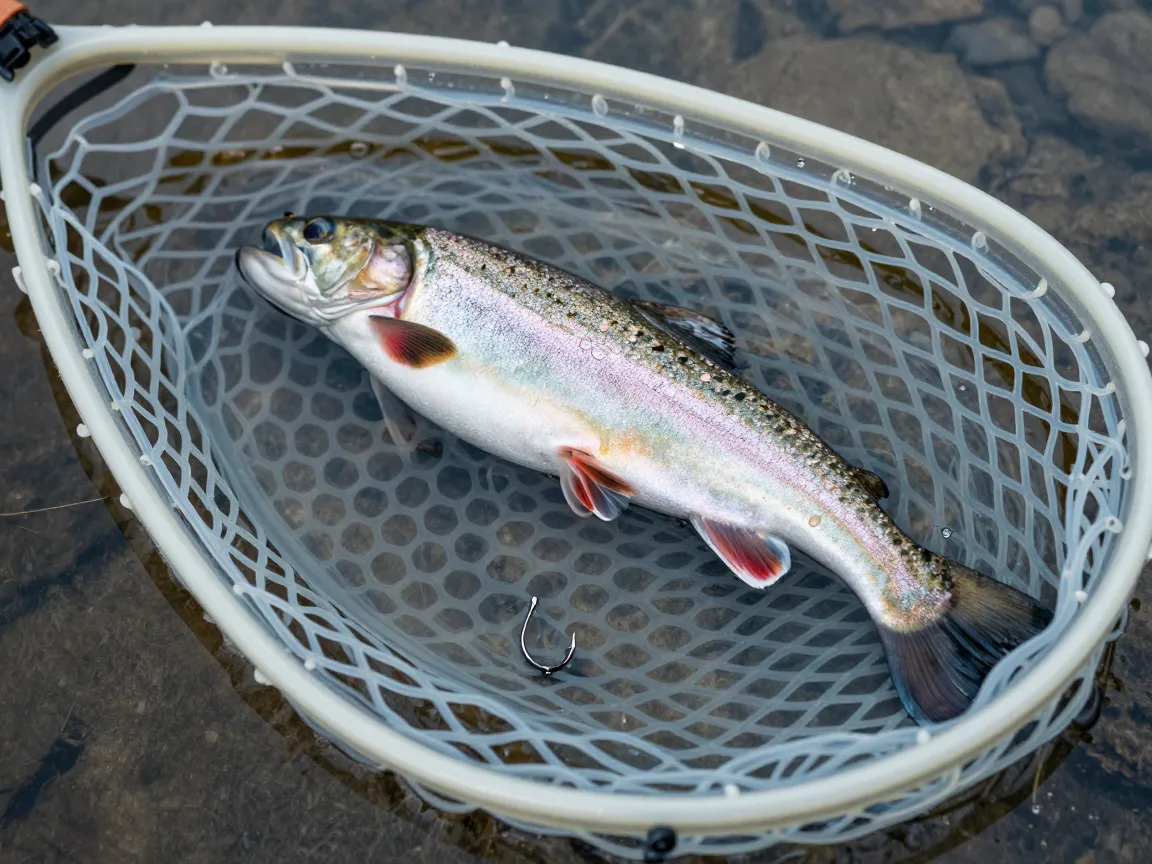
Rubber mesh has two practical advantages beyond fish safety. First, hooks pull out cleanly. A barbless hook that would take thirty seconds to untangle from nylon comes free from rubber mesh in under five seconds. Second, rubber bags dry quickly and don’t hold the mildewy smell that nylon develops after a season of use.
There’s also a newer option worth noting: “ghost” or clear rubber mesh. This material is nearly transparent in the water, which matters when you’re trying to land a wary trout in flat, clear conditions. Some guides on spring creeks and tailwaters now require clear mesh specifically because it appears to reduce fish stress during the netting process. If your fishing skews toward pressured, clear-water environments, clear rubber mesh is worth the slight price premium over standard black rubber.
2. Hoop Size Matched to Your Target Species
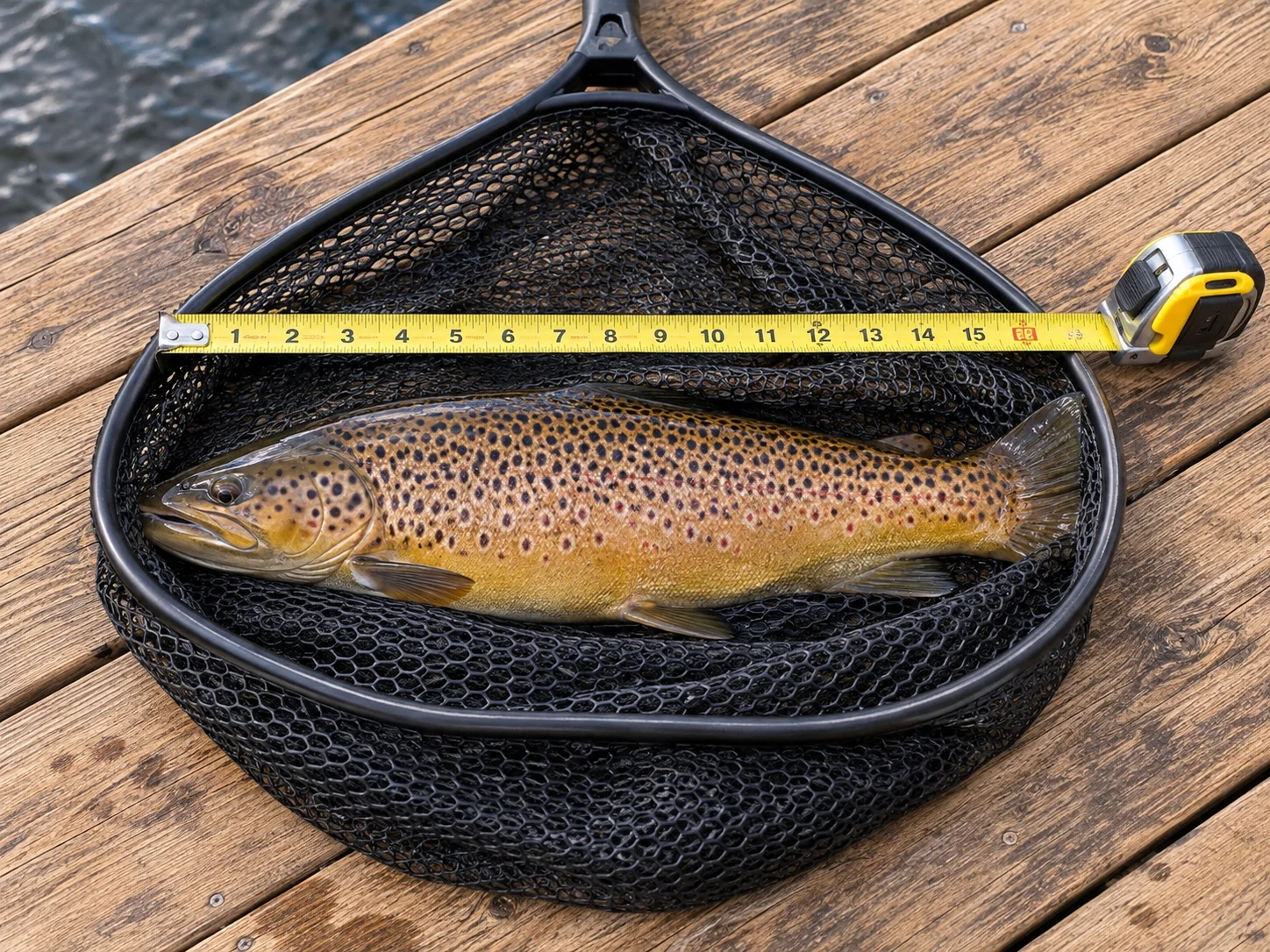
The hoop is what actually catches the fish, so its dimensions need to match what you’re chasing. A net with a 14-inch hoop width is fine for pan-sized brook trout. Chase steelhead or large brown trout on a big river and that same net becomes a source of frustration every time a fish rolls at your boots.
Teardrop-shaped hoops are the most common design for a reason. The narrow end lets you guide the fish in headfirst, and the wider belly gives you room to control a fish that’s still kicking. Wide oval or round hoops offer more surface area but can be awkward to maneuver in tight current or brushy stream banks. For most trout fishing in moving water, a teardrop hoop with an interior width between 15 and 18 inches covers the range from average fish to genuinely large ones.
Bag depth matters as much as hoop width. A shallow bag lets a large fish flip out before you can close your hand around the net. A bag depth of at least 18 inches is a reasonable minimum for trout fishing. If you regularly target species heavier than five pounds, go deeper. The fish should be fully contained with the hoop raised at a moderate angle, not balanced on the edge.
3. Handle Length and How It Affects Your Reach
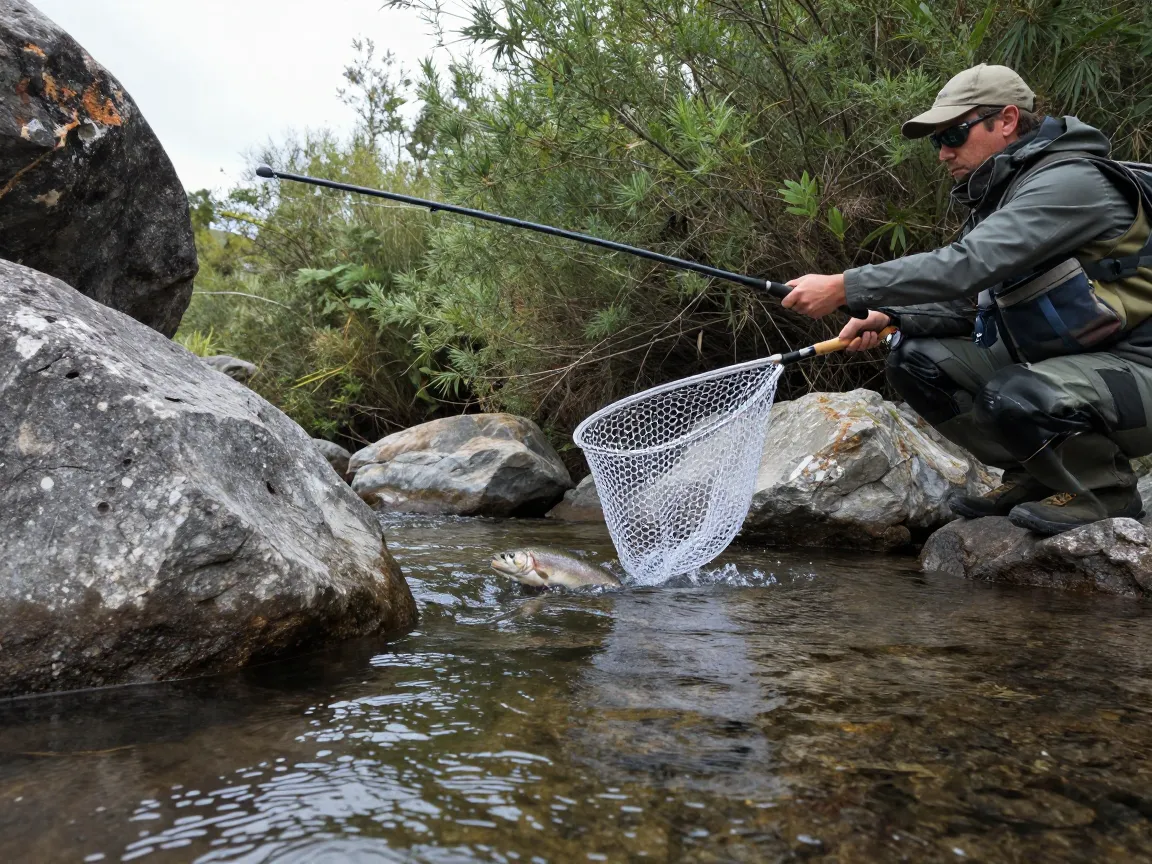
Most trout anglers fish with handles between 19 and 24 inches, and that range isn’t arbitrary. It’s long enough to extend your reach when a fish runs toward your legs, short enough to fit under a vest without constantly catching on brush.
Shorter handles, around 11 to 15 inches, work well for small-stream fishing where you’re often crouched between boulders and a long handle is a liability. Some anglers who wade deep prefer a handle closer to 24 inches so they can net fish at arm’s length without dipping their vest in the water. Neither extreme is wrong, but buying the wrong length for your specific water type is a mistake that shows up on every trip.
Balance is tied directly to handle length. A heavier hoop on a short handle tips forward and feels unwieldy after a few hours. Hold the net at the grip end before buying and check whether it balances near the middle third or tips aggressively toward the hoop. A net that balances well feels like a natural extension of your hand; one that doesn’t will fatigue your wrist by afternoon.
4. Frame Material and Long-Term Durability
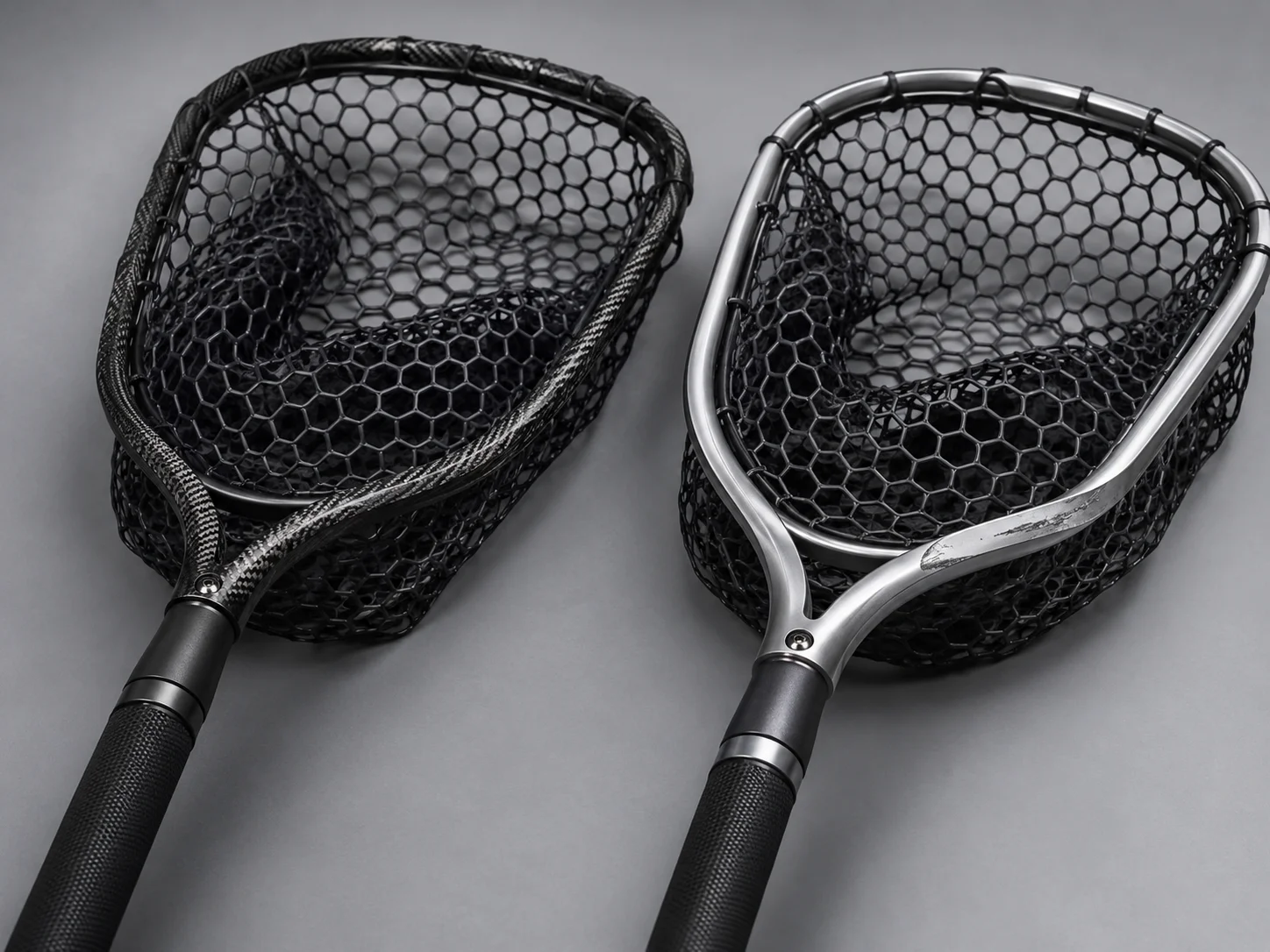
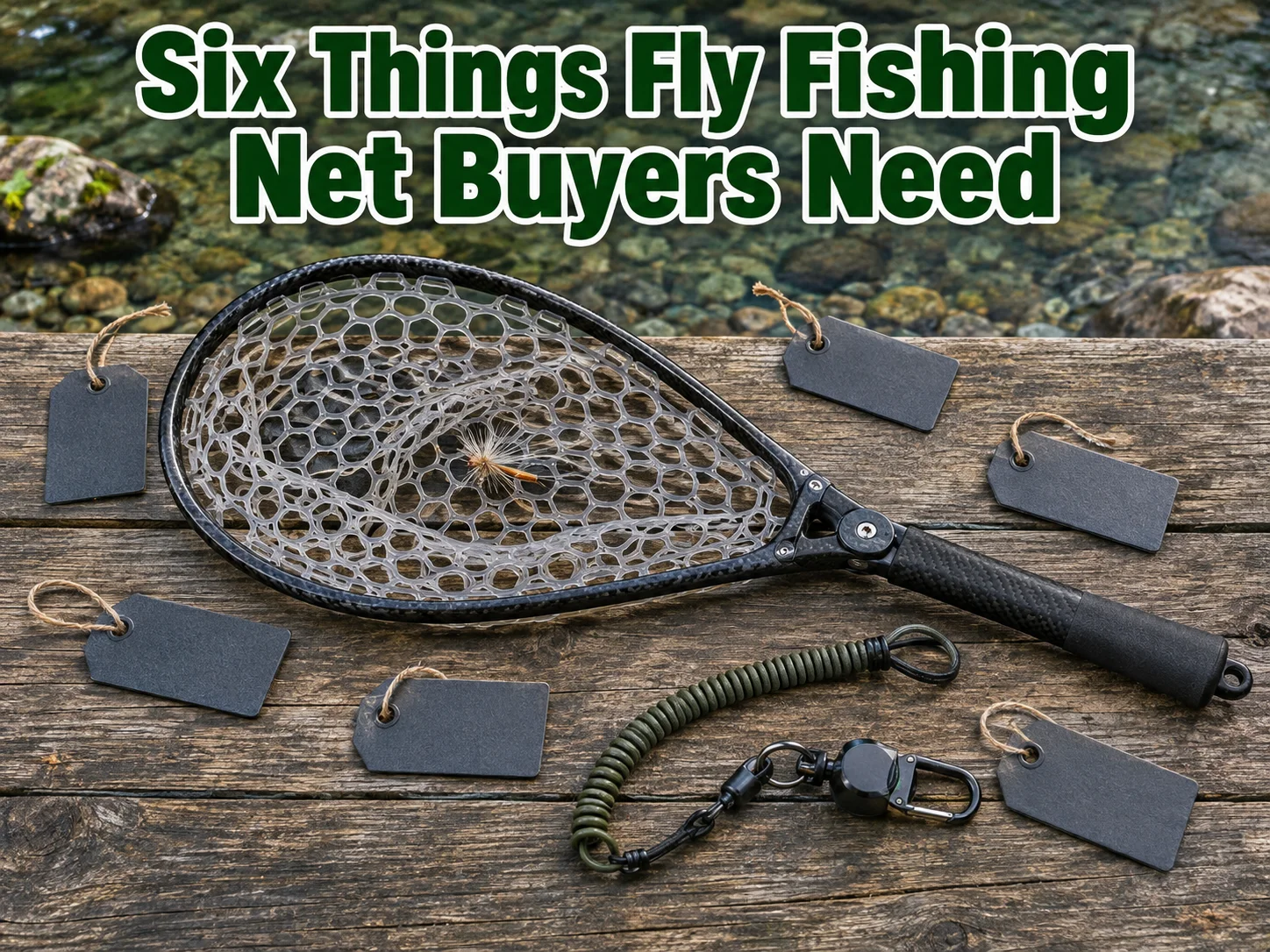
Carbon fiber and anodized aluminum are the two materials leading the market in 2026, and they perform differently enough that the choice is worth making deliberately.
Carbon fiber frames are lighter than aluminum at equivalent strength. For anglers who cover a lot of miles on foot, shaving weight from gear adds up. Carbon fiber also absorbs less heat in direct sun, which matters less in fly fishing than in cycling but is still a minor comfort factor. The tradeoff is brittleness under impact. A carbon fiber frame that gets slammed in a truck door or dropped on river rock is more likely to crack than an aluminum frame taking the same hit.
Anodized aluminum is heavier but more forgiving of rough handling. The anodization process creates a hard oxide layer that resists corrosion from freshwater and saltwater alike. If you fish saltwater flats for redfish or bonefish, aluminum is the safer long-term choice. For strictly freshwater trout fishing, either material works, and the decision often comes down to whether you prioritize weight savings or impact resistance.
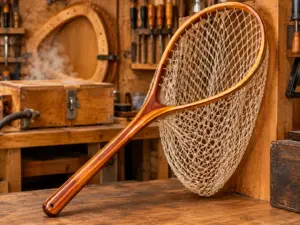
Avoid wood frames unless aesthetics are a priority you’re willing to pay a maintenance cost for. Wood nets look good but require periodic sealing, can warp in humid storage, and add weight without structural advantages over carbon or aluminum.
5. Attachment System and How You Carry the Net
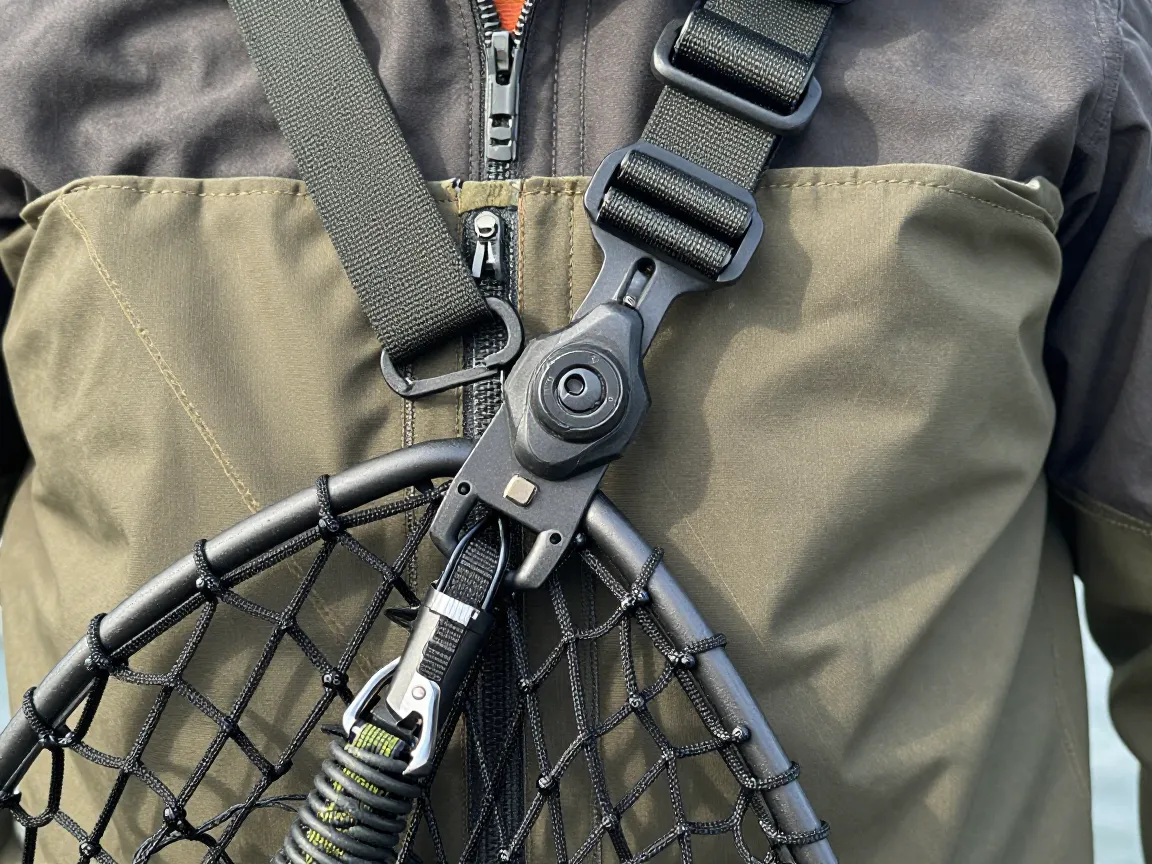
A net you can’t reach in time is a net that gets fish lost. The attachment system, meaning how the net connects to your body or pack, directly affects how quickly you can deploy it when a fish is on.
Magnetic releases have become the standard for a good reason. A strong rare-earth magnet holds the net against your pack strap or vest until you pull it free, which takes about half a second. No unclipping, no unbuckling. When a 20-inch brown is running in shallow water, half a second matters. Look for magnets rated to hold at least two to three pounds of force; cheaper magnetic clips lose their grip after a season of use or won’t hold a heavier net at all.
Lanyards are the traditional alternative. They’re reliable and simple, but require a hand to unclip and can swing the net into your casting arm if the cord is too long. Some anglers use a combination: a magnet release for primary deployment and a safety lanyard as a backup so the net doesn’t sink if the magnet releases unintentionally in deep water.
Clip-style retractors are common on wading staffs and pack hip belts. They work but tend to let the net swing freely, which catches brush and tangles in your fly line more than a magnet-and-strap setup does. If your fishing involves tight brush or lots of wading, the magnet release is worth the extra cost.
6. Weight, Buoyancy, and Packability
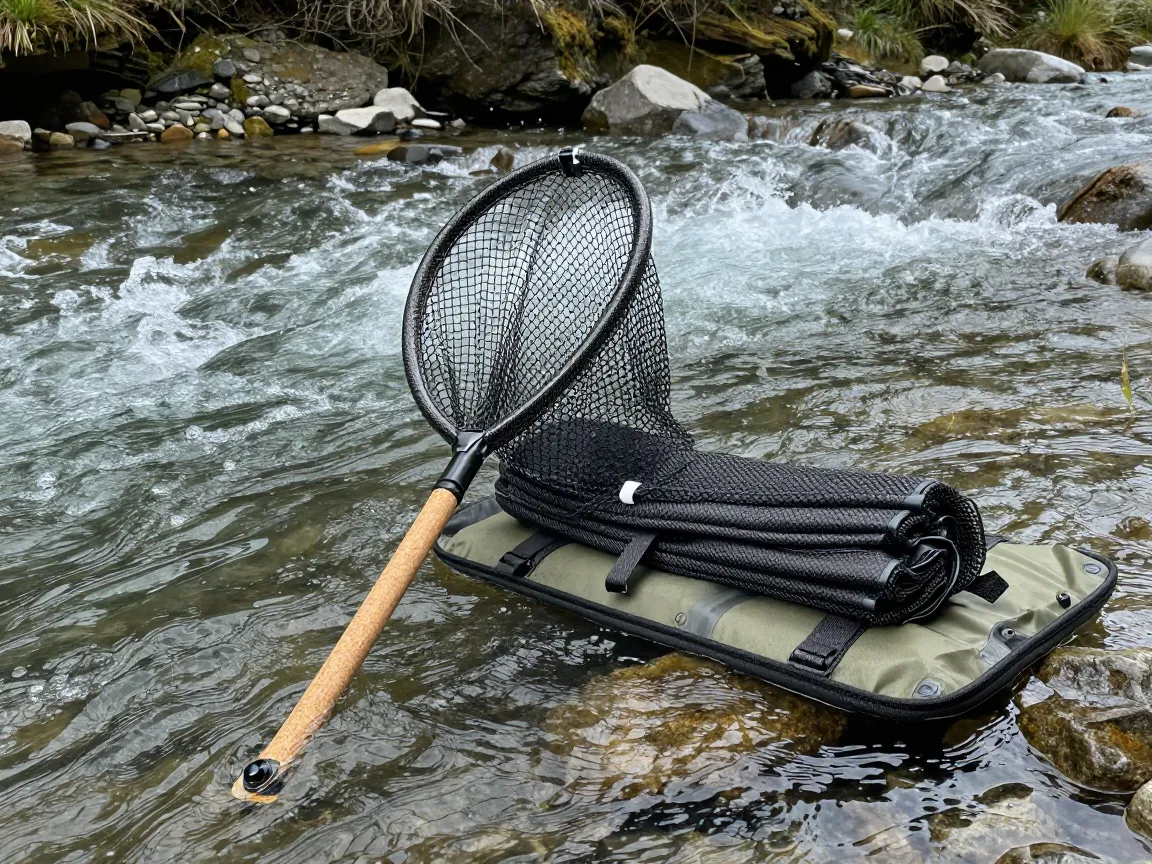
A net that sinks to the bottom of a fast run is a net you may not recover. Buoyancy is not a minor feature. Cork, foam-filled handles, and certain wood species all float. Carbon fiber frames with sealed hollow construction will often float as well, depending on the specific build. Before buying, confirm whether the manufacturer states the net floats. This is worth checking for any net under around 10 ounces, since lighter nets sometimes achieve their weight savings by using thin-walled construction that sinks.
Overall weight compounds through a full day of fishing. A net that feels inconsequential at 7 a.m. becomes noticeable after six miles of wading. Most quality trout nets fall between 7 and 14 ounces. Below 7 ounces, check carefully that the lighter construction doesn’t come at the cost of hoop rigidity, which you need to control a fish in current.
Packability matters most for backcountry trips. Some nets fold at the hoop or at a joint in the handle, reducing stored length by 40 to 50 percent. The folding mechanism is a potential failure point, so check whether the lock is a positive mechanical click or just friction-based. Friction folds loosen over time and have a tendency to collapse at the worst moment. If you’re carrying a net in a pack for miles, a solid folding mechanism with a physical lock is worth seeking out specifically, rather than accepting whatever comes on the first affordable net you find.
Conclusion
The core purchase decision comes down to two things you need to settle before you look at any specific net: what species and water type you’re targeting, and how you plan to carry the net all day. Those two answers will narrow the hoop size, handle length, and attachment system to a short list. From there, rubber or knotless mesh is non-negotiable for anyone practicing catch-and-release, and frame material is a straightforward call between weight savings and durability. Before buying, pick up the net, check the balance point at the handle, and confirm the manufacturer explicitly states whether it floats.