Fishing Stuff Organization Hacks That End Clutter and Speed Up Your Setup
The average angler loses roughly 20 minutes of fishing time per outing just searching for gear. That figure does not account for the trips where a missing hook or tangled soft-plastic bag turns a quick rigging job into a full gear excavation. These 6 fishing stuff organization hacks that end clutter and speed up your setup address that specific problem, targeting the habits and systems that cause tackle to pile up, rust, and disappear in the first place.
Disclosure: This post contains affiliate links. As an Amazon Associate, we earn from qualifying purchases, and at no extra cost to you.
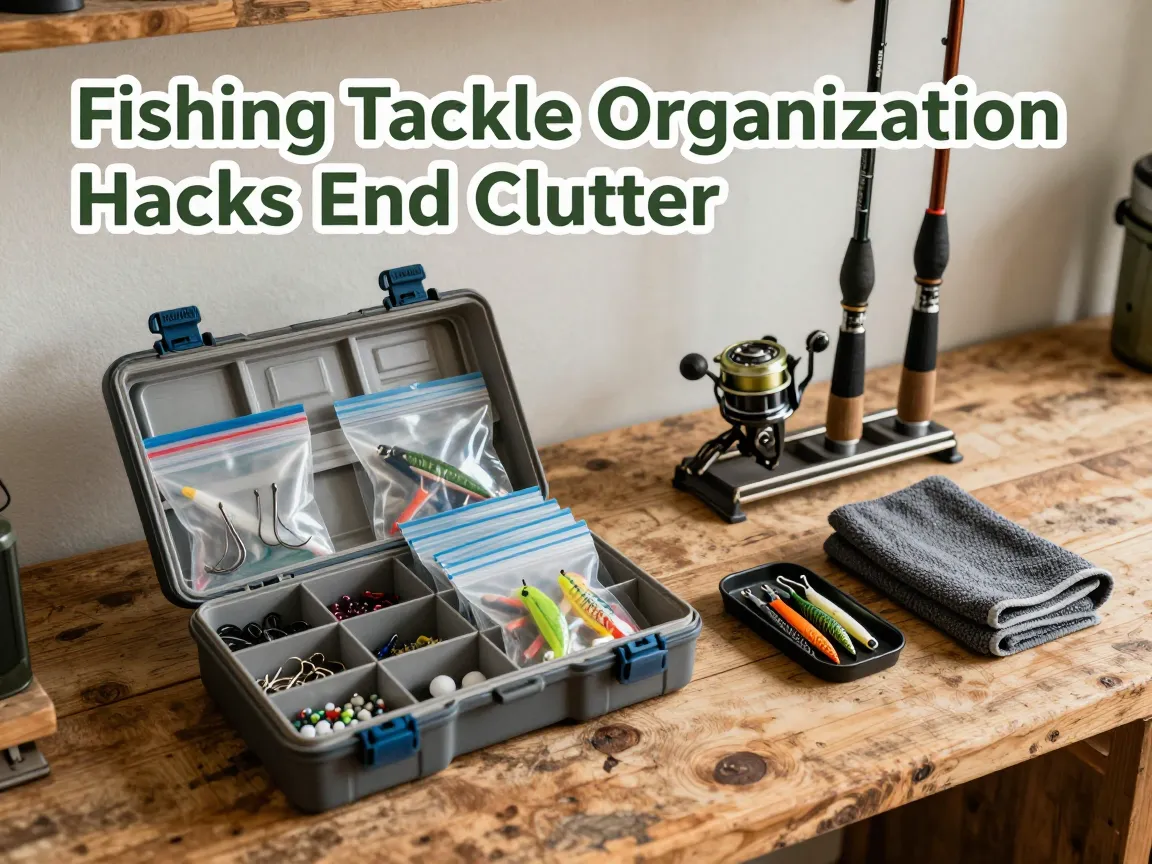
The fixes below are not about buying more storage products. Most of them cost nothing except one focused session of work at the start. What they do require is treating gear organization as a system rather than a chore you deal with when the mess becomes impossible to ignore.
1. Stage Everything in One Place Before You Sort Anything
The single biggest source of ongoing tackle chaos is scattered storage. Hooks live in a vest pocket, leader material sits in the glove box, spare lures are split between two tackle bags and a drawer in the garage. Because no single location holds everything, there is no honest picture of what you actually own.
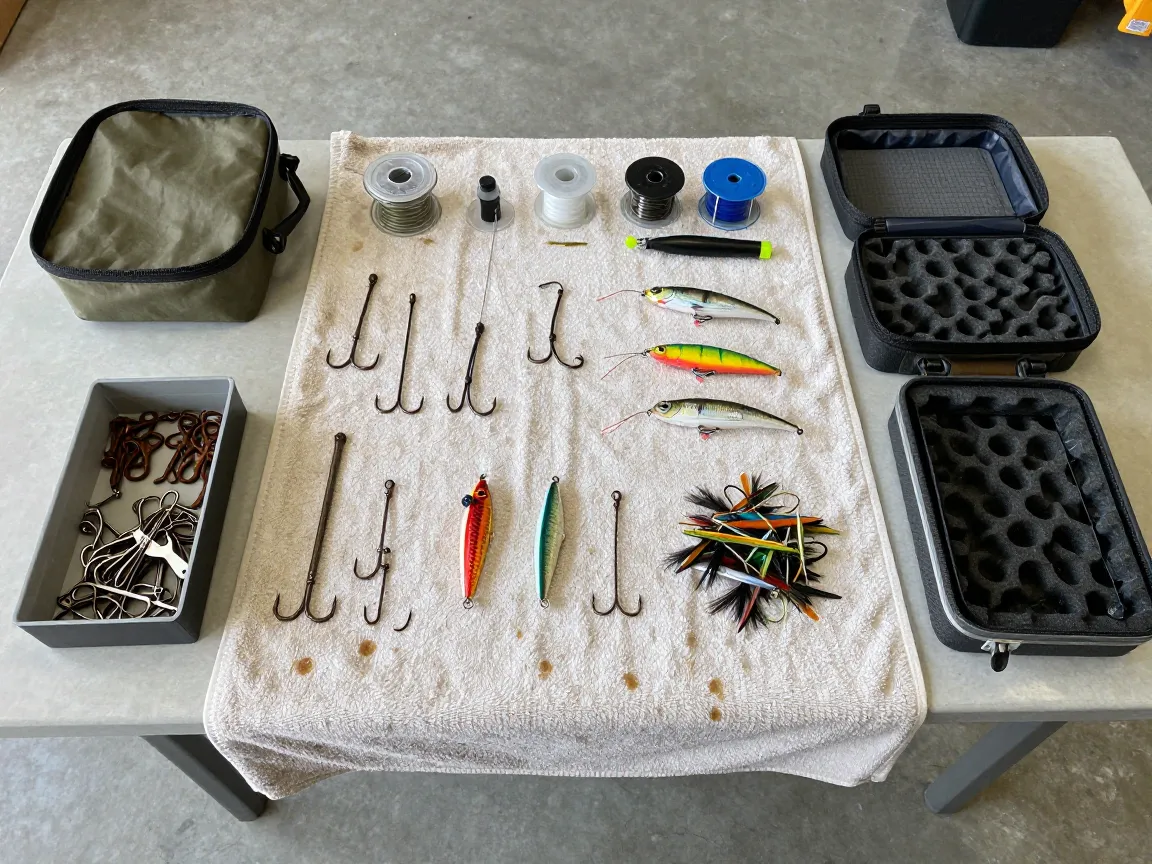
The fix starts with a physical consolidation. Pull every piece of tackle from every location, including boxes, bags, vehicle compartments, jacket pockets, and the junk drawer that somehow collected three dozen rusted size-8 hooks, and lay it all out on a single table covered with a dry towel. The towel keeps hooks from rolling and gives wet or damp items a place to drain. This staging step is not glamorous, but it is the foundation everything else depends on. Until you see all of your tackle at once, you cannot make rational decisions about what to keep, what to cut, or how to reorganize.
Before sorting begins, any gear that touched saltwater needs a fresh-water rinse. Everything should air-dry for at least a full day before going into boxes. Packing damp lures or leaders directly back into containers creates rust, sticky residue, and the kind of hidden mess that slows every future setup. Keep boxes open until contents are completely dry. If you are dealing with foam-lined fly boxes or pouches, those need extra time because moisture hides in the material.
The consolidation step also surfaces duplicates and items you have not used in years. Those go into a separate reserve pile rather than back into your active kit. That reserve gets its own labeled container stored away from primary gear, which keeps working kits lean.
2. Sort Tackle by Trip Type, Not Just by Item Category
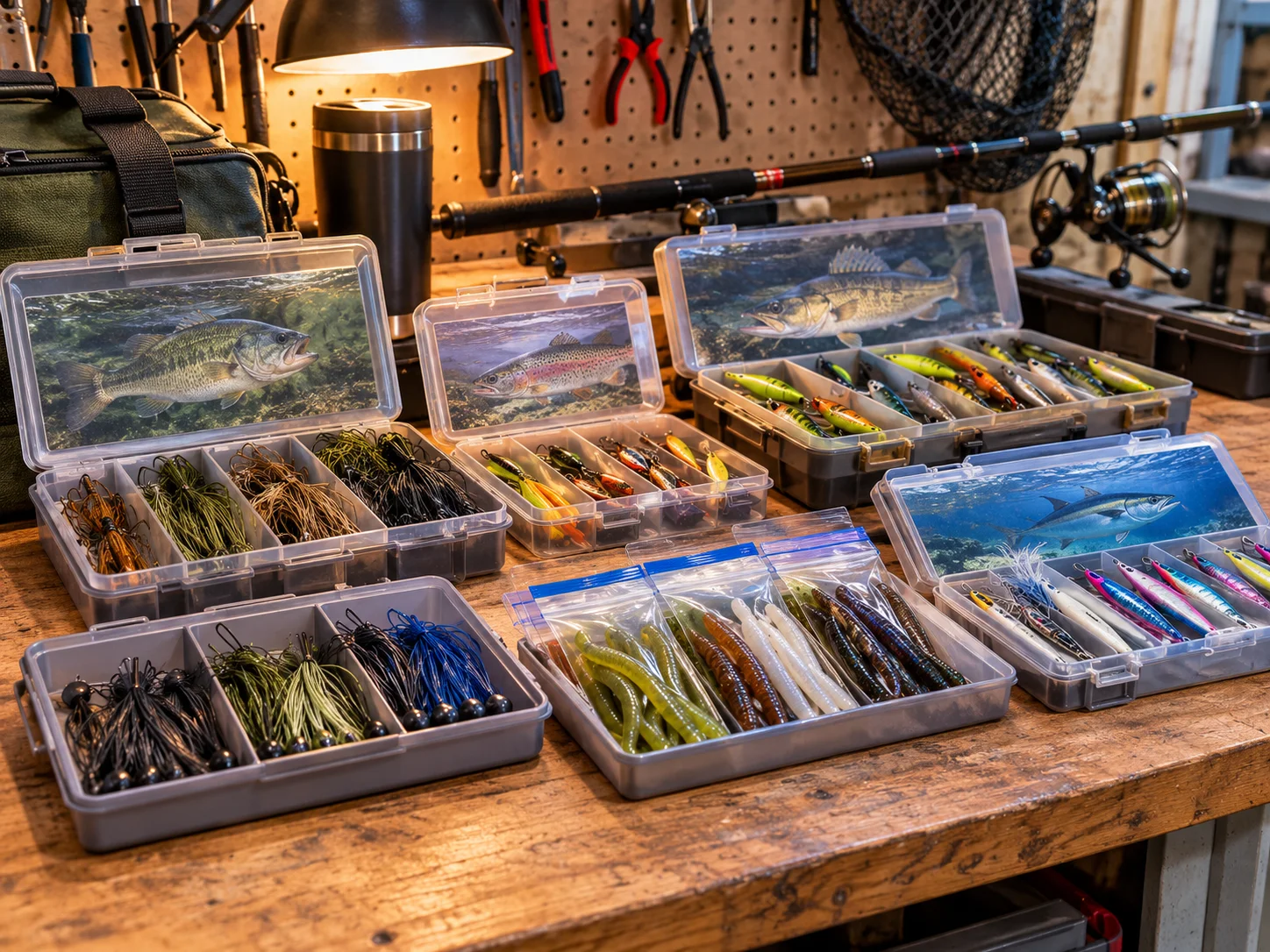
Most anglers organize by item type: all jigs together, all crankbaits in one tray, spinnerbaits grouped by size. That system makes sense for inventory management but it is slow on the water. When you rig for a specific trip, you do not need every jig you own. You need the three sizes that work on this lake, in this depth range, at this time of year.
Sorting by trip or target species rather than item type is what turns a tackle collection into a functional kit. The practical approach is to group lures by what and where you fish, then give each group its own tray or small box. A bass tray for a specific local lake holds only the lures that consistently produce there. A trout stream kit is a separate, smaller box. A dock walleye setup is another. If you saltwater fish, each common scenario gets its own tray.
The payoff shows up immediately on departure day. Instead of pulling open four or five large tackle boxes to find what you need, you grab one or two trays and go. Decision time drops, and you stop overpacking out of anxiety that you might need something you left behind. Because each tray has a fixed scope, it is also easier to notice when something is running low or broken.
Color-based sorting is a secondary method worth considering for specific bait categories, particularly soft plastics. If you fish finesse techniques where color selection matters, grouping by color within a species-based tray gives you a system that is both fast to scan and logically organized. The key is picking one primary sorting logic, applying it consistently, and not mixing methods within the same container.
3. Use Labeled Compartment Boxes for Terminal Tackle
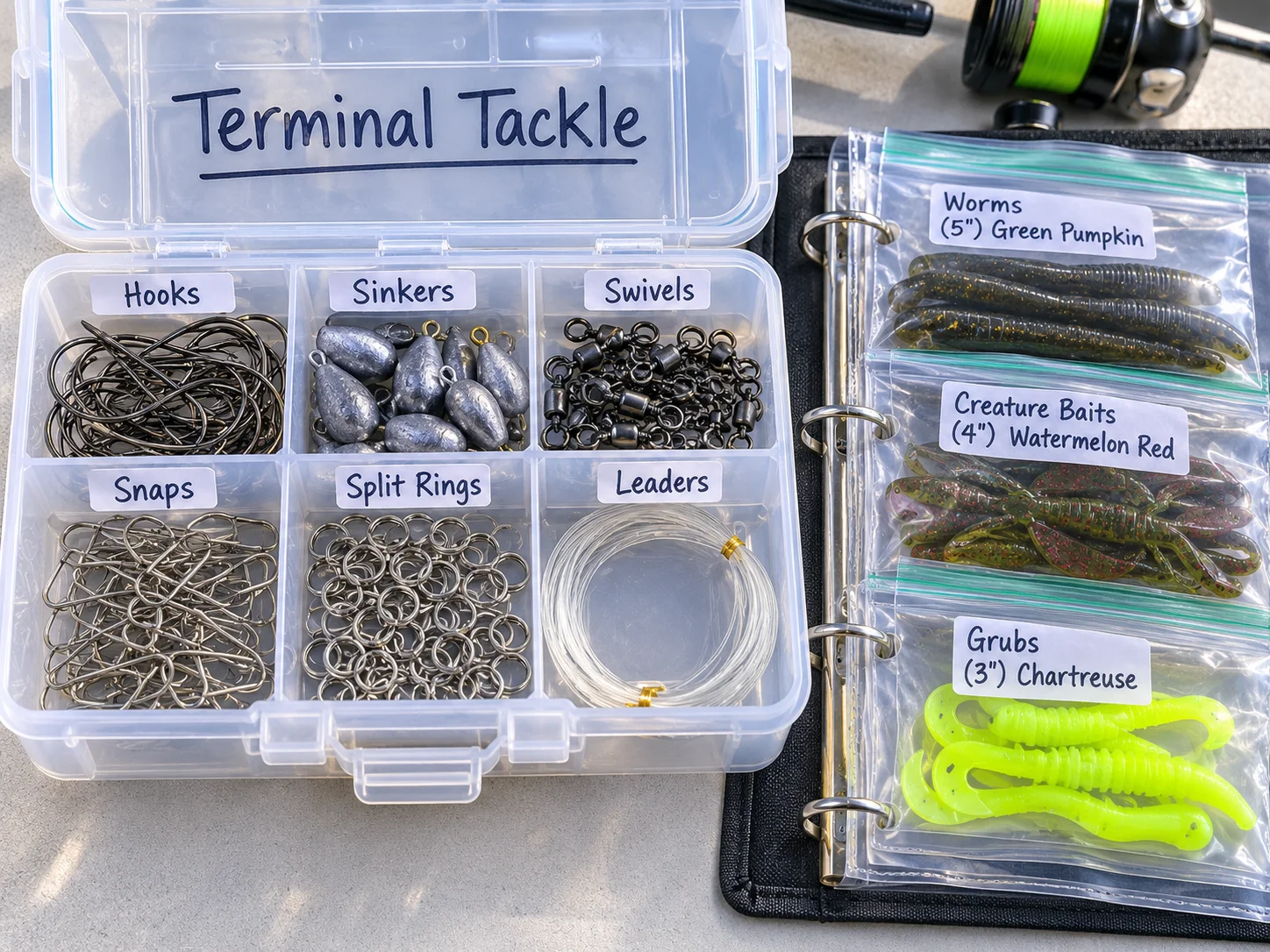
Terminal tackle is where organization systems typically collapse. Hooks, sinkers, swivels, snaps, split rings, and leaders are small, easy to mix together, and genuinely frustrating to sort through when you need a specific size in low light on a cold morning. A single unlabeled container holding twenty different hook sizes costs you more time per outing than almost any other gear failure.
Compartmentalized utility boxes solve this, but only when every compartment is labeled. Assign one size or type per compartment and label the outside of the box and the compartment itself. When a compartment is running low, you can see it at a glance without opening and counting. When you are rigging in the dark or in a moving boat, your hands know where to go. This is a small structural change that reduces decision friction every single time you reach for terminal tackle.
Soft plastics need a parallel approach. Loose bags inside a tackle box shift constantly, end up mixed together, and often leak plasticizer onto everything nearby. Keeping soft plastics in labeled zip-top bags, organized in a binder or a dedicated container, keeps them separated and easy to find. Label each bag externally with the bait name, size, and color so you can identify it without opening it. Anglers who fish a wide variety of soft plastics report that this single change eliminates more rummaging than almost any other fix.
The labeling rule applies to any container in your system. If you have to open a box to know what is inside, the label is missing. External labels mean you can scan a shelf or tackle bag in seconds and pull exactly what you need.
4. Build a Quick-Access Module for Each Fishing Style
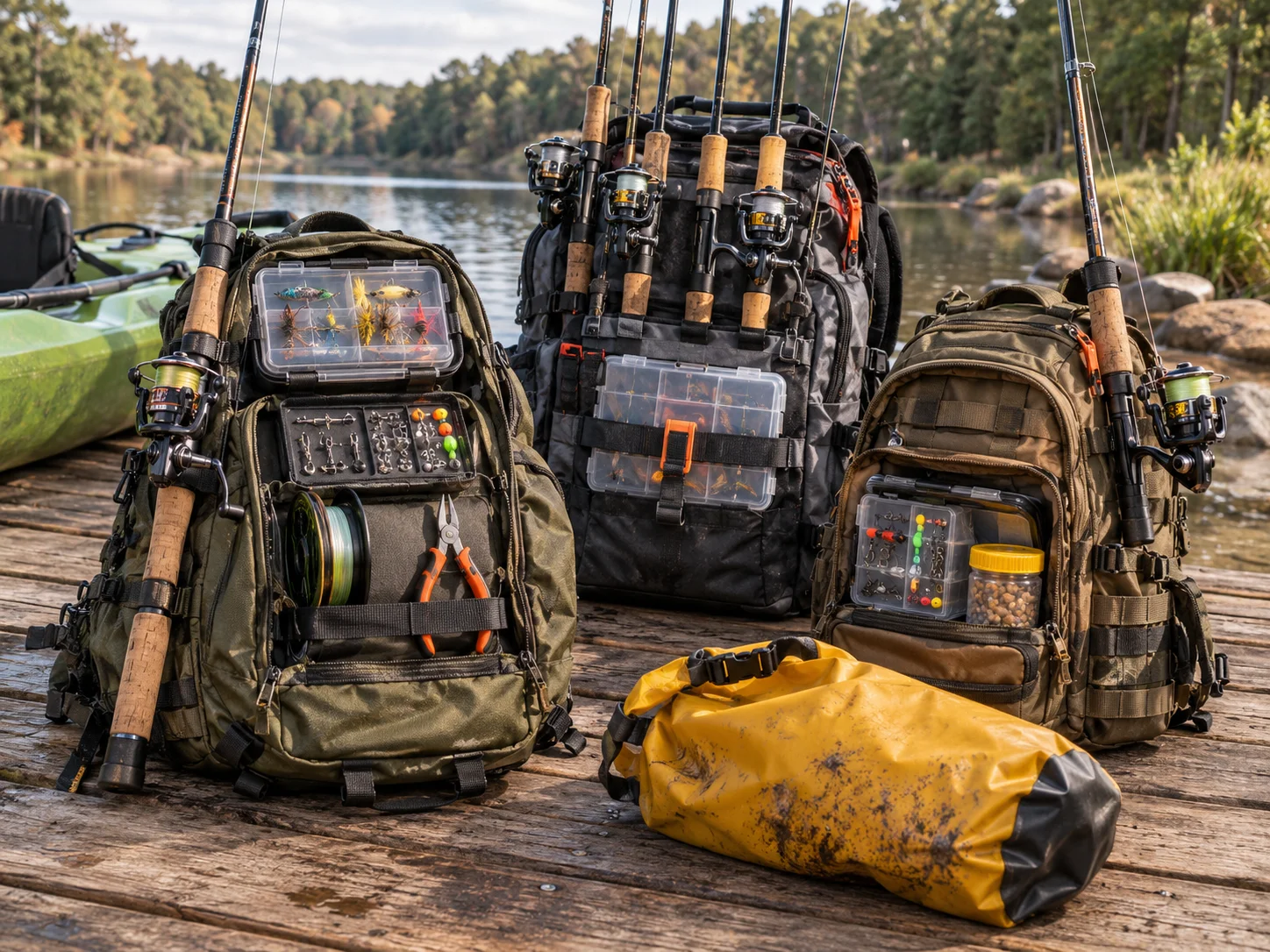
There is a difference between a tackle collection and a deployable kit. A collection is everything you own. A kit is the minimum effective gear for one specific style of fishing, staged so that it is ready to grab and go without reconfiguration.
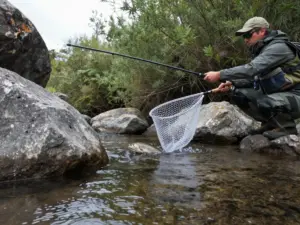
The concept comes from ultralight and backpacking fishing setups, where weight limits force discipline. A tight trip-specific kit for stream trout fishing, for example, contains one rod and reel, one small tackle module with the hooks and weights that work in that water, one cutting tool, and the right line already spooled. The small tackle module or fly box sits near the top of the pack for fast access. Nothing extra. When you are standing in a stream and need to swap a split shot, you are not digging through a bag of mixed gear. You reach into one known pocket and find exactly what you need.
That discipline transfers directly to any fishing style. A kayak bass setup becomes a small bag with four pre-rigged rods and a single tackle tray. A pier fishing kit lives in a compact backpack with a rod, a terminal tackle box, and a bait container. The critical discipline is returning every small item, specifically hooks, split shot, micro swivels, and similar components, to exactly the same place after every use. Components that do not go back to their home disappear. Once they are gone, the next setup requires improvising, which slows everything down.
A related refinement is designating a separate pocket or dry bag for wet and dirty items. Wet leaders, muddy pliers, and salt-rinsed lures should never go back into the main organized kit until they are cleaned and dry. Keeping a dedicated “dirty zone” prevents one wet outing from contaminating the whole system.
5. Apply a Four-Step Decluttering Process to Your Gear Zones
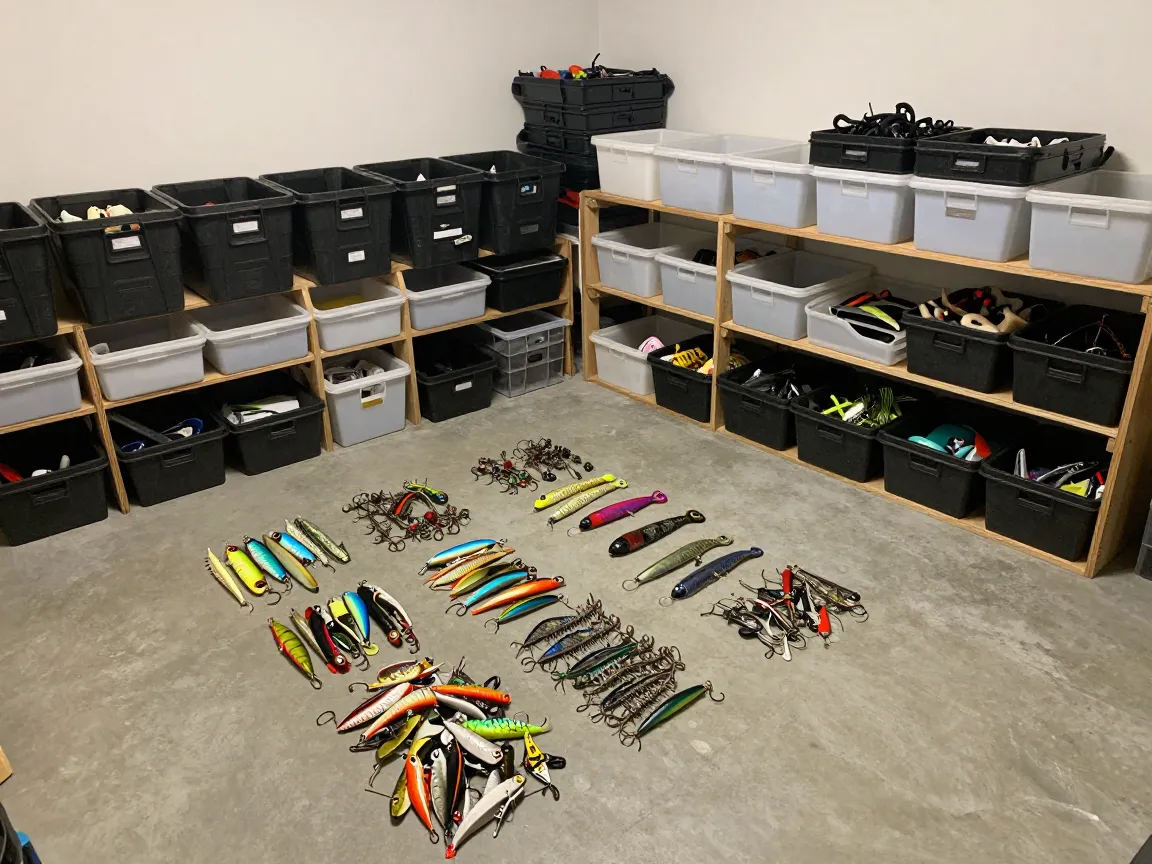
Professional organizers describe a collect-categorize-cut-contain sequence, sometimes called the Core 4, that works on any cluttered space. Applied to fishing gear, the four steps look like this. First, collect: pull everything out of every fishing-related storage zone, whether that is a tackle room, a garage corner, a truck bed, or a boat hatch. Second, categorize: group items by species, trip type, or technique, depending on the sorting logic you chose in step two of this list. Third, cut: remove anything broken, rusted, unused in the past two seasons, or genuinely redundant. Donate functional items, throw away damaged ones. Fourth, contain: return what remains to labeled boxes, bins, and racks that fit the actual volume of gear, with each category having a fixed home.
The cut step is where most anglers underperform. A tackle box that has accumulated cracked hard baits, lures with bent hooks, and three identical sizes of a jig you stopped using is functionally slower than a small box of twenty productive lures you actually fish. Broken lures create false visual noise and slow scanning. Tackle you never use occupies space that your working gear needs.
The contain step requires matching storage to gear volume honestly. Overstuffed boxes close poorly, damage contents, and make finding anything harder. If a container is more than three-quarters full, you likely need an additional box, not more compression.
Running this four-step process once per year, typically at the end of a season, prevents clutter creep, the gradual accumulation of items that happens when gear comes in without regular editing. A single annual session of two to three hours keeps active kits lean for the following twelve months.
6. Store Rods, Reels, and Reserve Gear with Access Frequency in Mind
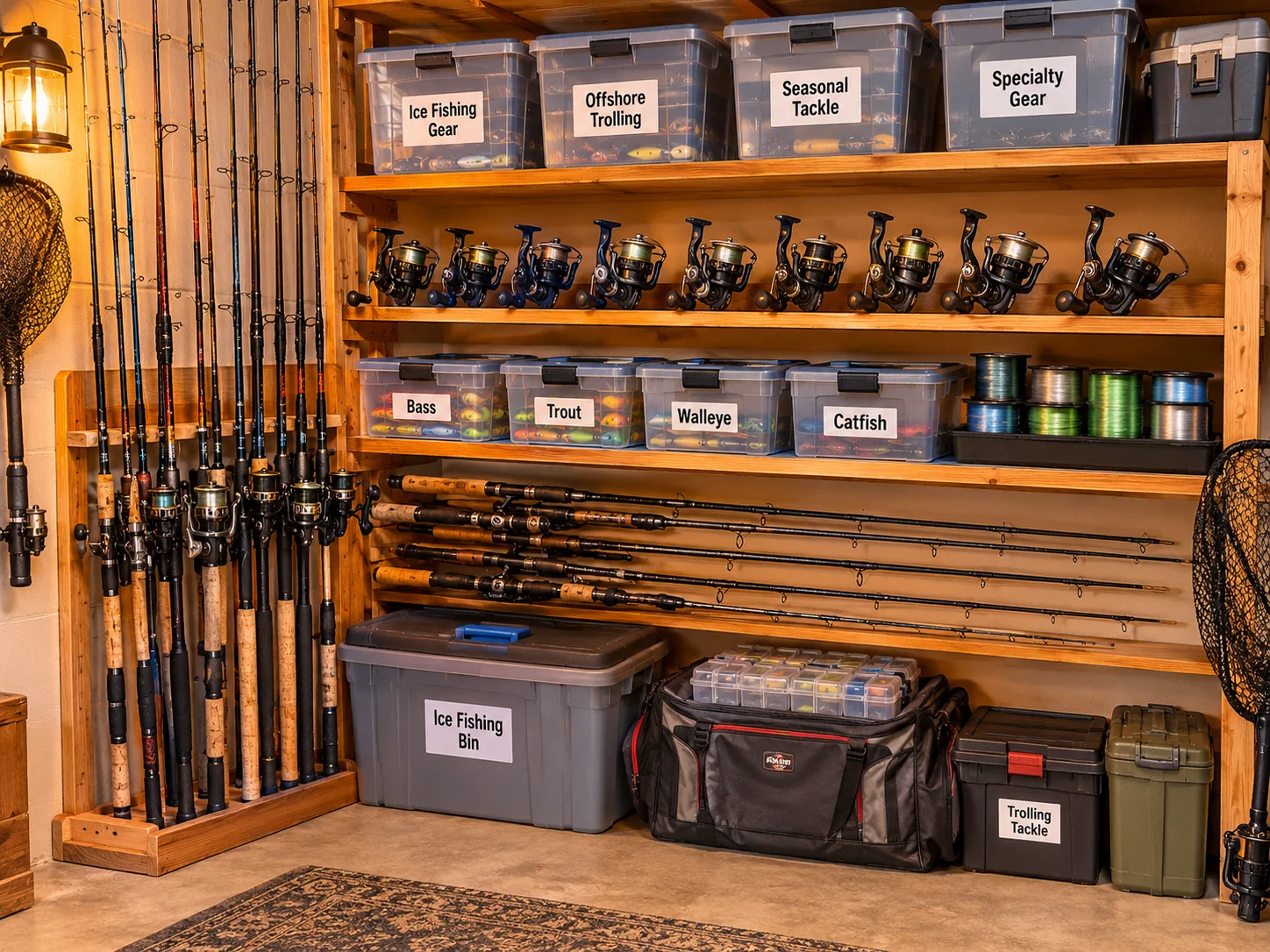
The final layer of a fast, low-clutter fishing setup is how primary and secondary gear coexist in physical space. The organizing principle is simple: gear you use on most trips should require the fewest steps to access; gear you use rarely or seasonally should be stored further away but clearly labeled.
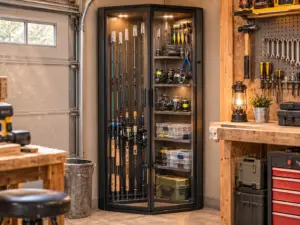
For rods and reels, proper end-of-season storage prevents both physical damage and spatial clutter. Reels should be cleaned with the drag tightened to prevent water intrusion during washing, then the drag should be backed off completely before storage to protect drag washers from compression damage over months of disuse. Rods go upright in a rack or lie flat along a wall. Leaning rods in a corner is the standard way to put a gradual bend in a blank that was straight when you bought it. Spare fishing line should be kept out of direct sunlight, which degrades monofilament and fluorocarbon significantly faster than ambient aging.
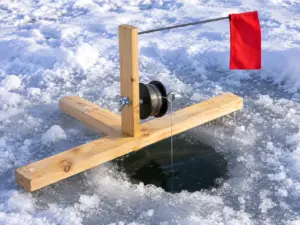
The access-frequency logic applies across the whole system. Primary boxes for the species and techniques you fish twenty or more times per season belong on the nearest shelf or in the top tray of your tackle bag, with no other gear in front of them. Specialty or seasonal gear, offshore trolling tackle that comes out four times a year, ice fishing gear stored from April through November, fly rods that only appear for one specific hatch, lives in clearly labeled bins pushed to the back of storage or onto upper shelves. You can find it when you need it, but it is not consuming prime access space when you do not.
This design reduces the time between arriving at a fishing spot and having a line in the water. It also prevents the specific frustration of moving six items to reach the one you actually need, which is what drives anglers to leave things out rather than put them away properly. When prime storage is reserved for prime gear, the system self-reinforces because putting gear back is easier than putting it somewhere random.
Conclusion
One session of honest consolidation, honest cutting, and honest labeling accomplishes more than any new storage product will. The productive next step is to pick one of these six hacks, specifically the consolidation and staging step in hack one, and run it this week before the gear scatters further. Everything else in this list builds on that foundation, and each subsequent step takes less time than the one before it because the system is already partially in place.